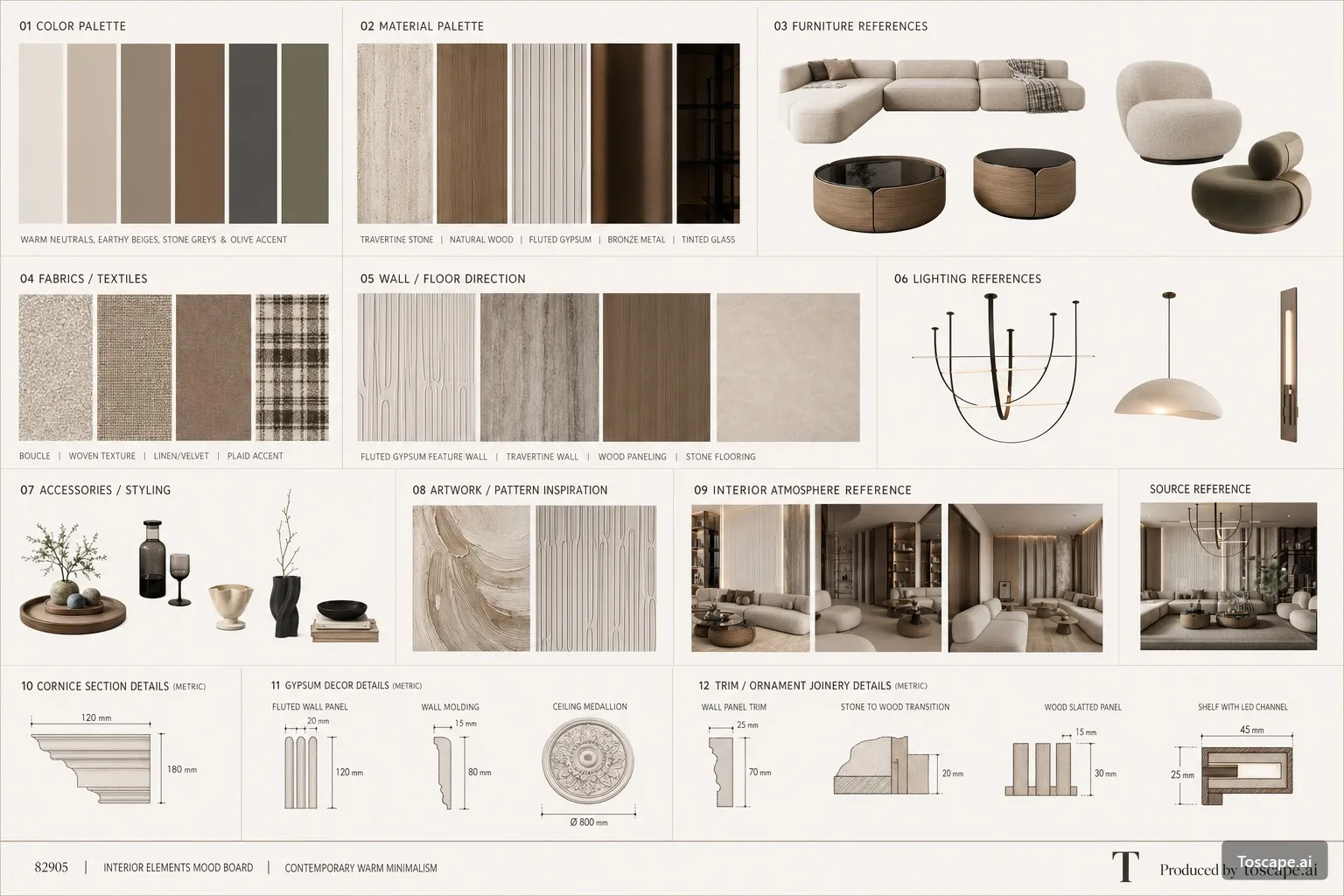
Warm Minimalism Moodboard for Interior Design is an architectural gallery study focused on moodboard design, using contemporary minimal, facade elements, monolithic volumes to explain the image as a practical reference for facade, massing, material, and spatial decisions.
The design direction leans towards a modernist lineage with a nod to organic minimalism, characterized by clean lines and a restrained aesthetic. The furniture references, such as the plush sectional sofa and rounded armchair, evoke a sense of softness and comfort, aligning with the overall warm minimalism theme. The lighting elements, with their minimalist forms and strategic placement, suggest a focus on atmospheric modulation, providing both functional illumination and sculptural interest.
Conceptually, the moodboard reflects a spatial philosophy centered on creating serene and inviting environments. The emphasis on natural materials and harmonious color palettes indicates a desire to blur the boundaries between interior spaces and their natural surroundings. This approach fosters a seamless integration of indoor and outdoor experiences, enhancing the occupant's connection to nature and promoting well-being.
The massing strategy, while not explicitly detailed in the moodboard, can be inferred from the visual coherence and balance of elements. The horizontal-vertical interplay is subtly suggested through the use of vertical fluted panels and horizontal wood slats, creating a rhythmic dialogue that guides the eye and enhances the perception of space. The load-reading cues, though implicit, are likely resolved through the considered use of materials and structural elements.
The envelope and facade logic, although not directly addressed, can be extrapolated from the interior references. The use of deep window reveals and shading devices would align with the warm minimalism theme, offering both visual permeability and thermal comfort. The texture and depth created by the material palette would translate effectively to an exterior facade, providing a cohesive aesthetic both inside and out.
Materials
The material reading is driven by mineral and stone-like tones, using surface depth, shadow, and warm neutral coloration to strengthen the facade's architectural identity.
Style
The style direction reads as contemporary minimal, supported by facade elements and monolithic volumes.
Building Type
Interior Elements
Facade Logic
The facade logic is organized around organic or parametric articulation, where repeated surface movement creates a unified envelope rather than a flat decorative skin.