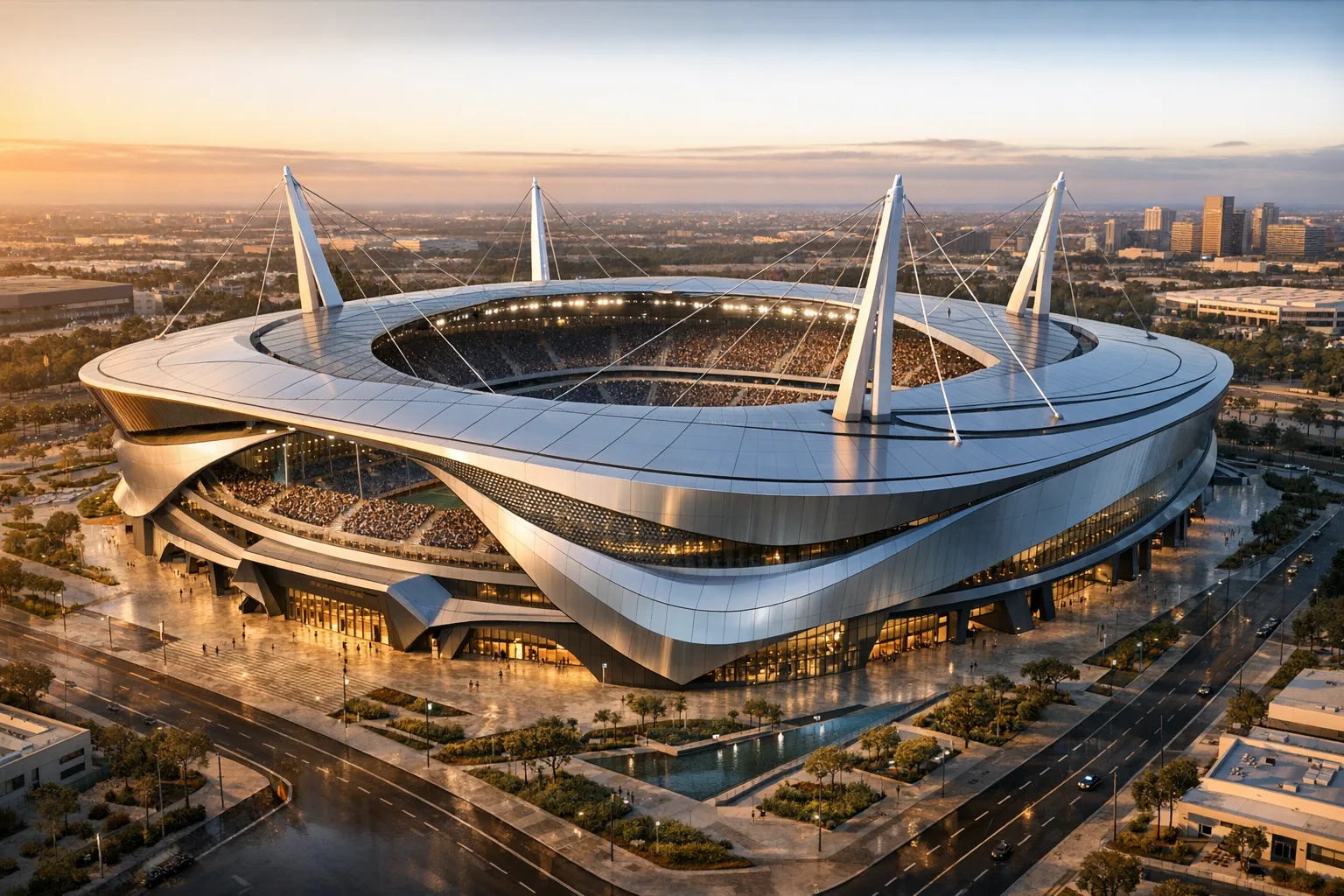
Contemporary Stadium with Dynamic Tectonic Expression is an architectural gallery study focused on exterior design, using contemporary minimal, exterior, monolithic volumes to explain the image as a practical reference for facade, massing, material, and spatial decisions.
Conceptually, the stadium reads as a celebration of movement and flow, with its form echoing the dynamic nature of the activities it hosts. The spatial philosophy appears to prioritize openness and connectivity, as seen in the generous fenestration strategy that allows for visual permeability and engagement with the surrounding urban context. The massing strategy is one of layered horizontality, with a clear hierarchy that guides the eye from the ground plane to the soaring roof structure, emphasizing the building's role as a landmark within its environment.
The formal composition is dominated by the interplay between the horizontal and vertical elements, with the tensile masts and cables providing a vertical counterpoint to the sweeping horizontal lines of the roof. This creates a sense of tension and balance, where the load-reading cues are subtly articulated through the visible structural components that anchor the roof. The facade logic is driven by a combination of solid and perforated panels, which modulate light and shadow across the building's surface, enhancing its tectonic expressiveness.
Material interpretation leans heavily on metallic finishes, likely aluminum or steel, which provide both durability and a sleek aesthetic. The confidence in this material choice is underscored by its reflective qualities, which interact dynamically with natural light, casting varied shadows that animate the facade throughout the day. The textural variation between solid and perforated panels adds depth and complexity, contributing to the building's visual interest and performance.
The light-shadow behavior is particularly noteworthy, as the stadium's design harnesses natural light to create an ever-changing play of shadows across its surfaces. This interaction is further enhanced by the building's landscape interface, which features water elements and greenery that soften the transition between built and natural environments. The skyline relationship is one of dominance, as the stadium's scale and form assert its presence within the urban fabric, yet it remains contextually responsive through its curvilinear form that echoes the surrounding landscape.
Materials
The material reading is driven by mineral and stone-like tones, using surface depth, shadow, and warm neutral coloration to strengthen the facade's architectural identity.
Style
The style direction reads as contemporary minimal, supported by exterior and monolithic volumes.
Building Type
Stadium
Facade Logic
The facade logic uses arches, screens, and layered openings to balance cultural reference, shading depth, and contemporary envelope rhythm.