African Contemporary Vernacular
Sub-Saharan Africa - encompassing diverse climatic zones from Sahel to savanna to... / Cultural heritage
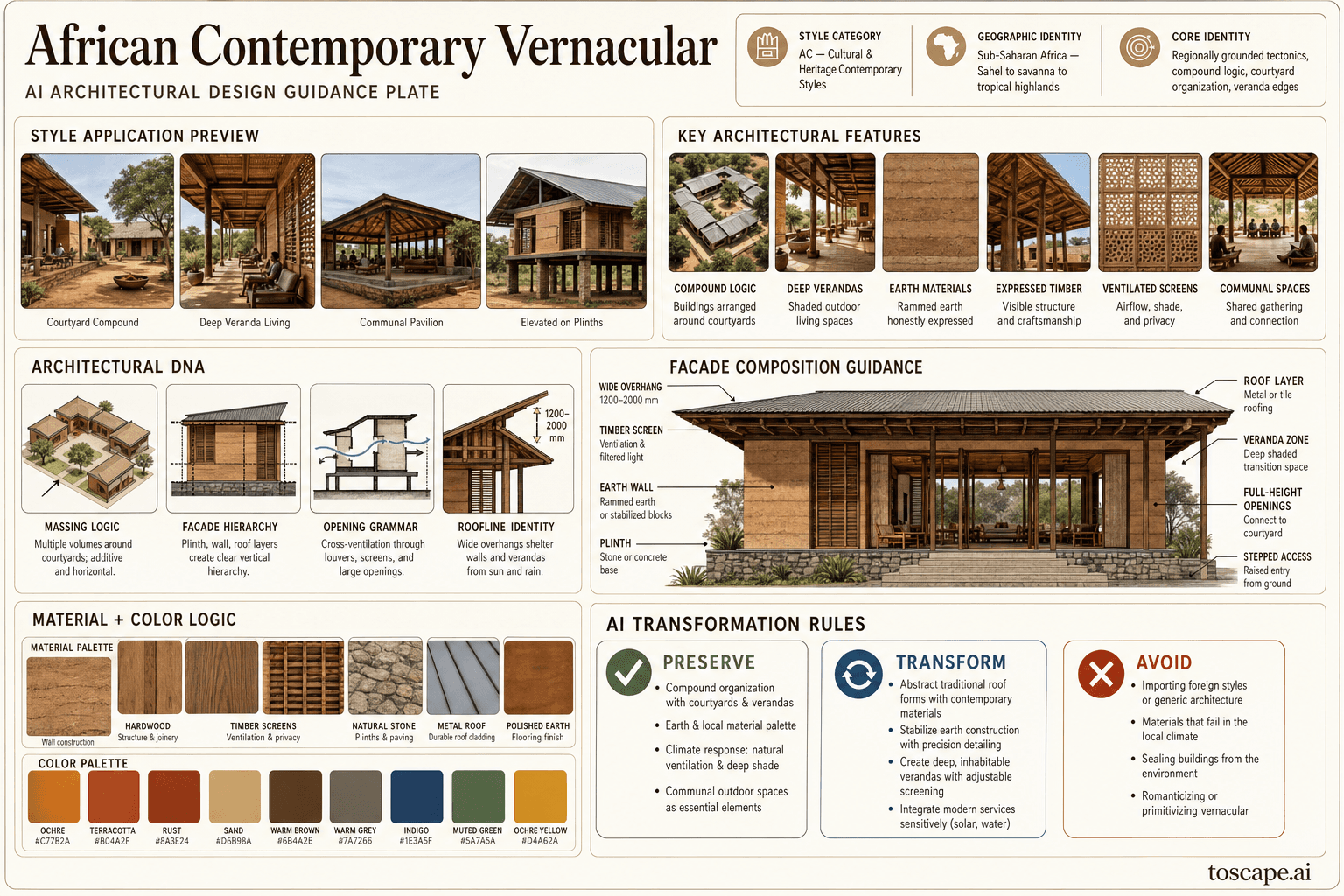
Regionally grounded tectonics, compound logic, courtyard organization, veranda edges, and vernacular reinterpretation.
Definition
African Contemporary Vernacular is a global architectural style within the cultural heritage. Regionally grounded tectonics, compound logic, courtyard organization, veranda edges, and vernacular reinterpretation.
- Family
- Cultural heritage
- Origin
- Sub-Saharan Africa - encompassing diverse climatic zones from Sahel to savanna.
- Massing
- Massing follows compound logic. Multiple smaller volumes arranged around courtyards and connected by covered walkways.
- Materials
- Walls: rammed earth, stabilized earth blocks, or lime-rendered masonry Roofing: standing-seam metal, clay tiles, or composite thatch panels Timber: locally sourced hardwood for structure, screens.
- Palette
- Primary tones: warm earth.
- Climate response
- Sub-Saharan Africa. Encompassing diverse climatic zones from Sahel to savanna to tropical highlands.
Overview
African Contemporary Vernacular is a global architectural style rooted in Sub-Saharan Africa - encompassing diverse climatic zones from Sahel to savanna to tropical highlands. Each application responds to its specific regional vernacular tradition (West African compound, East African Swahili, Southern African rondavel, etc.) reinterpreted through contemporary design. Regionally grounded tectonics, compound logic, courtyard organization, veranda edges, and vernacular reinterpretation. Grounded, communal, and climatically intelligent.
Visual DNA
Massing & Form
Massing follows compound logic. multiple smaller volumes arranged around courtyards and connected by covered walkways.
Facade Language
Facades express material honesty and climate response. Rammed earth walls display natural stratification and warm color.
Materials & Texture
Walls: rammed earth, stabilized earth blocks, or lime-rendered masonry Roofing: standing-seam metal, clay tiles, or composite thatch panels Timber: locally sourced hardwood for structure, screens, and joinery Flooring: polished earth,...
Color Palette
Primary tones: warm earth. ochre, terracotta, rust, sand, warm brown Timber tones: natural warm brown to weathered grey Roof tones: terracotta, warm grey, or natural metal Accent tones: deep indigo, ochre yellow, muted green (derived from...
Ornament & Detail
Compound spatial organization. courtyards and verandas as organizing elements.
Climate Response
Sub-Saharan Africa. encompassing diverse climatic zones from Sahel to savanna to tropical highlands.
Landscape & Ground
Sub-Saharan Africa. encompassing diverse climatic zones from Sahel to savanna to tropical highlands.
Reference elevation
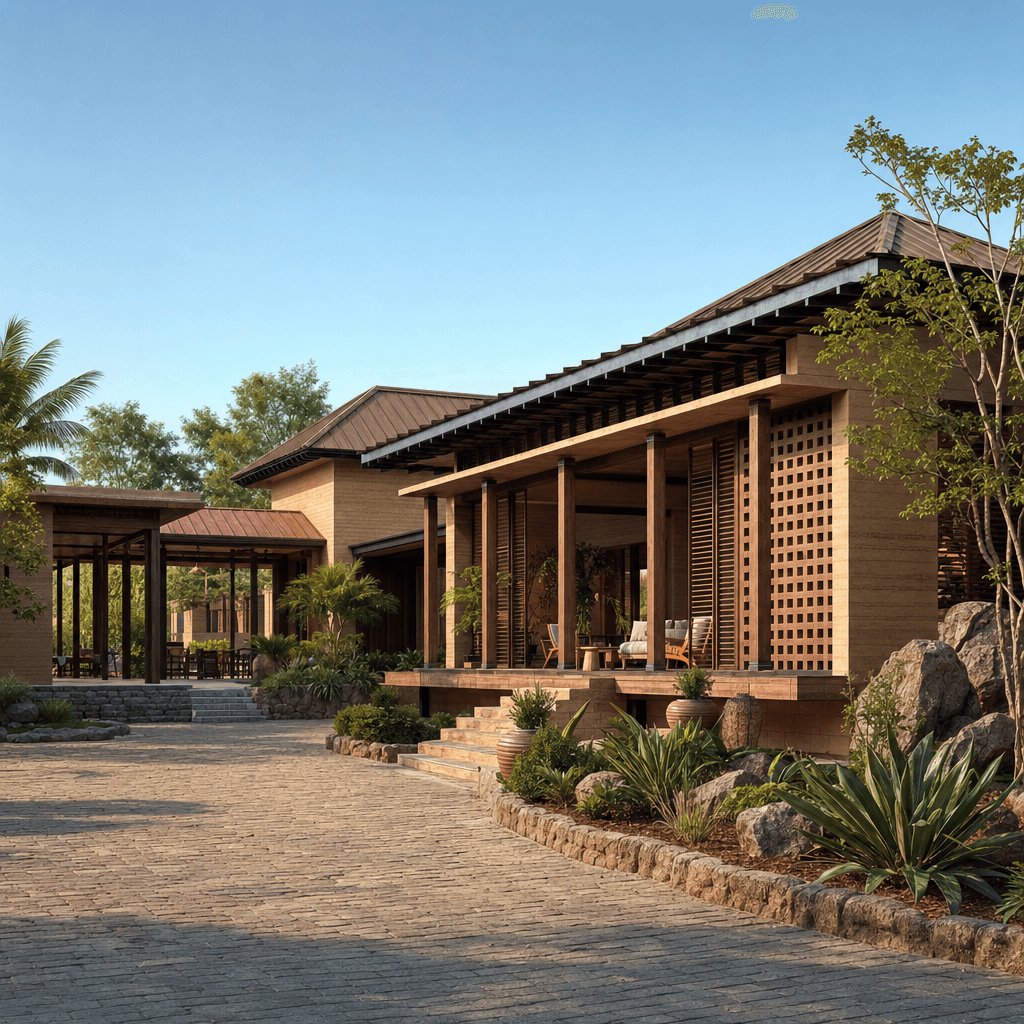
African Contemporary Vernacular - characteristic facade composition within the cultural heritage.
Context Snapshot
Grounded, communal, and climatically intelligent. Massing follows compound logic - multiple smaller volumes arranged around courtyards and connected by covered walkways. Sub-Saharan Africa - encompassing diverse climatic zones from Sahel to savanna to tropical highlands.
Contemporary Relevance
Today, African Contemporary Vernacular remains relevant wherever projects need cultural heritage cues without losing performance or contemporary usability. In Toscape it responds best when prompts emphasize massing follows compound logic - multiple smaller volumes arranged around courtyards and connected by covered walkways. walls: rammed earth, stabilized earth blocks, or lime-rendered masonry roofing: standing-seam metal, clay tiles, or composite...
Use this style in Toscape
Explore African Contemporary Vernacular directly inside Toscape using Facade Re-Style and design workflow prompts tuned for global architectural references.
Open African Contemporary Vernacular in the galleryFrequently asked questions
What is African Contemporary Vernacular?
African Contemporary Vernacular is a global architectural style within the cultural heritage. Regionally grounded tectonics, compound logic, courtyard organization, veranda edges, and vernacular reinterpretation.
What materials define African Contemporary Vernacular?
Walls: rammed earth, stabilized earth blocks, or lime-rendered masonry Roofing: standing-seam metal, clay tiles, or composite thatch panels Timber: locally sourced hardwood for structure, screens, and joinery Flooring: polished earth.
What is the African Contemporary Vernacular color palette?
Primary tones: warm earth. Ochre, terracotta, rust, sand, warm brown Timber tones: natural warm brown to weathered grey Roof tones: terracotta, warm grey, or natural metal Accent tones: deep indigo, ochre yellow.
What is the origin of African Contemporary Vernacular?
Grounded, communal, and climatically intelligent. Massing follows compound logic - multiple smaller volumes arranged around courtyards and connected by covered walkways. Sub-Saharan Africa - encompassing diverse climatic zones from Sahel to savanna to tropical highlands.
When should architects use African Contemporary Vernacular?
Today, African Contemporary Vernacular remains relevant wherever projects need cultural heritage cues without losing performance or contemporary usability. In Toscape it responds best when prompts emphasize massing follows compound logic - multiple smaller volumes arranged around courtyards and connected by covered walkways. Walls: rammed earth, stabilized earth blocks, or lime-rendered masonry roofing: standing-seam metal, clay tiles, or composite.
How do you render African Contemporary Vernacular in Toscape?
Open Toscape on Windows, load your own photo, elevation, sketch, or CAD view, then apply the African Contemporary Vernacular reference from the built-in style library. The Facade Re-Style and Design Options workflows keep your project geometry and camera while shifting materials, proportion, and detailing toward African Contemporary Vernacular.