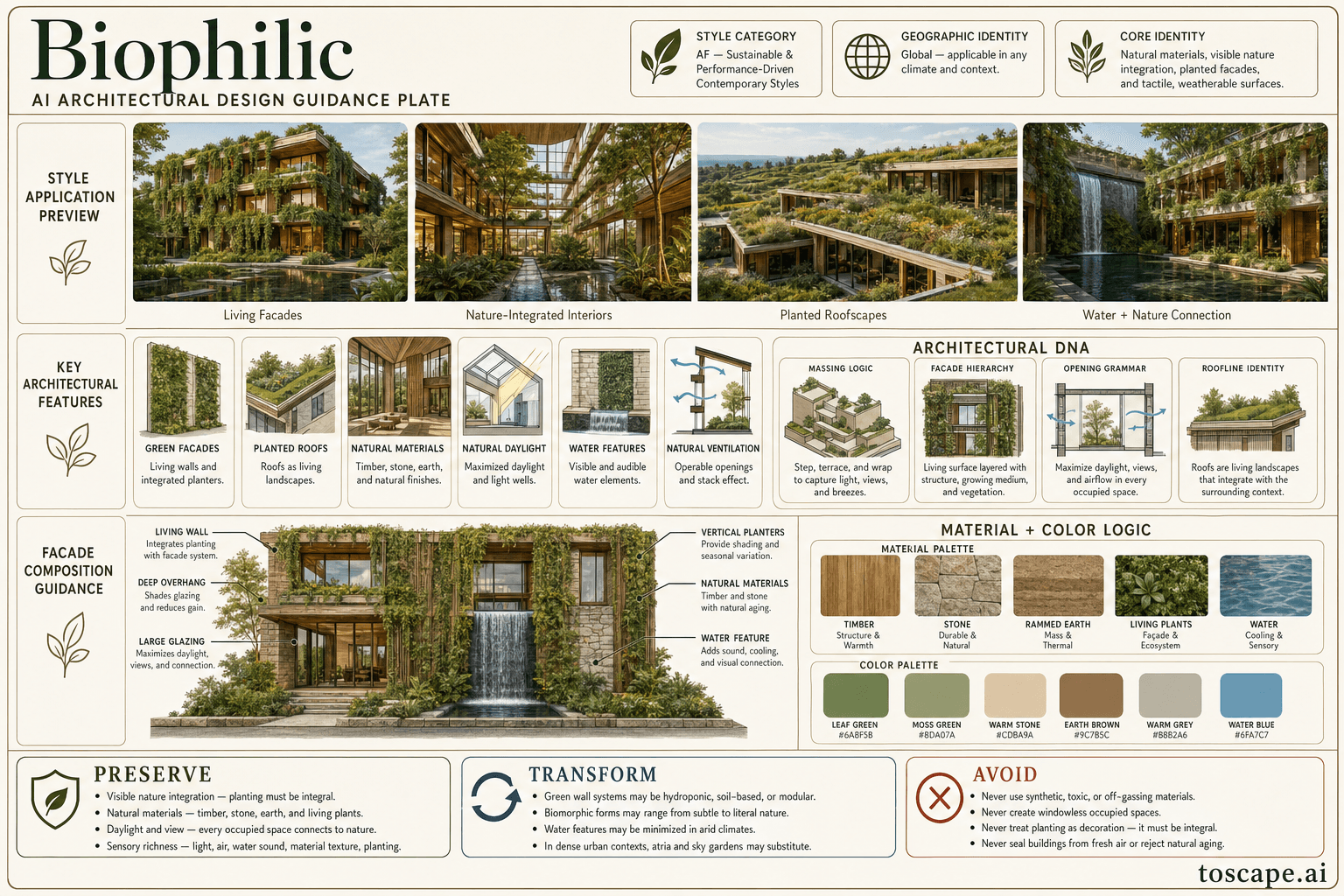
Biophilic
Global - applicable in any climate and context. / Sustainable performance
Natural materials, visible nature integration, planted facade logic, and tactile weatherable surfaces.
Definition
Biophilic is a global architectural style within the sustainable performance. Natural materials, visible nature integration, planted facade logic, and tactile weatherable surfaces.
- Family
- Sustainable performance
- Origin
- Global - applicable in any climate and context.
- Massing
- Massing is shaped to maximize access to nature. Building forms may step, terrace, or wrap to capture sunlight, views, and prevailing breezes.
- Materials
- Structure: exposed timber, low-carbon concrete, or steel Facade: living wall systems, timber cladding, stone, rammed earth Planting: native and climate-appropriate species.
- Palette
- Primary tones: natural timber, warm stone, earth tones, and green (from planting) The palette is nature-derived.
- Climate response
- Global. Applicable in any climate and context.
Overview
Biophilic is a global architectural style rooted in Global - applicable in any climate and context. Rooted in the biophilic design hypothesis that human well-being is fundamentally connected to our relationship with nature and living systems. Natural materials, visible nature integration, planted facade logic, and tactile weatherable surfaces. Alive, sensory, and nurturing.
Visual DNA
Massing & Form
Massing is shaped to maximize access to nature. building forms may step, terrace, or wrap to capture sunlight, views, and prevailing breezes.
Facade Language
The facade is a living surface. integrated planting systems (green walls, planter boxes, climbing plant trellises) are as important as the solid wall.
Materials & Texture
Structure: exposed timber, low-carbon concrete, or steel Facade: living wall systems, timber cladding, stone, rammed earth Planting: native and climate-appropriate species. integrated into building systems Flooring: natural timber, stone,...
Color Palette
Primary tones: natural timber, warm stone, earth tones, and green (from planting) The palette is nature-derived. greens, browns, warm greys, stone Water adds reflective blues The palette changes seasonally as vegetation cycles No...
Ornament & Detail
Visible nature integration. planting must be integral, not decorative.
Climate Response
Global. applicable in any climate and context.
Landscape & Ground
Global. applicable in any climate and context.
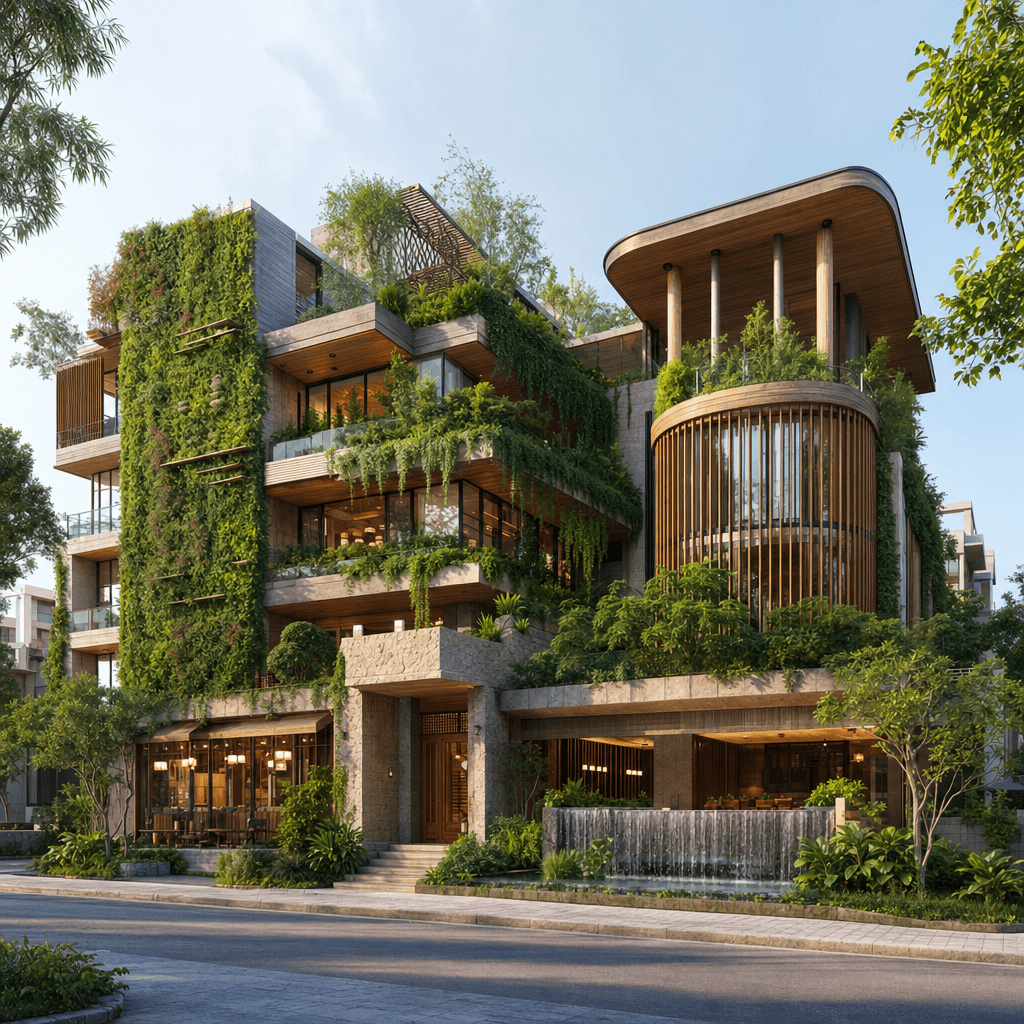
Reference elevation
Biophilic - characteristic facade composition within the sustainable performance.
Context Snapshot
Alive, sensory, and nurturing. Massing is shaped to maximize access to nature - building forms may step, terrace, or wrap to capture sunlight, views, and prevailing breezes. Global - applicable in any climate and context.
Contemporary Relevance
Today, Biophilic remains relevant wherever projects need sustainable performance cues without losing performance or contemporary usability. In Toscape it responds best when prompts emphasize massing is shaped to maximize access to nature - building forms may step, terrace, or wrap to capture sunlight, views, and prevailing breezes. structure: exposed timber, low-carbon concrete, or steel facade: living wall systems, timber cladding, stone, rammed earth...
Use this style in Toscape
Explore Biophilic directly inside Toscape using Facade Re-Style and design workflow prompts tuned for global architectural references.
Open Biophilic in the galleryFrequently asked questions
What is Biophilic?
Biophilic is a global architectural style within the sustainable performance. Natural materials, visible nature integration, planted facade logic, and tactile weatherable surfaces.
What materials define Biophilic?
Structure: exposed timber, low-carbon concrete, or steel Facade: living wall systems, timber cladding, stone, rammed earth Planting: native and climate-appropriate species. Integrated into building systems Flooring: natural timber, stone.
What is the Biophilic color palette?
Primary tones: natural timber, warm stone, earth tones, and green (from planting) The palette is nature-derived. Greens, browns, warm greys, stone Water adds reflective blues The palette changes seasonally as vegetation cycles No.
What is the origin of Biophilic?
Alive, sensory, and nurturing. Massing is shaped to maximize access to nature - building forms may step, terrace, or wrap to capture sunlight, views, and prevailing breezes. Global - applicable in any climate and context.
When should architects use Biophilic?
Today, Biophilic remains relevant wherever projects need sustainable performance cues without losing performance or contemporary usability. In Toscape it responds best when prompts emphasize massing is shaped to maximize access to nature - building forms may step, terrace, or wrap to capture sunlight, views, and prevailing breezes.
How do you render Biophilic in Toscape?
Open Toscape on Windows, load your own photo, elevation, sketch, or CAD view, then apply the Biophilic reference from the built-in style library. The Facade Re-Style and Design Options workflows keep your project geometry and camera while shifting materials, proportion, and detailing toward Biophilic.