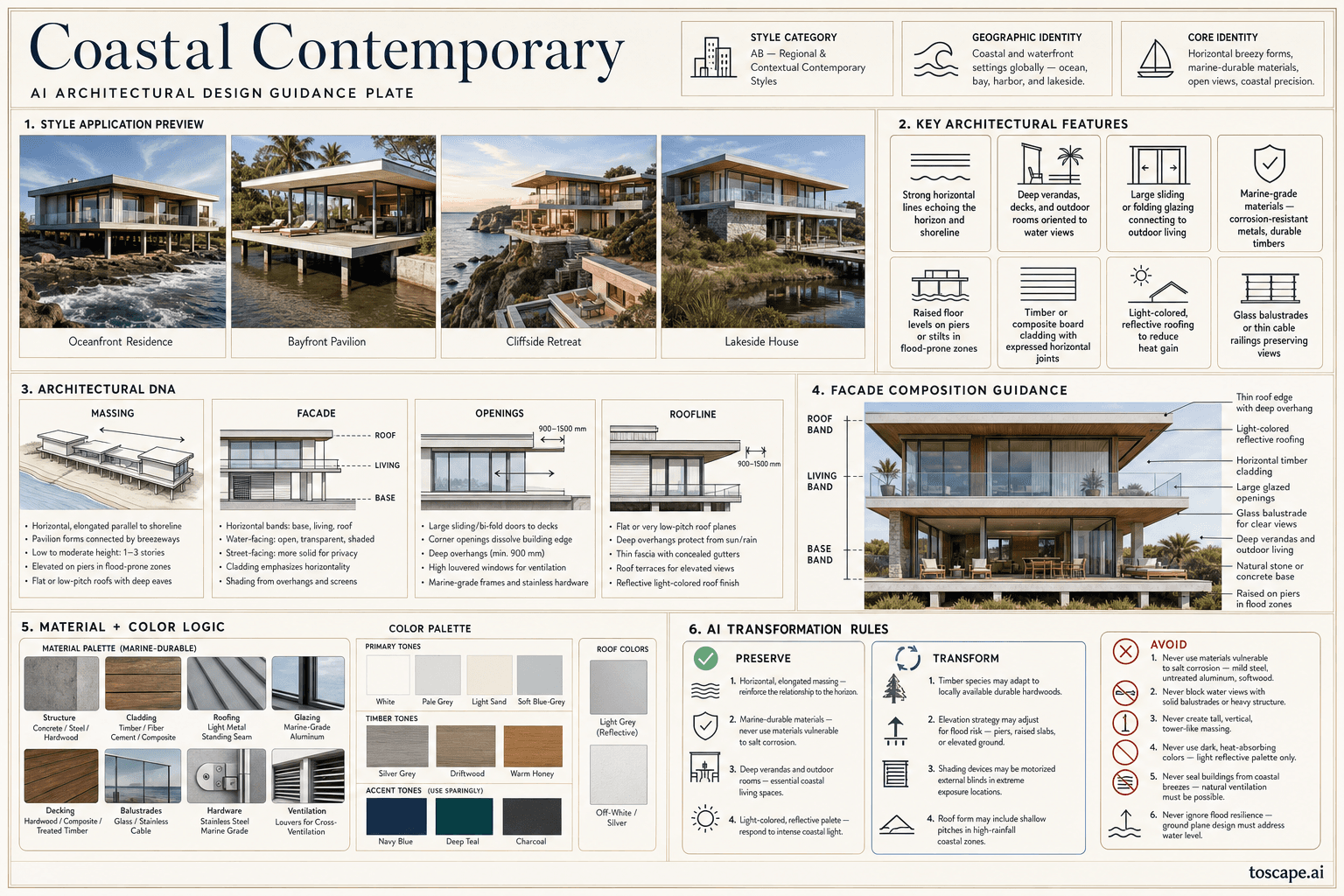
Coastal Contemporary
Coastal and waterfront settings globally - oceanfront, bay, harbor, and lakeside location... / Regional contemporary
Horizontal breezy forms, marine-durable materials, open views, and relaxed coastal precision.
Definition
Coastal Contemporary is a global architectural style within the regional contemporary. Horizontal breezy forms, marine-durable materials, open views, and relaxed coastal precision.
- Family
- Regional contemporary
- Origin
- Coastal and waterfront settings globally - oceanfront, bay, harbor, and lakeside location.
- Massing
- Massing is horizontal and elongated parallel to the shoreline. Maximizing water frontage and views.
- Materials
- Structure: treated concrete, marine-grade steel, or durable hardwood timber Cladding: weather-resistant timber (spotted gum, western red cedar), fiber cement boards.
- Palette
- Primary tones: white, pale grey, light sand, soft blue-grey Timber tones: natural silver-grey weathered, pale driftwood, warm honey Accent tones: navy blue, deep teal.
- Climate response
- Coastal and waterfront settings globally. Oceanfront, bay, harbor, and lakeside locations.
Overview
Coastal Contemporary is a global architectural style rooted in Coastal and waterfront settings globally - oceanfront, bay, harbor, and lakeside locations. Defined by marine climate conditions: salt spray, high humidity, strong winds, corrosive air, and the psychological desire for views and connection to water. Horizontal breezy forms, marine-durable materials, open views, and relaxed coastal precision. Relaxed yet refined - the architecture captures the ease of coastal living without sacrificing architectural rigor.
Visual DNA
Massing & Form
Massing is horizontal and elongated parallel to the shoreline. maximizing water frontage and views.
Facade Language
Facades are organized in horizontal bands. base, living, roof.
Materials & Texture
Structure: treated concrete, marine-grade steel, or durable hardwood timber Cladding: weather-resistant timber (spotted gum, western red cedar), fiber cement boards, or composite Roofing: light-colored standing-seam metal (zinc, aluminum,...
Color Palette
Primary tones: white, pale grey, light sand, soft blue-grey Timber tones: natural silver-grey weathered, pale driftwood, warm honey Accent tones: navy blue, deep teal, charcoal (sparingly) Roof color: light grey, off-white, or silver.
Ornament & Detail
Horizontal, elongated massing. reinforce the relationship to the horizon.
Climate Response
Coastal and waterfront settings globally. oceanfront, bay, harbor, and lakeside locations.
Landscape & Ground
Coastal and waterfront settings globally. oceanfront, bay, harbor, and lakeside locations.
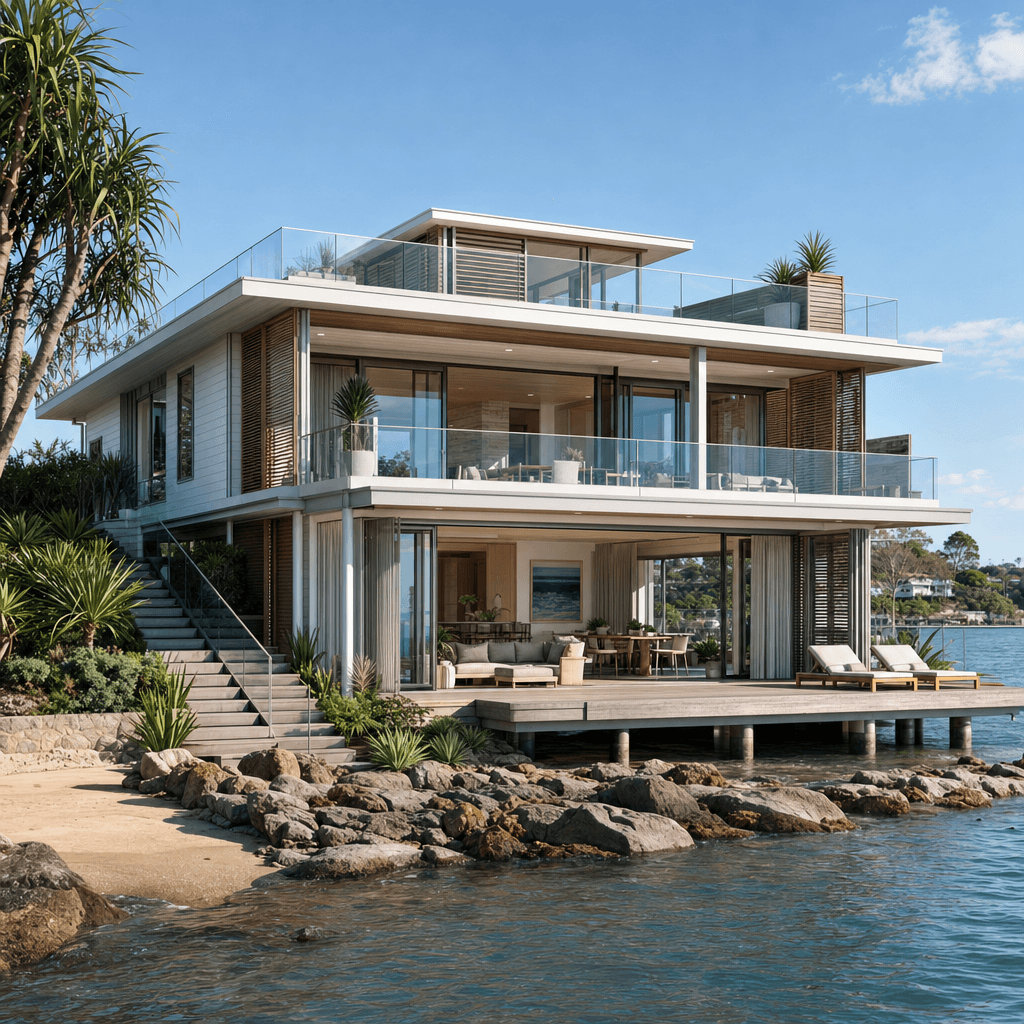
Reference elevation
Coastal Contemporary - characteristic facade composition within the regional contemporary.
Context Snapshot
Relaxed yet refined - the architecture captures the ease of coastal living without sacrificing architectural rigor. Massing is horizontal and elongated parallel to the shoreline - maximizing water frontage and views. Coastal and waterfront settings globally - oceanfront, bay, harbor, and lakeside locations.
Contemporary Relevance
Today, Coastal Contemporary remains relevant wherever projects need regional contemporary cues without losing performance or contemporary usability. In Toscape it responds best when prompts emphasize massing is horizontal and elongated parallel to the shoreline - maximizing water frontage and views. structure: treated concrete, marine-grade steel, or durable hardwood timber cladding: weather-resistant timber (spotted gum, western red cedar), fiber cement...
Use this style in Toscape
Explore Coastal Contemporary directly inside Toscape using Facade Re-Style and design workflow prompts tuned for global architectural references.
Open Coastal Contemporary in the galleryFrequently asked questions
What is Coastal Contemporary?
Coastal Contemporary is a global architectural style within the regional contemporary. Horizontal breezy forms, marine-durable materials, open views, and relaxed coastal precision.
What materials define Coastal Contemporary?
Structure: treated concrete, marine-grade steel, or durable hardwood timber Cladding: weather-resistant timber (spotted gum, western red cedar), fiber cement boards, or composite Roofing: light-colored standing-seam metal (zinc, aluminum.
What is the Coastal Contemporary color palette?
Primary tones: white, pale grey, light sand, soft blue-grey Timber tones: natural silver-grey weathered, pale driftwood, warm honey Accent tones: navy blue, deep teal, charcoal (sparingly) Roof color: light grey, off-white, or silver.
What is the origin of Coastal Contemporary?
Relaxed yet refined - the architecture captures the ease of coastal living without sacrificing architectural rigor. Massing is horizontal and elongated parallel to the shoreline - maximizing water frontage and views. Coastal and waterfront settings globally - oceanfront, bay, harbor, and lakeside locations.
When should architects use Coastal Contemporary?
Today, Coastal Contemporary remains relevant wherever projects need regional contemporary cues without losing performance or contemporary usability. In Toscape it responds best when prompts emphasize massing is horizontal and elongated parallel to the shoreline - maximizing water frontage and views. Structure: treated concrete, marine-grade steel, or durable hardwood timber cladding: weather-resistant timber (spotted gum, western red cedar), fiber cement.
How do you render Coastal Contemporary in Toscape?
Open Toscape on Windows, load your own photo, elevation, sketch, or CAD view, then apply the Coastal Contemporary reference from the built-in style library. The Facade Re-Style and Design Options workflows keep your project geometry and camera while shifting materials, proportion, and detailing toward Coastal Contemporary.