Adaptive Robotic Space
Y03 / Futuristic / Generative / Digital Organic / High-Tech Contemporary
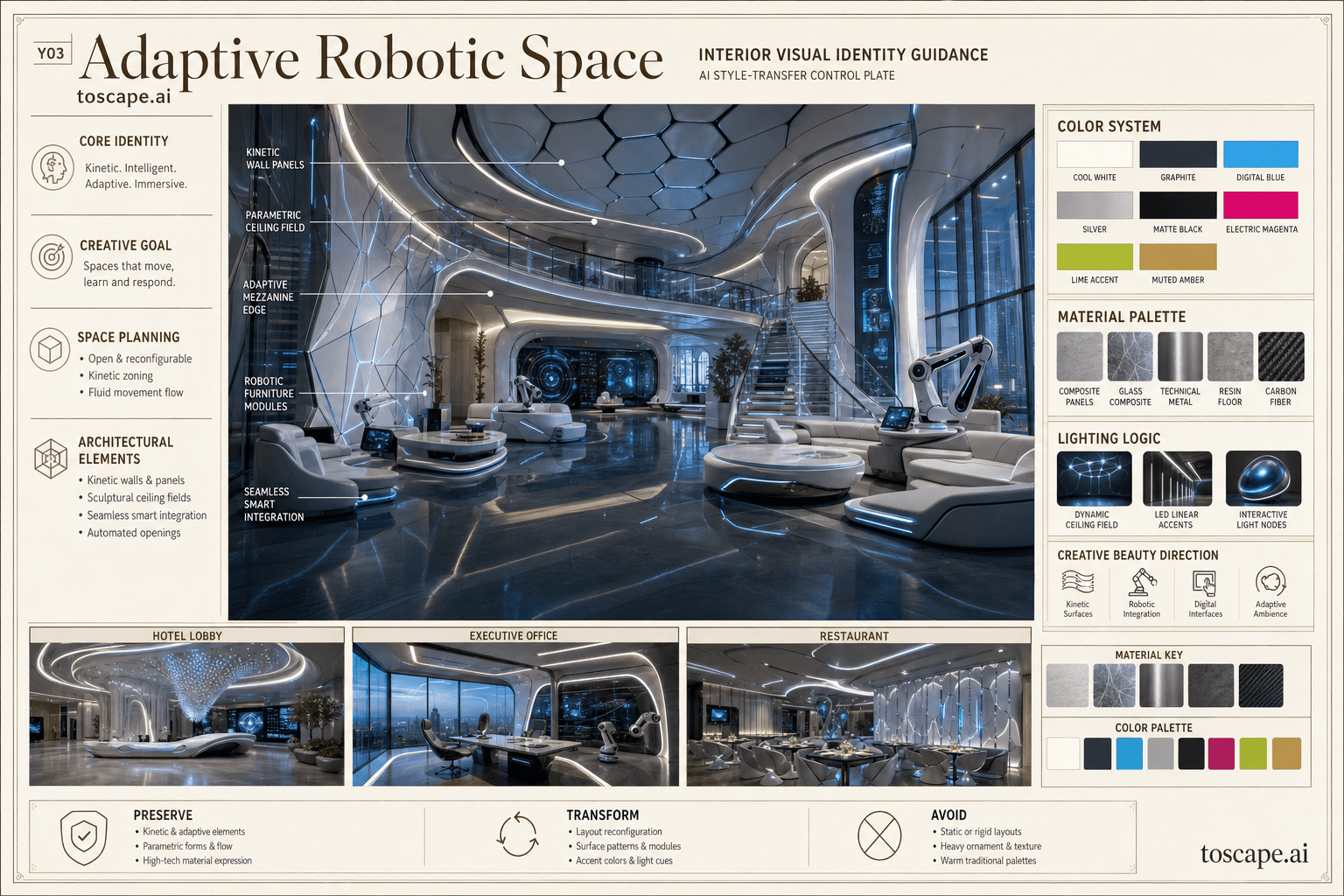
A futuristic kinetic interior style where robotic forms, adaptive surfaces, and programmable lighting create a living, transformable spatial...
Definition
Adaptive Robotic Space is an interior design style used for architectural visualization. A futuristic kinetic interior style where robotic forms, adaptive surfaces, and programmable lighting create a living, transformable spatial.
- Family
- Futuristic / Generative / Digital Organic / High-Tech Contemporary.
- Origin
- Rooted in early 21st-century advances in robotics, parametric design, and digital fabrication, Adaptive Robotic Space emerged.
- Massing
- Parametric geometries, articulating panels, faceted and curvilinear forms, modular kinetic surfaces, seamless joints, flowing cellular grids, visible or suggested robotics.
- Materials
- Smooth, tactilely cool, seamless, technically precise; micro-texture used for grip, tactile navigation, or visual signaling.
- Palette
- Crisp white or luminous silver surfaces, deep shadow graphite, black, electric blue gradients, and programmable light color.
- Lighting
- Programmable luminous fields-LEDs, OLED surfaces, integrated light grids, or responsive light panels mutually coordinated with kinetic panels.
Overview
Adaptive Robotic Space is an interior design style defined by A visually striking, high-tech interior defined by kinetic forms, transformable surfaces, seamless smart integration, and parametric organization guided by robotic and AI adaptability. To create interiors that feel intelligent, alive, ever-changing, and immersive, foregrounding the experience of automation, adaptability, and seamless digital-physical integration.
Visual DNA
Spatial Feeling
Alive, immersive, dynamic, engineered yet organic, with the sense that the space can morph, adapt, and respond to occupants or events.
Form Language
Parametric geometries, articulating panels, faceted and curvilinear forms, modular kinetic surfaces, seamless joints, flowing cellular grids, visible or suggested robotics. Flexible and scalable; proportions shift as the space...
Composition
Open, flexible, and reconfigurable-rooms shape-shift using moving partitions, robotic furniture, and articulating zones. Visually dynamic installations-kinetic walls, robotic ceiling fields, adaptive surfaces, or a robotic furniture...
Interior Elements
Kinetic panels or modular segments, parametric cladding, interactive LED surfaces, glass composite structures, or seamless technical skin with visible actuation lines. Sculptural and dynamic-can include kinetic fields, moving panels,...
Color System
Crisp white or luminous silver surfaces, deep shadow graphite, black, electric blue gradients, and programmable light color. A tight, high-tech palette-base neutrals dominate, while digital colors provide animated contrast; no...
Material Palette
Smooth, tactilely cool, seamless, technically precise; micro-texture used for grip, tactile navigation, or visual signaling. Use composites for all main spatial elements, glass for transparency and adaptability, metallics for...
Lighting Logic
Programmable luminous fields-LEDs, OLED surfaces, integrated light grids, or responsive light panels mutually coordinated with kinetic panels. Layer programmable digital gradients, sharp-edged spotlights, and glowing fields for depth...
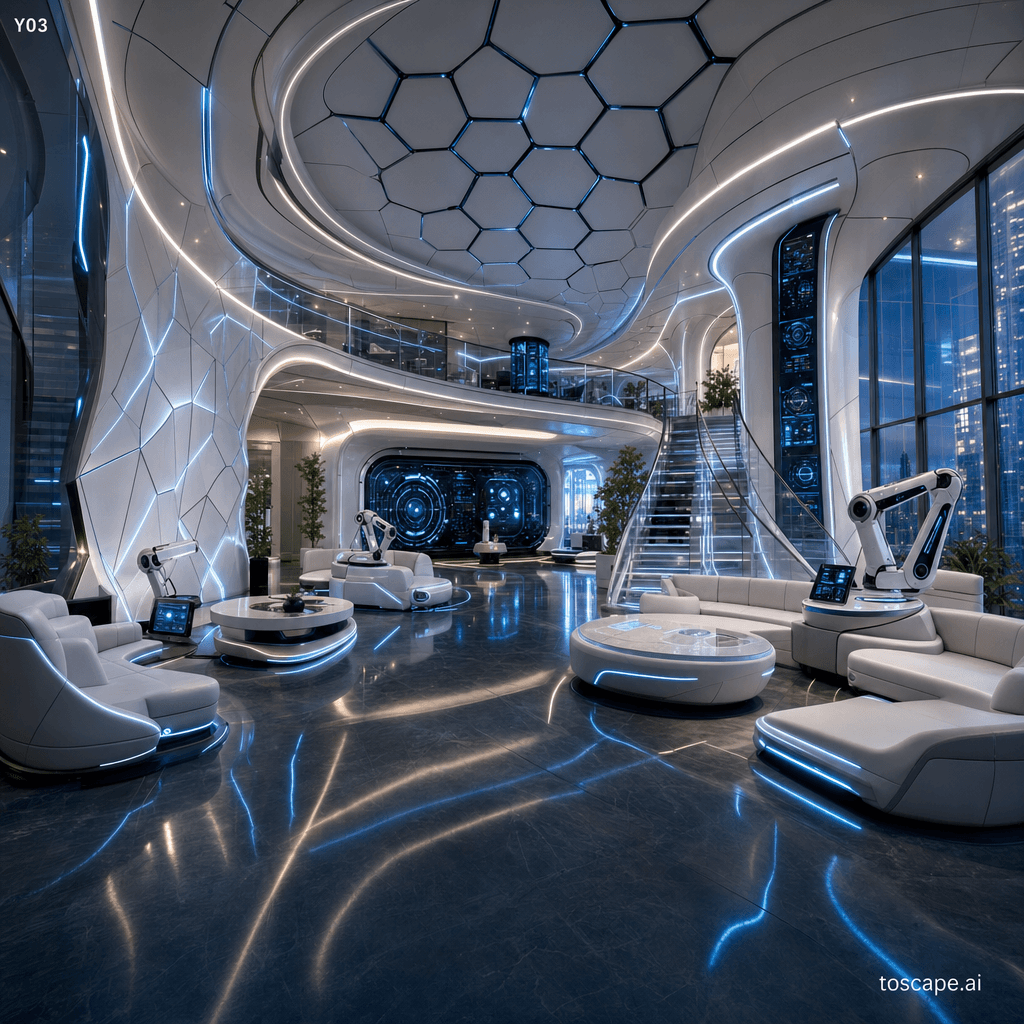
Interior reference image
Adaptive Robotic Space composition, material palette, furniture language, and lighting direction.
Context Snapshot
Rooted in early 21st-century advances in robotics, parametric design, and digital fabrication, Adaptive Robotic Space emerged... Deployed in forward-thinking workspaces, flagship tech retail, innovation labs, conference centers, hospitalities seeking a sense of arrival, and high-concept residences with a focus on automation. Leverage visible adaptive modules, kinetic partitioning, and responsive lighting with tactile performance materials, merging human-centric tech with immersive, editorial visual drama.
Composition And Planning
Open, flexible, and reconfigurable-rooms shape-shift using moving partitions, robotic furniture, and articulating zones. The eye and the body are encouraged to move fluidly; pathways reveal transformable elements, and space invites user-triggered or automated spatial change. Wide-to-medium height for immersive view; foreground kinetic features, midground modular elements, and a luminous spatial background maximize visual interest and depth.
Furniture Grammar
Geometric, modular, kinetic, or parametrically curved; sectional pieces often articulate or nest into each other-machine-edge yet ergonomic. Distributed dynamically in the space, never static; seating and tables adapt to different configurations, seldom strictly wall-backed or symmetrical. - Parametric modular seating pod - Robotic kinetic lounge bench - Floating adaptive worktable - Wall-emerging chaise - Mobile reconfigurable console
Creative Direction
An all-encompassing adaptive environment where architecture, furniture, and lighting move and transform seamlessly in concert-spatial choreography is visible, precise, and luminous, enhanced by visually immersive kinetic installations. Curated, minimalist in accessory but maximally dynamic-a clean space with one or two major robotic features as signature, beautifully lit, with crisp, photographic clarity of adaptive form. Low ambient light with powerful kinetic lighting, glowing interactive partitions, silhouettes of moving elements, and strong gradation between digital brilliance and mysterious shadow. - Flawless technical integration of...
Best Project Applications
- Innovation hubs, tech flagship stores, digital lobbies, luxury showrooms, advanced lounges, experimental homes.
Preserve, Transform, Avoid
Preserve
- Kinetic, visible adaptation and movement as central to spatial identity
- Seamless integration of high-tech materials and digital lighting
- Clean, parametric or modular geometry with flawless transitions
- Editorial clarity-every element participates in the adaptive logic
Transform
- Amplify kinetic features for dramatic effect while maintaining realism
- Push boundaries with programmable light, interactive panels, and robotic actuation
- Soften with digital gradients or frosted glass for atmospheric depth
- Express luxury through material performance, not superficial decor
Avoid
- Static, fixed surfaces with no visible adaptation
- Traditional decor, warm wood, or upholstered classics
- Overloaded color palettes, maximalist accessories, or handwork motifs
- Sci-fi movie cliches (starship controls, novelty shapes, random LEDs)
- Minor tech-only gadgets that do not contribute spatial drama
Frequently asked questions
What is Adaptive Robotic Space?
Adaptive Robotic Space is an interior design style used for architectural visualization. A futuristic kinetic interior style where robotic forms, adaptive surfaces, and programmable lighting create a living, transformable spatial.
What materials define Adaptive Robotic Space?
Smooth, tactilely cool, seamless, technically precise; micro-texture used for grip, tactile navigation, or visual signaling. Use composites for all main spatial elements, glass for transparency and adaptability.
What is the Adaptive Robotic Space color palette?
Crisp white or luminous silver surfaces, deep shadow graphite, black, electric blue gradients, and programmable light color. A tight, high-tech palette-base neutrals dominate, while digital colors provide animated contrast; no.
What is the origin of Adaptive Robotic Space?
Rooted in early 21st-century advances in robotics, parametric design, and digital fabrication, Adaptive Robotic Space emerged... Deployed in forward-thinking workspaces, flagship tech retail, innovation labs, conference centers, hospitalities seeking a sense of arrival, and high-concept residences with a focus on automation.
When should architects use Adaptive Robotic Space?
An all-encompassing adaptive environment where architecture, furniture, and lighting move and transform seamlessly in concert-spatial choreography is visible, precise, and luminous, enhanced by visually immersive kinetic installations. Curated, minimalist in accessory but maximally dynamic-a clean space with one or two major robotic features as signature, beautifully lit, with crisp, photographic clarity of adaptive form.
How do you render Adaptive Robotic Space in Toscape?
Open Toscape on Windows, load your own photo, elevation, sketch, or CAD view, then apply the Adaptive Robotic Space reference from the built-in style library. The Interior Design workflow keep your project geometry and camera while shifting materials, proportion, and detailing toward Adaptive Robotic Space.
Use this style in Toscape
Explore Adaptive Robotic Space inside Toscape using interior-focused rendering workflows and gallery references.
Open interior references