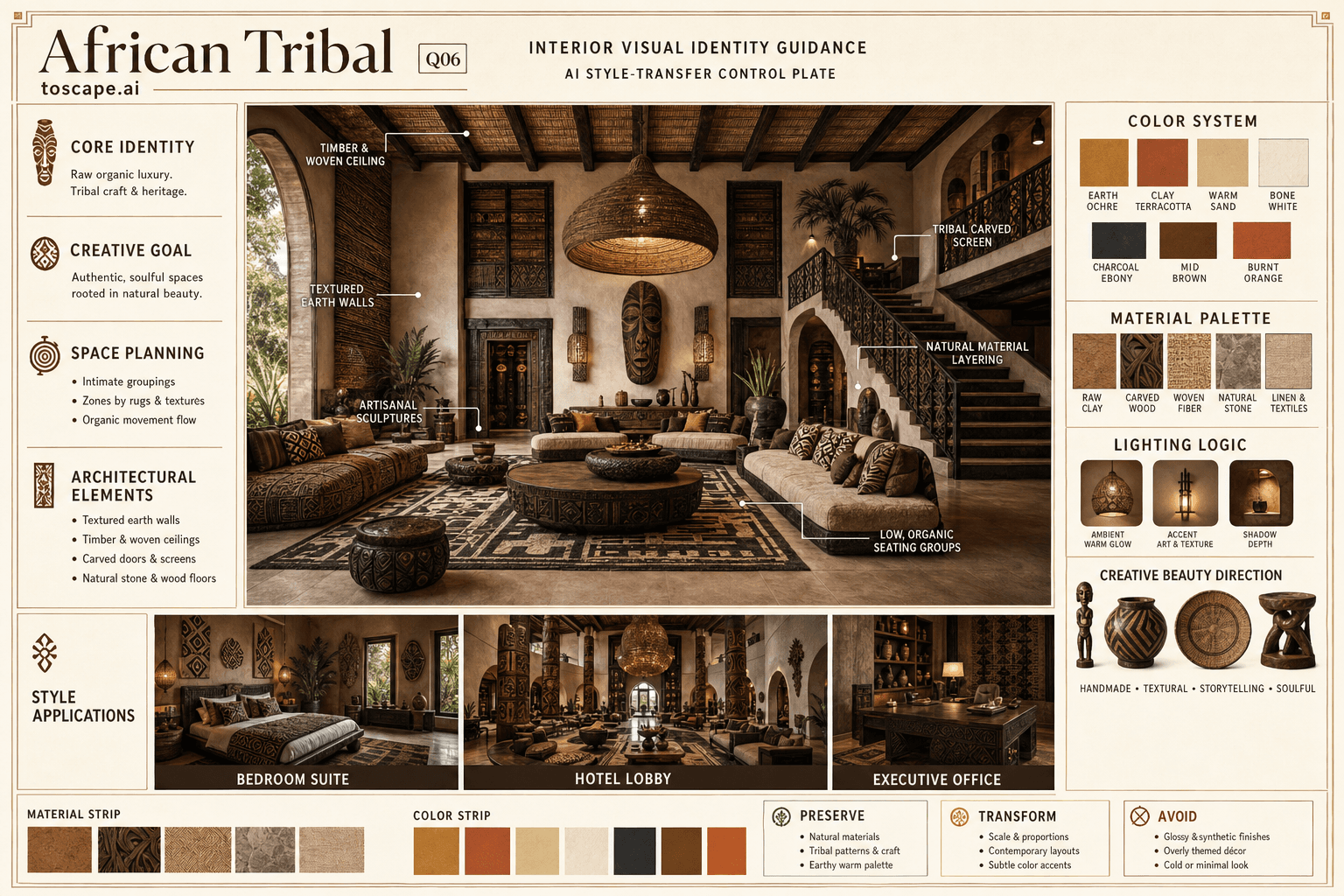
African Tribal
Q06 / Organic / Ethnic / Rustic / Naturalistic / Contemporary Cultural
A soulful, textural, grounded interior style celebrating authentic African craft, bold organic forms, and layered tribal artistry.
Definition
African Tribal is an interior design style used for architectural visualization. A soulful, textural, grounded interior style celebrating authentic African craft, bold organic forms, and layered tribal artistry.
- Family
- Organic / Ethnic / Rustic / Naturalistic / Contemporary Cultural.
- Origin
- Rooted in the diverse indigenous cultures of Sub-Saharan Africa, this style draws from centuries of tribal art, vernacular.
- Massing
- Sculptural, organic, fluid, tactile; incorporates bold silhouettes, geometric pattern, carved or hand-worked forms, primitive or totemic shapes, and low horizontal massing.
- Materials
- Richly tactile, raw, layered, matte, honest-emphasizing hand-made irregularity and the essence of natural materials.
- Palette
- Deep ochre walls, dark wood, hand-woven earth-tone textiles, beaded bone accents, and cast shadow.
- Lighting
- Warm, low-level, atmospheric; recessed uplights, concealed strip lighting, or lamp glow-never uniform overhead light.
Overview
African Tribal is an interior design style defined by A raw-yet-refined interior identity defined by bold organic forms, authentic tribal craft, earthy textures, graphic patterns, natural materials, and a grounded, soulful sense of place. To evoke a sense of authenticity, spirit, and cultural narrative by blending earthy material beauty with striking tribal forms, rooted craft, and a visual language that honors both tradition and premium contemporary living.
Visual DNA
Spatial Feeling
Earthy, grounded, enveloping, soulful, textural, warm, and rooted-never cold or synthetic.
Form Language
Sculptural, organic, fluid, tactile; incorporates bold silhouettes, geometric pattern, carved or hand-worked forms, primitive or totemic shapes, and low horizontal massing. Favors generous spaces, inviting proportions, bold central...
Composition
Intimate and grounded, often arranged in low, communal groupings; space feels lived-in but curated, with focus on conversation and display. Bold artisan pieces-such as large sculptural chairs, dramatic tribal art, hand-carved doors,...
Interior Elements
Earth-plaster, raw stucco, clay, limewash, timber cladding, woven matting, or painted with geometric tribal patterns; textured and naturalistic, never glossy or industrial. Flat, beamed, or thatched; exposed timber, woven reed, or...
Color System
Deep ochre walls, dark wood, hand-woven earth-tone textiles, beaded bone accents, and cast shadow. Base palette is grounded, earth-derived, and layered; highlight with saturated handmade pattern or select vibrancy only where authentic....
Material Palette
Richly tactile, raw, layered, matte, honest-emphasizing hand-made irregularity and the essence of natural materials. Walls and ceilings in plaster or timber; flooring in stone, concrete, or large rugs; furniture in carved or hewn wood;...
Lighting Logic
Warm, low-level, atmospheric; recessed uplights, concealed strip lighting, or lamp glow-never uniform overhead light. Use directional light to cast dramatic shadows on textured surfaces and artifacts, revealing tactile depth and...
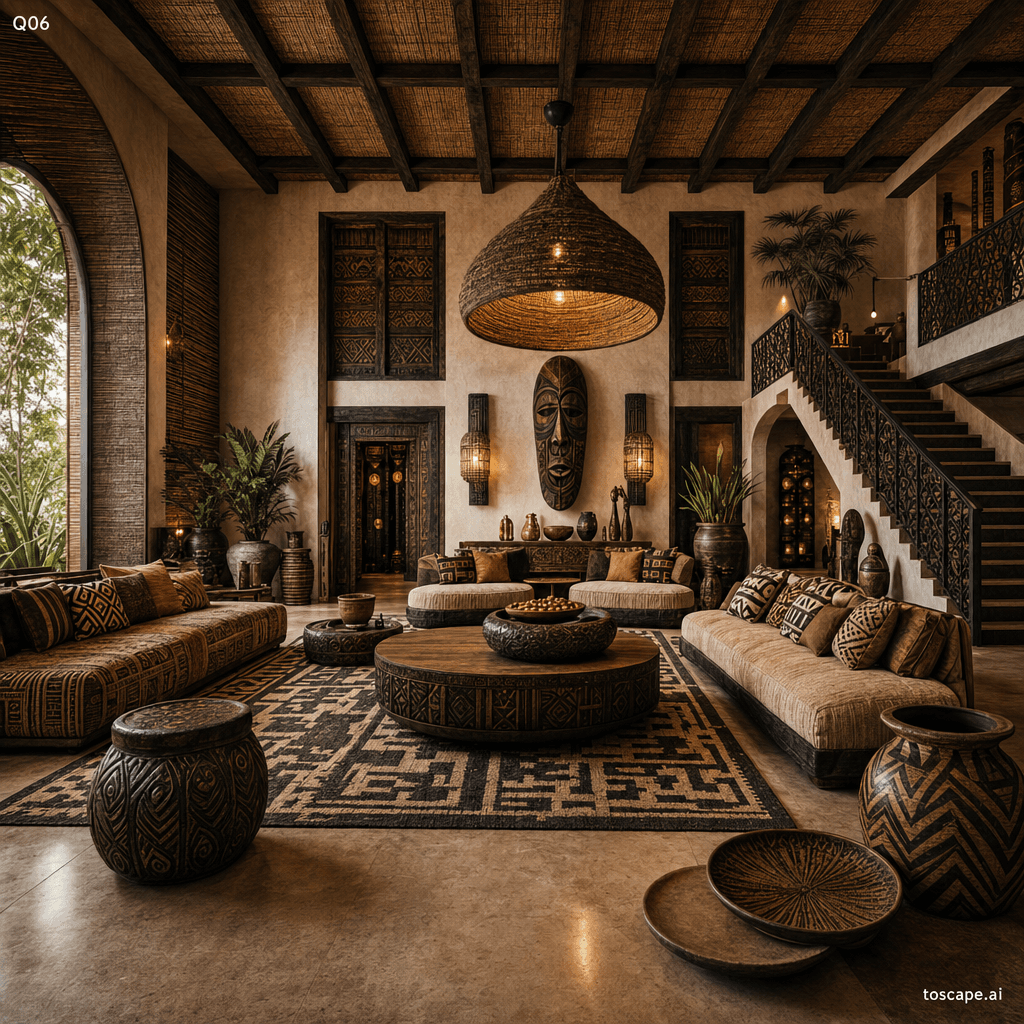
Interior reference image
African Tribal composition, material palette, furniture language, and lighting direction.
Context Snapshot
Rooted in the diverse indigenous cultures of Sub-Saharan Africa, this style draws from centuries of tribal art, vernacular... Chosen for editorial homes, boutique hotels, curated restaurants, high-end retail, art-forward lounges, and residential spaces seeking a narrative, sense of grounding, and design authenticity. Use genuine artisanal pieces, clean architectural forms, controlled palette, curated tribal art, and layered textures, editing out clutter but never sacrificing soul or tactile beauty.
Composition And Planning
Intimate and grounded, often arranged in low, communal groupings; space feels lived-in but curated, with focus on conversation and display. Free, organic pathways that flow around central gatherings or display elements; movement feels natural and inviting, not overly formal. Mid- or low-eye level; foreground with tactile objects or woven pieces; rich midground seating zone; feature focal wall or powerful display background; side-lighting enhances form and texture.
Furniture Grammar
Organic, substantial, grounded; low-slung with sculptural, primitive, or hand-crafted character. Grouped in intimate, conversational circles or clusters; anchor with large rugs, orient toward feature art, maintain generous space around key pieces. - Carved oversized tribal chair (Ashanti, Dogon, Bamileke, or similar) - Large timber coffee table with irregular edges - Woven-fiber lounge benches or stools - Mudcloth-upholstered floor cushions
Creative Direction
A sunlit lounge with layered ochre-plaster walls, a statement carved chair, woven mudcloth rug, curated art wall with masks and artifacts, generous negative space, bold shadow play, and organically grouped objects for deep visual atmosphere. Curated, textural, and controlled; select tribal hero objects, collector-grade artisanal pieces, and authentic handwork featured against rich natural backdrops and sculptural lighting. Moody, immersive, with shadow and beam of light focused on art and objects, deep earth colors, bone bead highlights, and texture revealed in every tactile surface. - Authentic, rare artisan objects - Real material...
Best Project Applications
- Editorial residences, boutique hotel lobbies, curated lounges, art-driven dining rooms, creative studios.
Preserve, Transform, Avoid
Preserve
- Preserve authentic tribal craft, texture, and pattern.
- Preserve bold organic massing and grounded material palette.
- Preserve curated, non-random artifact display and negative space.
- Preserve earthy, textural, and enveloping atmosphere.
Transform
- Allow selective curation for contemporary minimal luxury without losing warmth.
- Use premium natural materials with elevated craft-never synthetic gloss.
- Introduce innovative large-scale art or textile installations if grounded in authentic pattern.
- Enhance sculptural lighting or seating forms for drama so long as they remain tactile and raw.
Avoid
- Safari theme cliches, animal print excess.
- Plastic, resin, acrylic, or overtly synthetic surfaces.
- Mass-produced faux-tribal or globally eclectic mix with no African grounding.
- Colonial, Mediterranean, or Scandinavian details.
- Over-clutter or random artifact scatter without narrative.
Frequently asked questions
What is African Tribal?
African Tribal is an interior design style used for architectural visualization. A soulful, textural, grounded interior style celebrating authentic African craft, bold organic forms, and layered tribal artistry.
What materials define African Tribal?
Richly tactile, raw, layered, matte, honest-emphasizing hand-made irregularity and the essence of natural materials. Walls and ceilings in plaster or timber; flooring in stone, concrete, or large rugs; furniture in carved or hewn wood.
What is the African Tribal color palette?
Deep ochre walls, dark wood, hand-woven earth-tone textiles, beaded bone accents, and cast shadow. Base palette is grounded, earth-derived, and layered; highlight with saturated handmade pattern or select vibrancy only where authentic.
What is the origin of African Tribal?
Rooted in the diverse indigenous cultures of Sub-Saharan Africa, this style draws from centuries of tribal art, vernacular... Chosen for editorial homes, boutique hotels, curated restaurants, high-end retail, art-forward lounges, and residential spaces seeking a narrative, sense of grounding, and design authenticity.
When should architects use African Tribal?
A sunlit lounge with layered ochre-plaster walls, a statement carved chair, woven mudcloth rug, curated art wall with masks and artifacts, generous negative space, bold shadow play, and organically grouped objects for deep visual atmosphere. Curated, textural, and controlled; select tribal hero objects, collector-grade artisanal pieces, and authentic handwork featured against rich natural backdrops and sculptural lighting.
How do you render African Tribal in Toscape?
Open Toscape on Windows, load your own photo, elevation, sketch, or CAD view, then apply the African Tribal reference from the built-in style library. The Interior Design workflow keep your project geometry and camera while shifting materials, proportion, and detailing toward African Tribal.
Use this style in Toscape
Explore African Tribal inside Toscape using interior-focused rendering workflows and gallery references.
Open interior references