Arabian Heritage
N01 / Heritage Arabian / Regional / Traditional / Culturally Rooted / Middle Eastern / Warm...
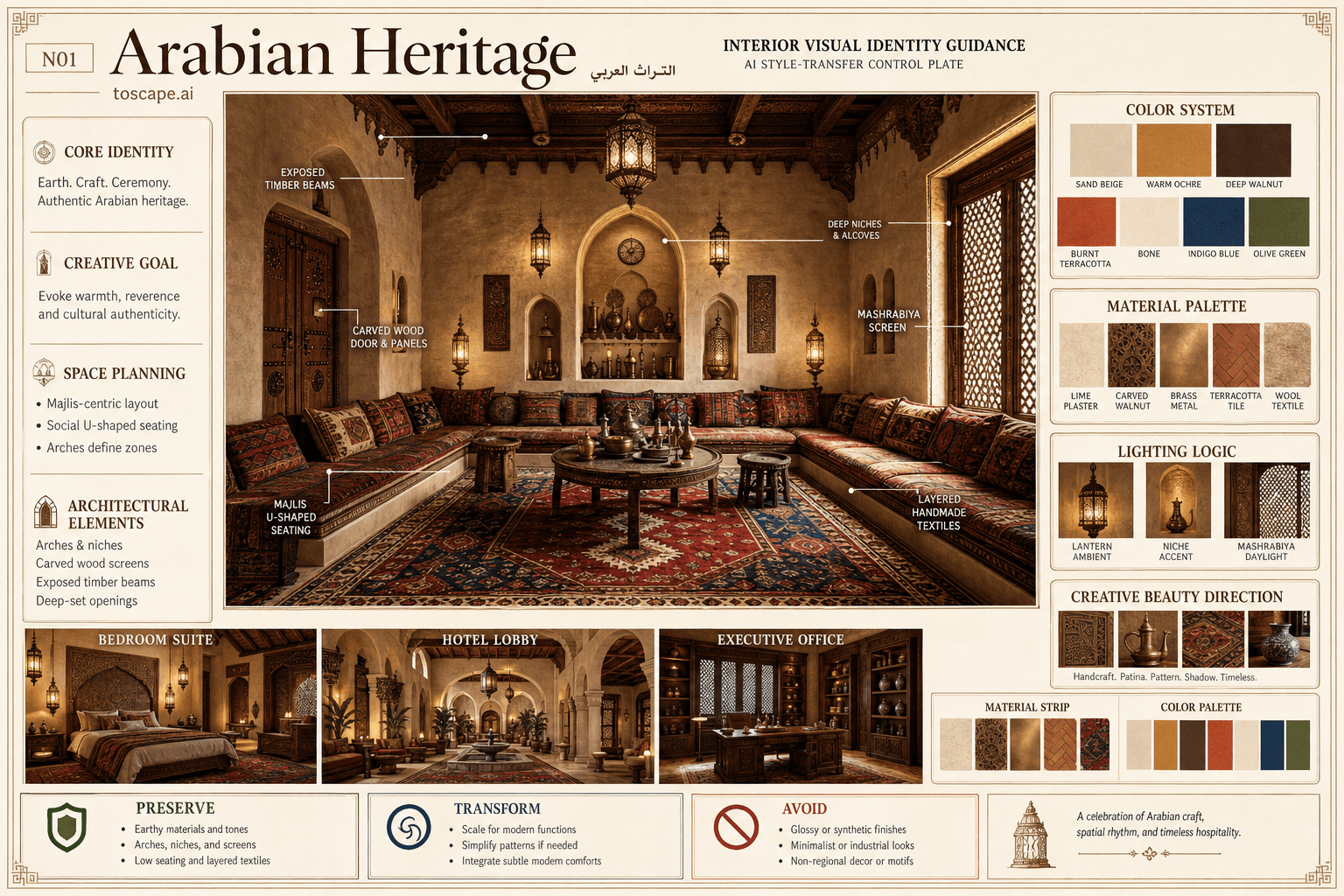
A richly authentic Arabian interior defined by earth-toned plaster, carved wood, rhythmic arches, tactile textiles, and enveloping majlis seating.
Definition
Arabian Heritage is an interior design style used for architectural visualization. A richly authentic Arabian interior defined by earth-toned plaster, carved wood, rhythmic arches, tactile textiles, and enveloping majlis seating.
- Family
- Heritage Arabian / Regional / Traditional / Culturally Rooted / Middle Eastern / Warm.
- Origin
- Rooted in pre-modern Arabian Peninsula architecture and interiors-Nabataean, oasis, desert, and coastal houses-characterized.
- Massing
- Organic geometric patterns, rounded arches, pointed niches, deep reveals, carved latticework (mashrabiya), low seating clusters, and human-scaled volumes.
- Materials
- Tactile, hand-worked, matte, natural, honest; rough plaster, open grain wood, woven or embroidered textiles.
- Palette
- Sand plaster, deep brown wood, ochre and terracotta, indigo accents, with brass details and layered wool rugs.
- Lighting
- Warm, low-level, achieved with wall sconces, lanterns, or concealed uplighting; occasional cove lighting.
Overview
Arabian Heritage is an interior design style defined by A visually immersive and emotionally grounded regional style defined by earth-toned plaster, hand-carved wood, organic geometry, tactile textiles, and timeless Arabian spatial rituals. To foster emotional connection, relaxation, and reverence by enveloping inhabitants in the timeless essence of Arabian dwellings-earth, craftsmanship, balance, shadow, and ceremony.
Visual DNA
Spatial Feeling
Grounded, serene, enveloping, warm, textural, and connected to earth and tradition.
Form Language
Organic geometric patterns, rounded arches, pointed niches, deep reveals, carved latticework (mashrabiya), low seating clusters, and human-scaled volumes. Medium to substantial wall thickness, generous but intimate room size, lowered or...
Composition
Organized around communal seating zones, central rugs, and openings that frame architectural rhythm, often with a majlis-centric composition. Carved wood doors, feature archway, deep niche with decor, mashrabiya window, or a central...
Interior Elements
Matte plaster in sand, ochre, or clay tones; occasional hand-painted motifs or carved wood panels; deep-set arches, niches, and wall alcoves. Exposed beams, palm trunk supports, carved wood ceilings, or quiet curved vaults with...
Color System
Sand plaster, deep brown wood, ochre and terracotta, indigo accents, with brass details and layered wool rugs. Keep the palette tonally layered and harmonious, never high-contrast primary; use earth-derived pigments and natural dyes for...
Material Palette
Tactile, hand-worked, matte, natural, honest; rough plaster, open grain wood, woven or embroidered textiles. Earthen/plaster for architectural shell; carved wood for points of entry, ceiling, and screen; textiles for comfort;...
Lighting Logic
Warm, low-level, achieved with wall sconces, lanterns, or concealed uplighting; occasional cove lighting. Use warm, grazing side-light, deep shadow pockets, and glowing lanterns to generate an inviting, moody atmosphere. Lighting must...
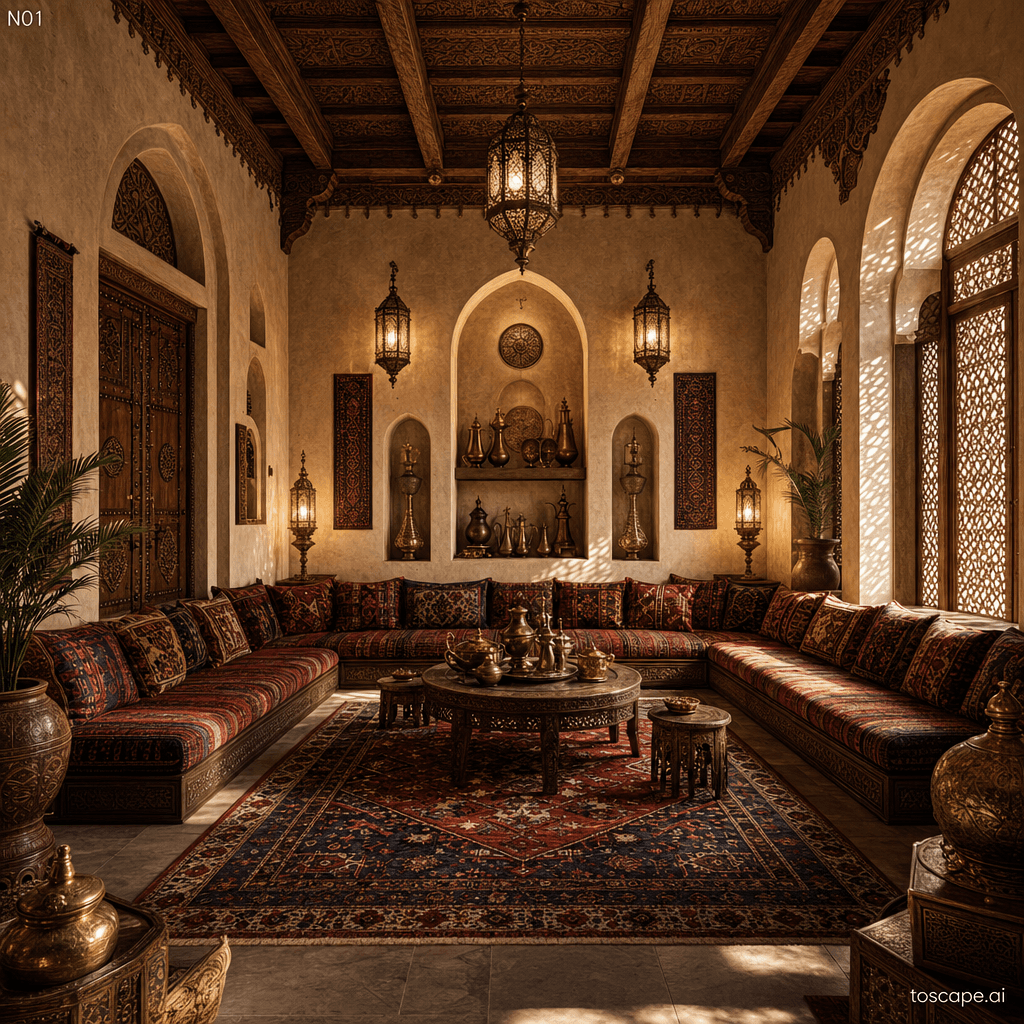
Interior reference image
Arabian Heritage composition, material palette, furniture language, and lighting direction.
Context Snapshot
Rooted in pre-modern Arabian Peninsula architecture and interiors-Nabataean, oasis, desert, and coastal houses-characterized... Used in luxury homes, majlis rooms, cultural centers, museums, boutique hotels, and high-end restaurants seeking deep regional narrative and sense of place. Elevate textures, craftwork, and material honesty while refining spatial openness; layer soft natural light and restraint for contemporary comfort without erasing authentic detailing.
Composition And Planning
Organized around communal seating zones, central rugs, and openings that frame architectural rhythm, often with a majlis-centric composition. Invites slow, ceremonial movement-paths follow architectural repetition, with pauses at focal points like alcoves, feature ceilings, or central seating. Opt for frontal or softly diagonal camera; include foreground rug/seat, middle ground table, background feature wall or archway, with strong rhythm and framing.
Furniture Grammar
Low-profile, linear or curved forms, solid, substantial, human-scaled; softened with rounded edges and artisan detail. Place seating along walls or in a U/L-shape; anchor with rug and central table; avoid floating arrangements-anchor is key. - Low majlis bench with embroidered cushions - Carved wood chest - Indigo wool kilim rug - Solid wood coffee table
Creative Direction
An inviting, artful majlis enveloped in sandy plaster, shadowy carved wood arches, jewel-toned kilims, layered artisan cushions, brass lanterns, and deep textural depth-both visually rich and spiritually calming. Carefully composed with strong focal arches, hero textile layering, pottery on deep-set niches, curated artifact vignettes, and dramatic filtered light for maximum story and authenticity. Late afternoon or fire-lit atmosphere, pronounced shadow casting arched profiles, glowing copper and brass, rich indigo and terra cotta textiles, and a sense of desert tranquility. - Real artisan craftwork (doors, ceilings, textiles) - Layered,...
Best Project Applications
- Majlis, heritage villas, luxury homes, boutique hotels, cultural lounges, ceremonial rooms.
Preserve, Transform, Avoid
Preserve
- Earth-colored plaster and walls with depth
- Hand-carved wood elements (arches, doors, ceilings)
- Authentic majlis seating and artisan textiles
- Architectural shadow, rhythm, and human-scale intimacy
Transform
- Modernize spatial openness while protecting regional language
- Use subtle integrated lighting but only if it supports shadow and warmth
- Curate richer, more textural artisan rugs and cushions
- Scale up traditional elements (arches, screens, lanterns) for drama in larger spaces
Avoid
- Cold, white, or high-gloss surfaces
- Minimalist, Scandinavian, or industrial furniture
- Moroccan, Turkish, or pan-"Arabesque" surface patterns
- LED strip lighting, grid spotlights, or commercial signage
- Overcrowding with random "ethnic" decor or synthetic props
Frequently asked questions
What is Arabian Heritage?
Arabian Heritage is an interior design style used for architectural visualization. A richly authentic Arabian interior defined by earth-toned plaster, carved wood, rhythmic arches, tactile textiles, and enveloping majlis seating.
What materials define Arabian Heritage?
Tactile, hand-worked, matte, natural, honest; rough plaster, open grain wood, woven or embroidered textiles. Earthen/plaster for architectural shell; carved wood for points of entry, ceiling, and screen; textiles for comfort.
What is the Arabian Heritage color palette?
Sand plaster, deep brown wood, ochre and terracotta, indigo accents, with brass details and layered wool rugs. Keep the palette tonally layered and harmonious, never high-contrast primary.
What is the origin of Arabian Heritage?
Rooted in pre-modern Arabian Peninsula architecture and interiors-Nabataean, oasis, desert, and coastal houses-characterized... Used in luxury homes, majlis rooms, cultural centers, museums, boutique hotels, and high-end restaurants seeking deep regional narrative and sense of place. Elevate textures, craftwork, and material honesty while refining spatial openness; layer soft natural light and restraint for contemporary comfort without erasing authentic detailing.
When should architects use Arabian Heritage?
An inviting, artful majlis enveloped in sandy plaster, shadowy carved wood arches, jewel-toned kilims, layered artisan cushions, brass lanterns, and deep textural depth-both visually rich and spiritually calming. Carefully composed with strong focal arches, hero textile layering, pottery on deep-set niches, curated artifact vignettes, and dramatic filtered light for maximum story and authenticity.
How do you render Arabian Heritage in Toscape?
Open Toscape on Windows, load your own photo, elevation, sketch, or CAD view, then apply the Arabian Heritage reference from the built-in style library. The Interior Design workflow keep your project geometry and camera while shifting materials, proportion, and detailing toward Arabian Heritage.
Use this style in Toscape
Explore Arabian Heritage inside Toscape using interior-focused rendering workflows and gallery references.
Open interior references