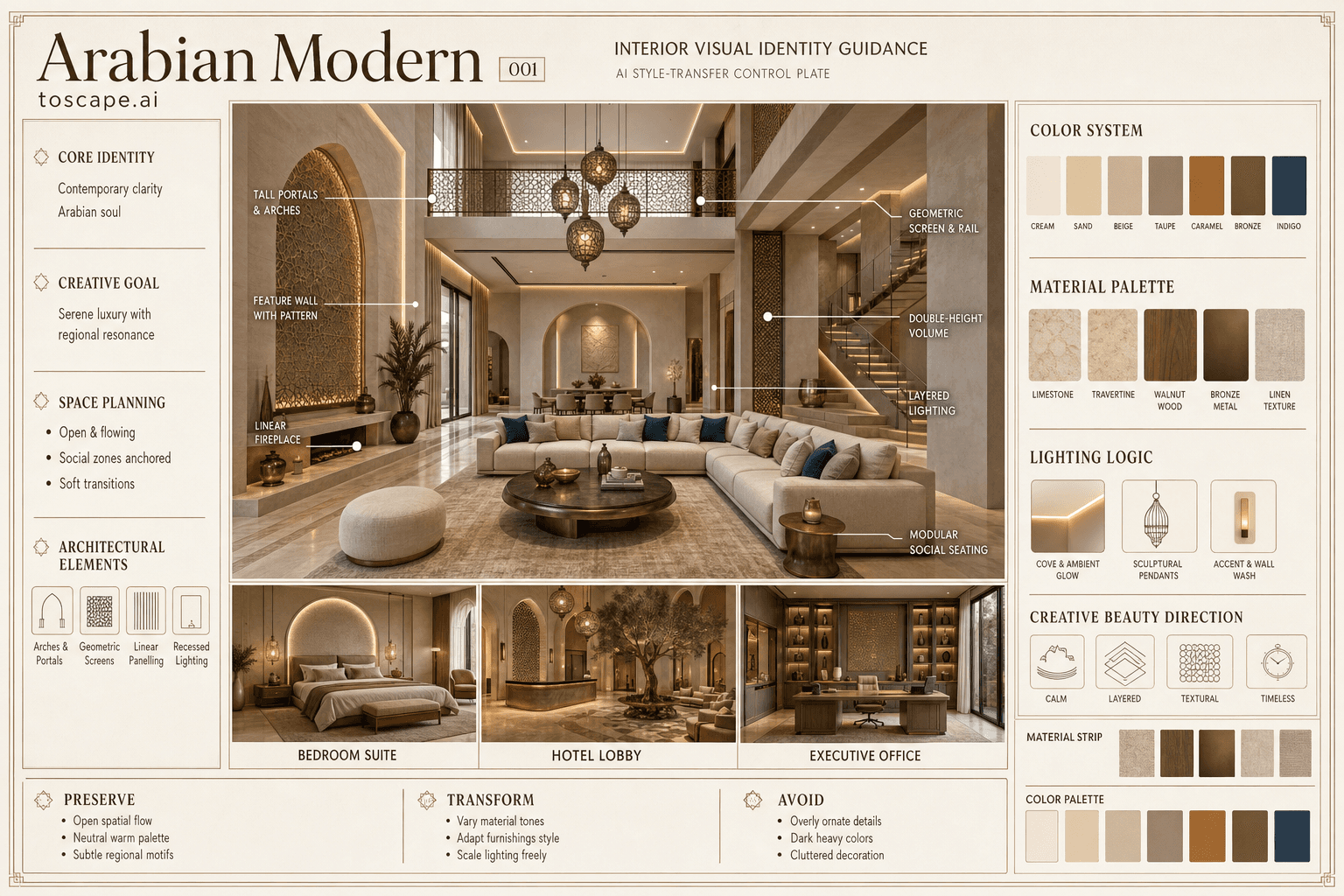
Arabian Modern
O01 / Contemporary / Premium Regional Modern / Modern Middle Eastern / Hospitality
A luxurious, tranquil modern interior with genuine Arabian regional cues, natural materials, spacious open zones, and curated contemporary calm.
Definition
Arabian Modern is an interior design style used for architectural visualization. A luxurious, tranquil modern interior with genuine Arabian regional cues, natural materials, spacious open zones, and curated contemporary calm.
- Family
- Contemporary / Premium Regional Modern / Modern Middle Eastern / Hospitality.
- Origin
- Emerged from Gulf and wider Middle East luxury design scenes seeking to modernize interior identity while maintaining.
- Massing
- Clean lines, softened rectangles, gentle curves, contemporary arches and portals, geometric cutouts, and floating planes; repetition of simple motifs or mashrabiya-inspired screens.
- Materials
- Tactile, layered, grounded-soft microplaster, honed stone, warm woods, felted wools, textured leather, and woven textiles; combine smooth surfaces with fine organic tactility.
- Palette
- Cream, sand, natural beige stone, warm walnut, rich bronze, cloudy white, tactile camel leather, and smoky metallic brushwork.
- Lighting
- Soft and indirect-concealed cove lighting, wall-washing, recessed fixtures, floor and table lamps with fabric or alabaster diffusers.
Overview
Arabian Modern is an interior design style defined by A visually calm, elegant, and contemporary interior style uniting clean modern lines, spatial openness, and luxurious materiality with subtle regional Arabian motifs and atmosphere. To create visually purposeful, comfortable interiors that feel luxurious and calm, offering gentle echoes of Arabian culture-through geometry, texture, form, or atmosphere-while maintaining modern design discipline.
Visual DNA
Spatial Feeling
Tranquil, open, airy, comfortable, softly luminous, and unmistakably premium.
Form Language
Clean lines, softened rectangles, gentle curves, contemporary arches and portals, geometric cutouts, and floating planes; repetition of simple motifs or mashrabiya-inspired screens. Tall or generous ceilings; horizontal openness; grand...
Composition
Open-plan or flowing rooms, with generous gathering zones and comfortable circulation; seating zones anchor the function, framed by rugs and lighting. Large sculptural sofa arrangement, feature wall with subtle pattern, elegant arch or...
Interior Elements
Smooth, creamy plaster or microcement; natural stone cladding; feature walls with linear or geometric panelling; selective carved or perforated screens; limited, deeply shadowed reveals. Ceilings are calm and spatially generous; may use...
Color System
Cream, sand, natural beige stone, warm walnut, rich bronze, cloudy white, tactile camel leather, and smoky metallic brushwork. Gentle tonal layering; harmonize stone, soft neutrals, and warm woods with only rare deep accents for...
Material Palette
Tactile, layered, grounded-soft microplaster, honed stone, warm woods, felted wools, textured leather, and woven textiles; combine smooth surfaces with fine organic tactility. Stone and plaster for architectural mass; woods for feature...
Lighting Logic
Soft and indirect-concealed cove lighting, wall-washing, recessed fixtures, floor and table lamps with fabric or alabaster diffusers. Aim for a golden, tranquil glow with soft contrasts, deep shadows beneath furniture, and pools of...
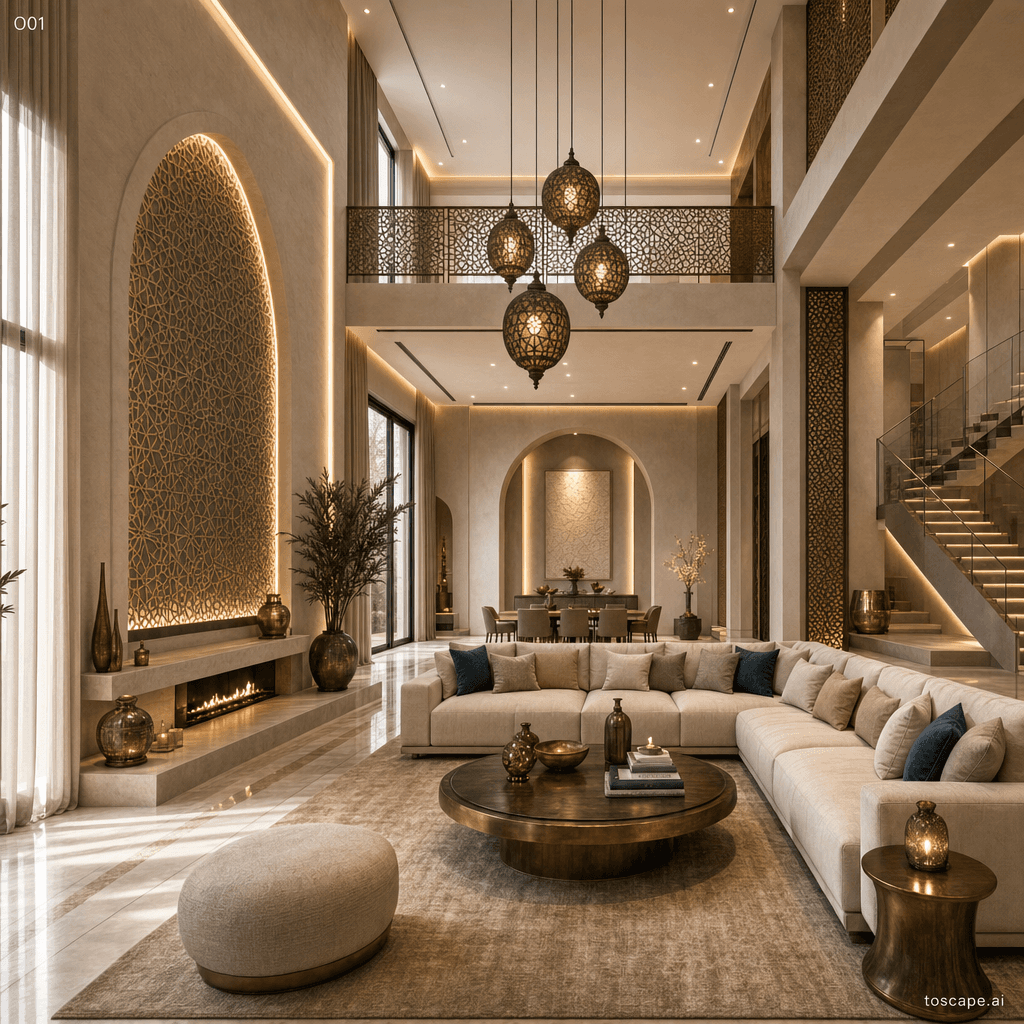
Interior reference image
Arabian Modern composition, material palette, furniture language, and lighting direction.
Context Snapshot
Emerged from Gulf and wider Middle East luxury design scenes seeking to modernize interior identity while maintaining... Popular in premium villas, urban townhouses, penthouses, destination hotels, private majlis, luxury retail, and F&B concepts seeking a distinctly regional yet modern identity. Retain essential spatial generosity, warmth, and motifs of Arabian architecture, but refine with minimalist geometry, open flows, curated pattern, and tactile, luxurious materials.
Composition And Planning
Open-plan or flowing rooms, with generous gathering zones and comfortable circulation; seating zones anchor the function, framed by rugs and lighting. Encourage fluid, meandering movement; sightlines are long and layered but softened by architectural details or drapery. Eye-level or slightly raised camera; layered composition with foreground (textiles, tables), strong midground seating, and a compelling architectural or feature wall in the background; soft symmetry or gentle leading lines.
Furniture Grammar
Low, inviting, and sculptural-emphasis on soft rectangles, gentle curves, broad seating, and floating forms. Anchor seating as central, floating islands for conversation; avoid pushing all furniture to the wall; let arrangement invite gathering and flow. - Modular contemporary majlis sofa - Slab stone or chunky wood coffee table - Sculpted wood accent chair
Creative Direction
A brilliantly tranquil, sunlit room with creamy stone surfaces, sculpted walnut, a geometric screen, modular low seating, artisan rug, and subtle bronze details-anchored by filtered natural light and calm luxury. Visually curated, with intentional empty space, one stunning material focus, dramatic shadow play, and a limited palette; every line and object precisely placed. Golden hour sunlight pouring through screens, raking over stone and wood, casting intricate shadows and highlighting sculptural seating-deep pools of inviting warmth and subtle visual drama. - Real stone surfaces and premium joinery - Artisan-crafted bronze or woodwork -...
Best Project Applications
- Upscale villas, majlis living rooms, penthouses, premium lounges, luxury hospitality.
Preserve, Transform, Avoid
Preserve
- The calm, open, and welcoming atmosphere
- Premium natural materials and tactile layering
- Subtle regional geometry or motif integrated into architecture, not stuck-on
- Social spatial planning with proud gathering zones
Transform
- Reinterpret arches and screens in minimalist, contemporary forms
- Update majlis tradition with modular, sculptural seating
- Use crafted metal and stonework in new compositions
- Adapt historical pattern into purely architectural or textural expression
Avoid
- Crowded, ornate traditional decor
- High-gloss, cold, or synthetic finishes
- Generic international minimalism without local cues
- Theme-park treatment or superficial Arabian decor
- Overly dark, cramped, or cluttered layouts
Frequently asked questions
What is Arabian Modern?
Arabian Modern is an interior design style used for architectural visualization. A luxurious, tranquil modern interior with genuine Arabian regional cues, natural materials, spacious open zones, and curated contemporary calm.
What materials define Arabian Modern?
Tactile, layered, grounded-soft microplaster, honed stone, warm woods, felted wools, textured leather, and woven textiles; combine smooth surfaces with fine organic tactility. Stone and plaster for architectural mass; woods for feature.
What is the Arabian Modern color palette?
Cream, sand, natural beige stone, warm walnut, rich bronze, cloudy white, tactile camel leather, and smoky metallic brushwork. Gentle tonal layering; harmonize stone, soft neutrals.
What is the origin of Arabian Modern?
Emerged from Gulf and wider Middle East luxury design scenes seeking to modernize interior identity while maintaining... Popular in premium villas, urban townhouses, penthouses, destination hotels, private majlis, luxury retail, and F&B concepts seeking a distinctly regional yet modern identity.
When should architects use Arabian Modern?
A brilliantly tranquil, sunlit room with creamy stone surfaces, sculpted walnut, a geometric screen, modular low seating, artisan rug, and subtle bronze details-anchored by filtered natural light and calm luxury. Visually curated, with intentional empty space, one stunning material focus, dramatic shadow play, and a limited palette; every line and object precisely placed.
How do you render Arabian Modern in Toscape?
Open Toscape on Windows, load your own photo, elevation, sketch, or CAD view, then apply the Arabian Modern reference from the built-in style library. The Interior Design workflow keep your project geometry and camera while shifting materials, proportion, and detailing toward Arabian Modern.
Use this style in Toscape
Explore Arabian Modern inside Toscape using interior-focused rendering workflows and gallery references.
Open interior references