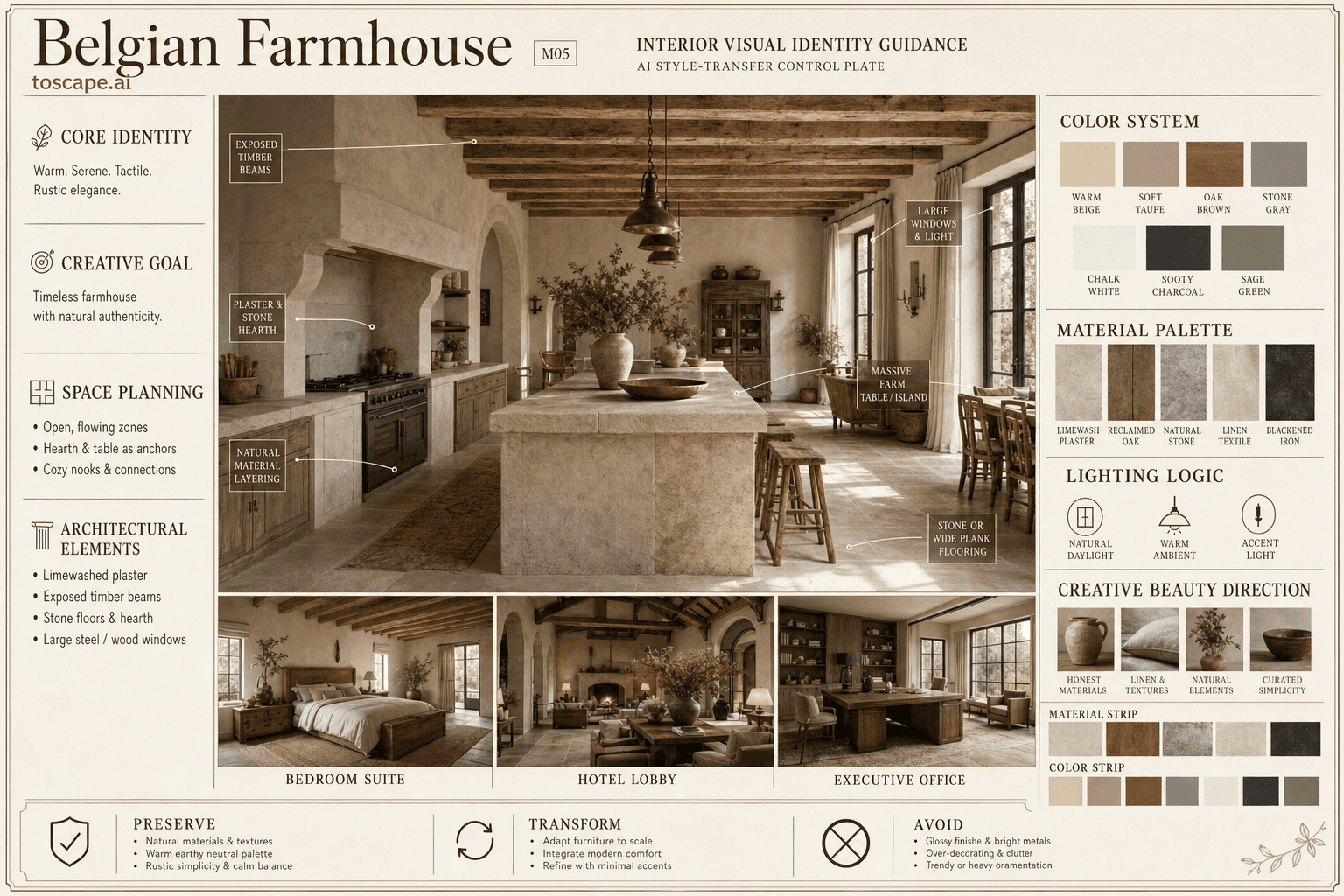
Belgian Farmhouse
M05 / Rustic Minimal / Warm Organic / Soft Contemporary / Modern Farmhouse
A calm, tactile farmhouse style defined by earthy limewashed walls, natural wood, honest forms, and subtle rustic elegance.
Definition
Belgian Farmhouse is an interior design style used for architectural visualization. A calm, tactile farmhouse style defined by earthy limewashed walls, natural wood, honest forms, and subtle rustic elegance.
- Family
- Rustic Minimal / Warm Organic / Soft Contemporary / Modern Farmhouse.
- Origin
- Rooted in rural Belgian country houses, this style gained global influence from Belgian interior designers who refined rustic.
- Massing
- Simple, rectilinear, and slightly rustic forms with soft edges; massive farmhouse tables, relaxed blocky sofas, open shelves, arched or raw-edged hearths, and robust structural timber.
- Materials
- Earthy, matte, natural, weathered, soft, hand-finished, and organic; visual interest comes from grain, weave, and patina.
- Palette
- Limewash beige, soft chalk white, natural oak, honed limestone, and blackened iron with dusty linen and occasional olive green.
- Lighting
- Understated and warm; use concealed uplighting, soft wall washes, and dimmable spots to complement natural light.
Overview
Belgian Farmhouse is an interior design style defined by A warm, serene, and tactile farmhouse style defined by calm earthy colors, natural textures, simple honest forms, and a quiet sense of rustic elegance. To create a peaceful, textural retreat that feels grounded, timeless, and naturally authentic-a soothing haven that balances rustic character with understated luxury.
Visual DNA
Spatial Feeling
Serene, airy, grounded, warm, and enveloping; a sense of peace and rural comfort.
Form Language
Simple, rectilinear, and slightly rustic forms with soft edges; massive farmhouse tables, relaxed blocky sofas, open shelves, arched or raw-edged hearths, and robust structural timber. Spacious, uncluttered rooms with generous scale;...
Composition
Open, but never cavernous; flowing and relaxed, with logical zones organized for comfort and connection. Hearth/fireplace, massive farm table, a reclaimed wood wall, sculpted limestone island, or large window framing rural views. Best...
Interior Elements
Limewashed plaster, hand-troweled stucco, pale or ecru paint, exposed stone or brick in moderation; never over-polished. Beamed or simple flat ceilings with rough natural wood, painted timber, or quiet textured plaster; no excessive...
Color System
Limewash beige, soft chalk white, natural oak, honed limestone, and blackened iron with dusty linen and occasional olive green. All colors are sun-baked, muted, and harmonious; no harsh contrast or synthetic tones-overall effect is...
Material Palette
Earthy, matte, natural, weathered, soft, hand-finished, and organic; visual interest comes from grain, weave, and patina. Wood grounds the space (floor, beams, furniture); walls are tactile limewash or stone; surfaces layer stone,...
Lighting Logic
Understated and warm; use concealed uplighting, soft wall washes, and dimmable spots to complement natural light. Capture golden afternoon sun, warm candle-like glow, and soft pools of light; emphasize textured shadows and gently...
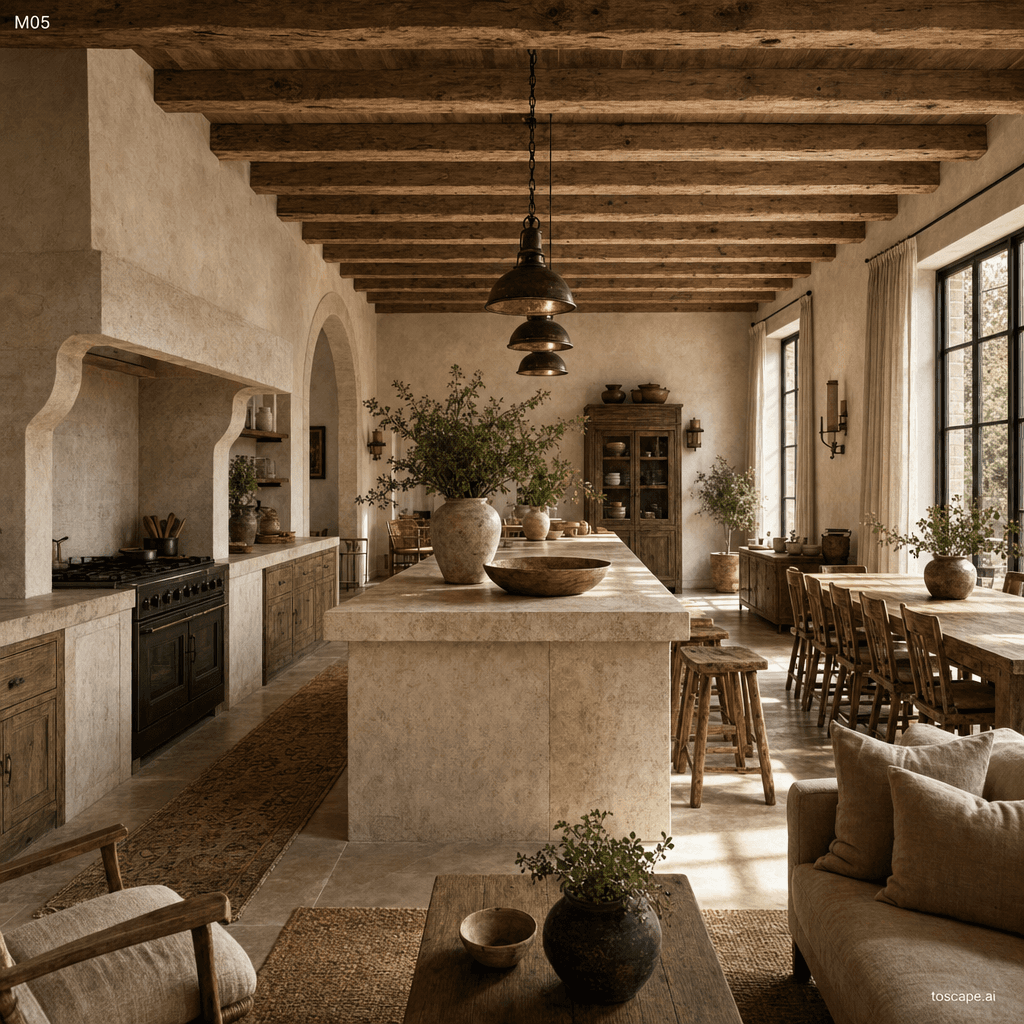
Interior reference image
Belgian Farmhouse composition, material palette, furniture language, and lighting direction.
Context Snapshot
Rooted in rural Belgian country houses, this style gained global influence from Belgian interior designers who refined rustic... Popular in boutique villas, high-end country homes, private wellness spaces, curated retail, and editorial hospitality; brings a premium, tactile, lived-in quality to contemporary settings. Pair the signature calmness and rustic textures with modern spatial openness, oversized windows, and refined, uncluttered furnishings for a luxurious yet grounded interior.
Composition And Planning
Open, but never cavernous; flowing and relaxed, with logical zones organized for comfort and connection. Movement is meandering and organic, encouraging slow exploration, comfort, and rest. Best composed at eye-level or slightly lower, highlighting texture and layering; include foreground furniture edge, midground object grouping, and strong background focal depth; soft, indirect daylight is preferred.
Furniture Grammar
Chunky, honest, squared yet gently softened; forms are substantial without heaviness, embracing a lived-in, robust presence. Furniture floats or sits slightly away from walls; seating grouped informally for comfort, centered around a hearth or window, always allowing flow and negative space. - Massive oak farmhouse dining table - Low, deep linen sofa - Plastered fireplace or raw stone hearth - Blackened iron light fixture - Open rustic shelving
Creative Direction
A sunlit, tactile salon with limewashed walls, aged oak beams, monumental farmhouse table, linen-upholstered armchairs, curated artisan pottery, robust fireplace, and soft natural rugs-understated, calm, and deeply inviting. Effortlessly curated, every object intentional, negative space celebrated, textures crisp in the light, a single sprig in a pottery vase, and no visual clutter; editorial photography highlights wood grain and linen folds. Golden-hour sunlight streaming through aged wood-framed windows, casting soft textured shadows over a rustic limestone floor, while the hearth smolders and linen upholstery glows in an earthy haze. -...
Best Project Applications
- Boutique country residences, villa living rooms, curated kitchens, rustic hotel suites, luxury retreats.
Preserve, Transform, Avoid
Preserve
- Calm, sun-baked, and tactile wall finishes (lime, plaster)
- Warm, authentic wood and stone as main materials
- Honest, chunky furniture forms in neutral linen or textile
- Subdued, harmonious, natural color palette
Transform
- Use contemporary scale and openness to enhance rustic atmosphere
- Refine joinery and fixtures for subtle luxury while staying artisanal
- Edit furniture mixes for clarity and negative space
- Soften edges and transitions; celebrate imperfection but keep it curated
Avoid
- Synthetic or high-gloss materials
- Overly busy, cluttered, or cute decor
- Industrial motifs or thin metal frameworks
- Crisp, cool Scandinavian whites or trend colors
- Overuse of faux-vintage or superficial rustic finishes
Frequently asked questions
What is Belgian Farmhouse?
Belgian Farmhouse is an interior design style used for architectural visualization. A calm, tactile farmhouse style defined by earthy limewashed walls, natural wood, honest forms, and subtle rustic elegance.
What materials define Belgian Farmhouse?
Earthy, matte, natural, weathered, soft, hand-finished, and organic; visual interest comes from grain, weave, and patina. Wood grounds the space (floor, beams, furniture); walls are tactile limewash or stone; surfaces layer stone.
What is the Belgian Farmhouse color palette?
Limewash beige, soft chalk white, natural oak, honed limestone, and blackened iron with dusty linen and occasional olive green. All colors are sun-baked, muted, and harmonious; no harsh contrast or synthetic tones-overall effect is.
What is the origin of Belgian Farmhouse?
Rooted in rural Belgian country houses, this style gained global influence from Belgian interior designers who refined rustic... Popular in boutique villas, high-end country homes, private wellness spaces, curated retail, and editorial hospitality; brings a premium, tactile, lived-in quality to contemporary settings.
When should architects use Belgian Farmhouse?
A sunlit, tactile salon with limewashed walls, aged oak beams, monumental farmhouse table, linen-upholstered armchairs, curated artisan pottery, robust fireplace, and soft natural rugs-understated, calm, and deeply inviting. Effortlessly curated, every object intentional, negative space celebrated, textures crisp in the light, a single sprig in a pottery vase, and no visual clutter; editorial photography highlights wood grain and linen folds.
How do you render Belgian Farmhouse in Toscape?
Open Toscape on Windows, load your own photo, elevation, sketch, or CAD view, then apply the Belgian Farmhouse reference from the built-in style library. The Interior Design workflow keep your project geometry and camera while shifting materials, proportion, and detailing toward Belgian Farmhouse.
Use this style in Toscape
Explore Belgian Farmhouse inside Toscape using interior-focused rendering workflows and gallery references.
Open interior references