Bio-Composite Interior
W04 / Contemporary Organic / Futuristic Naturalism / Eco-Minimal
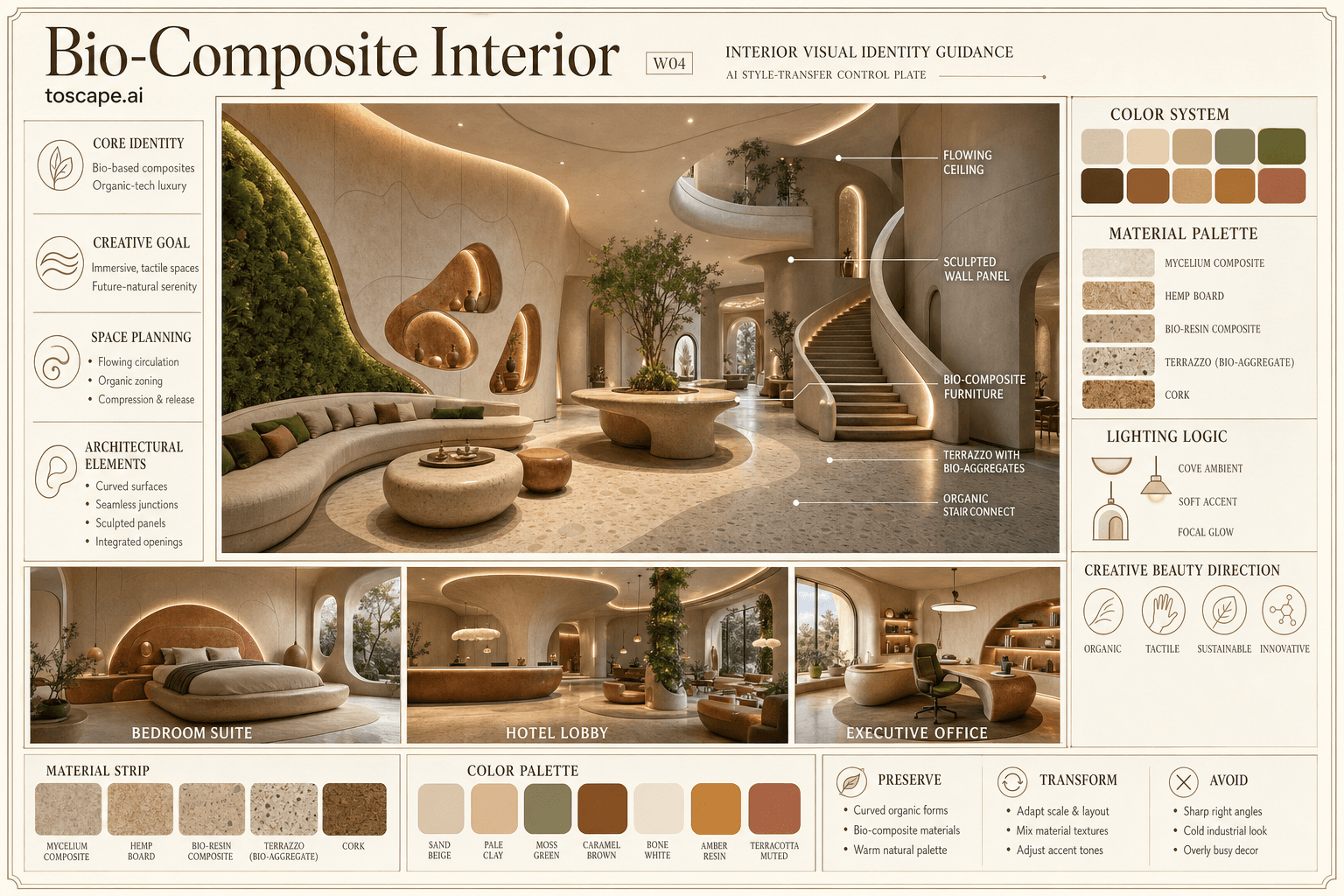
A softly organic, material-innovative interior style using sculpted bio-composite forms, seamless natural surfaces, and immersive, calming spatial...
Definition
Bio-Composite Interior is an interior design style used for architectural visualization. A softly organic, material-innovative interior style using sculpted bio-composite forms, seamless natural surfaces, and immersive, calming spatial.
- Family
- Contemporary Organic / Futuristic Naturalism / Eco-Minimal.
- Origin
- Emerging from the convergence of sustainable material science and contemporary design, this style responds to ecological.
- Massing
- Fluid organic geometry, gently curved walls and surfaces, seamless or soft-edged junctions, sculpted panels, wavelike forms, and subtly biomorphic silhouettes.
- Materials
- Tactile, organic, with a mix of smooth undulating shells and subtly fibrous, earthy panels; matte and low-sheen finishes preferred, occasional soft translucence for light elements.
- Palette
- Sand, pale clay, fiber taupe, moss, caramel, and soft amber with matte biometal accents for depth and warmth.
- Lighting
- Cove-lit or concealed LED strips built into organic recesses; luminous resin and bioluminescent effects for subtle glow.
Overview
Bio-Composite Interior is an interior design style defined by A visually striking contemporary interior language defined by innovative, tactile forms, bio-composite materials, seamless organic surfaces, and a living-technology atmosphere that prioritizes sustainability and sensory experience. To immerse occupants in a sensual, biomorphic environment that demonstrates environmental responsibility and material innovation while delivering comfort, calm, and visual inspiration.
Visual DNA
Spatial Feeling
Immersive, calming, enveloping, tactile, future-natural, and quietly luminous.
Form Language
Fluid organic geometry, gently curved walls and surfaces, seamless or soft-edged junctions, sculpted panels, wavelike forms, and subtly biomorphic silhouettes. Medium to open scale, with moments of enveloping intimacy; proportions...
Composition
Spatial layouts prioritize flow, comfort, and visual journey-favoring open plans with organically defined circulation and zones. Curved sculptural wall feature, integrated seating banquette, central monolithic table, soft-lit display...
Interior Elements
Continuous or gently articulated bio-composite panels, mycelium or hemp board cladding, textured resin-composite, or molded surfaces with soft transitions and natural grain/fiber exposure. Ceilings are quiet, flowing, cove-lit, or...
Color System
Sand, pale clay, fiber taupe, moss, caramel, and soft amber with matte biometal accents for depth and warmth. Build a harmonious, nature-inspired palette anchored in natural material tones; use tonal layering rather than strong contrast...
Material Palette
Tactile, organic, with a mix of smooth undulating shells and subtly fibrous, earthy panels; matte and low-sheen finishes preferred, occasional soft translucence for light elements. Major surfaces in bio-composite; joinery/furniture...
Lighting Logic
Cove-lit or concealed LED strips built into organic recesses; luminous resin and bioluminescent effects for subtle glow. Use layered soft indirect glows that pick out curving surfaces, paired with dynamic dapple or bioluminescent...
Interior reference image
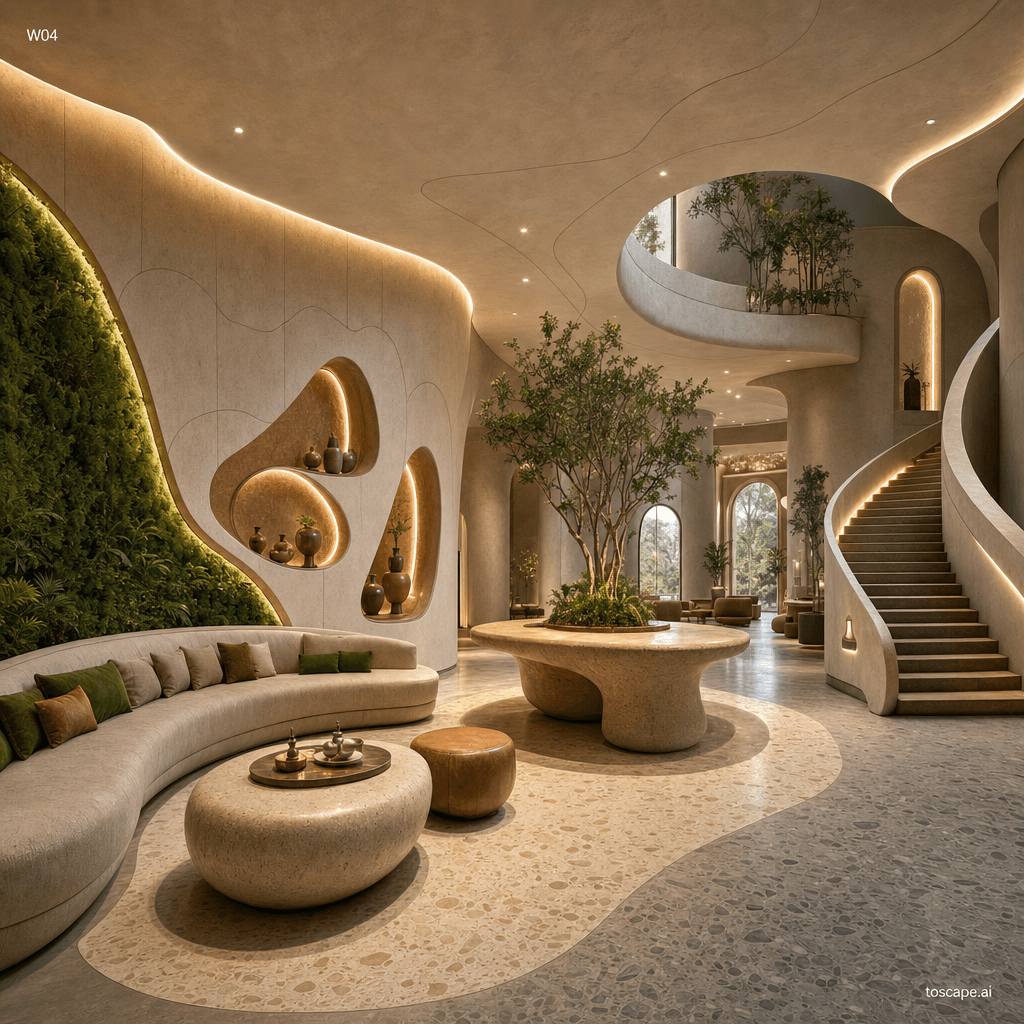
Bio-Composite Interior composition, material palette, furniture language, and lighting direction.
Context Snapshot
Emerging from the convergence of sustainable material science and contemporary design, this style responds to ecological... Active in boutique hotels, green-luxe residences, wellness spas, design-forward retail, and visionary concept spaces; also present in design exhibitions and award-winning sustainable projects. Sculpt major surfaces from bio-composite panels or pours, use natural daylight and bioluminescent accents, express joinery as organic transition zones, and reveal material grain or tactility with restraint and sophistication.
Composition And Planning
Spatial layouts prioritize flow, comfort, and visual journey-favoring open plans with organically defined circulation and zones. Movement feels natural, almost meandering, guided by gentle spatial compression and release or focal light. Use oblique camera angles or gentle overheads to highlight flowing geometry; foreground elements (e.g., sculpted seating) give way to a strongly featured wall or green installation in the background; avoid flat elevations.
Furniture Grammar
Generously rounded, soft-monolithic, biomorphic shapes with integrated bases; avoids sharp corners and visually "leggy" forms. Float seating and tables organically within the space, emphasizing flow and view lines; avoid rigid grid, wall-backing, or corporate stacking. - Molded mycelium or resin bio-sofa - Sculpted pebble-shaped coffee or side table - Integrated curved platform banquette
Creative Direction
A luminous, enveloping space with seamless, curved mycelium composite walls, monolithic pebble-like sofas, sculpted bio-resin tables, lush green wall accents, and soft, golden cove lighting for an organic, futuristic sanctuary. Meticulously styled yet calm, visualizing a hero biomaterial wall, carefully positioned tactile sculpture or vessel, integrated seating, and diffused light grazing every surface for an unmistakable eco-luxury mood. Dramatic, immersive render emphasizing deep shadow/play of light, saturated moss-green wall, glowing resin forms, and high-contrast textures in a quiet yet high-tech visual story. - Authentic, deeply...
Best Project Applications
- Boutique hotels, eco-luxe residences, wellness lounges, biophilic offices, sustainability-driven retail.
Preserve, Transform, Avoid
Preserve
- Preserve organic, seamless geometry and flowing forms.
- Maintain prominent use of real bio-composite materials as wall, ceiling, or major furniture surfaces.
- Emphasize tactile and textural depth, not flatness.
- Showcase thoughtful biophilic integration (living walls, organic planting).
Transform
- Experiment with new bio-material blends (mycelium, fiber-resin, hybrid sustainable composites) while staying visually natural and tactile.
- Integrate concealed technology (smart lighting, bioluminescent surfaces) for advanced serenity.
- Layer visual space with sculpted built-ins and innovative joinery shapes.
- Scale up curves or monolithic features for dramatic, cinematic spaces while retaining harmony.
Avoid
- Boxy, modular, or rigidly rectilinear plans.
- Cold, overtly synthetic or plastic-looking materials.
- High-gloss luxury surfaces such as marble or chrome.
- Industrial fixtures or exposed mechanical elements.
- Excessive decorative clutter, boho, or "faux-natural" props.
Frequently asked questions
What is Bio-Composite Interior?
Bio-Composite Interior is an interior design style used for architectural visualization. A softly organic, material-innovative interior style using sculpted bio-composite forms, seamless natural surfaces, and immersive, calming spatial.
What materials define Bio-Composite Interior?
Tactile, organic, with a mix of smooth undulating shells and subtly fibrous, earthy panels; matte and low-sheen finishes preferred, occasional soft translucence for light elements. Major surfaces in bio-composite; joinery/furniture.
What is the Bio-Composite Interior color palette?
Sand, pale clay, fiber taupe, moss, caramel, and soft amber with matte biometal accents for depth and warmth. Build a harmonious, nature-inspired palette anchored in natural material tones; use tonal layering rather than strong contrast.
What is the origin of Bio-Composite Interior?
Emerging from the convergence of sustainable material science and contemporary design, this style responds to ecological... Active in boutique hotels, green-luxe residences, wellness spas, design-forward retail, and visionary concept spaces; also present in design exhibitions and award-winning sustainable projects.
When should architects use Bio-Composite Interior?
A luminous, enveloping space with seamless, curved mycelium composite walls, monolithic pebble-like sofas, sculpted bio-resin tables, lush green wall accents, and soft, golden cove lighting for an organic, futuristic sanctuary. Meticulously styled yet calm, visualizing a hero biomaterial wall, carefully positioned tactile sculpture or vessel, integrated seating, and diffused light grazing every surface for an unmistakable eco-luxury mood.
How do you render Bio-Composite Interior in Toscape?
Open Toscape on Windows, load your own photo, elevation, sketch, or CAD view, then apply the Bio-Composite Interior reference from the built-in style library. The Interior Design workflow keep your project geometry and camera while shifting materials, proportion, and detailing toward Bio-Composite Interior.
Use this style in Toscape
Explore Bio-Composite Interior inside Toscape using interior-focused rendering workflows and gallery references.
Open interior references