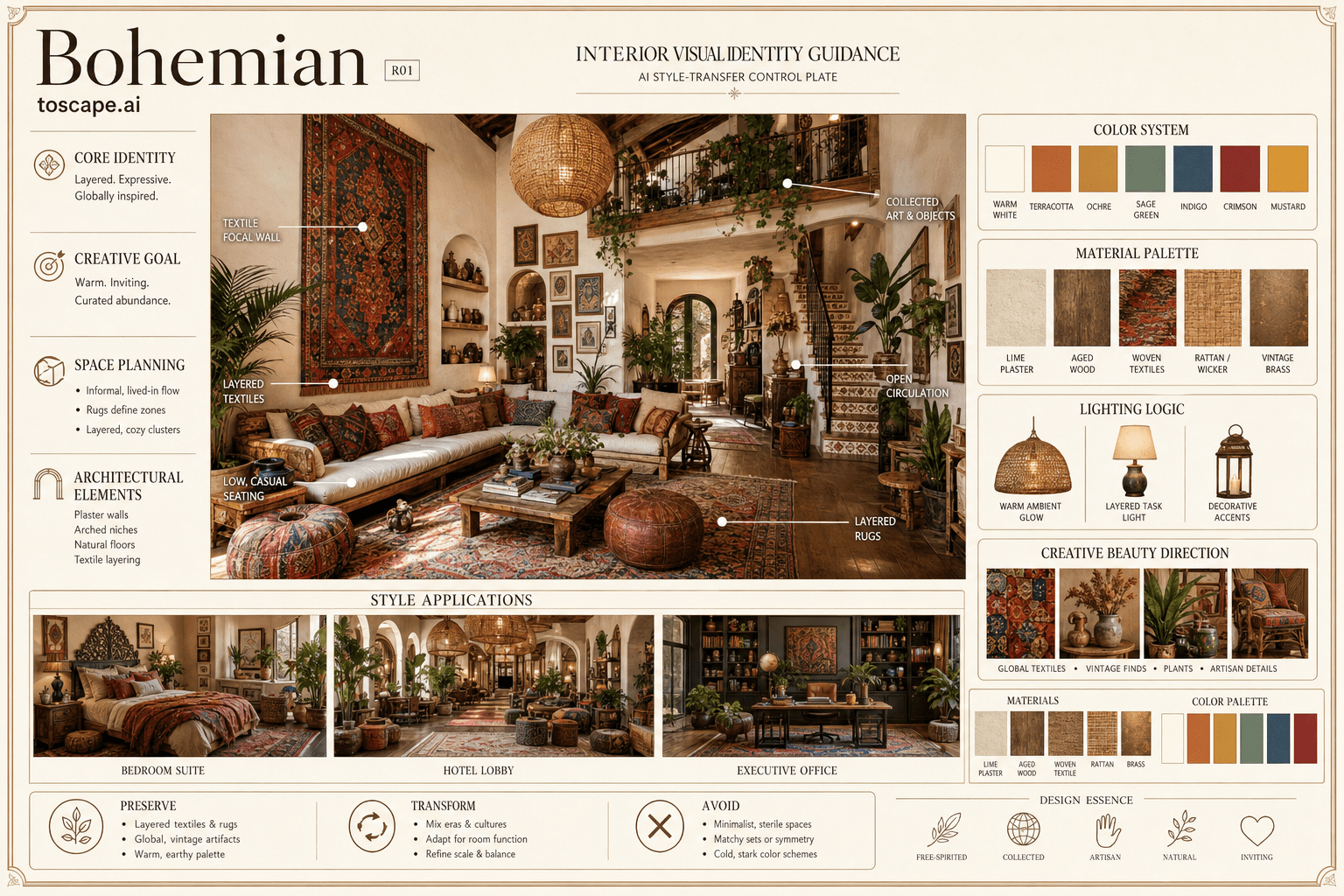
Bohemian
R01 / Eclectic / Global / Artistic / Organic / Vintage / Casual
A soulful, inviting interior style defined by layered global textiles, vintage finds, artisan-crafted decor, abundant plants, and relaxed, artful...
Definition
Bohemian is an interior design style used for architectural visualization. A soulful, inviting interior style defined by layered global textiles, vintage finds, artisan-crafted decor, abundant plants, and relaxed, artful.
- Family
- Eclectic / Global / Artistic / Organic / Vintage / Casual.
- Origin
- Derived from artistic and intellectual circles of late 19th-century Paris, evolving through mid-century and 1970s.
- Massing
- Mix of organic, curved, and low-slung or casual silhouettes; sculpted by nature and shaped by hand, with no rigid geometric system.
- Materials
- Highly tactile-layered textiles, rough wood, woven elements, handmade pottery, organic fiber, and lush plants.
- Palette
- Warm white wall, ochre and terracotta textiles, indigo rug, sage or teal pillows, antique brass, and wood.
- Lighting
- Soft, warm, layered-created by woven pendants, lanterns, or clustered table/floor lamps with diffused shades.
Overview
Bohemian is an interior design style defined by A layered, expressive, globally-inspired interior identity defined by relaxed informality, curated textiles, natural materials, vintage finds, and a free-spirited mix of color, pattern, and treasure-like objects. To create rooms that feel inviting, expressive, and personal through a curated yet uncontrived layering of color, pattern, and worldly artifacts.
Visual DNA
Spatial Feeling
Warm, relaxed, inviting, and emotionally rich; feels lived-in, layered, and full of creative energy.
Form Language
Mix of organic, curved, and low-slung or casual silhouettes; sculpted by nature and shaped by hand, with no rigid geometric system. Use a mix of compact and generous elements; intimate groupings and layered verticals soften...
Composition
Informal and inviting; composed for comfort, conversation, creativity, and lounging. Hero textile wall (tapestry, rug, or macrame), layered seating corner, curated gallery wall, fireplace with decor, or statement plants. Best seen at...
Interior Elements
Matte, chalky, or lime-plastered walls in warm or earthy neutrals; feature walls may use patterned wallpaper, woven hangings, gallery-style art, or layered rugs/textiles. Ceilings are not a decorative driver; keep them plain, bright,...
Color System
Warm white wall, ochre and terracotta textiles, indigo rug, sage or teal pillows, antique brass, and wood. Mix warm base tones with deeper, historic, or organic color pops; always use a harmonious, edited palette for curated layering....
Material Palette
Highly tactile-layered textiles, rough wood, woven elements, handmade pottery, organic fiber, and lush plants. Reserve linen/cotton for large surfaces (sofas, drapery), wool/jute for rugs and throws, wood for case goods, and cane/rattan...
Lighting Logic
Soft, warm, layered-created by woven pendants, lanterns, or clustered table/floor lamps with diffused shades. Harness golden, directional sunlight or glowing shadows from lanterns and lamp clusters; use shadow for mood and intimacy. Let...
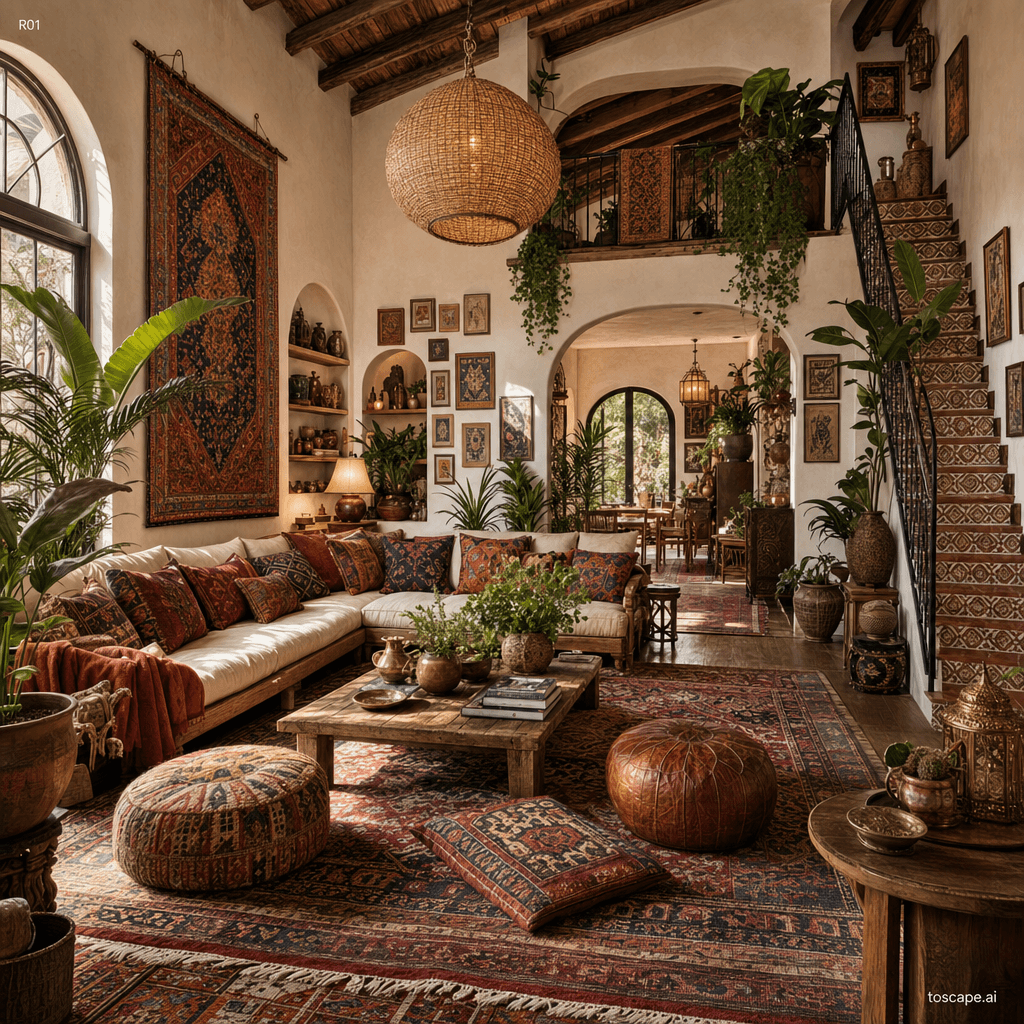
Interior reference image
Bohemian composition, material palette, furniture language, and lighting direction.
Context Snapshot
Derived from artistic and intellectual circles of late 19th-century Paris, evolving through mid-century and 1970s... Highly popular in urban apartments, creative studios, boutique hotels, luxury villas, beach houses, and resorts seeking authenticity and storytelling. Curate a balanced, premium version: edit clutter, privilege natural light, combine rich but balanced patterns and textiles, use real vintage or artisan finds, and elevate with high-quality materials and thoughtful placement.
Composition And Planning
Informal and inviting; composed for comfort, conversation, creativity, and lounging. Encourages a meandering, discovery-rich experience; pathways are casual, with furniture chosen for comfort and gathering rather than rigid separation. Best seen at mid-height, with depth revealed by textile layering, foreground decor, and strong diagonal or organic leading lines. Let sunlight or lamp glow filter in, emphasizing texture and layers.
Furniture Grammar
Organic, low, gently rounded, or vintage; a mix of artisan-crafted and vintage-found pieces, never part of a matching set. Freely arranged for conversation and comfort; group around layered rugs, float in rooms, and layer with ottomans or poufs-never rigid or compulsively aligned to walls. - Massive vintage kilim lounge sofa - Butterfly chair with block-printed cover - Stacked handmade Moroccan tables - Rattan hanging chair - Hand-carved antique trunk
Creative Direction
A sunlit living room with overlapping vintage rugs, relaxed low seating scattered with embroidered cushions, handwoven art and global textiles as wall features, lush plants spilling from baskets, and artisan ceramics glowing with personality-inviting, soulful, and editorial. Elegantly curated layers of rich, historic textiles offset neutral walls, with premium raw wood, sculptural vintage finds, designer lighting, gallery-style artwork, and expressive plants-framed in beautiful diffuse daylight. Low, warm sunlight rakes across woven throws, baskets, and plants; deep shadows accentuate the density of texture, objects, and...
Best Project Applications
- Luxury living rooms, creative studios, boutique hotels, bedrooms, lounge retreats.
Preserve, Transform, Avoid
Preserve
- Consistent, visually rich textile layering.
- Relaxed, organic seating and informal groupings.
- Use of authentic vintage, artisan, and global finds.
- Artistic, narrative, and soulful object displays.
Transform
- Edit clutter for premium curation while retaining boho layering.
- Upgrade material quality-use luxury textiles, designer ceramics, and artist-made lighting.
- Integrate contemporary plant design and lighting cues for freshness.
- Use gallery-style art and bold wall installations for modern identity.
Avoid
- Minimalist, cold, or sterile furniture and color palettes.
- Superficial "Boho" that relies on mass-market accessories.
- Rigid, symmetrical, or overly matched furniture sets.
- Over-polished, high-gloss, or synthetic materials.
- Excessive chaos, clutter, or kitsch that obscures focal beauty.
Frequently asked questions
What is Bohemian?
Bohemian is an interior design style used for architectural visualization. A soulful, inviting interior style defined by layered global textiles, vintage finds, artisan-crafted decor, abundant plants, and relaxed, artful.
What materials define Bohemian?
Highly tactile-layered textiles, rough wood, woven elements, handmade pottery, organic fiber, and lush plants. Reserve linen/cotton for large surfaces (sofas, drapery), wool/jute for rugs and throws, wood for case goods, and cane/rattan.
What is the Bohemian color palette?
Warm white wall, ochre and terracotta textiles, indigo rug, sage or teal pillows, antique brass, and wood. Mix warm base tones with deeper, historic, or organic color pops; always use a harmonious, edited palette for curated layering.
What is the origin of Bohemian?
Derived from artistic and intellectual circles of late 19th-century Paris, evolving through mid-century and 1970s... Highly popular in urban apartments, creative studios, boutique hotels, luxury villas, beach houses, and resorts seeking authenticity and storytelling.
When should architects use Bohemian?
A sunlit living room with overlapping vintage rugs, relaxed low seating scattered with embroidered cushions, handwoven art and global textiles as wall features, lush plants spilling from baskets, and artisan ceramics glowing with personality-inviting, soulful, and editorial.
How do you render Bohemian in Toscape?
Open Toscape on Windows, load your own photo, elevation, sketch, or CAD view, then apply the Bohemian reference from the built-in style library. The Interior Design workflow keep your project geometry and camera while shifting materials, proportion, and detailing toward Bohemian.
Use this style in Toscape
Explore Bohemian inside Toscape using interior-focused rendering workflows and gallery references.
Open interior references