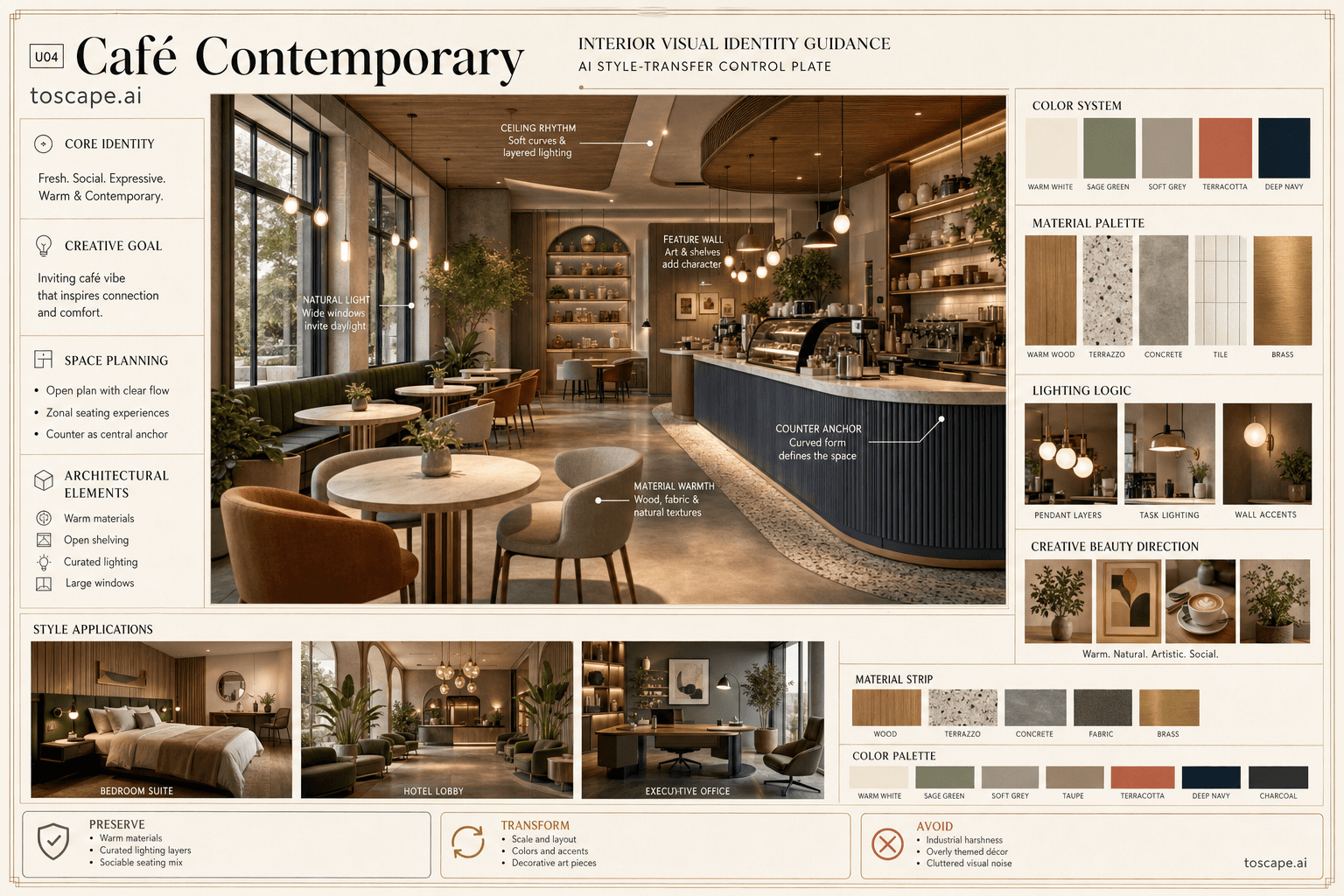
Cafe Contemporary
U04 / Contemporary, Modern, Hospitality, Urban, Social Food & Beverage
A fresh, inviting, and social cafe interior with warm modern materials, curated art, layered lighting, and contemporary furniture.
Definition
Cafe Contemporary is an interior design style used for architectural visualization. A fresh, inviting, and social cafe interior with warm modern materials, curated art, layered lighting, and contemporary furniture.
- Family
- Contemporary, Modern, Hospitality, Urban, Social Food & Beverage.
- Origin
- Emerging from 21st-century cafe culture.
- Massing
- Crisp lines, gentle curves, modular counters, slim and sculptural seating, open shelving, rounded or geometric cafe tables, and occasional bespoke features.
- Materials
- Layered and tactile; balance smooth walls with wood grain, soft upholstery, and subtle glazed or terrazzo surfaces.
- Palette
- Ivory or off-white walls, rich natural wood, muted blue/green textiles, matte black fixtures, terracotta accents, and greenery.
- Lighting
- Layered mix of downlights or coves for overall glow; not harsh or flat.
Overview
Cafe Contemporary is an interior design style defined by A fresh, social, and expressive hospitality interior defined by clean lines, curated modern furniture, warm materials, layered lighting, and a creative yet accessible cafe mood. To create an atmosphere of comfort, creativity, and sociability where guests relax, work, or connect, all within a thoughtfully designed and visually contemporary environment.
Visual DNA
Spatial Feeling
Open, lively, inviting, and approachable, with touches of warmth and a sense of curated casual elegance.
Form Language
Crisp lines, gentle curves, modular counters, slim and sculptural seating, open shelving, rounded or geometric cafe tables, and occasional bespoke features. Medium-height spaces emphasizing intimacy over monumentality; balance between...
Composition
Flexible, open plan anchored by the cafe counter, with seating zones that feel sociable but distinct: banquettes, communal tables, small rounds, window seats. The counter/barista station, feature wall, curated art arrangement, or a...
Interior Elements
Smooth, painted or plastered walls; occasional wood cladding, wall tiles near the counter, and curated art or menu boards. Ceilings are generally flat or gently articulated; exposed beams or light baffles can be used for character but...
Color System
Ivory or off-white walls, rich natural wood, muted blue/green textiles, matte black fixtures, terracotta accents, and greenery. Layer neutrals and tactile earth tones, introducing subtle color pops via art or botanicals for freshness....
Material Palette
Layered and tactile; balance smooth walls with wood grain, soft upholstery, and subtle glazed or terrazzo surfaces. Wood for floor and joinery, painted plaster for main walls/ceiling, tile or terrazzo at counter/feature walls, metal for...
Lighting Logic
Layered mix of downlights or coves for overall glow; not harsh or flat. Mix golden daylight with warm layered artificial lighting; accentuate focal counter, create pockets of shadow and glow. Lighting should zone spaces, guide movement,...
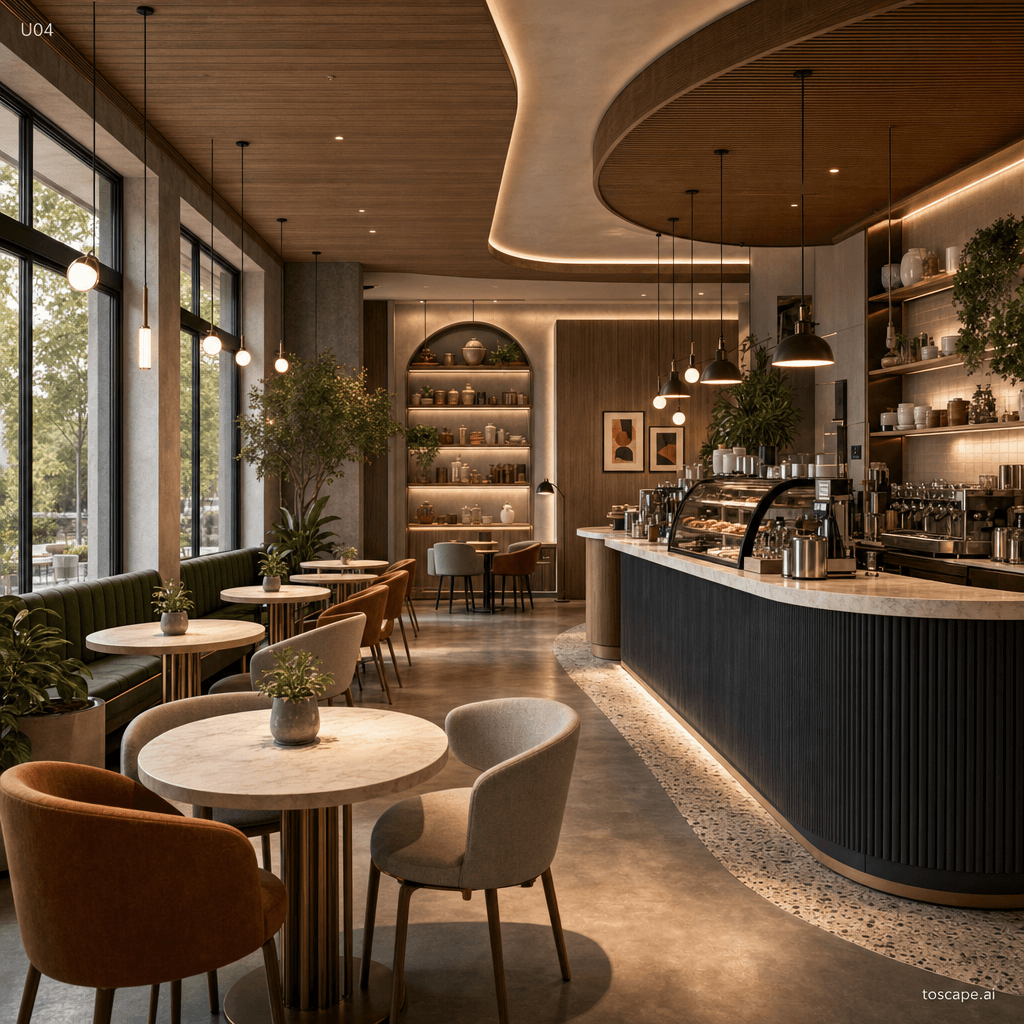
Interior reference image
Cafe Contemporary composition, material palette, furniture language, and lighting direction.
Context Snapshot
Emerging from 21st-century cafe culture, driven by the third-wave coffee movement and urban hospitality branding, with... Widely used in urban cafes, specialty coffee shops, patisseries, co-working cafes, and as a social lounge language in hotels. Blend tailored joinery, organic materials, curated art, and minimalist but inviting forms; foster light, openness, and warmth while maintaining a distinct, design-forward atmosphere.
Composition And Planning
Flexible, open plan anchored by the cafe counter, with seating zones that feel sociable but distinct: banquettes, communal tables, small rounds, window seats. Easy, natural flow from entrance to counter, then to seating; circulation feels uncluttered and encourages exploration or brief pauses. Focal wall or counter in the mid-background, layered seating in the foreground, natural depth with leading lines or light, camera set at seated eye level.
Furniture Grammar
Clean-lined, modern, occasionally rounded; mostly slim profiles, light frames, and gentle curves. Arrange in flexible, conversational groups; anchor communal seating centrally, scatter small tables to ribbons of light, align banquettes and window seating to maximize sociability and visual rhythm. - Curved wood cafe chair - Integrated banquette - Contemporary communal oak table - Sculptural pendant light fixture
Creative Direction
A well-lit cafe with expansive glazing, a warm oak or walnut cafe counter, sculptural modern pendants, curated soft art, integrated planters, layered seating-resulting in an inviting and lively scene. Curated, light-filled, balanced composition showcasing the counter, with select signature furniture, clean textures, lush planting, and a relaxed, editorial camera perspective. Emphasize golden-hour light, moody shadows around the counter, glowing pendants, and clusters of guests or curated props for lively authenticity. - Real timber and tactile materials - Custom joinery and commissioned art - Layered, designer lighting and soft acoustics
Best Project Applications
- Urban cafes, boutique coffee shops, bakery-cafes, hotel coffee lounges, social co-working hospitality.
Preserve, Transform, Avoid
Preserve
- Cafe counter or coffee bar as the spatial and social heart.
- Warm natural wood and tactile material palette.
- Social, layered, and flexible seating arrangements.
- Layered natural and artificial lighting for inviting atmosphere.
Transform
- Scale up art or planting for added personality.
- Mix soft contemporary curves with clean-lined joinery.
- Adapt color palette for local branding while keeping the core harmony.
- Integrate subtle brand elements or local craft.
Avoid
- Over-theming or gimmicky decor.
- Cold, purely industrial or office-like atmospheres.
- Dense clutter or excessive display objects.
- Random furniture mix without cohesion.
- Bright neon or hyper-saturated colors.
Frequently asked questions
What is Cafe Contemporary?
Cafe Contemporary is an interior design style used for architectural visualization. A fresh, inviting, and social cafe interior with warm modern materials, curated art, layered lighting, and contemporary furniture.
What materials define Cafe Contemporary?
Layered and tactile; balance smooth walls with wood grain, soft upholstery, and subtle glazed or terrazzo surfaces. Wood for floor and joinery, painted plaster for main walls/ceiling, tile or terrazzo at counter/feature walls.
What is the Cafe Contemporary color palette?
Ivory or off-white walls, rich natural wood, muted blue/green textiles, matte black fixtures, terracotta accents, and greenery. Layer neutrals and tactile earth tones, introducing subtle color pops via art or botanicals for freshness.
What is the origin of Cafe Contemporary?
Emerging from 21st-century cafe culture, driven by the third-wave coffee movement and urban hospitality branding, with... Widely used in urban cafes, specialty coffee shops, patisseries, co-working cafes, and as a social lounge language in hotels. Blend tailored joinery, organic materials, curated art, and minimalist but inviting forms; foster light, openness, and warmth while maintaining a distinct, design-forward atmosphere.
When should architects use Cafe Contemporary?
A well-lit cafe with expansive glazing, a warm oak or walnut cafe counter, sculptural modern pendants, curated soft art, integrated planters, layered seating-resulting in an inviting and lively scene. Curated, light-filled, balanced composition showcasing the counter, with select signature furniture, clean textures, lush planting, and a relaxed, editorial camera perspective.
How do you render Cafe Contemporary in Toscape?
Open Toscape on Windows, load your own photo, elevation, sketch, or CAD view, then apply the Cafe Contemporary reference from the built-in style library. The Interior Design workflow keep your project geometry and camera while shifting materials, proportion, and detailing toward Cafe Contemporary.
Use this style in Toscape
Explore Cafe Contemporary inside Toscape using interior-focused rendering workflows and gallery references.
Open interior references