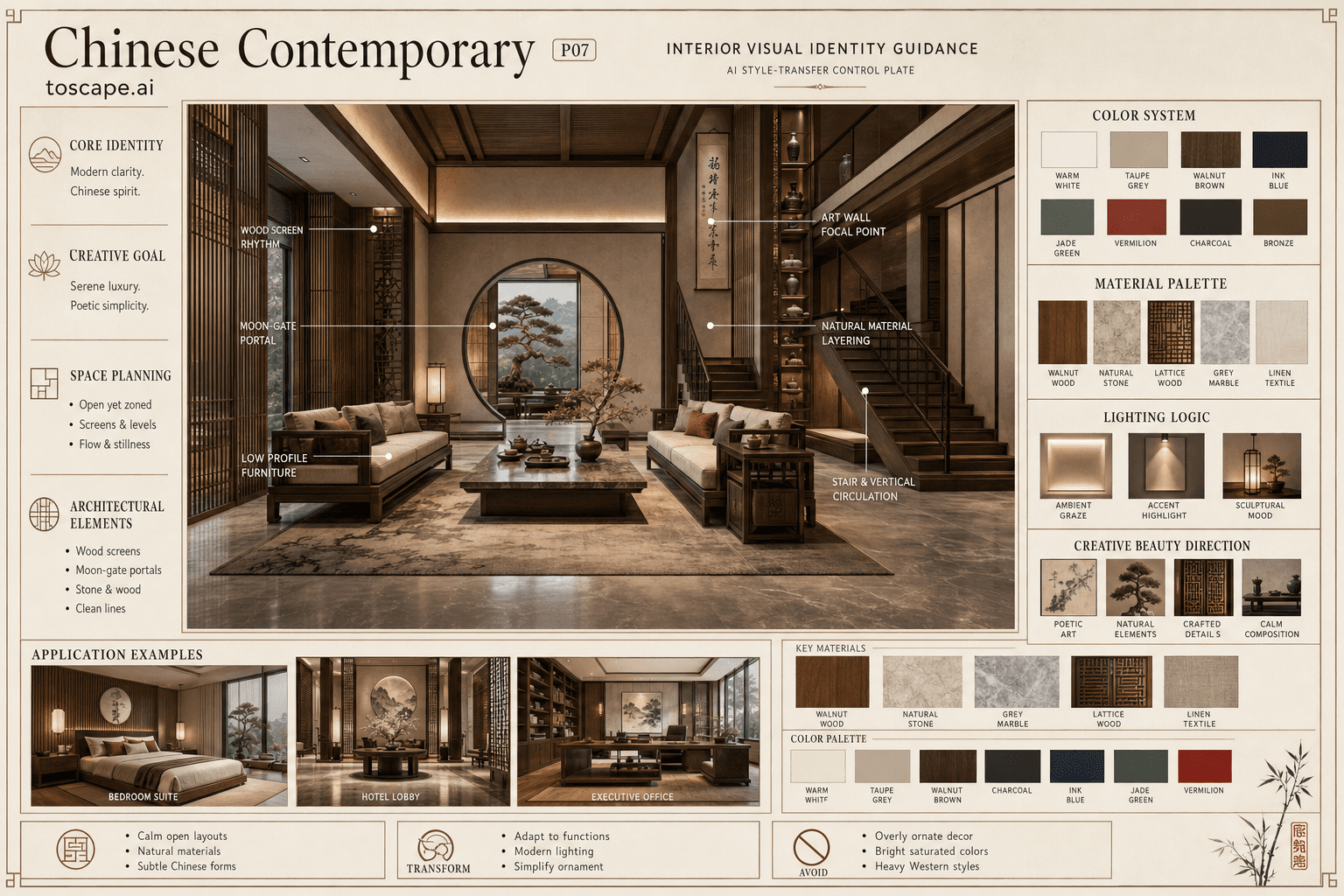
Chinese Contemporary
P07 / Contemporary / Asian Modern / Refined Minimal / Luxury Cultural
A serene, modern Chinese interior style uniting natural materials, sculptural joinery, and poetic spatial calm for luxurious contemporary living.
Definition
Chinese Contemporary is an interior design style used for architectural visualization. A serene, modern Chinese interior style uniting natural materials, sculptural joinery, and poetic spatial calm for luxurious contemporary living.
- Family
- Contemporary / Asian Modern / Refined Minimal / Luxury Cultural.
- Origin
- Evolved from merging contemporary architecture with Chinese heritage design, referencing Ming and Song dynastic minimalism.
- Massing
- Vertical rhythm, linear geometry, graceful screens, floating or low furniture, elegant joinery, subtle archways or moon-gates, circular motifs, and sculptural negative space.
- Materials
- Smooth, tactile, natural, finely finished, harmonious mix of matte and polished surfaces.
- Palette
- Warm walnut, off-white walls, pale stone, shadowy latticework, with restrained hues in blue, green, charcoal, or red clay.
- Lighting
- Concealed coves, recessed slot lighting, subtle indirect fixtures embedded in joinery; keep ceilings dark or plain, lighting quiet.
Overview
Chinese Contemporary is an interior design style defined by A refined, tranquil contemporary interior language uniting modern spatial clarity with essential Chinese forms, natural materials, and poetic cultural detail. To create spaces of meditative beauty, clarity, quiet sophistication, and cultural depth-modern in construction, deeply Chinese in spirit and atmosphere.
Visual DNA
Spatial Feeling
Serene, composed, contemplative, luminous, meditative, and quietly luxurious; invites stillness and sensory clarity.
Form Language
Vertical rhythm, linear geometry, graceful screens, floating or low furniture, elegant joinery, subtle archways or moon-gates, circular motifs, and sculptural negative space. Grounded and intimate scale-never monumental or compressed;...
Composition
Open yet emotionally zoned; subspaces are suggested with screens, art walls, or level changes rather than closed partitions. A main seating group with a statement tea table, an art wall with calligraphy or painting, a delicate altar...
Interior Elements
Smooth white or off-white plaster, pale warm grey, natural wood paneling, stone insets, delicate latticework, or subtle vertical slot features. Ceilings are quiet, often flat or with shallow coffering, clean shadow lines, and concealed...
Color System
Warm walnut, off-white walls, pale stone, shadowy latticework, with restrained hues in blue, green, charcoal, or red clay. Anchor with a gentle triad of wood, white, and mild stone; highlight with one subtle accent only when desired....
Material Palette
Smooth, tactile, natural, finely finished, harmonious mix of matte and polished surfaces. Wood dominates verticals, joinery, and signature furniture; stone grounds the floor or main tables; textiles and art objects offer textural...
Lighting Logic
Concealed coves, recessed slot lighting, subtle indirect fixtures embedded in joinery; keep ceilings dark or plain, lighting quiet. Use a harmonious blend of natural and soft indirect light, creating play of shadow and reflection on...
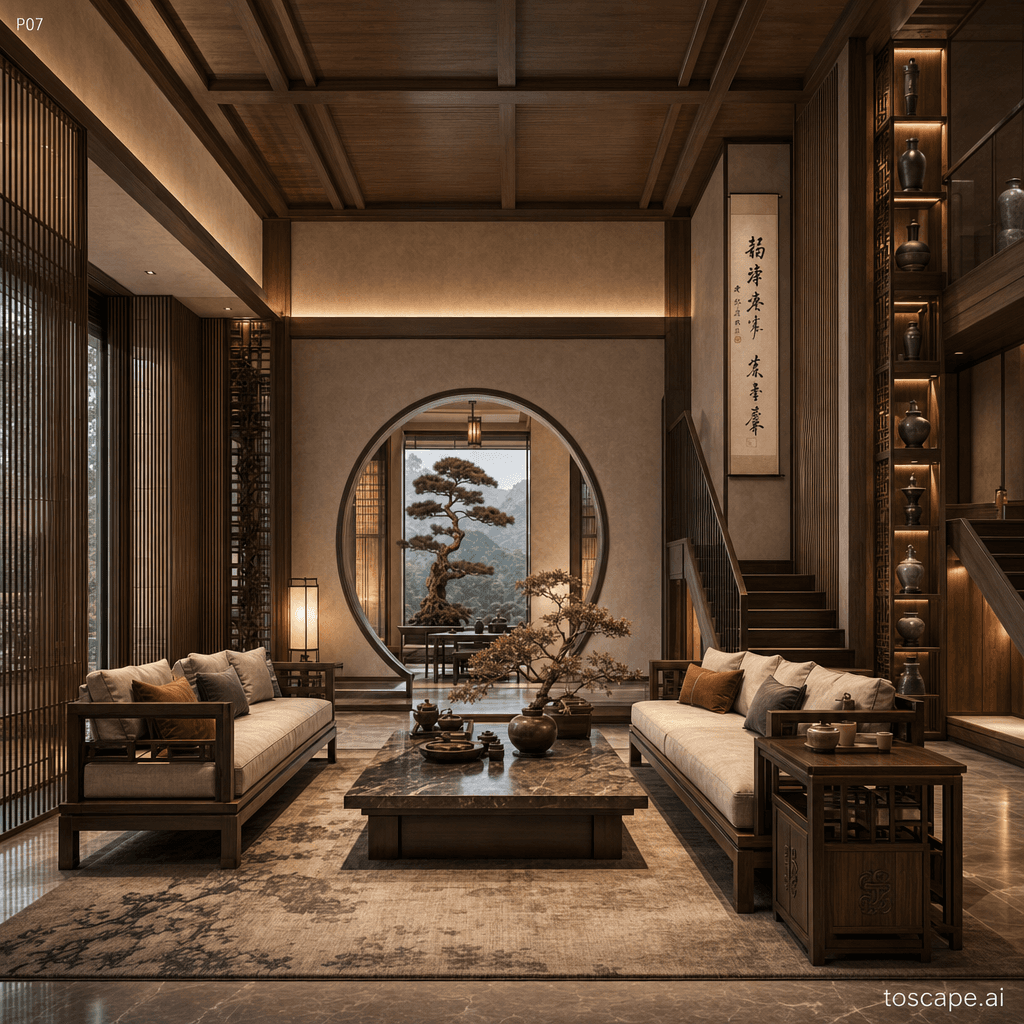
Interior reference image
Chinese Contemporary composition, material palette, furniture language, and lighting direction.
Context Snapshot
Evolved from merging contemporary architecture with Chinese heritage design, referencing Ming and Song dynastic minimalism,... Favored by luxury homes, high-end boutique hotels, restaurants, spa retreats, art galleries, cultural pavilions, and exclusive apartments in China and internationally. Retain pure forms, warm wood, clean stone, poetic art, and subtle Chinese iconography while editing excessive motif use; combine contemporary art, custom joinery, and sculpture for depth and status.
Composition And Planning
Open yet emotionally zoned; subspaces are suggested with screens, art walls, or level changes rather than closed partitions. Fluid and contemplative; designed to encourage slow movement, reflection, and pause. Best with a slightly raised camera, showcasing strong alignments, layered screens, and a generous play of foreground/midground/background; favor balanced asymmetry and tranquil depth.
Furniture Grammar
Sculptural, grounded, often low; pure, elegant lines, negative space under seats, legs and beams subtly expressed. Floating and symmetrical where possible; respect negative space around and beneath pieces; place signature tea tables or benches as spatial anchors. - Modern Ming Yoke-back chair or horseshoe armchair - Low walnut tea table - Lattice-backed bench
Creative Direction
A tranquil living area bathed in soft daylight, with vertical wood screens, contemporary Ming chairs around a sculpted tea table, warm stone floor, floating bench, poetic art wall, and a minimalist planter with a single flowering branch. Precisely composed with negative space-shadow and light animating the joinery, premium material close-ups, one statement art piece or object, serene and energetic at once; curated to feel calm yet culturally show-stopping. Evening light washes across pale wood, with lantern-glow highlighting carved screens and ink art, shadow play echoing poetic rhythm, deep corners balanced by glowing material. -...
Best Project Applications
- Luxury homes, boutique hotels, tea lounges, artful spa or wellness suites, exclusive restaurants.
Preserve, Transform, Avoid
Preserve
- Preserve signature Chinese joinery and material honesty.
- Preserve poetic negative space and balanced spatial silence.
- Preserve calm, neutral color system with subtle cultural accents.
- Preserve subtle but unmistakable Chinese forms in furniture and screens.
Transform
- Elevate proportion, scale, and spatial clarity for modern luxury.
- Integrate concealed, premium modern lighting to enhance serenity.
- Commission contemporary Chinese art or curated sculpture.
- Update detailing and joinery to express craftsmanship in a distinctly contemporary way.
Avoid
- Overloading with decorative patterns or Chinoiserie motifs.
- Using overly bold or synthetic color palettes.
- Adding Western style sofas, lounge chairs, or random international decor.
- Introducing industrial, rustic, or overtly Scandinavian elements.
- Cluttering space with excessive accessories or mass-market art.
Frequently asked questions
What is Chinese Contemporary?
Chinese Contemporary is an interior design style used for architectural visualization. A serene, modern Chinese interior style uniting natural materials, sculptural joinery, and poetic spatial calm for luxurious contemporary living.
What materials define Chinese Contemporary?
Smooth, tactile, natural, finely finished, harmonious mix of matte and polished surfaces. Wood dominates verticals, joinery, and signature furniture; stone grounds the floor or main tables; textiles and art objects offer textural.
What is the Chinese Contemporary color palette?
Warm walnut, off-white walls, pale stone, shadowy latticework, with restrained hues in blue, green, charcoal, or red clay. Anchor with a gentle triad of wood, white, and mild stone; highlight with one subtle accent only when desired.
What is the origin of Chinese Contemporary?
Evolved from merging contemporary architecture with Chinese heritage design, referencing Ming and Song dynastic minimalism,... Favored by luxury homes, high-end boutique hotels, restaurants, spa retreats, art galleries, cultural pavilions, and exclusive apartments in China and internationally.
When should architects use Chinese Contemporary?
A tranquil living area bathed in soft daylight, with vertical wood screens, contemporary Ming chairs around a sculpted tea table, warm stone floor, floating bench, poetic art wall, and a minimalist planter with a single flowering branch.
How do you render Chinese Contemporary in Toscape?
Open Toscape on Windows, load your own photo, elevation, sketch, or CAD view, then apply the Chinese Contemporary reference from the built-in style library. The Interior Design workflow keep your project geometry and camera while shifting materials, proportion, and detailing toward Chinese Contemporary.
Use this style in Toscape
Explore Chinese Contemporary inside Toscape using interior-focused rendering workflows and gallery references.
Open interior references