Colonial Classic
B05 / Classic, Early American, Modern Classic, Traditional New England
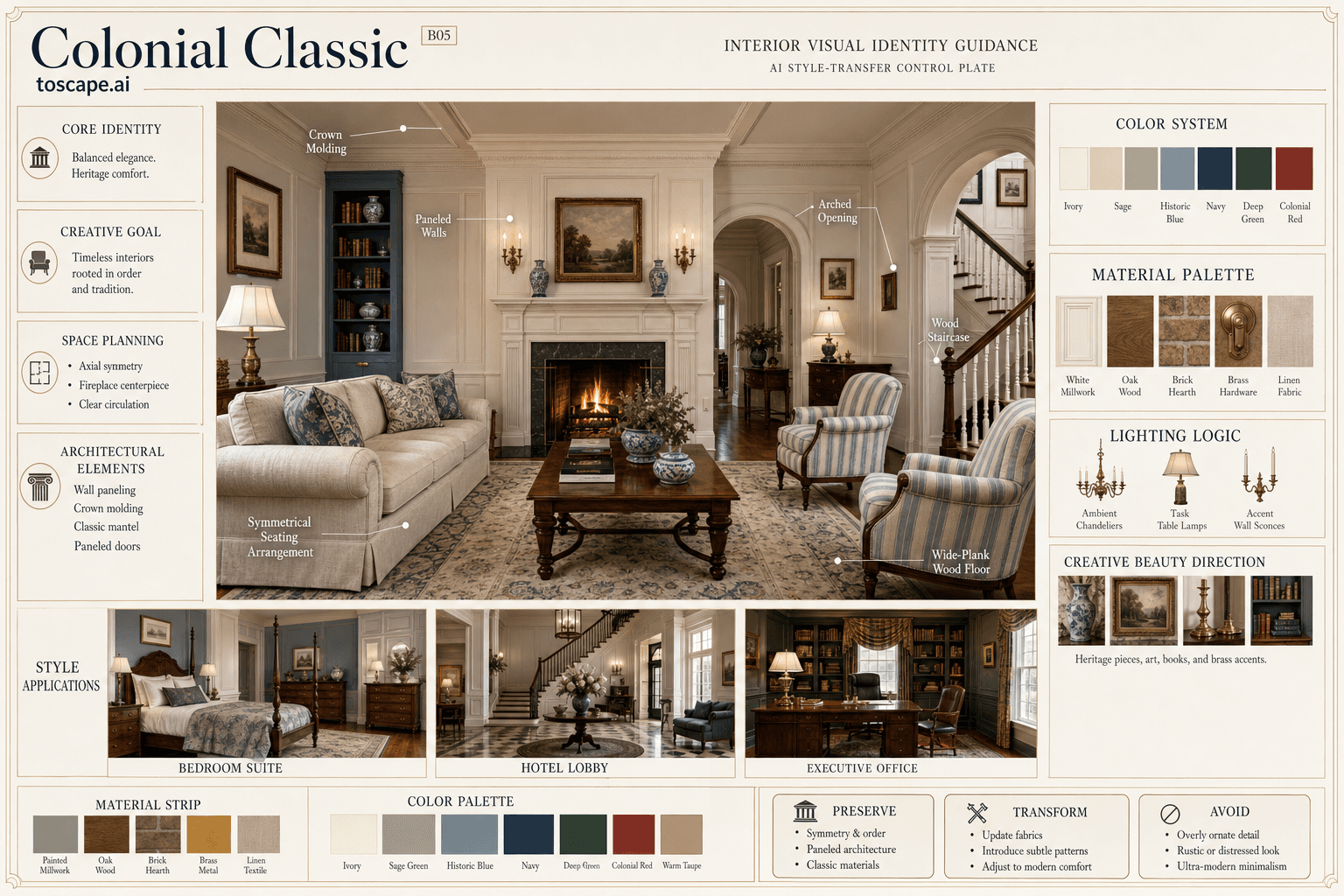
A dignified, paneled and symmetrical heritage interior style with warm wood, classic millwork, soft colors, and quietly beautiful traditional...
Definition
Colonial Classic is an interior design style used for architectural visualization. A dignified, paneled and symmetrical heritage interior style with warm wood, classic millwork, soft colors, and quietly beautiful traditional.
- Family
- Classic, Early American, Modern Classic, Traditional New England.
- Origin
- Inspired by the refined interiors of 18th to early 19th-century American colonial homes, which imported and adapted English.
- Massing
- Rectilinear room shapes, paneled walls, classic cornices, simple architraves, traditional mantelpieces, subtle arches, and strong vertical/horizontal proportion; gentle curves appear only in furniture or architectural detail.
- Materials
- Comfortable, tactile, and honest: wood grain, smooth painted millwork, soft wool or cotton textiles, and lightly textured plaster.
- Palette
- Ivory or soft white walls, warm mid- or dark-wood floor, sage or blue panels, navy or deep green textiles, burnished brass.
- Lighting
- Warm, diffuse light from ceiling-mounted fixtures, large classic lanterns, or chandeliers with candelabra-style bulbs.
Overview
Colonial Classic is an interior design style defined by A dignified, balanced, and inviting classic interior style defined by symmetrical room structure, paneled walls, muted color palette, traditional furniture, and refined detailing inspired by American and British colonial-era homes. To invoke a sense of historical groundedness, hospitality, and quiet dignity while balancing comfort, order, and traditional beauty.
Visual DNA
Spatial Feeling
Bright, stately, welcoming, harmonious, and dignified with a calm and settled atmosphere.
Form Language
Rectilinear room shapes, paneled walls, classic cornices, simple architraves, traditional mantelpieces, subtle arches, and strong vertical/horizontal proportion; gentle curves appear only in furniture or architectural detail. Balanced,...
Composition
Rooms are typically formal and box-shaped with clear, rational zones; layouts prioritize axial relationships and gathering points, most often centering on a fireplace or window. Fireplace mantel, central window, classic credenza or...
Interior Elements
Painted or stained wall paneling (raised, flat, or recessed), picture-frame moldings, chair rails, painted plaster above wainscoting, and boxed-out window reveals. Flat or gently coffered ceilings with classic crown molding, understated...
Color System
Ivory or soft white walls, warm mid- or dark-wood floor, sage or blue panels, navy or deep green textiles, burnished brass, and brick or black hearth details. Base of soft off-whites harmonizes with muted historical hues and natural...
Material Palette
Comfortable, tactile, and honest: wood grain, smooth painted millwork, soft wool or cotton textiles, and lightly textured plaster. Walls and built-ins: painted wood and trims; flooring: hardwood covered by rugs; focal points: brick,...
Lighting Logic
Warm, diffuse light from ceiling-mounted fixtures, large classic lanterns, or chandeliers with candelabra-style bulbs. Aim for soft beams and gentle pools of light that highlight paneled depth, wood grain, and textile texture, with...
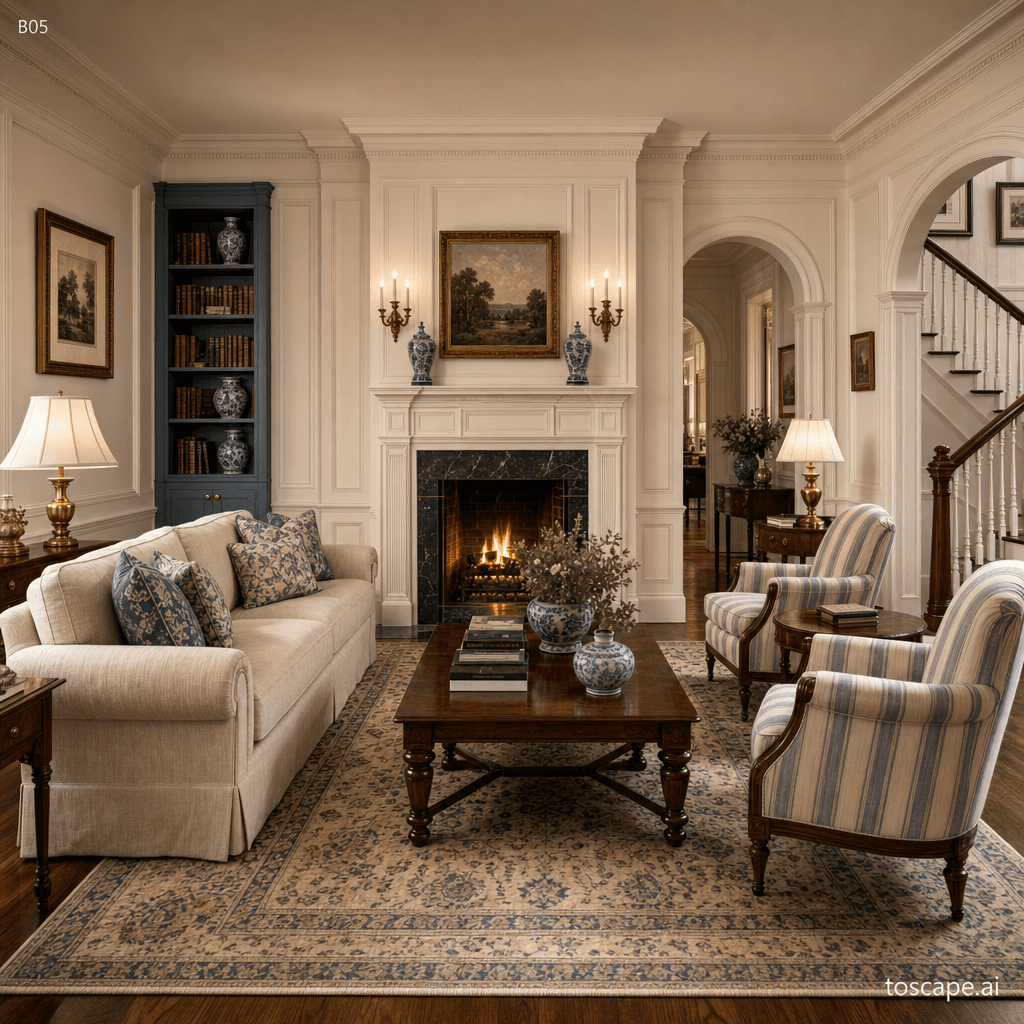
Interior reference image
Colonial Classic composition, material palette, furniture language, and lighting direction.
Context Snapshot
Inspired by the refined interiors of 18th to early 19th-century American colonial homes, which imported and adapted English... Favored in historic home renovations, luxury homes seeking timelessness, boutique hotels with American heritage themes, classic clubhouses, and formal yet comfortable residential settings. Maintain strong symmetry, wall paneling, and millwork hierarchy; select premium materials, update upholstery for comfort, and use edited accessory layers while preserving the essential order and dignity.
Composition And Planning
Rooms are typically formal and box-shaped with clear, rational zones; layouts prioritize axial relationships and gathering points, most often centering on a fireplace or window. Flow is orderly, moving gracefully from entry to living to dining or study, often with visual sightlines reinforcing the sense of symmetry and calm. Best compositions place the camera at eye level, centered on a paneled wall, fireplace, or windowscape with foreground interest from a classic table, allowing midground seating and clear sightlines to secondary details.
Furniture Grammar
Rectilinear and gently rounded, classic profiles such as Queen Anne, Chippendale, Hepplewhite, or Windsor-inspired; dignified with softly sculpted lines. Symmetrical groupings around a focal point (usually the fireplace or window); tables and storage pieces are placed against walls or in conversational clusters. - Windsor chair - Camelback sofa - Chippendale sideboard - Secretary desk
Creative Direction
A sunlit living room with paneled ivory walls, wide-plank oak floors, heritage blue accents, symmetrical classic furniture, a commanding fireplace, and luminous, calm atmosphere. Spacious, airy, and refined, with perfect symmetry, visible millwork depth, soft heritage textiles, artfully curated accessory groupings, and glowing natural or candelabra light. Golden, moody, fireplace-lit-panel shadows, warm oak polish, and candle-glow creating an introspective historic mood. - Exceptional joinery and paneled millwork - Real hardwood and premium textiles - Antique hardware and curated, historically grounded decor
Best Project Applications
- Historic and luxury homes, boutique hotels, formal parlors, dining rooms, libraries, stately entryways.
Preserve, Transform, Avoid
Preserve
- Consistent symmetrical architecture and furniture arrangement.
- Paneled walls and classic millwork with clear visual hierarchy.
- Authentic heritage materials and restrained color palette.
- Fireplace or architectural focal point with controlled decoration.
Transform
- Freshen upholstery colors within the classic palette.
- Edit accessories for clarity and calm-curate, don't crowd.
- Introduce contemporary comfort subtly in seat construction.
- Use premium materials and finishes for modern luxury while maintaining historical language.
Avoid
- Breaking symmetry or omitting paneled walls entirely.
- Overusing rustic, distressed, or farmhouse language.
- Introducing modern, minimalist, or plasticky materials.
- Over-ornamentation, metallic glam, or gold accessories.
- Chaotic, unanchored furniture groupings or lack of architectural logic.
Frequently asked questions
What is Colonial Classic?
Colonial Classic is an interior design style used for architectural visualization. A dignified, paneled and symmetrical heritage interior style with warm wood, classic millwork, soft colors, and quietly beautiful traditional.
What materials define Colonial Classic?
Comfortable, tactile, and honest: wood grain, smooth painted millwork, soft wool or cotton textiles, and lightly textured plaster. Walls and built-ins: painted wood and trims; flooring: hardwood covered by rugs; focal points: brick.
What is the Colonial Classic color palette?
Ivory or soft white walls, warm mid- or dark-wood floor, sage or blue panels, navy or deep green textiles, burnished brass, and brick or black hearth details. Base of soft off-whites harmonizes with muted historical hues and natural.
What is the origin of Colonial Classic?
Inspired by the refined interiors of 18th to early 19th-century American colonial homes, which imported and adapted English... Favored in historic home renovations, luxury homes seeking timelessness, boutique hotels with American heritage themes, classic clubhouses, and formal yet comfortable residential settings.
When should architects use Colonial Classic?
A sunlit living room with paneled ivory walls, wide-plank oak floors, heritage blue accents, symmetrical classic furniture, a commanding fireplace, and luminous, calm atmosphere. Spacious, airy, and refined, with perfect symmetry, visible millwork depth, soft heritage textiles, artfully curated accessory groupings, and glowing natural or candelabra light.
How do you render Colonial Classic in Toscape?
Open Toscape on Windows, load your own photo, elevation, sketch, or CAD view, then apply the Colonial Classic reference from the built-in style library. The Interior Design workflow keep your project geometry and camera while shifting materials, proportion, and detailing toward Colonial Classic.
Use this style in Toscape
Explore Colonial Classic inside Toscape using interior-focused rendering workflows and gallery references.
Open interior references