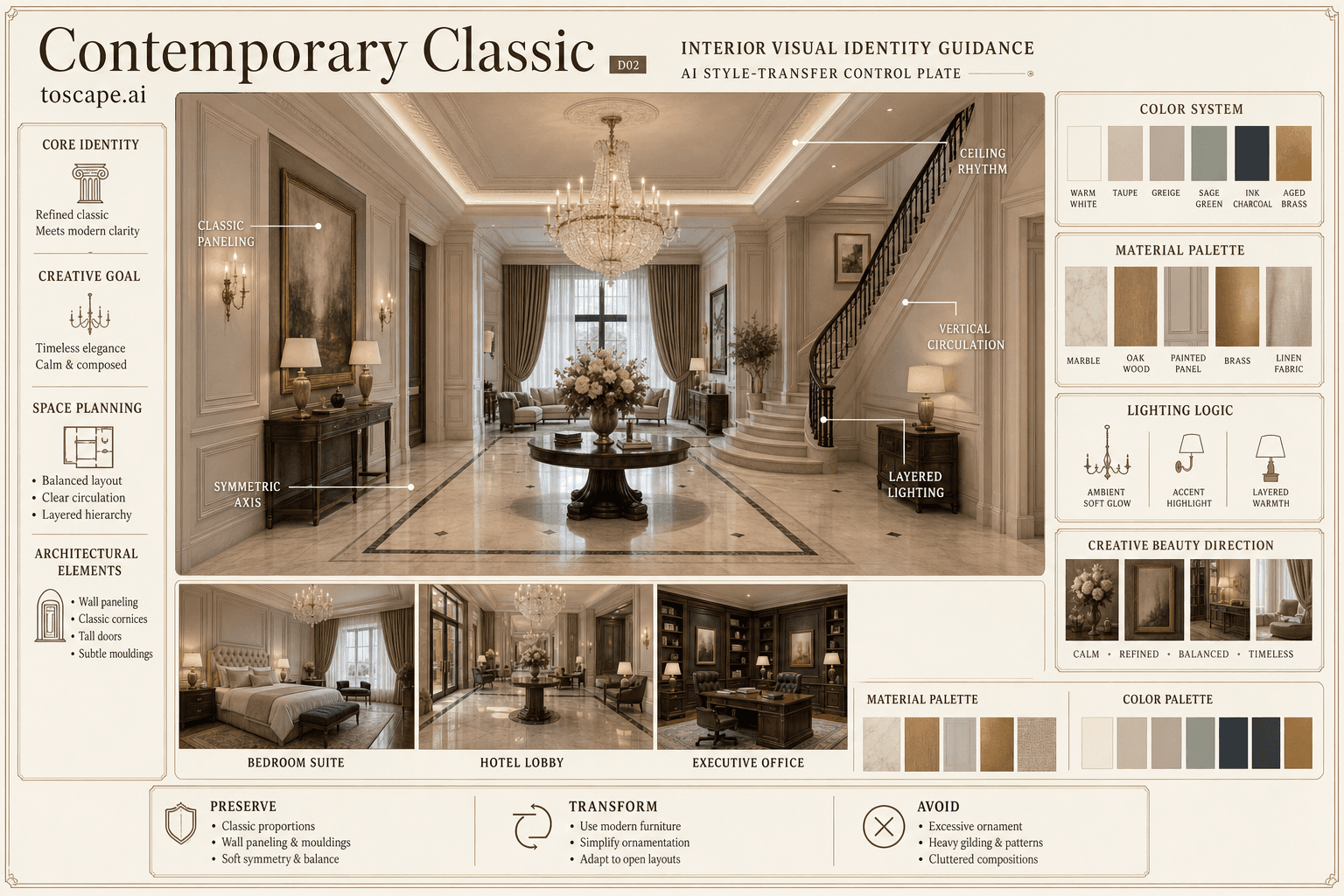
Contemporary Classic
D02 / Modern Classic, Soft Classic, Transitional
Timeless, airy, and elegant-where classic wall paneling and proportion meet modern simplicity and luminous natural light.
Definition
Contemporary Classic is an interior design style used for architectural visualization. Timeless, airy, and elegant-where classic wall paneling and proportion meet modern simplicity and luminous natural light.
- Family
- Modern Classic, Soft Classic, Transitional.
- Origin
- Evolved from European and American Neo-Classical and 20th-century Classic Revival styles.
- Massing
- Rectilinear wall frames, classic cornices, restrained proportions, elegant verticality, soft curves only in furniture accents, never overwhelming.
- Materials
- Smooth painted surfaces, brushed/natural wood grain, tactile yet restrained textiles, softly reflective stone, gentle metallic gleam.
- Palette
- Ivory walls, eggshell trim, greige upholstery, pale oak floor, brass lighting accents, and one muted color per room.
- Lighting
- Soft general lighting-cove lights, ceiling lights with diffusers, or classical-contemporary ceiling fixtures.
Overview
Contemporary Classic is an interior design style defined by A harmonious synthesis of refined classical proportion and ornament with calm, edited contemporary materiality and spatial clarity. To evoke restrained sophistication and quiet grandeur, making rooms feel stately, bright, and comfortable without decorative excess or period drama.
Visual DNA
Spatial Feeling
Airy, composed, quietly grand, inviting yet formal, and filled with soft, luminous light.
Form Language
Rectilinear wall frames, classic cornices, restrained proportions, elegant verticality, soft curves only in furniture accents, never overwhelming. Taller ceilings preferred; generous scale with balanced spaces, even in compact rooms....
Composition
Composed and balanced rooms; open yet structured layouts work well, with gentle room transitions. Classical focal wall (paneling, fireplace, or large art), symmetrical windows, or a sculptural chandelier centered in the ceiling. Use a...
Interior Elements
Painted wall paneling, vertical panels, picture-frame mouldings, subtle wainscoting, or clean architectural plaster; occasional stone or fine-texture wall as an accent. Ceilings are quietly decorative; use classical cornice, subtle...
Color System
Ivory walls, eggshell trim, greige upholstery, pale oak floor, brass lighting accents, and one muted color per room. Base palette is calm and harmonious; small infusions of colored textile or art add layered interest without chaos. Deep...
Material Palette
Smooth painted surfaces, brushed/natural wood grain, tactile yet restrained textiles, softly reflective stone, gentle metallic gleam. Wood and panelling set the architectural background; marble or stone appear as accent surfaces; metal...
Lighting Logic
Soft general lighting-cove lights, ceiling lights with diffusers, or classical-contemporary ceiling fixtures. Emphasize luminous natural light, with warm layered shadows and small sparkling highlights from chandeliers or mirrors....
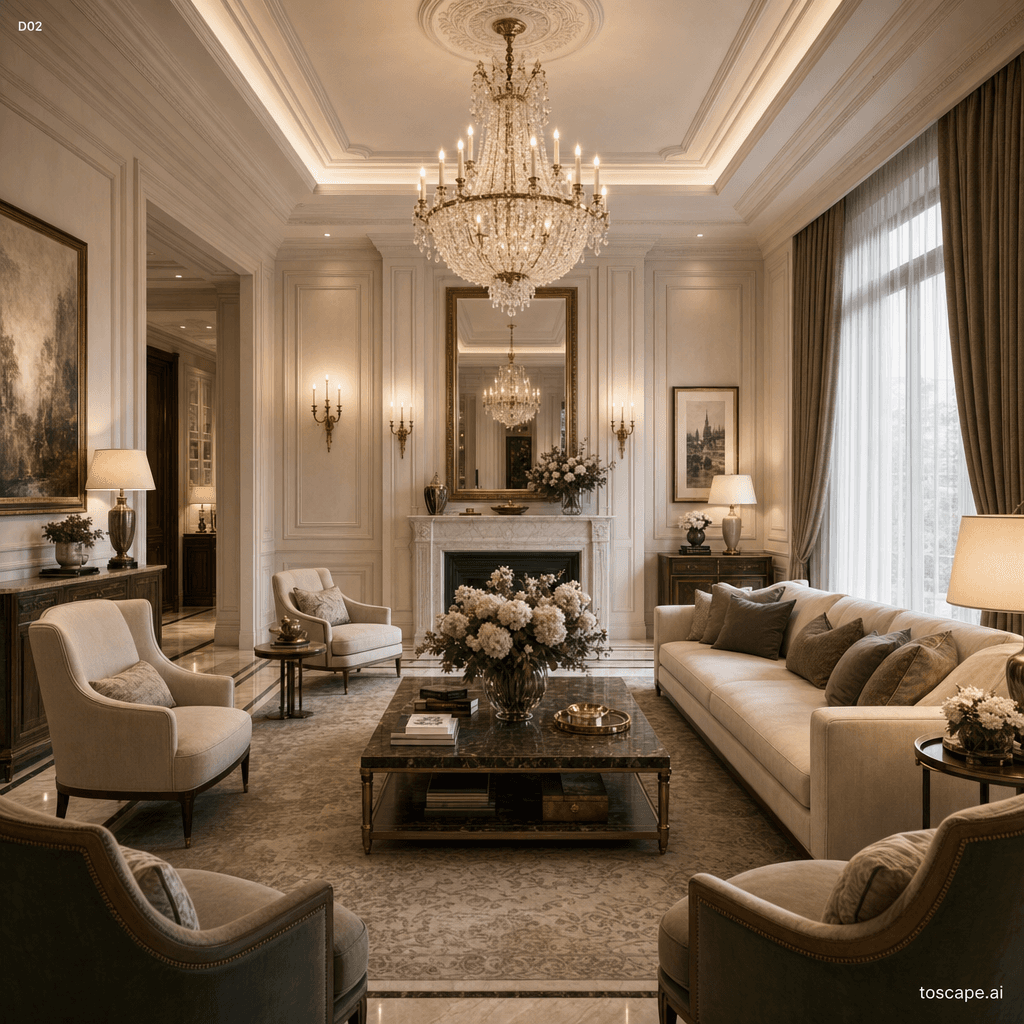
Interior reference image
Contemporary Classic composition, material palette, furniture language, and lighting direction.
Context Snapshot
Evolved from European and American Neo-Classical and 20th-century Classic Revival styles, refreshed by modern editing and the... Widely used in luxury real estate, premium hotels, city apartments, and by clients seeking equilibrium between heritage and modernity. Pair classical bones-paneled walls, tall doors, and symmetrical logic-with clean-lined modern furniture, subtle contrast, premium finishes, and edited art and accessories.
Composition And Planning
Composed and balanced rooms; open yet structured layouts work well, with gentle room transitions. Smooth, graceful flow; clear circulation, doors often centered or symmetrically placed; no obstacle course layouts. Use a centered or lightly off-center camera at eye height, with a visible foreground and balanced background, deep view into the room's main classical wall.
Furniture Grammar
Elegant, gently curved or contemporary-cornered; touches of classic profiles in a simplified modern interpretation. Center seating groups to anchor the room, balance side chairs, avoid edge clutter, float select pieces if space allows. - Tuxedo or shelter-arm sofa with piped edge - Framed accent chair - Marble-top coffee table - Brass-legged side table
Creative Direction
A serene, high-ceilinged living room with ivory paneled walls, luminous natural light, plush modern-classic seating in greige, a sculptural chandelier, pale oak floors, understated art, and minimal but refined accessories. Quietly dramatic proportions, cropped details of classical trim, soft shadow play, premium matte finishes, bold contemporary art, layered warm textiles, and impeccable spatial order. Deeper mood lighting; a softly glowing brass chandelier, richer shadows under panel reveals, a play of reflection across marble surfaces, and focused spotlights on art-always retaining classical control. - Immaculate custom paneling and...
Best Project Applications
- Luxury homes, high-end apartments, premium hotels, club lounges, and formal rooms seeking both comfort and dignity.
Preserve, Transform, Avoid
Preserve
- Clear paneled wall and ceiling hierarchy.
- Neutral, harmonious color and material palette.
- Refined modern-classic furniture with tailored profiles.
- Compositional balance, soft symmetry, and visual calm.
Transform
- Slightly soften or dramatize color palette for atmosphere.
- Use custom arts or large mirrors for elegant, modern focal points.
- Float select furniture or joinery to introduce breath.
- Quietly integrate contemporary art or sculptural lighting as long as classical order is visible.
Avoid
- No period-heavy or baroque/rococo decor.
- No trendy industrial, bohemian, or rustic elements.
- No harsh contrast or busy patterns.
- No low-grade plastic, very cold metal, or over-ornamented trims.
- No excessive symmetrical rigidity.
Frequently asked questions
What is Contemporary Classic?
Contemporary Classic is an interior design style used for architectural visualization. Timeless, airy, and elegant-where classic wall paneling and proportion meet modern simplicity and luminous natural light.
What materials define Contemporary Classic?
Smooth painted surfaces, brushed/natural wood grain, tactile yet restrained textiles, softly reflective stone, gentle metallic gleam. Wood and panelling set the architectural background; marble or stone appear as accent surfaces; metal.
What is the Contemporary Classic color palette?
Ivory walls, eggshell trim, greige upholstery, pale oak floor, brass lighting accents, and one muted color per room. Base palette is calm and harmonious; small infusions of colored textile or art add layered interest without chaos. Deep.
What is the origin of Contemporary Classic?
Evolved from European and American Neo-Classical and 20th-century Classic Revival styles, refreshed by modern editing and the... Widely used in luxury real estate, premium hotels, city apartments, and by clients seeking equilibrium between heritage and modernity. Pair classical bones-paneled walls, tall doors, and symmetrical logic-with clean-lined modern furniture, subtle contrast, premium finishes, and edited art and accessories.
When should architects use Contemporary Classic?
A serene, high-ceilinged living room with ivory paneled walls, luminous natural light, plush modern-classic seating in greige, a sculptural chandelier, pale oak floors, understated art, and minimal but refined accessories. Quietly dramatic proportions, cropped details of classical trim, soft shadow play, premium matte finishes, bold contemporary art, layered warm textiles, and impeccable spatial order.
How do you render Contemporary Classic in Toscape?
Open Toscape on Windows, load your own photo, elevation, sketch, or CAD view, then apply the Contemporary Classic reference from the built-in style library. The Interior Design workflow keep your project geometry and camera while shifting materials, proportion, and detailing toward Contemporary Classic.
Use this style in Toscape
Explore Contemporary Classic inside Toscape using interior-focused rendering workflows and gallery references.
Open interior references