Corporate Modern
U07 / Contemporary / Modern / Commercial / Workplace
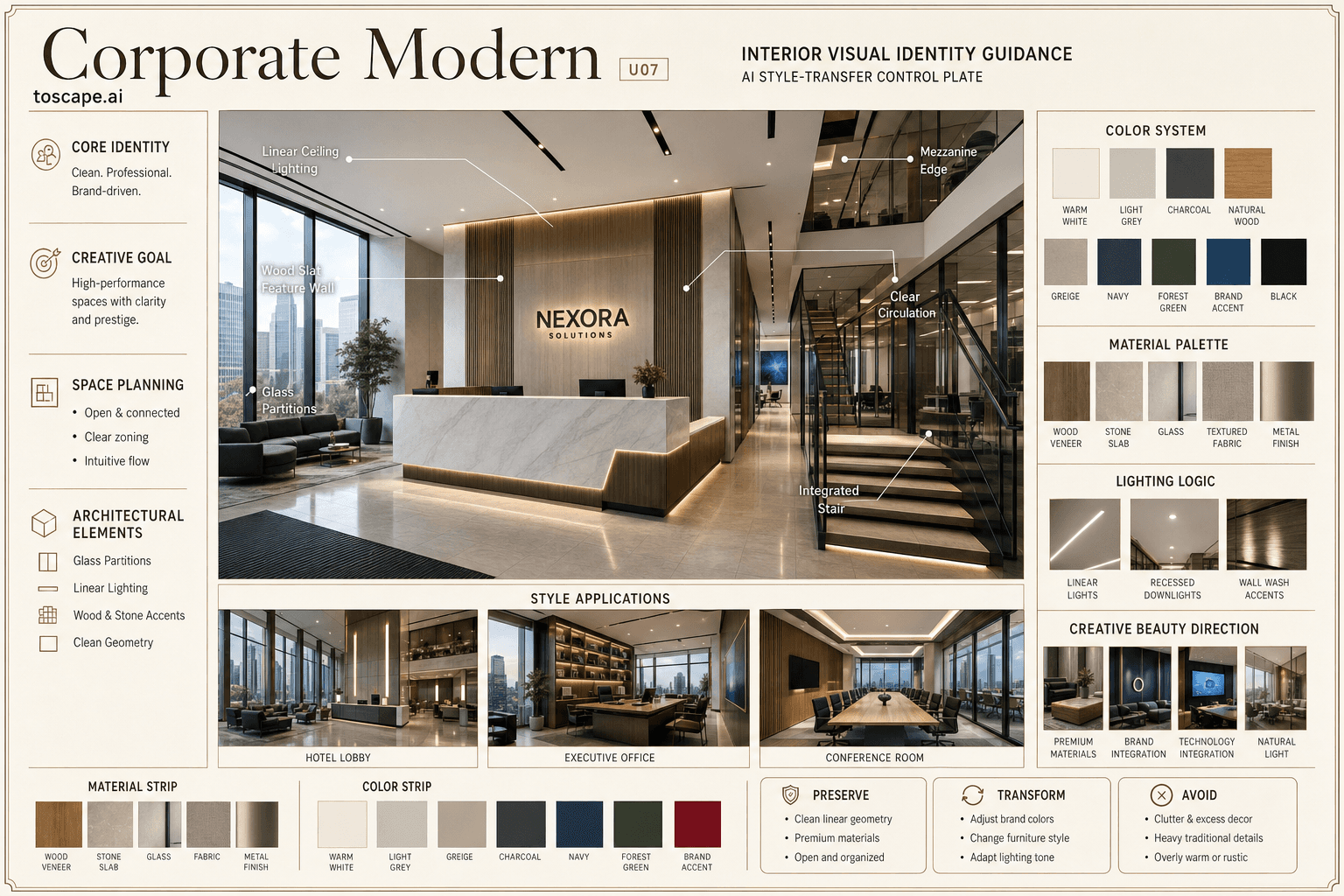
A sophisticated, organized modern workplace defined by glass partitions, premium materials, refined lighting, and clear brand-focused spatial...
Definition
Corporate Modern is an interior design style used for architectural visualization. A sophisticated, organized modern workplace defined by glass partitions, premium materials, refined lighting, and clear brand-focused spatial.
- Family
- Contemporary / Modern / Commercial / Workplace.
- Origin
- Corporate Modern emerged from late 20th-century office architecture, blending international modernism with current workplace.
- Massing
- Linear, rectilinear, and planar-crisp edges, simple geometric shapes, large-format glazing, and confident volumes with integrated technology.
- Materials
- Controlled and refined: smooth, matte, subtly tactile; polished stone, warm wood grain, clean glass; textiles introduce acoustic softness.
- Palette
- Matte off-white, pale grey, natural walnut or oak, soft charcoal, black frames, navy or green accents as art or panel.
- Lighting
- Recessed or linear fixtures, cove lights, integrated ceiling luminaires; always indirect, even, and glare-free.
Overview
Corporate Modern is an interior design style defined by A clean, organized, and visually dynamic commercial interior style defined by sharp linear geometry, premium materials, refined functional zones, advanced technology integration, and a calm yet confident brand presence. To foster productivity, trust, and professional achievement while subtly communicating brand prestige and cultural agility.
Visual DNA
Spatial Feeling
Open, bright, controlled, professional, and visually calm-balanced between collaborative energy and executive composure.
Form Language
Linear, rectilinear, and planar-crisp edges, simple geometric shapes, large-format glazing, and confident volumes with integrated technology. Spacious, with generous ceiling heights and broad surface expanses; focal points rely on scale...
Composition
Open-plan main zones, transparent meeting spaces, private offices along perimeter or core, key public-facing axis (reception/waiting). Reception desks, executive conference tables, branded wall features, signature lounge areas,...
Interior Elements
Smooth painted walls (off-white, pale grey, warm neutrals), large glass partitions with slim or black frames, wood or stone cladding at focal zones, integrated writable surfaces or acoustic panels. Clean, flat, or subtly recessed...
Color System
Matte off-white, pale grey, natural walnut or oak, soft charcoal, black frames, navy or green accents as art or panel. Use a neutral ground, amplify warmth with wood, reserve color sparingly for wayfinding, branding, or visual energy....
Material Palette
Controlled and refined: smooth, matte, subtly tactile; polished stone, warm wood grain, clean glass; textiles introduce acoustic softness. Glass dominates partitions; wood and stone highlight key touchpoints (reception, conference);...
Lighting Logic
Recessed or linear fixtures, cove lights, integrated ceiling luminaires; always indirect, even, and glare-free. Balance strong daylight with precise, slightly cool ambient light; layer indirect and accent lighting to create hierarchy...
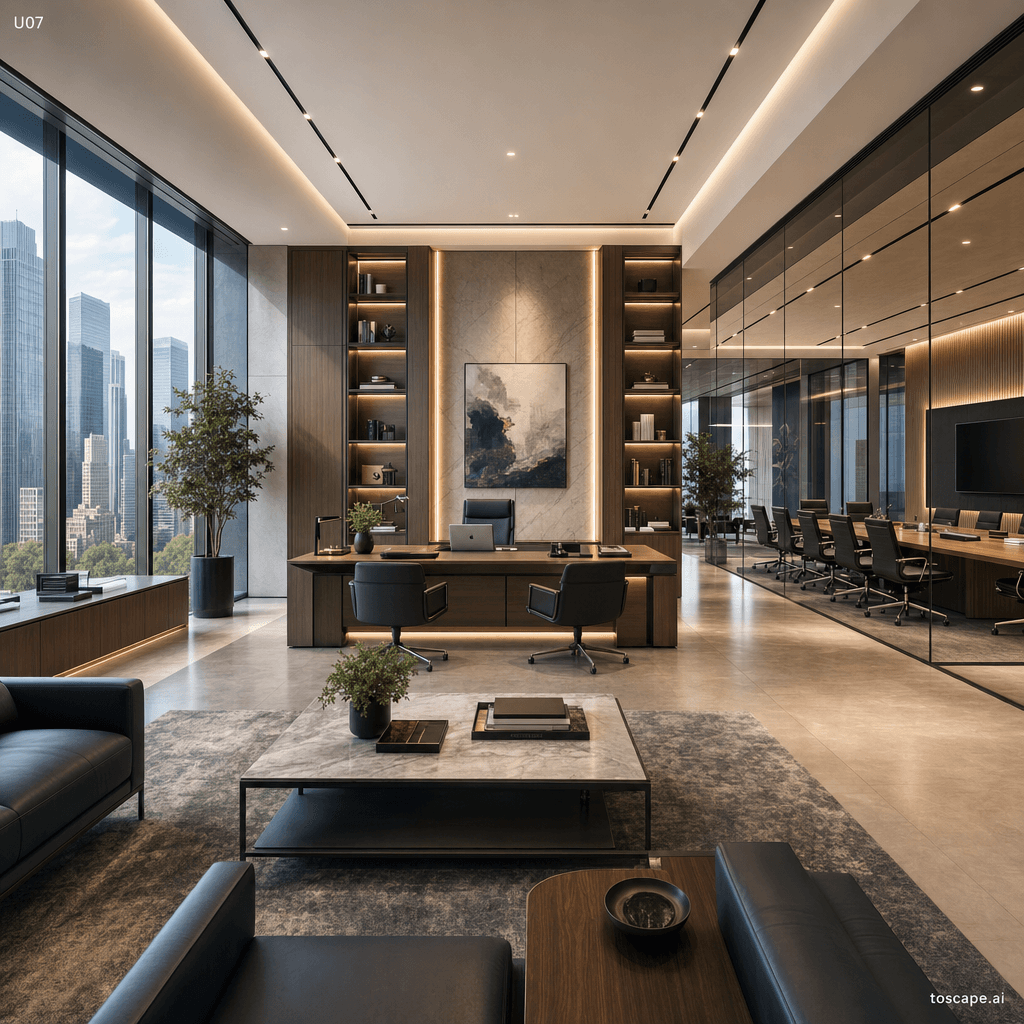
Interior reference image
Corporate Modern composition, material palette, furniture language, and lighting direction.
Context Snapshot
Corporate Modern emerged from late 20th-century office architecture, blending international modernism with current workplace... Found in new headquarters, premium office fit-outs, client-facing executive floors, conference suites, innovation hubs, boardrooms, and urban business lounges. Elevate the brand's DNA through select use of high-quality woods, stone, glass, metal, contemporary art, and refined lighting; balance spacious open areas with private work zones and collaborative hubs.
Composition And Planning
Open-plan main zones, transparent meeting spaces, private offices along perimeter or core, key public-facing axis (reception/waiting). Straightforward, intuitive circulation with clear pathways, inviting nodes, and controlled visual axes; progression from public to private is visually subtle. Mid to slightly elevated eye-level camera, facing a glazed partition, reception focus, or collaborative zone; arrange elements in clear layers-foreground (sofa, desk), middle (partition, art), strong background focus.
Furniture Grammar
Linear, modular, visually light or softly sculpted; clean lines, slab ends, gentle curves if ergonomic. Furniture is arranged for logical workflow and conversation; align with visual axes, maintain order, and avoid crowding-group seating defines collaborative or lounge nodes. - Executive sit/stand desk with integrated cable management - Modular conference table with tech integration - Architectonic lounge sofa
Creative Direction
A sunlit open-plan office with transparent executive meeting rooms, warm walnut and brushed black metal details, sculptural pendant lighting, curated art, and a brand-focused reception wall anchored by calm organization and subtle luxury. Crisp, organized, with sharp lines, strong visual contrasts, and premium contemporary furniture; architectural lighting, material hierarchy, and art are highlighted in balanced photographic compositions. Deep daylight washes through glass, with highlights on wood and stone, soft shadow gradients, and corporate branding glowing subtly; the scene evokes ambition and composure. - Impeccable joinery and...
Best Project Applications
- Corporate headquarters, executive suites, boardrooms, agency workspaces, premium co-working offices, business lounges.
Preserve, Transform, Avoid
Preserve
- Preserve glass partition logic and visual openness.
- Preserve premium, well-edited material hierarchy.
- Preserve clarity and order in space planning.
- Preserve contemporary ergonomic furniture with professional scale.
Transform
- Integrate warm wood or stone for increased psychological comfort without losing clarity.
- Evolve tech and hardware details for a signature brand identity.
- Allow sculptural lighting or art as hierarchical (not decorative) focal points.
- Adapt layout density for hybrid work/meeting modes, preserving core style identity.
Avoid
- Rustic or vintage domestic motifs.
- Ornate, classic, or homey decorative details.
- Exposed brick, distressed finishes, DIY or industrial elements.
- Overstuffed, residential-scale furniture.
- Overly sterile, lifeless, or generic grid fit-outs.
Frequently asked questions
What is Corporate Modern?
Corporate Modern is an interior design style used for architectural visualization. A sophisticated, organized modern workplace defined by glass partitions, premium materials, refined lighting, and clear brand-focused spatial.
What materials define Corporate Modern?
Controlled and refined: smooth, matte, subtly tactile; polished stone, warm wood grain, clean glass; textiles introduce acoustic softness. Glass dominates partitions; wood and stone highlight key touchpoints (reception, conference).
What is the Corporate Modern color palette?
Matte off-white, pale grey, natural walnut or oak, soft charcoal, black frames, navy or green accents as art or panel. Use a neutral ground, amplify warmth with wood, reserve color sparingly for wayfinding, branding, or visual energy.
What is the origin of Corporate Modern?
Corporate Modern emerged from late 20th-century office architecture, blending international modernism with current workplace... Found in new headquarters, premium office fit-outs, client-facing executive floors, conference suites, innovation hubs, boardrooms, and urban business lounges.
When should architects use Corporate Modern?
A sunlit open-plan office with transparent executive meeting rooms, warm walnut and brushed black metal details, sculptural pendant lighting, curated art, and a brand-focused reception wall anchored by calm organization and subtle luxury. Crisp, organized, with sharp lines, strong visual contrasts, and premium contemporary furniture; architectural lighting, material hierarchy, and art are highlighted in balanced photographic compositions.
How do you render Corporate Modern in Toscape?
Open Toscape on Windows, load your own photo, elevation, sketch, or CAD view, then apply the Corporate Modern reference from the built-in style library. The Interior Design workflow keep your project geometry and camera while shifting materials, proportion, and detailing toward Corporate Modern.
Use this style in Toscape
Explore Corporate Modern inside Toscape using interior-focused rendering workflows and gallery references.
Open interior references