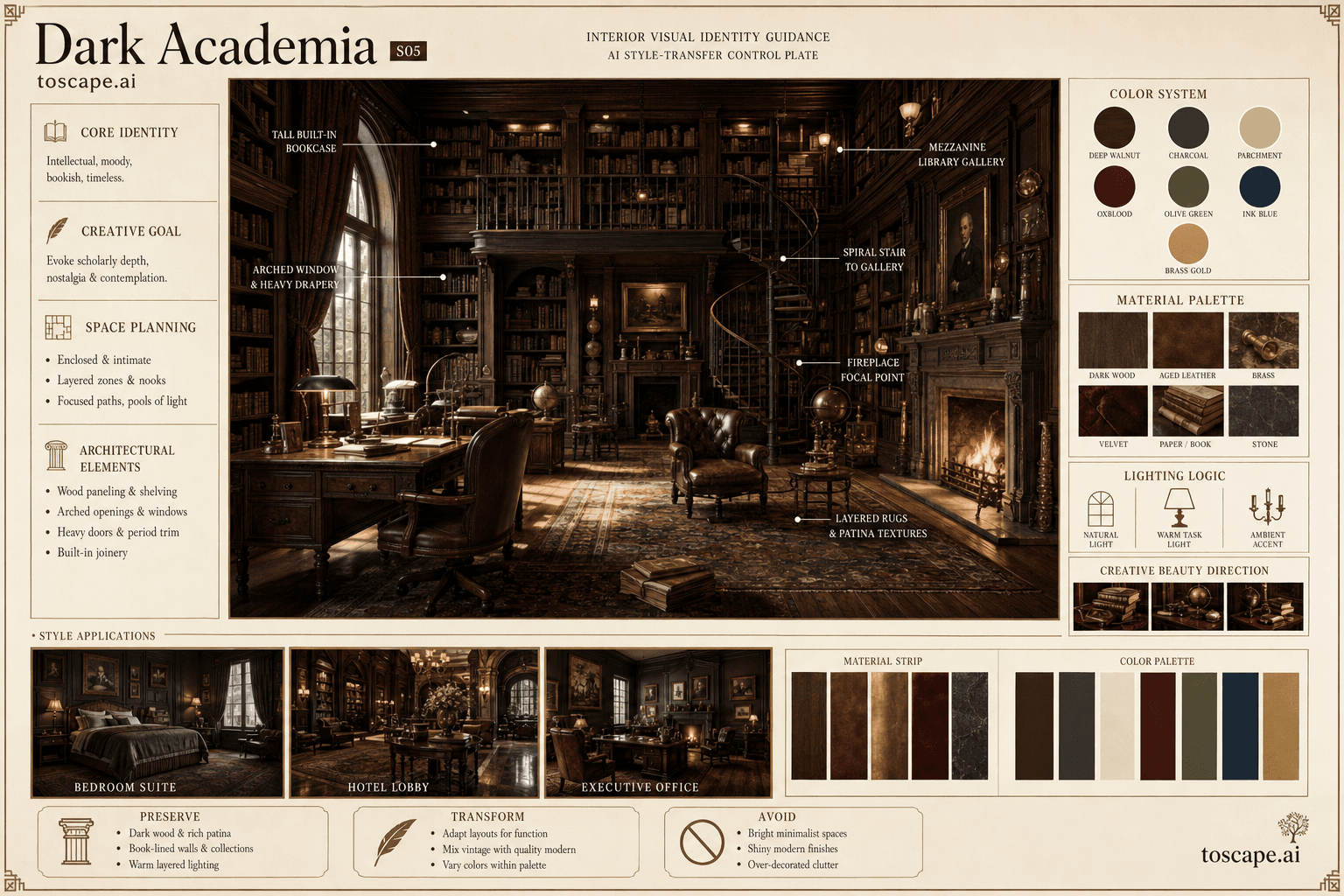
Dark Academia
S05 / Neo-Classic | Gothic Revival | Cinematic Lounge | Old-World Library | Literary Romanticism
A moody, immersive literary interior style defined by dark wood, layered books, patina, shadow, and vintage academic character.
Definition
Dark Academia is an interior design style used for architectural visualization. A moody, immersive literary interior style defined by dark wood, layered books, patina, shadow, and vintage academic character.
- Family
- Neo-Classic | Gothic Revival | Cinematic Lounge | Old-World Library | Literary Romanticism.
- Origin
- Inspired by European university libraries, Victorian studies, and the literary world's romanticism-melding classic academic.
- Massing
- Rectilinear with intentional curves-arched windows, classic moldings, softly rounded chairs, antique columns, and abundant shelving.
- Materials
- Layered, tactile, and timeworn-soft velvets, cracked leather, burnished metals, thick wool, and exposed book spines.
- Palette
- Walnut and oak, moss green velvets, oxblood leather, heavy linen ivory, brass lamp glow, and parchment accents.
- Lighting
- Warm pools from classic library lamps, sconces, and shaded pendants; dim overall, with high shadow-to-light contrast.
Overview
Dark Academia is an interior design style defined by A moody, intellectual interior style defined by shadowed wood, vintage academia, layered literature, rich patina, tactile textiles, and atmospheric light. To evoke a sense of intellectual depth, nostalgia, and contemplative romance, transporting occupants into a timeless academic retreat.
Visual DNA
Spatial Feeling
Cocooning, immersive, quietly dramatic, intellectually stimulating, and full of narrative depth.
Form Language
Rectilinear with intentional curves-arched windows, classic moldings, softly rounded chairs, antique columns, and abundant shelving. Moderate to tall ceilings; rooms may feel intimate or grand, but always sheltered; furniture grounds...
Composition
Enclosed, focused, study-like; prioritizes small group or solitary use over open-plan expansiveness. Bookcases, fireplaces, heavy writing desks, arched windows, curated art walls. Slightly off-center, eye-level or slightly lower, with...
Interior Elements
Dark wood paneling, rich matte paint, textured plaster, library shelving, curated gallery walls. Ceilings are typically understated, flat or gently coffered, with perimeter molding or subdued period detail; not the decorative driver....
Color System
Walnut and oak, moss green velvets, oxblood leather, heavy linen ivory, brass lamp glow, and parchment accents. Rich, layered, harmonious blends of dark neutrals and warm accent hues punctuated by age-worn gold and occasional deep jewel...
Material Palette
Layered, tactile, and timeworn-soft velvets, cracked leather, burnished metals, thick wool, and exposed book spines. Woods dominate walls, floors, and shelves; upholstery and rugs provide softness; brass and aged metals punctuate...
Lighting Logic
Warm pools from classic library lamps, sconces, and shaded pendants; dim overall, with high shadow-to-light contrast. Strategically punctuate darkness with isolated pools of golden lamplight, enhancing patina and layered shadow for...
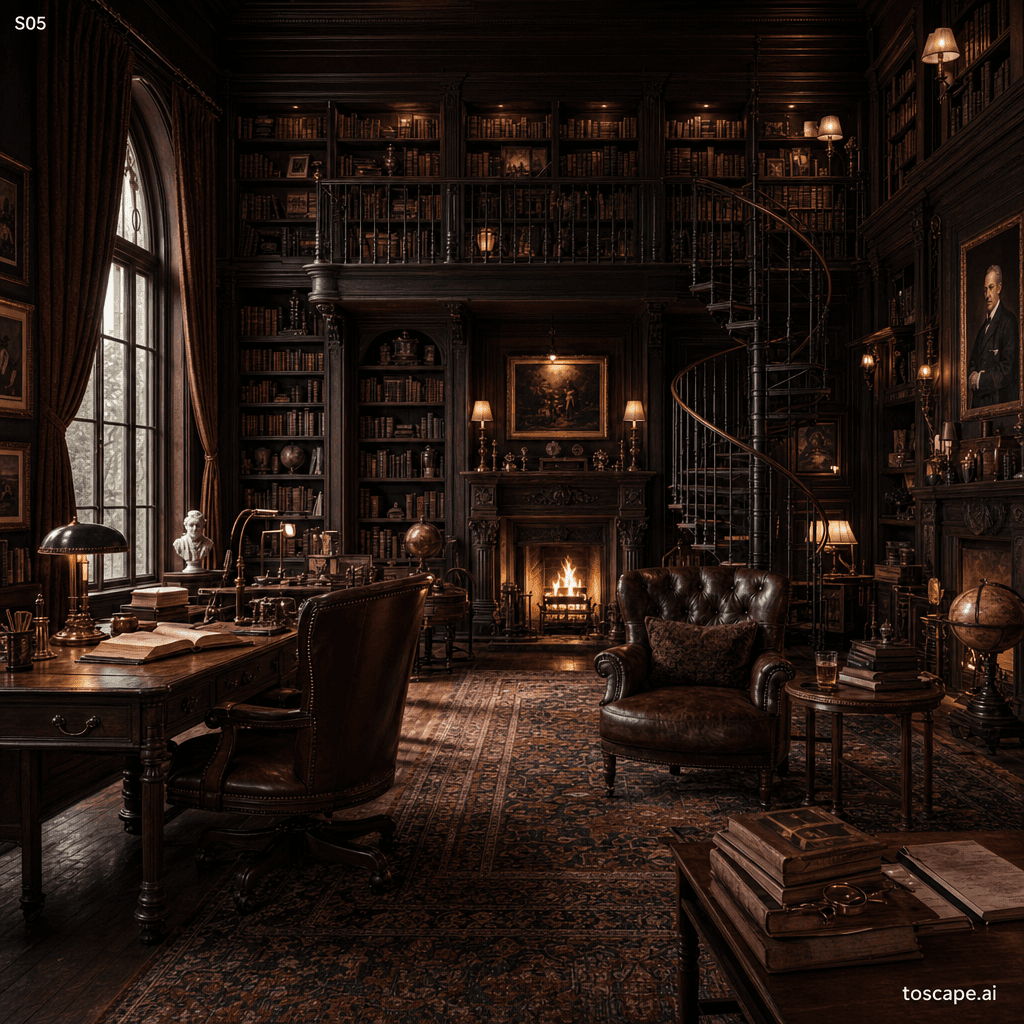
Interior reference image
Dark Academia composition, material palette, furniture language, and lighting direction.
Context Snapshot
Inspired by European university libraries, Victorian studies, and the literary world's romanticism-melding classic academic... Used in stylish residential libraries, boutique hotels, creative studios, literary-themed cafes, and refined study lounges. Preserve vintage richness but refine with contemporary elegance; carefully edit layers of books and art, add premium materials, and control lighting for powerful atmosphere.
Composition And Planning
Enclosed, focused, study-like; prioritizes small group or solitary use over open-plan expansiveness. Meandering, inviting exploration-paths curve around shelves, tables, and art, guiding the eye toward focal objects or light pools. Slightly off-center, eye-level or slightly lower, with layered depth-foreground objects, book-lined midground, focal point in the back, light and shadow interplay.
Furniture Grammar
Classic, sturdy, and scholarly-rolled arms, claw feet, button-tufted upholstery, double-caned or carved wood accents. Furniture is grouped for function and intimacy; reading corners, desk-nook combinations, conversational vignettes; never pure symmetry, but always composed. - Chesterfield sofa in aged leather - Massive walnut writing desk - Button-tufted velvet armchair
Creative Direction
A layered library bathed in golden lamplight, walnut shelves stacked with tomes, chesterfield leather seating among Persian rugs, single-rosed vases, and period art-all immersed in soft shadow and narrative warmth. Curated vignettes: angled books piled under brass desk lamps, velvet drapes half drawn, glove-polished wood, and artfully composed clusters of sculpture and manuscripts-everything refined yet intimate. A deep, shadowed study with lamplight glancing off ink bottles and gold frames, heavy drapery swallowing daylight at the edges, punctuated by the rich patina of books and story-soaked objects. - Real hardwood bespoke shelving and...
Best Project Applications
- Private libraries, creative studies, boutique hotels, reading lounges, atmospheric home offices.
Preserve, Transform, Avoid
Preserve
- Moody, intellectual atmosphere and narrative patina.
- Deep stained woods and real book layering.
- Warm lamplight pools and shadow depth.
- Rich textiles, aged leathers, and academic art.
Transform
- Refine book and object curation for clarity and beauty.
- Elevate material quality-woods, velvets, brass-for luxury without losing authenticity.
- Control layering density to avoid clutter, focusing on storytelling clusters.
- Use skillful lighting to romanticize shadows and highlight narrative details.
Avoid
- Minimalist, empty, or generic dark rooms.
- Modern synthetic materials and shiny plastic furniture.
- Cold white light, spotlights, or blue LEDs.
- Random maximalism without academic narrative.
- Excessive gothic, fantasy, or horror motifs.
Frequently asked questions
What is Dark Academia?
Dark Academia is an interior design style used for architectural visualization. A moody, immersive literary interior style defined by dark wood, layered books, patina, shadow, and vintage academic character.
What materials define Dark Academia?
Layered, tactile, and timeworn-soft velvets, cracked leather, burnished metals, thick wool, and exposed book spines. Woods dominate walls, floors, and shelves; upholstery and rugs provide softness; brass and aged metals punctuate.
What is the Dark Academia color palette?
Walnut and oak, moss green velvets, oxblood leather, heavy linen ivory, brass lamp glow, and parchment accents. Rich, layered, harmonious blends of dark neutrals and warm accent hues punctuated by age-worn gold and occasional deep jewel.
What is the origin of Dark Academia?
Inspired by European university libraries, Victorian studies, and the literary world's romanticism-melding classic academic... Used in stylish residential libraries, boutique hotels, creative studios, literary-themed cafes, and refined study lounges. Preserve vintage richness but refine with contemporary elegance; carefully edit layers of books and art, add premium materials, and control lighting for powerful atmosphere.
When should architects use Dark Academia?
A layered library bathed in golden lamplight, walnut shelves stacked with tomes, chesterfield leather seating among Persian rugs, single-rosed vases, and period art-all immersed in soft shadow and narrative warmth. Curated vignettes: angled books piled under brass desk lamps, velvet drapes half drawn, glove-polished wood, and artfully composed clusters of sculpture and manuscripts-everything refined yet intimate.
How do you render Dark Academia in Toscape?
Open Toscape on Windows, load your own photo, elevation, sketch, or CAD view, then apply the Dark Academia reference from the built-in style library. The Interior Design workflow keep your project geometry and camera while shifting materials, proportion, and detailing toward Dark Academia.
Use this style in Toscape
Explore Dark Academia inside Toscape using interior-focused rendering workflows and gallery references.
Open interior references