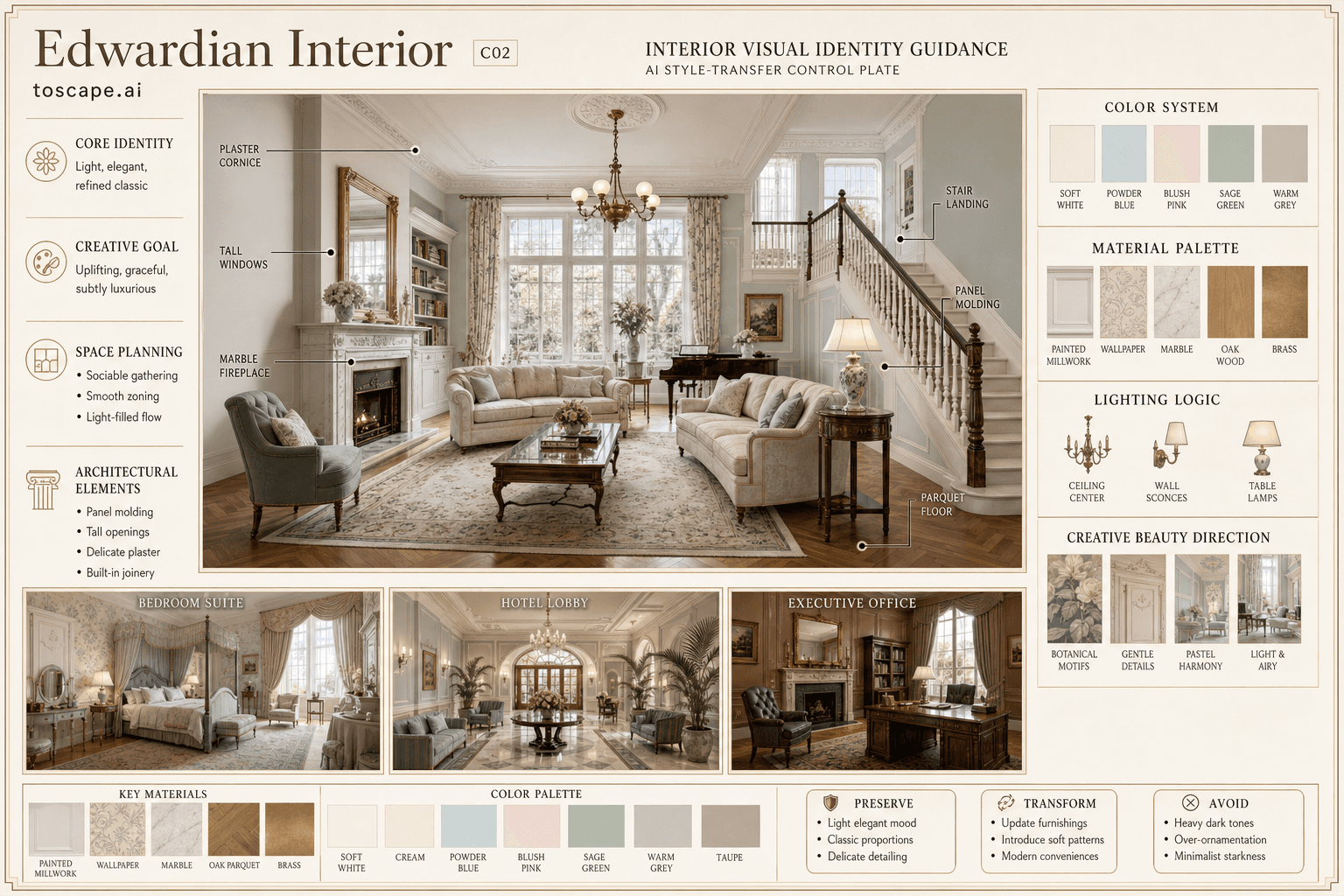
Edwardian Interior
C02 / Modern Classic / Early 20th Century Revival / Light Classical
An airy, refined classical style with pastel paneling, tall luminous windows, delicate mouldings, and understated elegant comfort.
Definition
Edwardian Interior is an interior design style used for architectural visualization. An airy, refined classical style with pastel paneling, tall luminous windows, delicate mouldings, and understated elegant comfort.
- Family
- Modern Classic / Early 20th Century Revival / Light Classical.
- Origin
- Edwardian style emerged in Britain during the reign of Edward VII (1901-1910), blending late Victorian architectural formality.
- Massing
- Clean-lined neoclassical mouldings, delicate plaster panels, tall windows, soft arches, organic botanical motifs, and gentle curves.
- Materials
- Smooth painted surfaces, light grain wood, gentle fabric textures, crisp plasterwork, and subtle rug pile.
- Palette
- Soft white, powder blue, sage green, blush pink, brass accents, warm oak or light parquet, gentle taupe.
- Lighting
- Softly diffused from central pendant fixtures, delicate ceiling medallion lights, or subtle wall sconces.
Overview
Edwardian Interior is an interior design style defined by A refined, airy, and light classical interior style defined by elegant proportions, restrained ornamentation, delicate pastel palettes, and a harmonious blend of tradition and early modern freshness. The intent is to create interiors that feel uplifting, sociable, cultured, and subtly luxurious, combining period charm with a fresh, welcoming ambiance.
Visual DNA
Spatial Feeling
Bright, airy, and welcoming, with a subtle sense of grace and formality.
Form Language
Clean-lined neoclassical mouldings, delicate plaster panels, tall windows, soft arches, organic botanical motifs, and gentle curves. Generous ceiling heights, elegant room dimensions, balanced wall/floor ratios, and a preference for...
Composition
Rooms are organized for social gathering and comfort, favoring square or rectangular spaces with defined conversation areas. Fireplaces, feature windows, delicate ceiling lights, and tasteful art or botanical arrangements. Best rendered...
Interior Elements
Painted or wallpapered panels, delicate molding, light-tone wainscoting, and subtle classical relief; pastel backgrounds, botanical or geometric patterns. Coffered, gently corniced, or with refined decorative plasterwork medallions;...
Color System
Soft white, powder blue, sage green, blush pink, brass accents, warm oak or light parquet, gentle taupe. Maintain tonal harmony among light pastels, creams, and soft metallics for a serene, luminous atmosphere. For drama, inject deeper...
Material Palette
Smooth painted surfaces, light grain wood, gentle fabric textures, crisp plasterwork, and subtle rug pile. Wood and plaster define structure and walls, textiles soften seating, brass gleams at key points, and glass reflects light...
Lighting Logic
Softly diffused from central pendant fixtures, delicate ceiling medallion lights, or subtle wall sconces. Capture the play of gentle daylight and the shimmer of brass or glass fixtures; emphasize layered brightness and romantic evening...
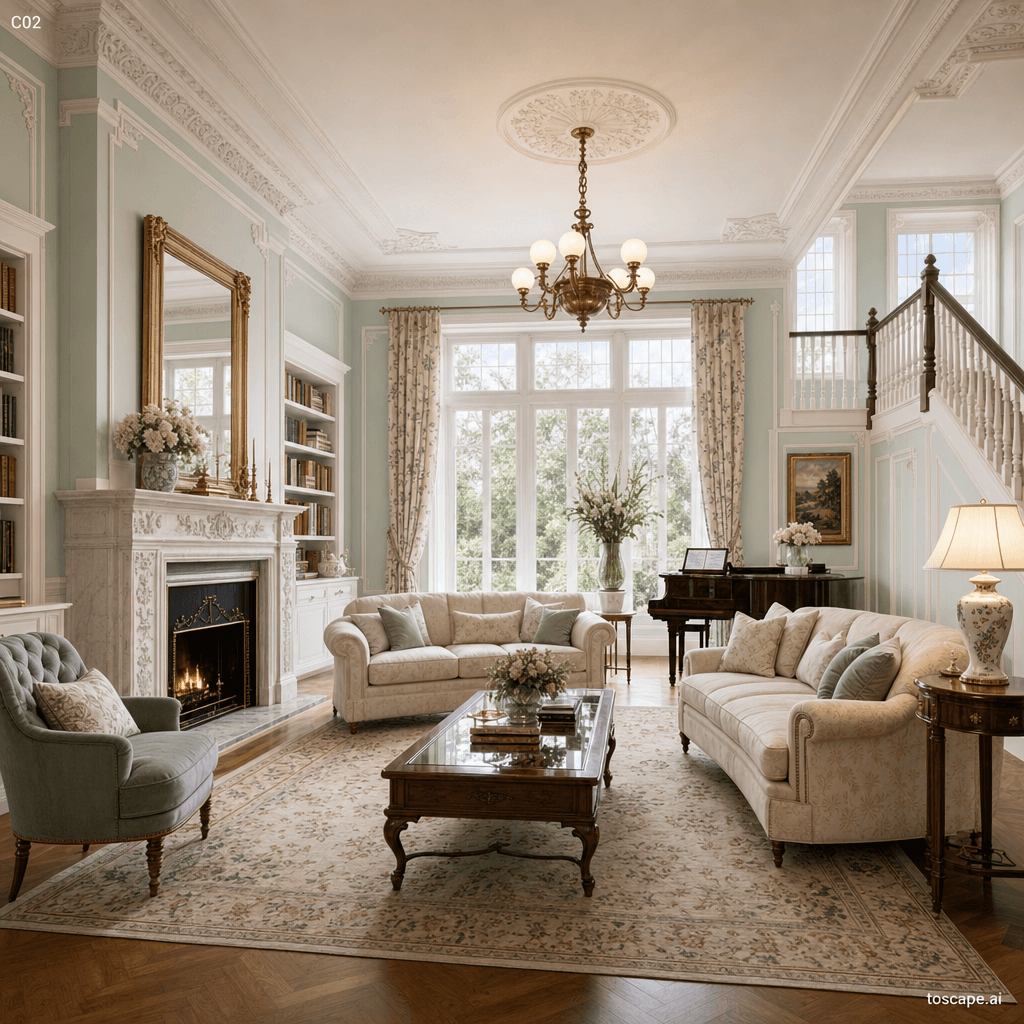
Interior reference image
Edwardian Interior composition, material palette, furniture language, and lighting direction.
Context Snapshot
Edwardian style emerged in Britain during the reign of Edward VII (1901-1910), blending late Victorian architectural formality... Favored in luxury residential projects, boutique hotels, cafes, and curated revivals of historic interiors; applied in spaces seeking a sense of quiet classicism and light-filled comfort. Preserve the sense of proportion, paneling, and delicate detail, update with fresher pastel palettes, controlled natural light, and simplified furniture for upscale, desirable interiors.
Composition And Planning
Rooms are organized for social gathering and comfort, favoring square or rectangular spaces with defined conversation areas. Movement is easy and natural, guided by tall doorways, open sightlines, and inviting light. Best rendered with a shoulder-height, slightly off-center view to reveal foreground seating, midground focal wall, and the fullness of natural light from windows.
Furniture Grammar
Delicate, light classic shapes with curved lines and tapered legs; subtle nods to Art Nouveau and late-Victorian, but less ornate. Grouped to foster conversation, lightly symmetrical but never rigid, balanced with spatial breathing room. - Elegant settee with tapered legs - Lightly tufted armchair - Painted wood sideboard - Inlaid salon table
Creative Direction
A refined salon with powder blue paneling, elegant medallion ceiling, tall sash windows flooding the room with light, blush velvet settee, delicate botanical drapery, brass chandelier, and a single period artwork. Subtle, airy, balanced, artfully styled with paired seating, gentle tablescapes, controlled vignettes, flawless paneling, and a curated, harmonious palette. Flooded with golden afternoon light, dappled shadows from tall windows, pastel walls glowing, a single elegant bouquet, and polished parquet reflecting subtle highlights. - Flawless wall paneling and plaster - Real wood floors and brass hardware - Custom drapery and tailored...
Best Project Applications
- Luxury homes, formal sitting rooms, boutique hotel lounges, light-filled dining or garden rooms.
Preserve, Transform, Avoid
Preserve
- Tall, luminous windows and soft daylighting
- Painted or wallpapered classical paneling
- Delicate, restrained mouldings and plasterwork
- Pastel palettes and light materials
Transform
- Introduce softer modern forms if they do not break classical balance
- Selectively use contemporary lighting in classic shapes
- Update botanical textiles within the pastel system
- Simplify ornament for cleaner, editorial presentation
Avoid
- Heavy, dark, or oppressive color schemes
- Overly ornate Victorian or Rococo furniture
- Industrial, minimalist, or rustic materials
- Cluttered "maximalist" accessory displays
- Flat, generic hotel or "Pinterest" luxury
Frequently asked questions
What is Edwardian Interior?
Edwardian Interior is an interior design style used for architectural visualization. An airy, refined classical style with pastel paneling, tall luminous windows, delicate mouldings, and understated elegant comfort.
What materials define Edwardian Interior?
Smooth painted surfaces, light grain wood, gentle fabric textures, crisp plasterwork, and subtle rug pile. Wood and plaster define structure and walls, textiles soften seating, brass gleams at key points, and glass reflects light.
What is the Edwardian Interior color palette?
Soft white, powder blue, sage green, blush pink, brass accents, warm oak or light parquet, gentle taupe. Maintain tonal harmony among light pastels, creams, and soft metallics for a serene, luminous atmosphere. For drama, inject deeper.
What is the origin of Edwardian Interior?
Edwardian style emerged in Britain during the reign of Edward VII (1901-1910), blending late Victorian architectural formality... Favored in luxury residential projects, boutique hotels, cafes, and curated revivals of historic interiors; applied in spaces seeking a sense of quiet classicism and light-filled comfort.
When should architects use Edwardian Interior?
A refined salon with powder blue paneling, elegant medallion ceiling, tall sash windows flooding the room with light, blush velvet settee, delicate botanical drapery, brass chandelier, and a single period artwork. Subtle, airy, balanced, artfully styled with paired seating, gentle tablescapes, controlled vignettes, flawless paneling, and a curated, harmonious palette.
How do you render Edwardian Interior in Toscape?
Open Toscape on Windows, load your own photo, elevation, sketch, or CAD view, then apply the Edwardian Interior reference from the built-in style library. The Interior Design workflow keep your project geometry and camera while shifting materials, proportion, and detailing toward Edwardian Interior.
Use this style in Toscape
Explore Edwardian Interior inside Toscape using interior-focused rendering workflows and gallery references.
Open interior references