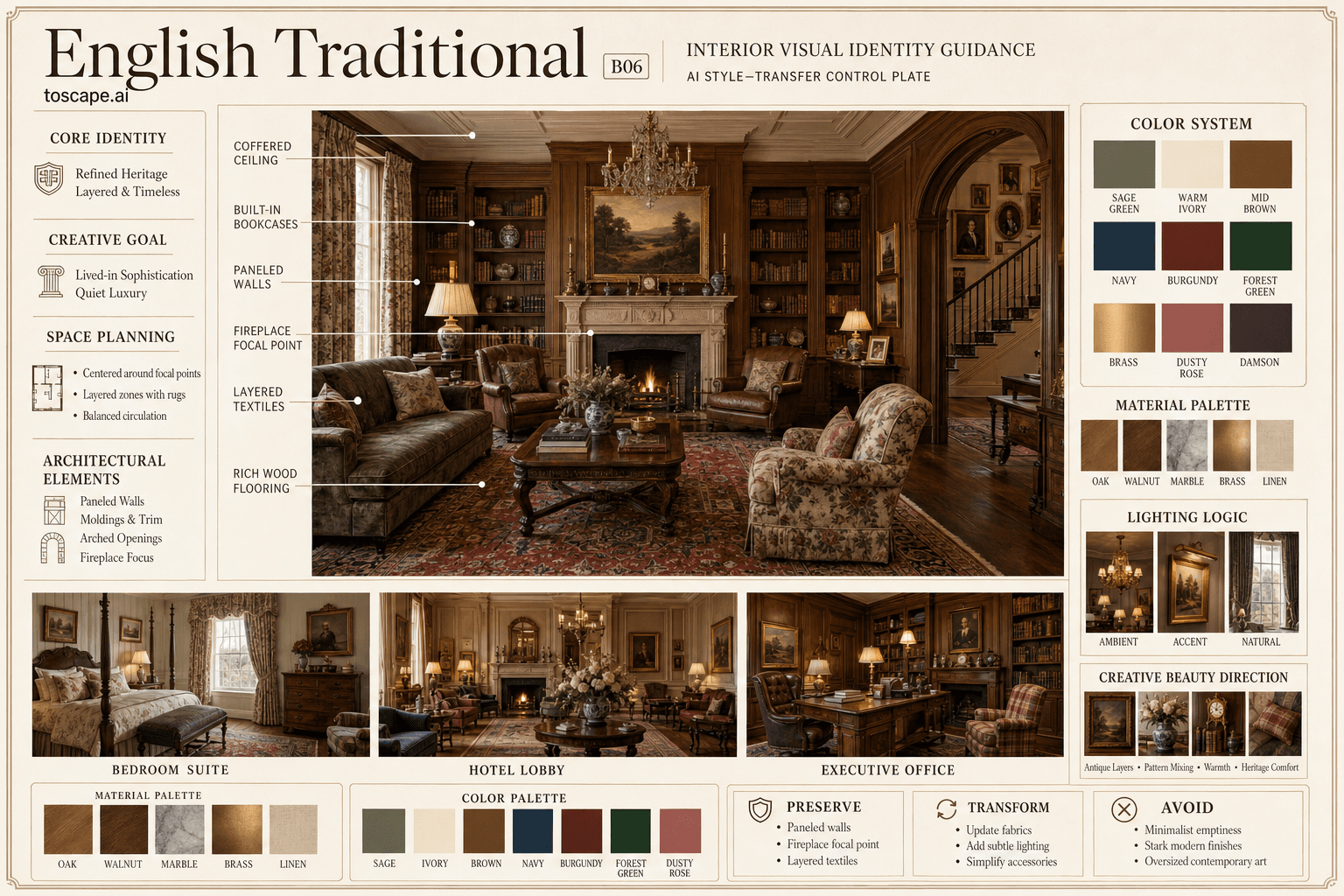
English Traditional
B06 / Modern Classic / Colonial Classic / Old World Heritage / Country Estate / Refined...
A layered, refined English interior defined by paneled walls, classic furniture, rich textiles, historic art, and comfortable, cultivated elegance.
Definition
English Traditional is an interior design style used for architectural visualization. A layered, refined English interior defined by paneled walls, classic furniture, rich textiles, historic art, and comfortable, cultivated elegance.
- Family
- Modern Classic / Colonial Classic / Old World Heritage / Country Estate / Refined.
- Origin
- Draws on Georgian, Regency, and Victorian English interiors, adapted for today's residential and boutique hospitality spaces.
- Massing
- Gracious symmetry, paneled walls, elegant moldings, archways, bay windows, generous fireplaces, classic arm/furniture curves, and balanced silhouettes.
- Materials
- Sumptuous, tactile, and historic-wood grain, soft upholstery, wool rugs, velvet, and glazed ceramics.
- Palette
- Sage paneling, antique wood, aged brass, soft ivory, patterned Persian rug, deep velvet, and classic stripe/floral prints.
- Lighting
- Warm, layered: classic pendants, shaded chandeliers, semi-flush fixtures, or decorative lanterns.
Overview
English Traditional is an interior design style defined by A refined, layered, and timeless interior identity rooted in English country house traditions, marked by tailored composition, rich materials, curated antiques, and a comfortable, lived-in elegance. To evoke lived-in sophistication and quiet luxury, combining English restraint with cozy informality and a layered, character-rich backdrop.
Visual DNA
Spatial Feeling
Inviting, layered, substantial, warm, cultivated, and comfortably elegant.
Form Language
Gracious symmetry, paneled walls, elegant moldings, archways, bay windows, generous fireplaces, classic arm/furniture curves, and balanced silhouettes. Medium to tall spaces feel best, with well-scaled wall details and a sense of...
Composition
Composed and room-based, often defined by a central seating area around a fireplace or focal table. Main fireplace, statement art, bay window, antique cabinet, bookcase wall, or piano. Best with a slightly elevated eye-level angle,...
Interior Elements
Signature paneled or wainscoted walls, painted or wood-finished, with subtle moldings, traditional wallcoverings (damask, stripe, floral), and framed art. Quietly detailed-flat, coffered, or lightly molded ceilings; may include subtle...
Color System
Sage paneling, antique wood, aged brass, soft ivory, patterned Persian rug, deep velvet, and classic stripe/floral prints. Balance warm neutrals with layered, lived-in color in textiles and art; ground the scheme with wood and bring...
Material Palette
Sumptuous, tactile, and historic-wood grain, soft upholstery, wool rugs, velvet, and glazed ceramics. Wood dominates floors, joinery, and paneling; textiles cover seating, windows, and floors; stone/iron is reserved for the hearth and...
Lighting Logic
Warm, layered: classic pendants, shaded chandeliers, semi-flush fixtures, or decorative lanterns. Create moody pockets of warmth and shadow, highlighting texture, paneling, and focal points, with soft, golden glows and deep, inviting...
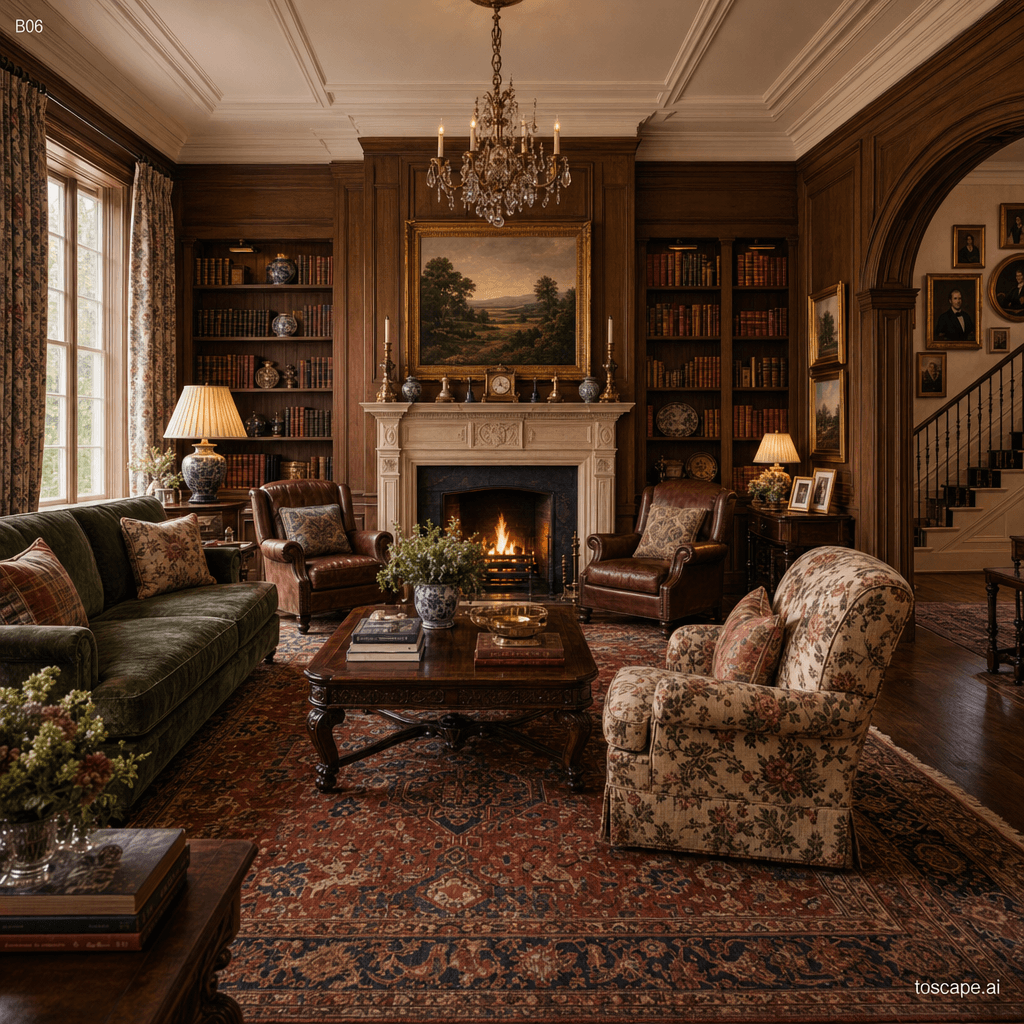
Interior reference image
English Traditional composition, material palette, furniture language, and lighting direction.
Context Snapshot
Draws on Georgian, Regency, and Victorian English interiors, adapted for today's residential and boutique hospitality spaces. Favored in luxury homes, traditional hotels, boutique rural and urban hospitality, and premium restoration projects needing a sense of age, dignity, and comfort. Retain paneled walls, bespoke joinery, curated antiques, and patterned textiles while editing clutter, refining color, and emphasizing comfort and spatial light.
Composition And Planning
Composed and room-based, often defined by a central seating area around a fireplace or focal table. Invites relaxed circulation around central focal points, with clear sightlines to art, fireplace, or gardens. Best with a slightly elevated eye-level angle, capturing the main wall, fireplace, and seating zone; use foreground textile or furniture, a midground cluster, and curated background.
Furniture Grammar
Classic English forms-rolled arms, camelback or wingback sofas, deep-seated club chairs, cabriole or turned legs, soft curves. Sympathetic symmetry with conversational grouping, never wall-hugging; occasional "reading" chairs, nested tables, or writing desks placed for utility and charm. - Wingback armchair - Chesterfield sofa - Mahogany writing desk - Glass-front bookcase - Ebonized occasional table
Creative Direction
A sun-washed paneled drawing room layered with Persian rugs, a deep green velvet sofa, antique mahogany cases, brass lamps, oil paintings, and an inviting fireplace, composed for both comfort and visual richness. Carefully composed, flooded with warm natural light, with perfectly styled bookshelves, artfully layered textiles and objects, and every detail cleaned for elegance without losing genuine warmth. Golden hour light grazing paneled walls, deep jewel-toned textiles and oils, dramatic shadow around bookcases and mantel, and a glowing reading lamp anchoring the evening's story. - Paneled walls and real wood detail - Quality rugs and...
Best Project Applications
- Luxury homes, boutique hotels, private clubs, drawing rooms, libraries.
Preserve, Transform, Avoid
Preserve
- Paneled or wainscoted wall architecture
- Sympathetic classic English furniture forms
- Harmoniously layered textiles and rugs
- Curated sense of history and comfort
Transform
- Modernize color palettes while preserving heritage tone
- Edit clutter-curate antiques and accessories thoughtfully
- Slightly open up space planning for better daylight and usability
- Use contemporary art sparingly only if well-integrated with other elements
Avoid
- Stark minimalism and blank walls
- Generic mass-market "traditional" furniture
- Synthetic or plastic materials
- Harsh lighting (cold, blue, or clinical LEDs)
- Visual randomness without compositional balance
Frequently asked questions
What is English Traditional?
English Traditional is an interior design style used for architectural visualization. A layered, refined English interior defined by paneled walls, classic furniture, rich textiles, historic art, and comfortable, cultivated elegance.
What materials define English Traditional?
Sumptuous, tactile, and historic-wood grain, soft upholstery, wool rugs, velvet, and glazed ceramics. Wood dominates floors, joinery, and paneling; textiles cover seating, windows, and floors.
What is the English Traditional color palette?
Sage paneling, antique wood, aged brass, soft ivory, patterned Persian rug, deep velvet, and classic stripe/floral prints. Balance warm neutrals with layered, lived-in color in textiles and art; ground the scheme with wood and bring.
What is the origin of English Traditional?
Draws on Georgian, Regency, and Victorian English interiors, adapted for today's residential and boutique hospitality spaces. Favored in luxury homes, traditional hotels, boutique rural and urban hospitality, and premium restoration projects needing a sense of age, dignity, and comfort. Retain paneled walls, bespoke joinery, curated antiques, and patterned textiles while editing clutter, refining color, and emphasizing comfort and spatial light.
When should architects use English Traditional?
A sun-washed paneled drawing room layered with Persian rugs, a deep green velvet sofa, antique mahogany cases, brass lamps, oil paintings, and an inviting fireplace, composed for both comfort and visual richness. Carefully composed, flooded with warm natural light, with perfectly styled bookshelves, artfully layered textiles and objects, and every detail cleaned for elegance without losing genuine warmth.
How do you render English Traditional in Toscape?
Open Toscape on Windows, load your own photo, elevation, sketch, or CAD view, then apply the English Traditional reference from the built-in style library. The Interior Design workflow keep your project geometry and camera while shifting materials, proportion, and detailing toward English Traditional.
Use this style in Toscape
Explore English Traditional inside Toscape using interior-focused rendering workflows and gallery references.
Open interior references