Farmhouse
J01 / Rustic / Organic / Country / Heritage / Casual
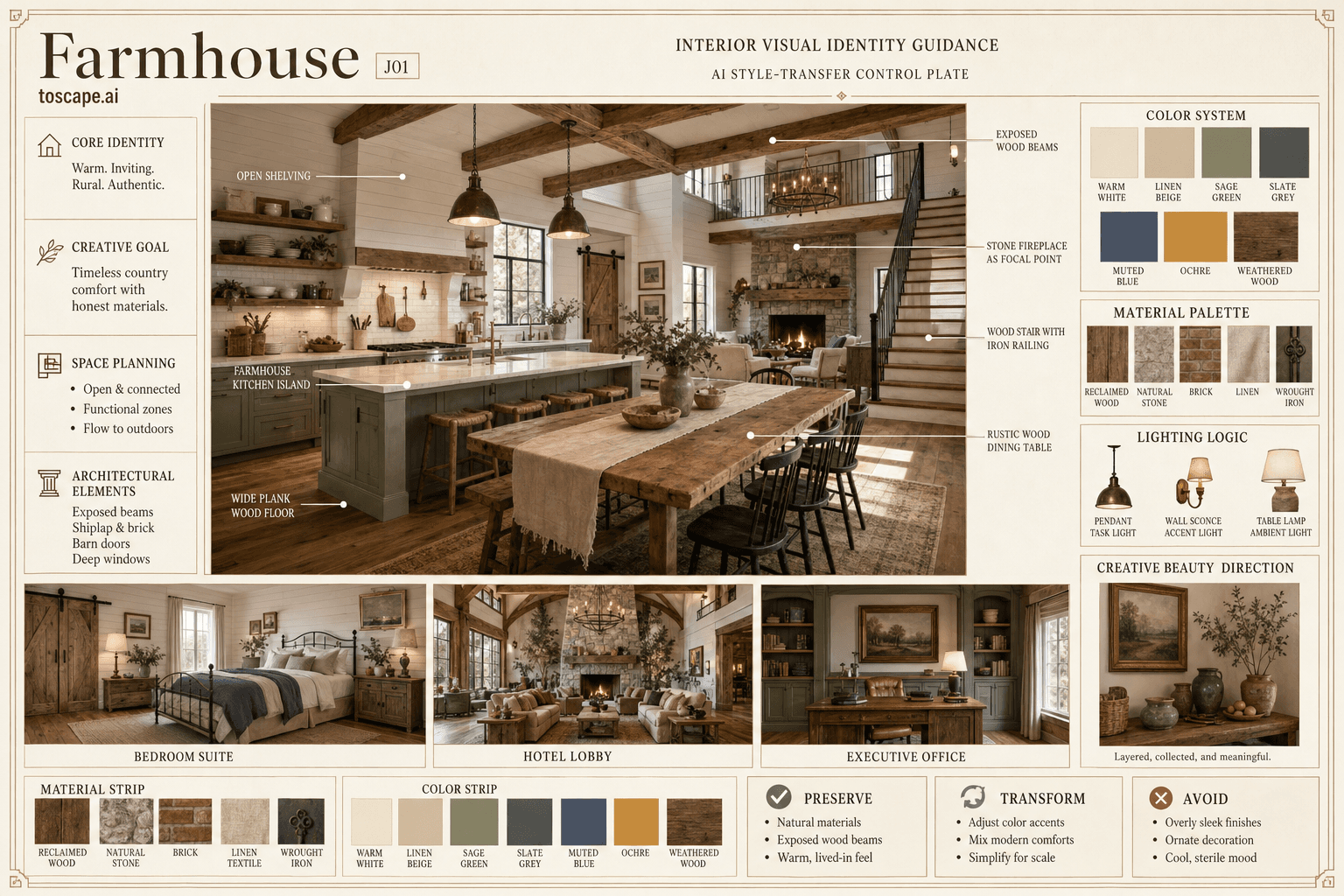
A warm, tactile rural interior identity defined by honest natural materials, exposed beams, soft light, and simple furniture.
Definition
Farmhouse is an interior design style used for architectural visualization. A warm, tactile rural interior identity defined by honest natural materials, exposed beams, soft light, and simple furniture.
- Family
- Rustic / Organic / Country / Heritage / Casual.
- Origin
- Rooted in traditional European and American rural dwellings and agricultural architecture, especially 18th-early 20th-century.
- Massing
- Simple, solid, utilitarian geometry: sturdy tables, exposed beams, gentle curves in reclaimed wood, barn doors, and deep window ledges.
- Materials
- Tactile richness, visible grain, subtle patina, nubby woven surfaces, and relaxed softness throughout.
- Palette
- Warm whites with layered linen, patinated timber, touches of olive green, warm brass hardware, and tactile rug softening.
- Lighting
- Soft, indirect, and warm-ceiling-mounted or wall sconces with opaque or linen shades, avoiding cold or harsh sources.
Overview
Farmhouse is an interior design style defined by A warm, inviting, rustic rural interior defined by honest natural materials, casual comfort, simple craftsmanship, and authentic rural character. To create an authentic, functional, and emotionally warm environment that feels rooted in nature and tradition, offering everyday comfort and lived-in beauty.
Visual DNA
Spatial Feeling
Bright, airy, relaxed, and comforting, with a strong sense of home and memory.
Form Language
Simple, solid, utilitarian geometry: sturdy tables, exposed beams, gentle curves in reclaimed wood, barn doors, and deep window ledges. Balanced, welcoming proportions with medium to generous ceiling heights where possible; rooms feel...
Composition
Open-plan or semi-open, with clear zones: large kitchen-dining areas, central communal seating, generous circulation, and visual connection to nature. Feature fireplace, farm-style dining table, freestanding kitchen island, exposed beam...
Interior Elements
Painted shiplap, limewash, rough plaster, exposed brick, or simple white-painted drywall; occasional natural stone or wood panel accent. Exposed timber beams, reclaimed wood, or simple flat white ceiling with subtle texture; never...
Color System
Warm whites with layered linen, patinated timber, touches of olive green, warm brass hardware, and tactile rug softening. Keep the palette earthy and natural, with dominant neutrals, restrained dusty or nature-based hues, and no...
Material Palette
Tactile richness, visible grain, subtle patina, nubby woven surfaces, and relaxed softness throughout. Wood for floors, furniture, beams, and some walls; stone or brick for fireplaces and select floors; soft textiles for comfort;...
Lighting Logic
Soft, indirect, and warm-ceiling-mounted or wall sconces with opaque or linen shades, avoiding cold or harsh sources. Use dramatic sunbeams, soft corner shadow, and warm lamp pools to create evocative, homely atmosphere. Lighting should...
Interior reference image
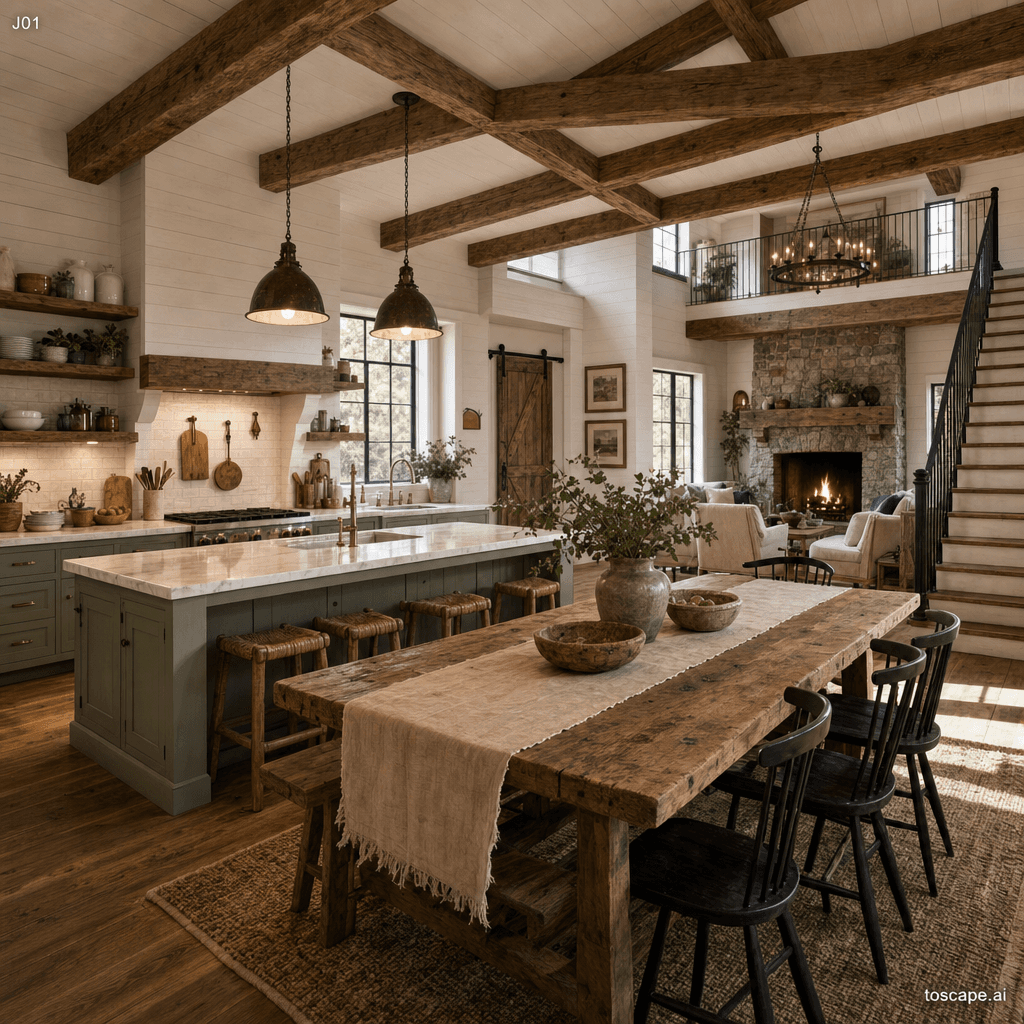
Farmhouse composition, material palette, furniture language, and lighting direction.
Context Snapshot
Rooted in traditional European and American rural dwellings and agricultural architecture, especially 18th-early 20th-century... Popular for both suburban and rural homes, boutique hospitality, and stylish city apartments seeking authenticity, warmth, and a sense of retreat from urban life. Preserve the hand-crafted simplicity, layered comfort, and honest materials, but curate color, de-clutter, and avoid excessive decorative kitsch; elevate raw materials with refined finishes and clear spatial order.
Composition And Planning
Open-plan or semi-open, with clear zones: large kitchen-dining areas, central communal seating, generous circulation, and visual connection to nature. Easy, uninterrupted flow between spaces; the eye travels through a gentle rhythm of architectural features, with no abrupt transitions. Eye-level or slight downward camera, wide angle to show beams/ceiling, capturing foreground furniture (like a table), midground seating, and a light-filled window or fireplace as backdrop; subtle asymmetry and strong textural focus.
Furniture Grammar
Solid, honest, and functional; chunky, sturdy shapes with rounded edges or worn corners. Informal groupings centered around conversation or utility; allow enough space between pieces for relaxation and flow; always anchored in function. - Long plank farmhouse dining table - Oversized slipcovered sofa - Windsor or spindle-back chair
Creative Direction
A longtime-lived-in, sun-dappled farmhouse room with reclaimed timber beams, smooth shiplap, a timeworn farm table, oversized slipcovered sofa, linen curtains, worn wool rugs, handmade pottery, and subtle art, all glowing with filtered natural light. Crisply composed, with warm daylight revealing every tactile grain and patina; curated groupings on shelves, no clutter, balanced room-wide beauty, elevated hand-made and local objects. Low sun rays highlighting rough wood, deep shadow around a hearth, steam curling from a pottery mug, and subtle haze caught in linen drapery-evocative, immersive, and emotionally nostalgic. - Real, quality...
Best Project Applications
- Country homes, family kitchens, rural guesthouses, farmhouse-inspired cafes, open-plan living spaces.
Preserve, Transform, Avoid
Preserve
- Honest, tactile natural materials (especially weathered wood)
- Welcoming, light-filled rural atmosphere
- Handmade and functional furniture
- Inviting, layered, unpretentious comfort
Transform
- Curate and declutter accessories for a more refined look
- Use premium finishes and craftsmanship to elevate authenticity
- Allow subtle contemporary lighting or open-plan layouts if they do not disturb rural soul
- Mix old and new artifacts to tell a fresh country story
Avoid
- Plastic or synthetic finishes and accessories
- Excessive faux distressing or staged "farmhouse" props
- Glossy, luxurious, or ornate surfaces
- Monochrome minimalism with no rural warmth
- Bold industrial or urban insertions
Frequently asked questions
What is Farmhouse?
Farmhouse is an interior design style used for architectural visualization. A warm, tactile rural interior identity defined by honest natural materials, exposed beams, soft light, and simple furniture.
What materials define Farmhouse?
Tactile richness, visible grain, subtle patina, nubby woven surfaces, and relaxed softness throughout. Wood for floors, furniture, beams, and some walls; stone or brick for fireplaces and select floors; soft textiles for comfort.
What is the Farmhouse color palette?
Warm whites with layered linen, patinated timber, touches of olive green, warm brass hardware, and tactile rug softening. Keep the palette earthy and natural, with dominant neutrals, restrained dusty or nature-based hues, and no.
What is the origin of Farmhouse?
Rooted in traditional European and American rural dwellings and agricultural architecture, especially 18th-early 20th-century... Popular for both suburban and rural homes, boutique hospitality, and stylish city apartments seeking authenticity, warmth, and a sense of retreat from urban life.
When should architects use Farmhouse?
A longtime-lived-in, sun-dappled farmhouse room with reclaimed timber beams, smooth shiplap, a timeworn farm table, oversized slipcovered sofa, linen curtains, worn wool rugs, handmade pottery, and subtle art, all glowing with filtered natural light. Crisply composed, with warm daylight revealing every tactile grain and patina; curated groupings on shelves, no clutter, balanced room-wide beauty, elevated hand-made and local objects.
How do you render Farmhouse in Toscape?
Open Toscape on Windows, load your own photo, elevation, sketch, or CAD view, then apply the Farmhouse reference from the built-in style library. The Interior Design workflow keep your project geometry and camera while shifting materials, proportion, and detailing toward Farmhouse.
Use this style in Toscape
Explore Farmhouse inside Toscape using interior-focused rendering workflows and gallery references.
Open interior references