Indian Contemporary
Q01 / Contemporary, Ethnic Modern, Regional Luxury, Transitional Indian
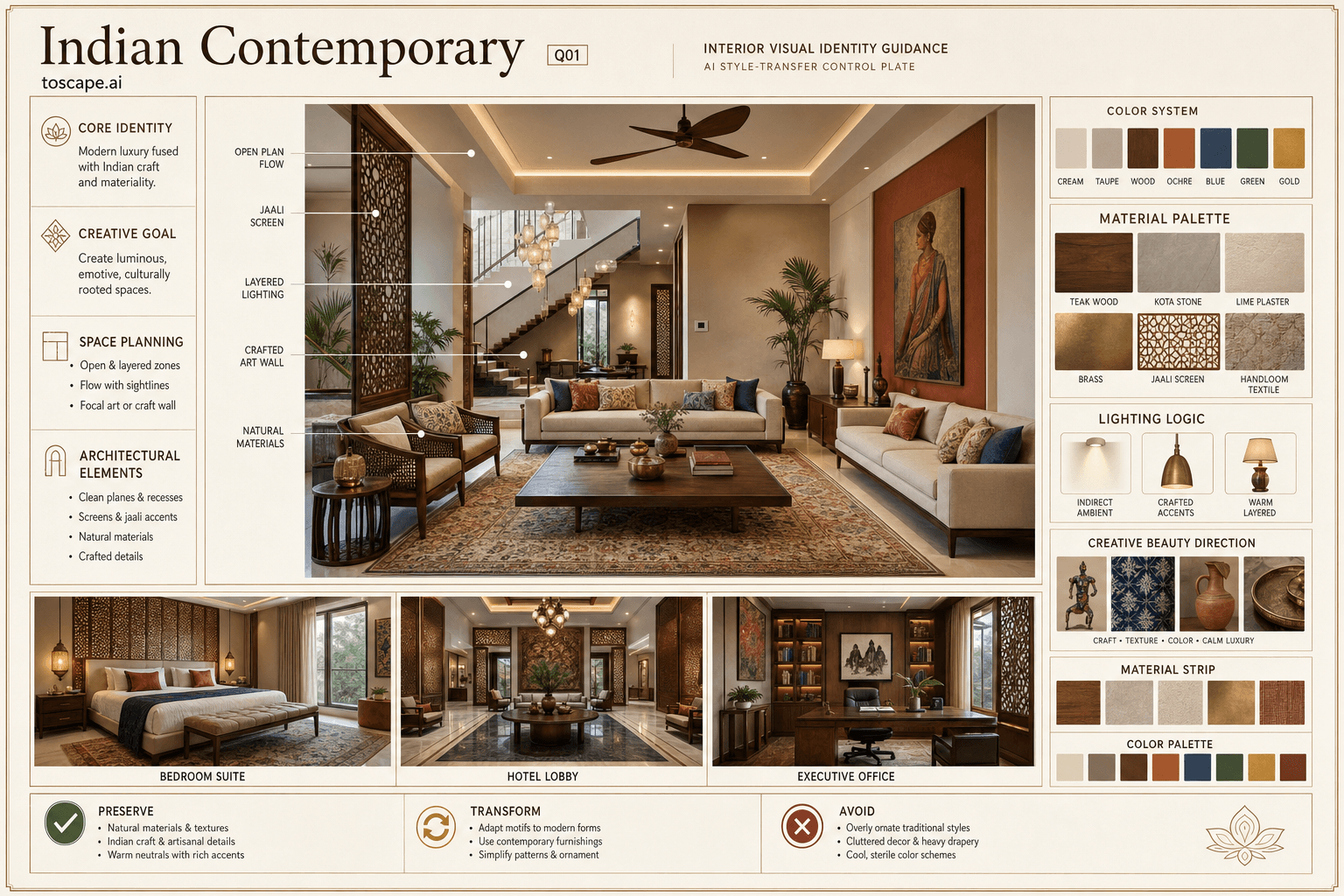
A calm, luxurious, modern Indian interior featuring tactile natural materials, premium craft, curated color, and subtle regional artistry.
Definition
Indian Contemporary is an interior design style used for architectural visualization. A calm, luxurious, modern Indian interior featuring tactile natural materials, premium craft, curated color, and subtle regional artistry.
- Family
- Contemporary, Ethnic Modern, Regional Luxury, Transitional Indian.
- Origin
- Evolved in the 21st century from upscale Indian residences and hospitality projects seeking a break from classic ornate.
- Massing
- Clean lines, simple geometric planes, gentle curves, integrated screening, low furniture, crafted detail, layered recesses, and softly articulated architecture.
- Materials
- Tactile, matte, finely grained, with hand-carved or woven accents; subtle irregularities are celebrated.
- Palette
- Cream, taupe, rich brown, soft grey, accents of deep blue/mustard/ochre, patina brass, and controlled texture.
- Lighting
- Warm white cove, recessed LED, soft diffusers, or semi-flush fixtures; avoid cold blue or stark spotlights.
Overview
Indian Contemporary is an interior design style defined by A sophisticated fusion of modern spatial clarity, luxurious minimalism, and refined Indian craft, color, and materiality. To create interiors that feel global and refined, yet unmistakably Indian through color, artistry, understated tradition, and material storytelling.
Visual DNA
Spatial Feeling
Open, inviting, vibrant yet serene, with relaxed luxury and clear airiness.
Form Language
Clean lines, simple geometric planes, gentle curves, integrated screening, low furniture, crafted detail, layered recesses, and softly articulated architecture. Balanced-mid- to large-scale rooms with controlled, human-centric scale,...
Composition
Open-plan or partially zoned with visual flows; avoids tight compartmentalization. Hero walls with art, sculptural screens, signature furniture, patterned rug, or select cultural artifact-never multiple rivaling elements. Eye-height...
Interior Elements
Smooth painted or lime-plastered walls in cream, off-white, taupe, pale grey, or muted color blocks; feature walls may use wood paneling, stone cladding, artisanal paint, or subtle relief. Ceilings are generally plain, flat, or subtly...
Color System
Cream, taupe, rich brown, soft grey, accents of deep blue/mustard/ochre, patina brass, and controlled texture. Use grounded neutrals as a base, bold Indian accent colors for energy, and metallics for a touch of luxe-always in a...
Material Palette
Tactile, matte, finely grained, with hand-carved or woven accents; subtle irregularities are celebrated. Use wood for furniture and detail, stone for floors/tables/baths, cane/woven for accents, brass for hardware and select decor;...
Lighting Logic
Warm white cove, recessed LED, soft diffusers, or semi-flush fixtures; avoid cold blue or stark spotlights. Use pools of warm light and gentle shadow to reveal surface texture, highlight crafted objects, and create intimacy; never...
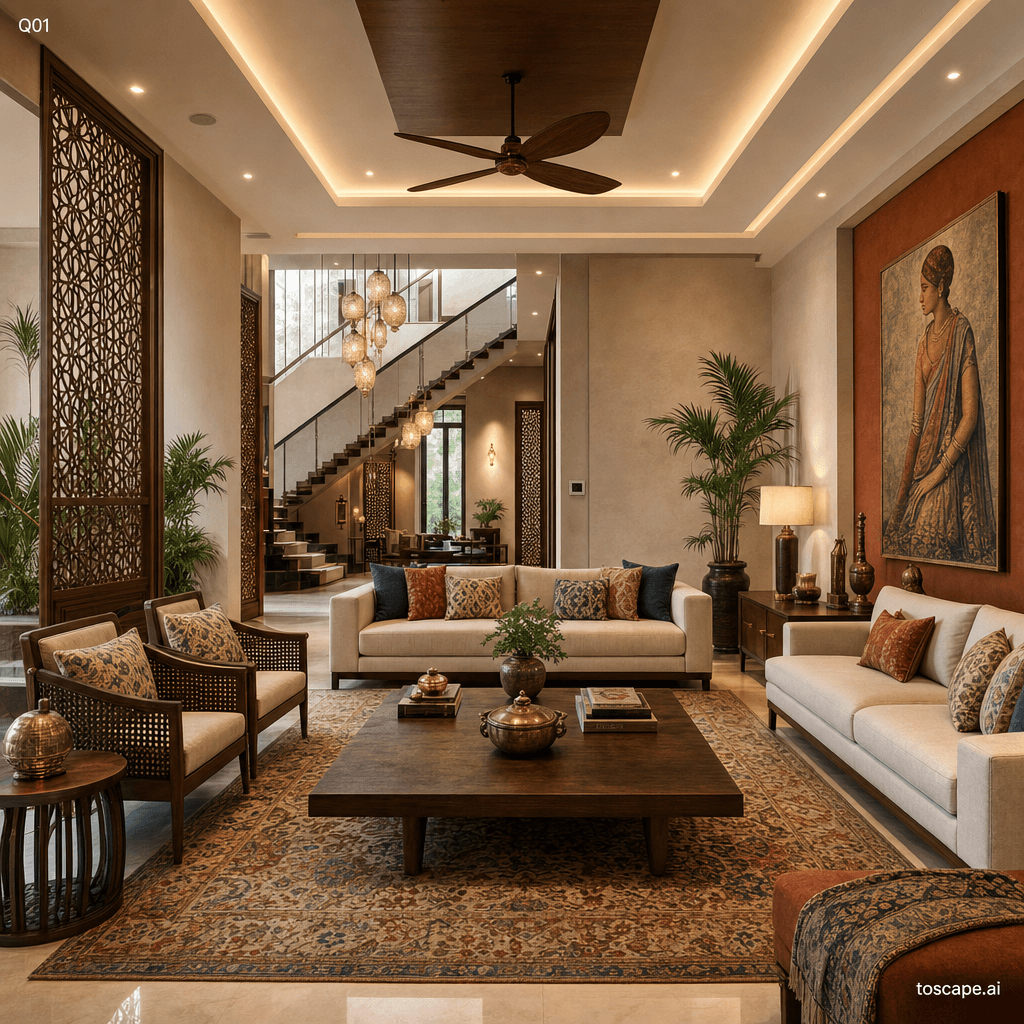
Interior reference image
Indian Contemporary composition, material palette, furniture language, and lighting direction.
Context Snapshot
Evolved in the 21st century from upscale Indian residences and hospitality projects seeking a break from classic ornate... Popular in luxury homes, apartments, boutique hotels, resto-lounges, design-driven offices, and new-gen Indian villas seeking local flavor with a global soul. Express architecture with clean planes, use open layouts, showcase warm woods, stone, brass, vibrant accents, handwork, and locally inspired furniture-with restraint and premium finishing.
Composition And Planning
Open-plan or partially zoned with visual flows; avoids tight compartmentalization. Fluid, with clear sightlines; encourages natural movement and layered discovery of Indian elements. Eye-height (approx. 120-140cm) with foreground rug/table, middle seating cluster, and rear focal wall/screen-use diagonal or soft central framing for depth, avoid harsh symmetry.
Furniture Grammar
Low, linear, relaxed, with soft-edged or slightly rounded geometry; rooted but light. Anchor main seating centrally, with floating arrangement or wall-aligned in smaller rooms; allow breathing space between units; highlight one statement piece per zone. - Low wooden divan or daybed - Woven cane-and-wood chair (Pierre Jeanneret inspired) - Marble-topped coffee table with brass accents
Creative Direction
A sunlit, open-plan living space featuring creamy walls, solid wood floors, curated designer furniture with woven cane and brass, a bold Indian artwork, patterned rug, warm vintage brass lighting, layered natural textiles, and a sculptural plant. Minimal, art-directed, with focus on negative space, signature Indian elements, bespoke wood joinery, large-format art, and crystal-clear daylight capturing surface and textile subtleties. Deep, glowing light with pools of warm shadow, moody stone or wood feature wall, pops of ochre or emerald in art/rug, shadow-cast screens, and candlelit brass near pure white textiles. - Real, tactile materials...
Best Project Applications
- Luxury living rooms, villas, apartments, boutique hotel suites, design-driven restaurants, urban contemporary homes.
Preserve, Transform, Avoid
Preserve
- Maintain calm, open space and daylight priority.
- Preserve authentic Indian craft, materiality, and subtle color expressions.
- Celebrate tactile natural materials (wood, stone, brass).
- Keep decor editorial, curated, and never cluttered.
Transform
- Translate traditional patterns into oversized or edited modern motifs.
- Use local craft in abstracted, minimalist forms.
- Intermix global design furniture with Indian accents for cosmopolitan edge.
- Heighten luxury through bespoke finishes and art commissions.
Avoid
- Overcrowding with folk, temple, or ceremonial decor.
- Layering with synthetic, plastic, or high-gloss finishes.
- Turning the style into sterile minimalism or generic hotel modern.
- Introducing industrial, flashy, or random neon color elements.
- Faking Indian flavor with touristy or non-premium artifacts.
Frequently asked questions
What is Indian Contemporary?
Indian Contemporary is an interior design style used for architectural visualization. A calm, luxurious, modern Indian interior featuring tactile natural materials, premium craft, curated color, and subtle regional artistry.
What materials define Indian Contemporary?
Tactile, matte, finely grained, with hand-carved or woven accents; subtle irregularities are celebrated. Use wood for furniture and detail, stone for floors/tables/baths, cane/woven for accents, brass for hardware and select decor.
What is the Indian Contemporary color palette?
Cream, taupe, rich brown, soft grey, accents of deep blue/mustard/ochre, patina brass, and controlled texture. Use grounded neutrals as a base, bold Indian accent colors for energy.
What is the origin of Indian Contemporary?
Evolved in the 21st century from upscale Indian residences and hospitality projects seeking a break from classic ornate... Popular in luxury homes, apartments, boutique hotels, resto-lounges, design-driven offices, and new-gen Indian villas seeking local flavor with a global soul.
When should architects use Indian Contemporary?
A sunlit, open-plan living space featuring creamy walls, solid wood floors, curated designer furniture with woven cane and brass, a bold Indian artwork, patterned rug, warm vintage brass lighting, layered natural textiles, and a sculptural plant. Minimal, art-directed, with focus on negative space, signature Indian elements, bespoke wood joinery, large-format art, and crystal-clear daylight capturing surface and textile subtleties.
How do you render Indian Contemporary in Toscape?
Open Toscape on Windows, load your own photo, elevation, sketch, or CAD view, then apply the Indian Contemporary reference from the built-in style library. The Interior Design workflow keep your project geometry and camera while shifting materials, proportion, and detailing toward Indian Contemporary.
Use this style in Toscape
Explore Indian Contemporary inside Toscape using interior-focused rendering workflows and gallery references.
Open interior references