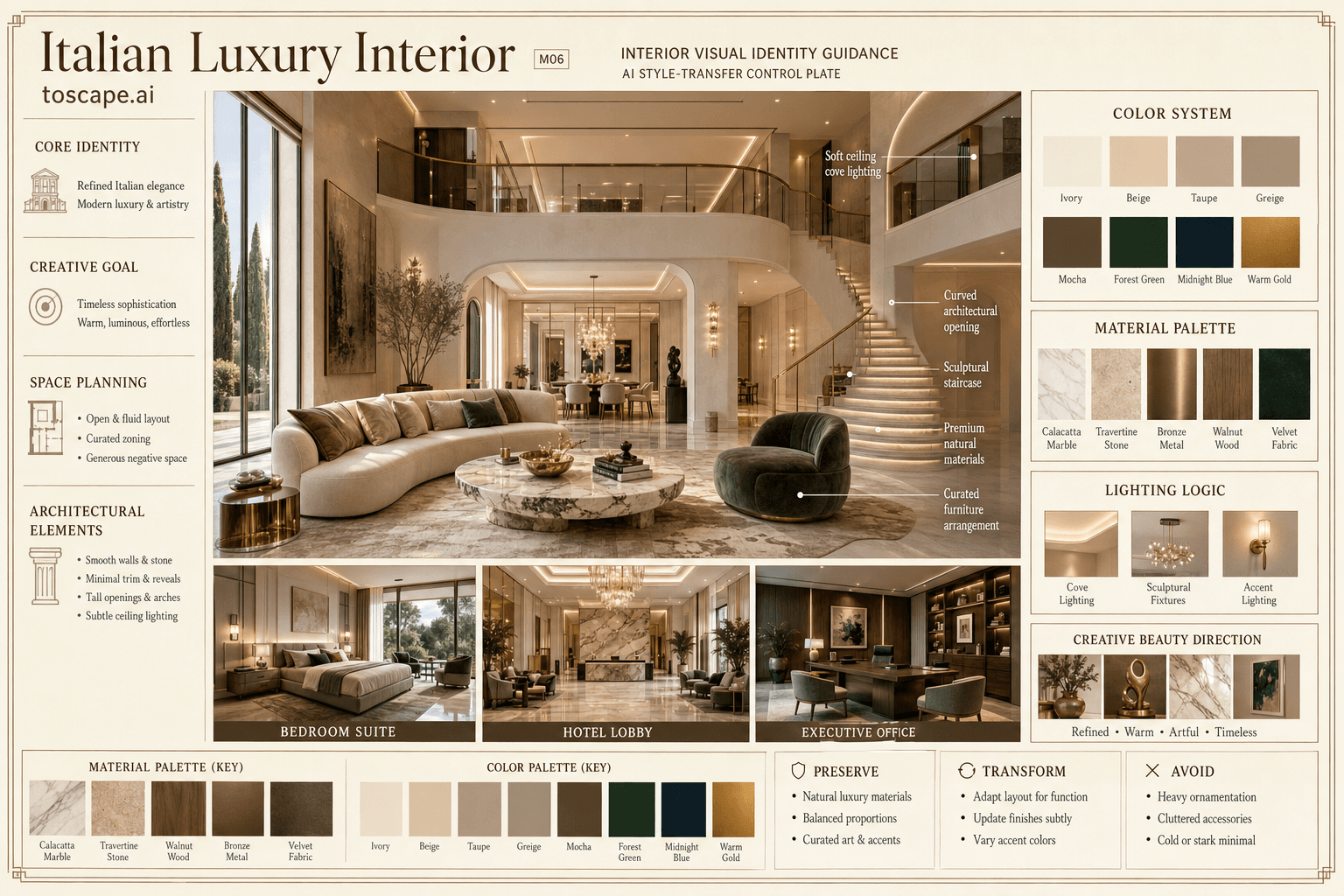
Italian Luxury Interior
M06 / Modern Classic, Mediterranean, Contemporary, European Luxury
A luminous, sculptural Italian luxury interior defined by iconic designer furniture, tactile noble materials, and curated modern glamour.
Definition
Italian Luxury Interior is an interior design style used for architectural visualization. A luminous, sculptural Italian luxury interior defined by iconic designer furniture, tactile noble materials, and curated modern glamour.
- Family
- Modern Classic, Mediterranean, Contemporary, European Luxury.
- Origin
- Rooted in Italy's postwar luxury modernism, haute couture sensibility, and historic villa culture, evolved by contemporary.
- Massing
- Fluid modern classic geometry, sculpted curves, elegant straight lines, softly rounded edges, and organic forms balanced with architectural clarity.
- Materials
- Smooth, polished, velvety, subtly ribbed, and lightly tactile; a dialogue between hard and soft, gleaming and matte.
- Palette
- Ivory, creamy white, calacatta marble, warm taupe, forest green, gold, rich wood with gentle natural variation.
- Lighting
- Integrated cove lighting, recessed downlights, and indirect wall wash; always soft, never harsh or overexposed.
Overview
Italian Luxury Interior is an interior design style defined by A refined, luminous, and fashion-forward luxury interior identity characterized by fluid modern classic proportions, sumptuously tactile materials, sculptural Italian furniture, elevated yet restrained glamour, and a polished, inviting atmosphere. To create interiors that evoke refined Italian heritage reinterpreted with modern artistry, sensual materiality, premium comfort, and timeless Mediterranean light.
Visual DNA
Spatial Feeling
Bright, welcoming, harmonious, cultivated, chic, and quietly glamorous.
Form Language
Fluid modern classic geometry, sculpted curves, elegant straight lines, softly rounded edges, and organic forms balanced with architectural clarity. Tall and generously proportioned spaces, generous but not monumental scale, with...
Composition
Open, fluid, and welcoming with carefully zoned gathering areas and circulation paths that feel effortless. Sculptural sofas and lounge chairs, dramatic coffee tables, art walls, bespoke fireplaces, or a luminous view. Best captured at...
Interior Elements
Smooth painted plaster, premium stucco, silk wallcoverings, book-matched stone, and minimal paneling with architectural reveals. Ceilings are elegantly restrained-clean flat or very shallow coffered planes, sometimes with recessed cove...
Color System
Ivory, creamy white, calacatta marble, warm taupe, forest green, gold, rich wood with gentle natural variation. Elevate light, warmth, and tonal depth with sumptuous neutrals and artful accent color pops. Ivory and golden marble,...
Material Palette
Smooth, polished, velvety, subtly ribbed, and lightly tactile; a dialogue between hard and soft, gleaming and matte. Stone and wood for architecture and large elements; textiles for seating and window treatment; metal and glass as...
Lighting Logic
Integrated cove lighting, recessed downlights, and indirect wall wash; always soft, never harsh or overexposed. Layer daylight and controlled warm glow, using highlights on marble and velvet, soft shadows to dramatize edges, and...
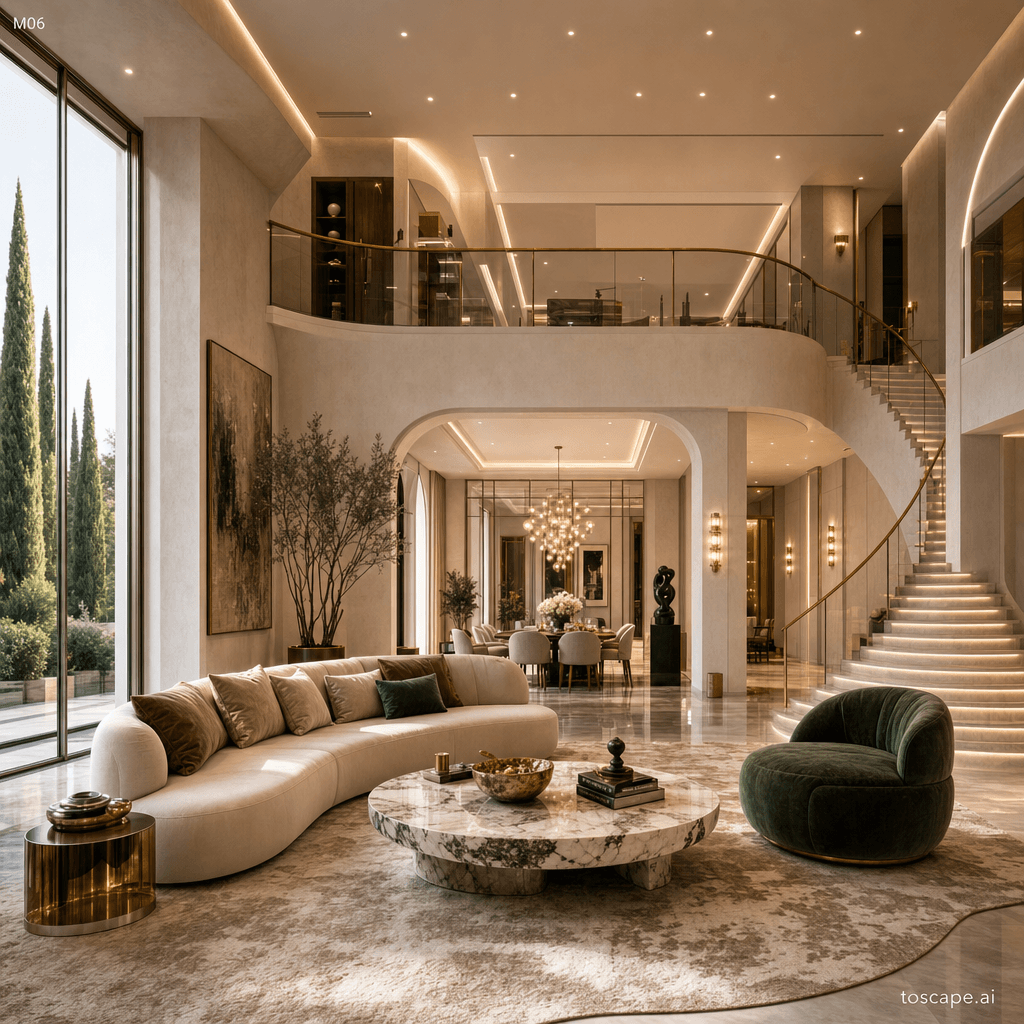
Interior reference image
Italian Luxury Interior composition, material palette, furniture language, and lighting direction.
Context Snapshot
Rooted in Italy's postwar luxury modernism, haute couture sensibility, and historic villa culture, evolved by contemporary... Highly relevant in luxury residences, penthouses, boutique hotels, high-end showrooms, yachts, and editorial hospitality projects worldwide. Elevate material quality, invest in iconic Italian furniture, use light and shadow to enhance form, curate spaces with premium restraint, and let signature pieces and materials define the luxurious mood.
Composition And Planning
Open, fluid, and welcoming with carefully zoned gathering areas and circulation paths that feel effortless. Movement is graceful, inviting, and uninterrupted, encouraging comfort and connection between social areas. Best captured at seated or eye-height, with a wide angle showing foreground statement furniture, midground focus, and background depth or window views; layering and leading lines highlight spatial sophistication.
Furniture Grammar
Sinuous, sculptural, and unmistakably Italian-curved lines, softened rectangles, floating forms, legs often exposed and elegantly detailed. Furniture should "float" on area rugs, favoring open grouping, dynamic interplay, and strong visual anchoring to key views or focal walls; avoid tight wall-backing or overcrowding. - Curved Minotti or Flexform sofa - Marble-topped coffee table - Poltrona Frau armchair - Flou or B&B Italia bed - Gio Ponti-inspired console
Creative Direction
An airy, sunlit living room with a curving Italian designer sofa, calacatta marble floor and feature wall, brushed gold lighting, a single sculptural olive tree, and artful curation of luxurious textures and surfaces. Careful spacing, strong daylight, a few flawless furniture icons, tightly edited art, polished metals, and a meticulously composed sense of calm Italian glamour. Dramatic evening light, a glowing modern chandelier or fluted glass sconce, luminous marble, plush velvet in emerald or sapphire, shadowed corners, and an editorially staged Italian cocktail moment. - Use of authentic Italian designer furniture and finishes -...
Best Project Applications
- Luxury penthouses, villa living spaces, designer bedrooms, boutique hotel suites, and high-end showrooms.
Preserve, Transform, Avoid
Preserve
- Iconic sculptural Italian designer furniture.
- High-quality, tactile materials: marble, velvet, brushed gold, premium wood.
- Light-filled, open, and elegantly balanced spatial composition.
- Editorial, curated restraint in decor and accessories.
Transform
- Update color palettes to suit contemporary design (softer or bolder accents) still within Italian spectrum.
- Introduce new Italian lighting or art objects while keeping true to curated sophistication.
- Vary material finishes (matte/glossy, warm/cool) for layered luxury.
- Pair classic furniture icons with emerging Italian design pieces for freshness.
Avoid
- Overloading with accessories, patterns, or mixed styles.
- Introducing rustic, industrial, farmhouse, or cold minimalist elements.
- Using faux or low-quality materials imitating Italian luxury.
- Cluttering spaces or relying on generic "international hotel" cues.
- Heavy classical ornament, trims, or decoration outside subtle reveals.
Frequently asked questions
What is Italian Luxury Interior?
Italian Luxury Interior is an interior design style used for architectural visualization. A luminous, sculptural Italian luxury interior defined by iconic designer furniture, tactile noble materials, and curated modern glamour.
What materials define Italian Luxury Interior?
Smooth, polished, velvety, subtly ribbed, and lightly tactile; a dialogue between hard and soft, gleaming and matte. Stone and wood for architecture and large elements; textiles for seating and window treatment.
What is the Italian Luxury Interior color palette?
Ivory, creamy white, calacatta marble, warm taupe, forest green, gold, rich wood with gentle natural variation. Elevate light, warmth, and tonal depth with sumptuous neutrals and artful accent color pops. Ivory and golden marble.
What is the origin of Italian Luxury Interior?
Rooted in Italy's postwar luxury modernism, haute couture sensibility, and historic villa culture, evolved by contemporary... Highly relevant in luxury residences, penthouses, boutique hotels, high-end showrooms, yachts, and editorial hospitality projects worldwide.
When should architects use Italian Luxury Interior?
An airy, sunlit living room with a curving Italian designer sofa, calacatta marble floor and feature wall, brushed gold lighting, a single sculptural olive tree, and artful curation of luxurious textures and surfaces. Careful spacing, strong daylight, a few flawless furniture icons, tightly edited art, polished metals, and a meticulously composed sense of calm Italian glamour.
How do you render Italian Luxury Interior in Toscape?
Open Toscape on Windows, load your own photo, elevation, sketch, or CAD view, then apply the Italian Luxury Interior reference from the built-in style library. The Interior Design workflow keep your project geometry and camera while shifting materials, proportion, and detailing toward Italian Luxury Interior.
Use this style in Toscape
Explore Italian Luxury Interior inside Toscape using interior-focused rendering workflows and gallery references.
Open interior references