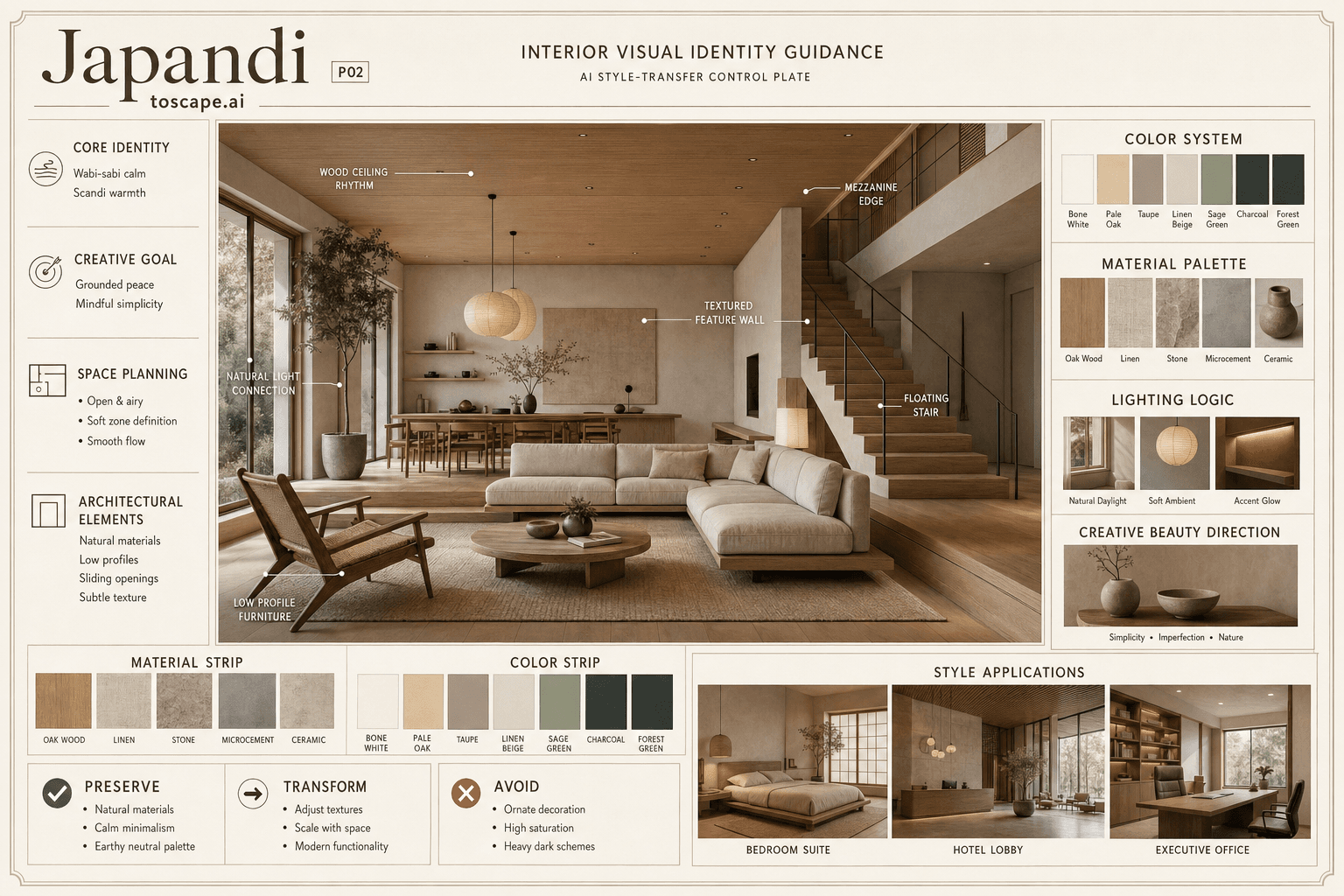
Japandi
P02 / Minimal / Contemporary / Organic / Asian / Scandinavian
A tranquil, minimal, and tactile style blending Japanese restraint and Scandinavian warmth-defined by natural materials, soft light, and serene...
Definition
Japandi is an interior design style used for architectural visualization. A tranquil, minimal, and tactile style blending Japanese restraint and Scandinavian warmth-defined by natural materials, soft light, and serene.
- Family
- Minimal / Contemporary / Organic / Asian / Scandinavian.
- Origin
- Japandi evolved from the aesthetic and cultural resonance between Japanese and Scandinavian design philosophies-both.
- Massing
- Simple, honest geometry; soft rectangles, low curves, slender lines, organic silhouettes, gently asymmetric balance, and subtle natural irregularity.
- Materials
- Matte, tactile, soft-to-the-touch, and organic-with deep attention to grain, weave, and subtle imperfection.
- Palette
- Soft whites, warm pale woods, light clay, oatmeal textiles, and touches of black for depth.
- Lighting
- Soft, indirect lighting from cove, floor, or wall sources; never harsh overhead fixtures or cold spots.
Overview
Japandi is an interior design style defined by A serene, balanced, and inviting interior style blending Japanese wabi-sabi restraint with Scandinavian warmth, defined by minimal composition, natural materials, grounded forms, and luminous calm. To evoke grounded peace, mindful beauty, quiet functionality, and a sense of honest comfort rooted in nature.
Visual DNA
Spatial Feeling
Airy, calm, welcoming, peaceful, and tactile, with a sense of visual breathing room.
Form Language
Simple, honest geometry; soft rectangles, low curves, slender lines, organic silhouettes, gently asymmetric balance, and subtle natural irregularity. Low, horizontal emphasis; furniture is visually grounded; scale is intimate and...
Composition
Open, airy, and uncluttered layouts, favoring flow over compartmentalization. A sculptural wooden table, a textured feature wall, a statement lounge chair, or an artfully arranged plant or ceramic. Slightly elevated or natural eye-level...
Interior Elements
Smooth or gently textured plaster, limewash, microcement, pale timber paneling, or large-format natural stone. Not a decorative driver in this style; ceilings should be quiet, flat, and free of ornament, sometimes with exposed light...
Color System
Soft whites, warm pale woods, light clay, oatmeal textiles, and touches of black for depth. Base the palette on harmonious, natural earth tones; maintain tonal unity with subtle accent contrasts anchored in the natural spectrum. Use...
Material Palette
Matte, tactile, soft-to-the-touch, and organic-with deep attention to grain, weave, and subtle imperfection. Keep wood on floors, joinery, and major furniture; linen/wool on upholstery and soft furnishings; stone or ceramic as...
Lighting Logic
Soft, indirect lighting from cove, floor, or wall sources; never harsh overhead fixtures or cold spots. Capture shafts of natural daylight, soft glows from lanterns, deep directional shadow on pale textures, and the warm shimmer of...
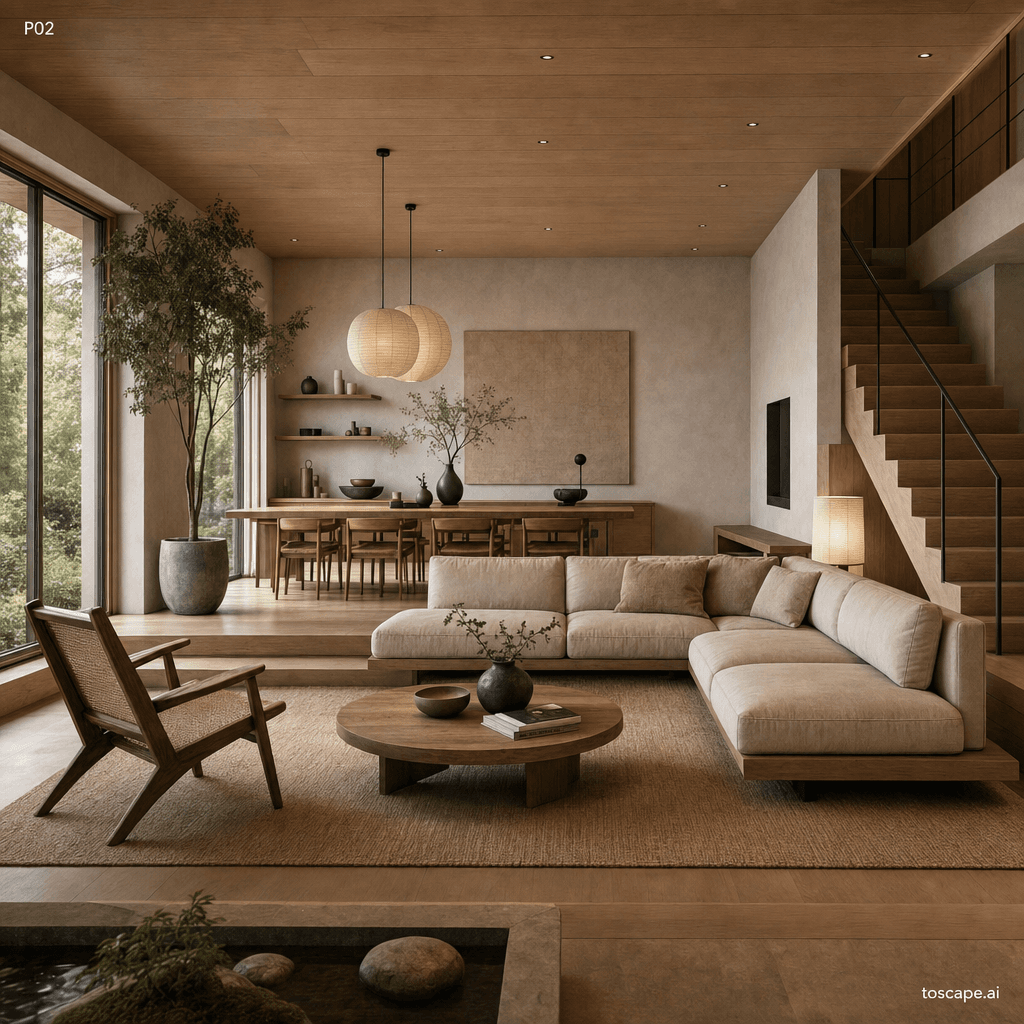
Interior reference image
Japandi composition, material palette, furniture language, and lighting direction.
Context Snapshot
Japandi evolved from the aesthetic and cultural resonance between Japanese and Scandinavian design philosophies-both... Popular in upscale apartments, wellness spaces, boutique hotels, and curated residences that emphasize mindfulness and lifestyle over decorative abundance. Elevate natural light, tactile materials, sculptural minimal furniture, and tranquil styling, while balancing wabi-sabi humility and Scandinavian comfort.
Composition And Planning
Open, airy, and uncluttered layouts, favoring flow over compartmentalization. Smooth, intuitive movement and visual sightlines; furniture and objects invite calm circulation. Slightly elevated or natural eye-level view; layered foreground objects; depth shown by negative space and staggered elements; compositional balance over strict symmetry.
Furniture Grammar
Low, gently curved or rectilinear, visually light, with rounded corners and soft edges; never heavy or ornate. Groupings are loose, allow generous breathing room, and float away from walls; arrangement supports conversational intimacy and visual tranquility. - Paper lantern floor lamp - Pale oak dining table with soft edges - Linen-upholstered armless sofa - Spindle-back wooden lounge chair
Creative Direction
A luminous room with pale wooden floors, soft plaster walls, sculptural low sofas in linen, sheer curtains filtering sunlight, one hand-crafted ceramic vase on a rounded oak table, framed by ample negative space and a sculptural plant. A serenely composed, sunlit space with floating furniture, quiet textural contrasts, artisan objects, and a sense of editorial clarity-inviting but never staged or crowded. Soft dawn or dusk light, warm shadow, subtle play of materials, and glowing elements (a paper lamp, a delicate branch in a vase), with an atmosphere of introspective calm. - Authentic hand-finished wood and stone - Editorial-grade art...
Best Project Applications
- Contemporary living rooms, wellness suites, boutique hotels, calm bedrooms, open-plan residences.
Preserve, Transform, Avoid
Preserve
- Generous negative space and visual quiet
- Honest natural materials and soft, tactile texture
- Calm, light-filled atmosphere with warm earth tones
- Low, gently curved furniture with space to breathe
Transform
- Use contemporary art or lighting as long as subtlety and harmony are maintained
- Gently layer secondary textures or objects to enhance visual comfort
- Introduce biophilic accents (plants, wood, stone) for deeper connection to nature
- Calibrate brightness from daylight to evening mood without losing softness
Avoid
- Over-decoration or maximalist styling
- Heavy, high-backed, ornate, or dark furniture
- Synthetic, high-gloss, or plastic materials
- Stark black/white contrast or strong color clashing
- Visual clutter or crowding that reduces calmness
Frequently asked questions
What is Japandi?
Japandi is an interior design style used for architectural visualization. A tranquil, minimal, and tactile style blending Japanese restraint and Scandinavian warmth-defined by natural materials, soft light, and serene.
What materials define Japandi?
Matte, tactile, soft-to-the-touch, and organic-with deep attention to grain, weave, and subtle imperfection. Keep wood on floors, joinery, and major furniture; linen/wool on upholstery and soft furnishings.
What is the Japandi color palette?
Soft whites, warm pale woods, light clay, oatmeal textiles, and touches of black for depth. Base the palette on harmonious, natural earth tones; maintain tonal unity with subtle accent contrasts anchored in the natural spectrum. Use.
What is the origin of Japandi?
Japandi evolved from the aesthetic and cultural resonance between Japanese and Scandinavian design philosophies-both... Popular in upscale apartments, wellness spaces, boutique hotels, and curated residences that emphasize mindfulness and lifestyle over decorative abundance. Elevate natural light, tactile materials, sculptural minimal furniture, and tranquil styling, while balancing wabi-sabi humility and Scandinavian comfort.
When should architects use Japandi?
A luminous room with pale wooden floors, soft plaster walls, sculptural low sofas in linen, sheer curtains filtering sunlight, one hand-crafted ceramic vase on a rounded oak table, framed by ample negative space and a sculptural plant.
How do you render Japandi in Toscape?
Open Toscape on Windows, load your own photo, elevation, sketch, or CAD view, then apply the Japandi reference from the built-in style library. The Interior Design workflow keep your project geometry and camera while shifting materials, proportion, and detailing toward Japandi.
Use this style in Toscape
Explore Japandi inside Toscape using interior-focused rendering workflows and gallery references.
Open interior references