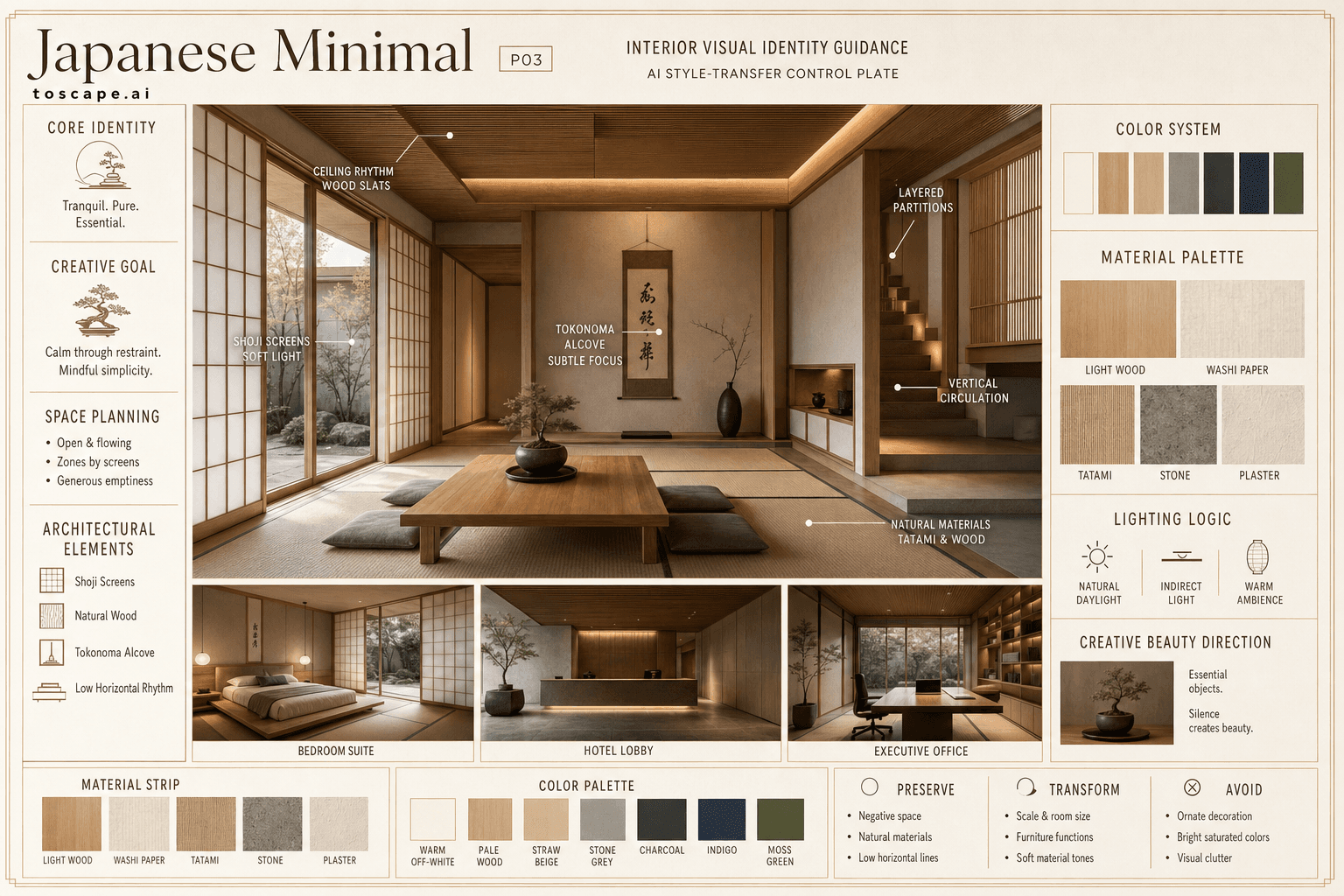
Japanese Minimal
P03 / Minimal / Asian / Organic / Contemporary
A serene, textural, and disciplined minimal interior rooted in Japanese spatial philosophy, pure natural materials, and poetic negative space.
Definition
Japanese Minimal is an interior design style used for architectural visualization. A serene, textural, and disciplined minimal interior rooted in Japanese spatial philosophy, pure natural materials, and poetic negative space.
- Family
- Minimal / Asian / Organic / Contemporary.
- Origin
- Rooted in Japanese architectural tradition (wabi-sabi, shoji, tatami, sukiya-zukuri) and post-war modernism, emphasizing ma.
- Massing
- Simple linear planes, rectilinear and low massing, subtle organic curves only where nature flows; large sliding doors, screens, and modular lattices.
- Materials
- Subtle, refined, and tactile; matte or semi-matte; honest expression of grain, fiber, paper, and stone surface.
- Palette
- Creamy plaster, pale hinoki or ash wood, straw beige mats, soft grey stone, single accent of indigo, with no jarring shifts.
- Lighting
- Discrete, indirect, and atmospheric; use cove lighting, hidden linear LED, paper lanterns, and low-output fixtures, never visible bulbs.
Overview
Japanese Minimal is an interior design style defined by A tranquil, pure, and contemplative interior style defined by silent restraint, natural materials, essential forms, and perfectly balanced negative space. To evoke calm, mindfulness, and timeless beauty through disciplined simplicity and honest materials, allowing emptiness and light to elevate every object and surface.
Visual DNA
Spatial Feeling
Calm, open, luminous, contemplative, and spiritually quiet.
Form Language
Simple linear planes, rectilinear and low massing, subtle organic curves only where nature flows; large sliding doors, screens, and modular lattices. Balanced proportions with generous negative space and low horizontal rhythm; intimate...
Composition
Open, free-flowing, and modular; minimal partitions, with sliding shoji or fusuma panels allowing reconfiguration. When present, focal points are subtle-a tokonoma alcove, a statement bonsai, an artful stone, or a perfectly placed low...
Interior Elements
Smooth natural plaster, pale timber, paper shoji screens, or finely finished joinery; walls are planar, nearly bare, with visible grain or subtle depth. Not a decorative driver in this style; use a quiet flat ceiling or exposed timber...
Color System
Creamy plaster, pale hinoki or ash wood, straw beige mats, soft grey stone, single accent of indigo, with no jarring shifts. Colors must support serenity, material clarity, and avoid contrast that disrupts calm; palettes belong to...
Material Palette
Subtle, refined, and tactile; matte or semi-matte; honest expression of grain, fiber, paper, and stone surface. Warm wood and natural plaster dominate walls, floors, and ceilings; paper for screens and lighting; stone or charred timber...
Lighting Logic
Discrete, indirect, and atmospheric; use cove lighting, hidden linear LED, paper lanterns, and low-output fixtures, never visible bulbs. Highlight interplay of shoji-filtered daylight and soft, low warm pools of light; use shadow to...
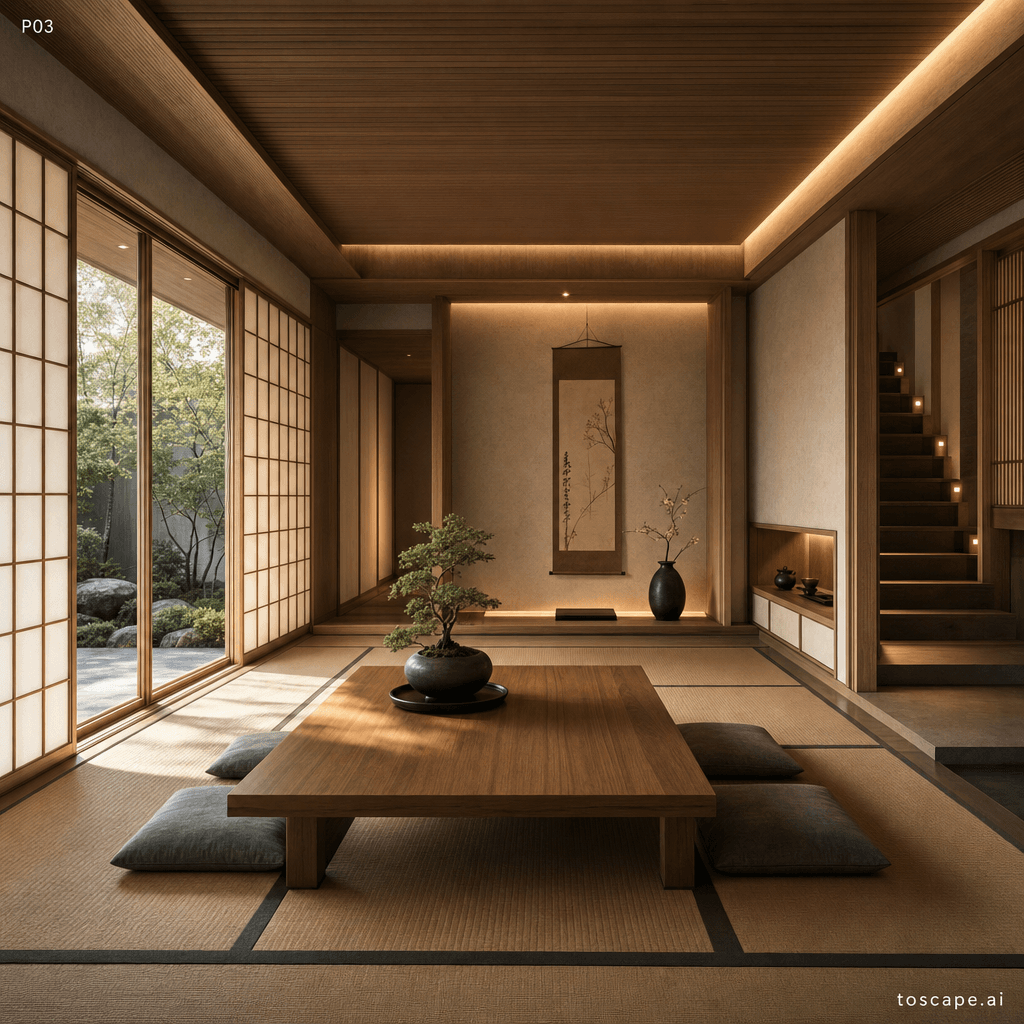
Interior reference image
Japanese Minimal composition, material palette, furniture language, and lighting direction.
Context Snapshot
Rooted in Japanese architectural tradition (wabi-sabi, shoji, tatami, sukiya-zukuri) and post-war modernism, emphasizing ma... Widely adopted in luxury homes, boutique hotels, wellness environments, specialty cafes, and architect-designed apartments seeking purity and calm. Harness timeless Japanese craft with premium finishes, integrate contemporary lighting, refine joinery, and optimize natural light, always preserving disciplined spareness.
Composition And Planning
Open, free-flowing, and modular; minimal partitions, with sliding shoji or fusuma panels allowing reconfiguration. Smooth, unobstructed, and slow; movement encourages mindfulness and awareness of surroundings. Best with a slightly lower-than-eye-level camera to echo low seating height, frame wide open planes, highlight layered screens, and gently lead the eye through shifting rectangles of light and shadow.
Furniture Grammar
Low, linear, subtly rounded at edges; forms referencing Japanese tansu, zaisu, or chabudai. Pieces are precisely placed, always leaving space to breathe; aligned with tatami grid or architectural modularity; nothing crowds circulation. - Low chabudai table - Zabuton floor cushions - Shoji-backed platform bed
Creative Direction
A sunlit living space with pale natural wood, silent tatami, sliding shoji panels open to a simple garden, one low chabudai table, a single branch in a ceramic vase, and soft, moving shadows caressing every surface. Shot with low natural light, pristine negative space, a tactile focus on joinery detail, one poetic art piece, and every object appearing effortlessly considered. Muted morning or dusk light, shadowed corners, a single glowing paper lantern, tatami texture highlighted, and a quiet, immersive sense of time suspended. - Impeccable joinery and craft detail - Real tatami and authentic paper or stone - Invisible transitions and...
Best Project Applications
- Luxury homes, premium spas, boutique hotels, meditative offices, serene bedrooms.
Preserve, Transform, Avoid
Preserve
- Large areas of negative space and visual emptiness.
- Honest natural materials: pale wood, real tatami, authentic paper and stone.
- Sliding shoji or fusuma screens, low furniture, and seamless joinery.
- Soft natural light and silent architectural lines.
Transform
- Refine tatami and wood planes with premium craftsmanship.
- Integrate discreet modern lighting or climate technology without visual disturbance.
- Allow carefully selected contemporary Japanese furniture in the spirit of restraint.
- Use rare, single bold accents (deep indigo, moss) when they have poetic placement and clear intent.
Avoid
- Western decorative moldings or ornate ceilings.
- Over-furnishing or using tall, bulky sofas and armchairs.
- Bright synthetic or trendy colors.
- Visible technical lighting fixtures or metal elements.
- Busy patterns or "Japandi" textile layering.
Frequently asked questions
What is Japanese Minimal?
Japanese Minimal is an interior design style used for architectural visualization. A serene, textural, and disciplined minimal interior rooted in Japanese spatial philosophy, pure natural materials, and poetic negative space.
What materials define Japanese Minimal?
Subtle, refined, and tactile; matte or semi-matte; honest expression of grain, fiber, paper, and stone surface. Warm wood and natural plaster dominate walls, floors, and ceilings; paper for screens and lighting; stone or charred timber.
What is the Japanese Minimal color palette?
Creamy plaster, pale hinoki or ash wood, straw beige mats, soft grey stone, single accent of indigo, with no jarring shifts. Colors must support serenity, material clarity, and avoid contrast that disrupts calm.
What is the origin of Japanese Minimal?
Rooted in Japanese architectural tradition (wabi-sabi, shoji, tatami, sukiya-zukuri) and post-war modernism, emphasizing ma... Widely adopted in luxury homes, boutique hotels, wellness environments, specialty cafes, and architect-designed apartments seeking purity and calm. Harness timeless Japanese craft with premium finishes, integrate contemporary lighting, refine joinery, and optimize natural light, always preserving disciplined spareness.
When should architects use Japanese Minimal?
A sunlit living space with pale natural wood, silent tatami, sliding shoji panels open to a simple garden, one low chabudai table, a single branch in a ceramic vase, and soft, moving shadows caressing every surface. Shot with low natural light, pristine negative space, a tactile focus on joinery detail, one poetic art piece, and every object appearing effortlessly considered.
How do you render Japanese Minimal in Toscape?
Open Toscape on Windows, load your own photo, elevation, sketch, or CAD view, then apply the Japanese Minimal reference from the built-in style library. The Interior Design workflow keep your project geometry and camera while shifting materials, proportion, and detailing toward Japanese Minimal.
Use this style in Toscape
Explore Japanese Minimal inside Toscape using interior-focused rendering workflows and gallery references.
Open interior references