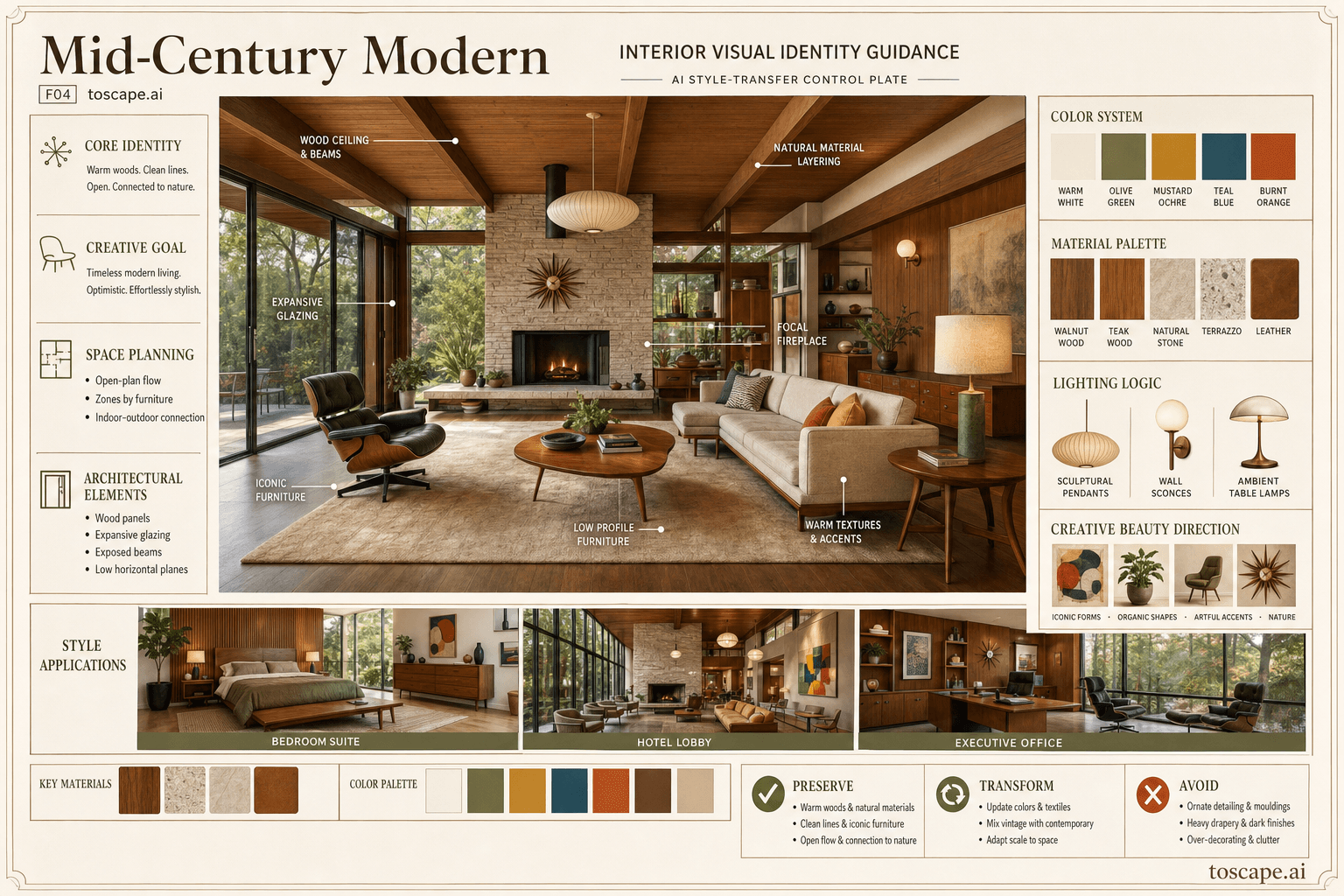
Mid-Century Modern
F04 / Modern / Retro Modern / Atomic Age / Minimal Modern / Organic Modern
A warm, optimistic modern style blending iconic retro furniture, open plans, sculptural wood, and curated color in light-filled harmony.
Definition
Mid-Century Modern is an interior design style used for architectural visualization. A warm, optimistic modern style blending iconic retro furniture, open plans, sculptural wood, and curated color in light-filled harmony.
- Family
- Modern / Retro Modern / Atomic Age / Minimal Modern / Organic Modern.
- Origin
- Emerging between the mid-1940s and late 1960s (especially in the US and Northern Europe), this style drew from International.
- Massing
- Low horizontal planes, elongated forms, rounded edges, tapered legs, floating furniture, gentle curves, clean orthogonals, and statement organic shapes.
- Materials
- Subtly tactile; wood grain, nubby woven fabrics, leather, smooth stone, and glass interplay warmly without roughness.
- Palette
- Crisp white walls, sumptuous wood, teal/olive textiles, ochre accents, black lines, and sunlight.
- Lighting
- Discreet ceiling spots, hidden uplighting, or flush-mount fixtures maintain the clean ceiling plane. Highlight contrasting pools of sunlight and deep shadow, emphasizing form and depth.
Overview
Mid-Century Modern is an interior design style defined by A visually optimistic, elegant modern interior language defined by warm woods, organic lines, open plans, iconic furniture, and harmonious integration of nature and light. To create open, livable, emotionally uplifting interiors where good design is effortless, beautiful, and human-centered.
Visual DNA
Spatial Feeling
Airy, open, unpretentious, inviting, and effortlessly stylish with a relaxed retro mood.
Form Language
Low horizontal planes, elongated forms, rounded edges, tapered legs, floating furniture, gentle curves, clean orthogonals, and statement organic shapes. Balanced, human-scaled, typically with lower ceilings and horizontal orientation;...
Composition
Open-plan or semi-open, celebrating flow and connection between zones while maintaining intimacy. Iconic furniture (e.g., Eames lounge), dramatic art, feature fireplace, large window or glazed wall, sculptural lighting. Eye-level or...
Interior Elements
Smooth painted walls in warm white or muted hues, punctuated by natural wood panels, occasional brick, or stone accents; feature walls may use vertical slats or geometric patterns. Ceilings are plain or wood-clad; sometimes exposed...
Color System
Crisp white walls, sumptuous wood, teal/olive textiles, ochre accents, black lines, and sunlight. Build from a warm, natural core and introduce saturated or muted accents in measured, graphic doses for retro vibrancy. Charcoal and...
Material Palette
Subtly tactile; wood grain, nubby woven fabrics, leather, smooth stone, and glass interplay warmly without roughness. Use wood for furniture, panelling, and shelving; stone/terrazzo for floor or fireplace; fabric for seating and rugs;...
Lighting Logic
Discreet ceiling spots, hidden uplighting, or flush-mount fixtures maintain the clean ceiling plane. Highlight contrasting pools of sunlight and deep shadow, emphasizing form and depth. Use lighting to draw attention to furniture and...
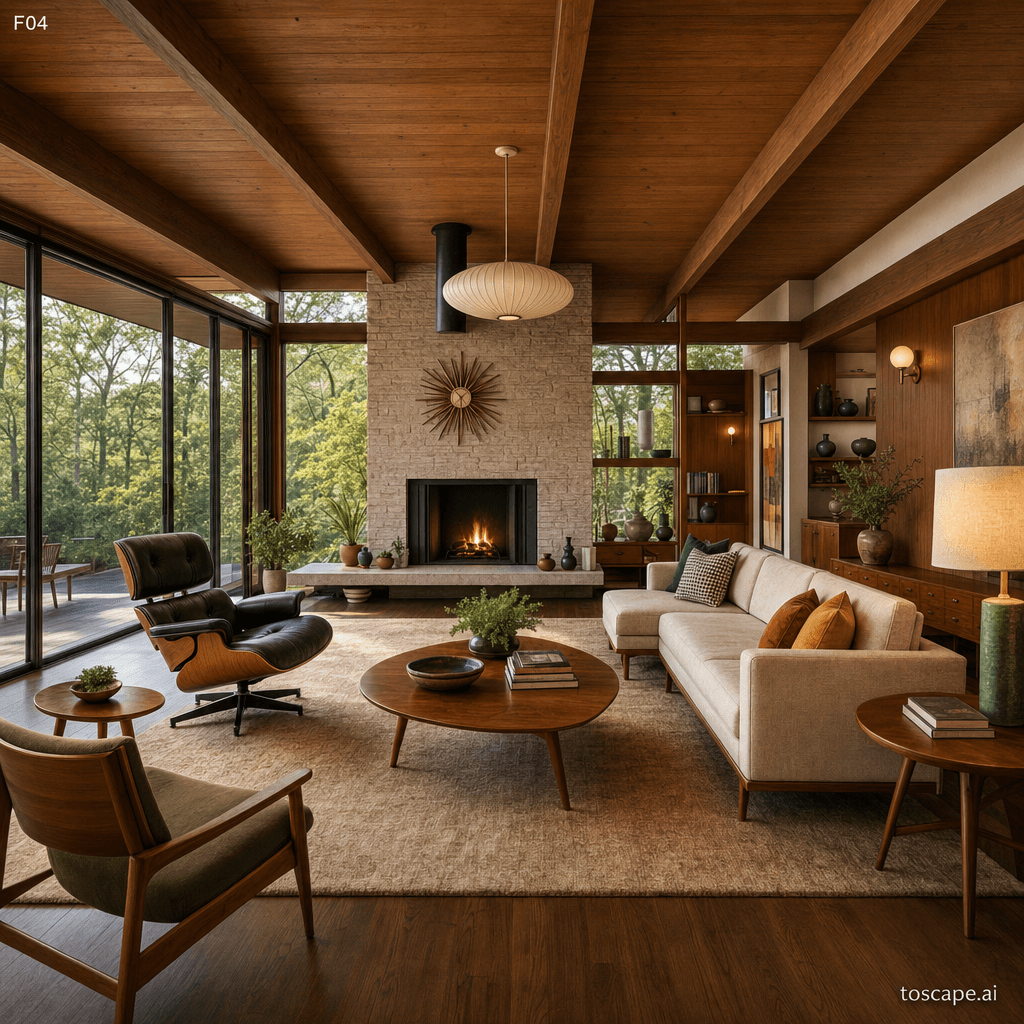
Interior reference image
Mid-Century Modern composition, material palette, furniture language, and lighting direction.
Context Snapshot
Emerging between the mid-1940s and late 1960s (especially in the US and Northern Europe), this style drew from International... Widely revived in premium homes, boutique hotels, creative workspaces, and design-conscious retail, especially for living areas, lounges, and kitchens. Emphasize lightness, top-tier woods, signature designer pieces, tactile fabrics, and curated color-all elevated and decluttered for a contemporary, editorial interior.
Composition And Planning
Open-plan or semi-open, celebrating flow and connection between zones while maintaining intimacy. Visual and physical movement is fluid and continuous, guiding the eye horizontally through views, art, or nature, without clutter or obstruction. Eye-level or slightly lowered camera height; present a wide, sunlit view with background glazing, signature furniture in the midground, and layered accessories.
Furniture Grammar
Slim, low, elongated, with organic curves and architectural lines; always visually light, often with splayed or tapered legs. Position away from walls, often arranged around a rug and coffee table; visual clarity, negative space, and conversation zones are essential. - Eames lounge chair and ottoman - Noguchi coffee table - Saarinen Tulip table or chair - Florence Knoll sofa - Hans Wegner lounge chairs
Creative Direction
An airy, sunlight-drenched living space with crisp white walls, hero walnut joinery, designer lounge seating, curated abstract art, and warm sculptural lighting, all tied together by lush wood, clean lines, and vibrant accent color. Decluttered, perfectly styled, and luminous; furnishings are placed for graphic impact, sunlight models wood and fabric textures, and every accessory is iconic and intentional. Strong horizontal rays, dramatic light-and-shadow, spotlighted profile of an Eames chair against wood panel, bold-colored art and textiles, gentle reflections enhancing architectural form. - Authentic designer furniture or well-crafted...
Best Project Applications
- Residential living rooms, creative studios, boutique hotels, modern dining rooms, bedrooms, stylish lobbies.
Preserve, Transform, Avoid
Preserve
- Iconic mid-century designer furniture and shapes
- Warm natural woods and tactile upholstery
- Open plan, light-filled spaces with visual clarity
- Carefully curated, minimal accessories
Transform
- Edit clutter for contemporary audiences
- Use elevated, premium versions of classic materials
- Style with bolder, curated art for editorial drama
- Blend original features with contemporary lighting or textiles that respect the era
Avoid
- Generic, boxy contemporary sofas
- Heavy, dark, or rustic surfaces
- Kitschy retro motifs or pastel overload
- Excess ornament or busy decoration
- Diluting with Scandinavian, industrial, or hotel minimalism
Frequently asked questions
What is Mid-Century Modern?
Mid-Century Modern is an interior design style used for architectural visualization. A warm, optimistic modern style blending iconic retro furniture, open plans, sculptural wood, and curated color in light-filled harmony.
What materials define Mid-Century Modern?
Subtly tactile; wood grain, nubby woven fabrics, leather, smooth stone, and glass interplay warmly without roughness. Use wood for furniture, panelling, and shelving; stone/terrazzo for floor or fireplace; fabric for seating and rugs.
What is the Mid-Century Modern color palette?
Crisp white walls, sumptuous wood, teal/olive textiles, ochre accents, black lines, and sunlight. Build from a warm, natural core and introduce saturated or muted accents in measured.
What is the origin of Mid-Century Modern?
Emerging between the mid-1940s and late 1960s (especially in the US and Northern Europe), this style drew from International... Widely revived in premium homes, boutique hotels, creative workspaces, and design-conscious retail, especially for living areas, lounges, and kitchens. Emphasize lightness, top-tier woods, signature designer pieces, tactile fabrics, and curated color-all elevated and decluttered for a contemporary, editorial interior.
When should architects use Mid-Century Modern?
An airy, sunlight-drenched living space with crisp white walls, hero walnut joinery, designer lounge seating, curated abstract art, and warm sculptural lighting, all tied together by lush wood, clean lines, and vibrant accent color. Decluttered, perfectly styled, and luminous; furnishings are placed for graphic impact, sunlight models wood and fabric textures, and every accessory is iconic and intentional.
How do you render Mid-Century Modern in Toscape?
Open Toscape on Windows, load your own photo, elevation, sketch, or CAD view, then apply the Mid-Century Modern reference from the built-in style library. The Interior Design workflow keep your project geometry and camera while shifting materials, proportion, and detailing toward Mid-Century Modern.
Use this style in Toscape
Explore Mid-Century Modern inside Toscape using interior-focused rendering workflows and gallery references.
Open interior references