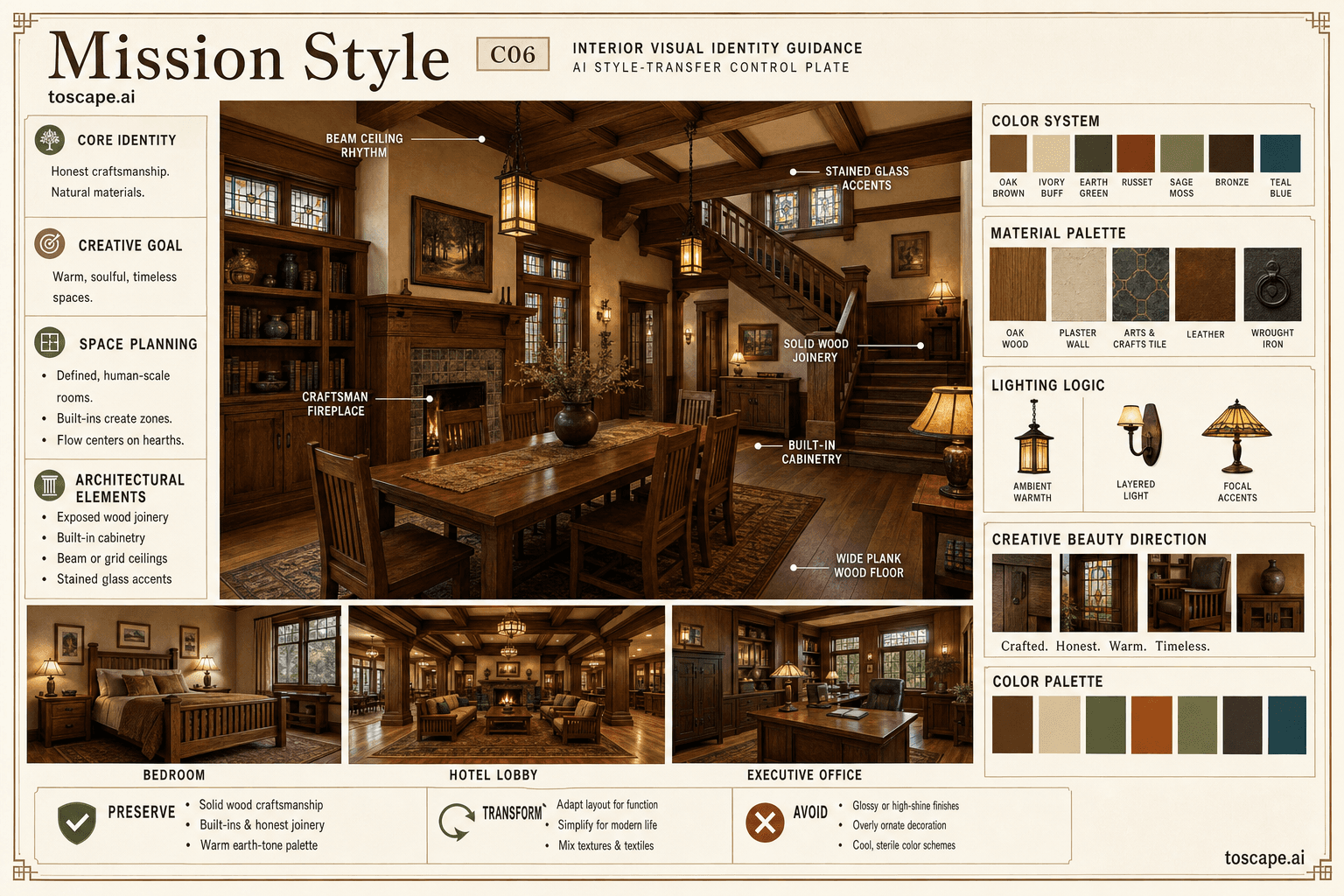
Mission Style
C06 / Rustic Modern Classic / American Arts & Crafts / Early Modern Heritage
A grounded, quietly elegant interior celebrating exposed artisan woodwork, solid furniture, and honest, handcrafted simplicity.
Definition
Mission Style is an interior design style used for architectural visualization. A grounded, quietly elegant interior celebrating exposed artisan woodwork, solid furniture, and honest, handcrafted simplicity.
- Family
- Rustic Modern Classic / American Arts & Crafts / Early Modern Heritage.
- Origin
- Originating in the American West and Midwest in the late 19th and early 20th centuries, Mission Style evolved as a simplified.
- Massing
- Rectilinear geometry, strong horizontals and verticals, broad flat surfaces, exposed joinery, subtle grid patterns, and boxy but human-scaled massing.
- Materials
- Rustic, tactile, and natural; textures are matte or satin, with visible grain, faint tool marks, and artisanal irregularity.
- Palette
- Medium-oak wood, warm plaster, moss green, hand-thrown pottery earth tones, olive or amber glass, and oil-rubbed metal.
- Lighting
- Soft, warm light sources; ceiling fixtures with mission art glass, bronze, or mica shades integrated into beams or ceiling grid.
Overview
Mission Style is an interior design style defined by A grounded, honest, and quietly elegant interior style defined by rectilinear architecture, exposed joinery, handcrafted woodwork, natural materials, and restrained ornamentation. To express honest structure, warmth, and human-scale comfort through handcrafted materials and simple, strong geometry.
Visual DNA
Spatial Feeling
Warm, intimate, rooted, ordered, and quietly purposeful.
Form Language
Rectilinear geometry, strong horizontals and verticals, broad flat surfaces, exposed joinery, subtle grid patterns, and boxy but human-scaled massing. Medium to low proportions, with solid architectural definition and a sense of...
Composition
Room-based layouts with clear zones, articulated by woodworking and built-ins; respect for function, flow, and the human scale. Fireplaces with strong mantels, handcrafted cabinetry, wood-framed windows with stained glass, and iconic...
Interior Elements
Smooth plaster, painted drywall, or soft earth-toned surfaces framed by exposed wooden rails, stiles, and wainscoting; built-in shelving and cabinetry are frequent. Visible wooden beams, boxed coffers, or simple flat ceilings with...
Color System
Medium-oak wood, warm plaster, moss green, hand-thrown pottery earth tones, olive or amber glass, and oil-rubbed metal. Use a triadic or analogous palette grounded by wood, soft neutrals, and occasional earthy greens, russets, or gentle...
Material Palette
Rustic, tactile, and natural; textures are matte or satin, with visible grain, faint tool marks, and artisanal irregularity. Wood organizes floors, ceilings, trims, and furniture; tile and glass accent hearths, built-ins, lighting;...
Lighting Logic
Soft, warm light sources; ceiling fixtures with mission art glass, bronze, or mica shades integrated into beams or ceiling grid. Bathed in soft daylight and golden lamplight, light rakes through wood beams and reveals depth in built-ins...
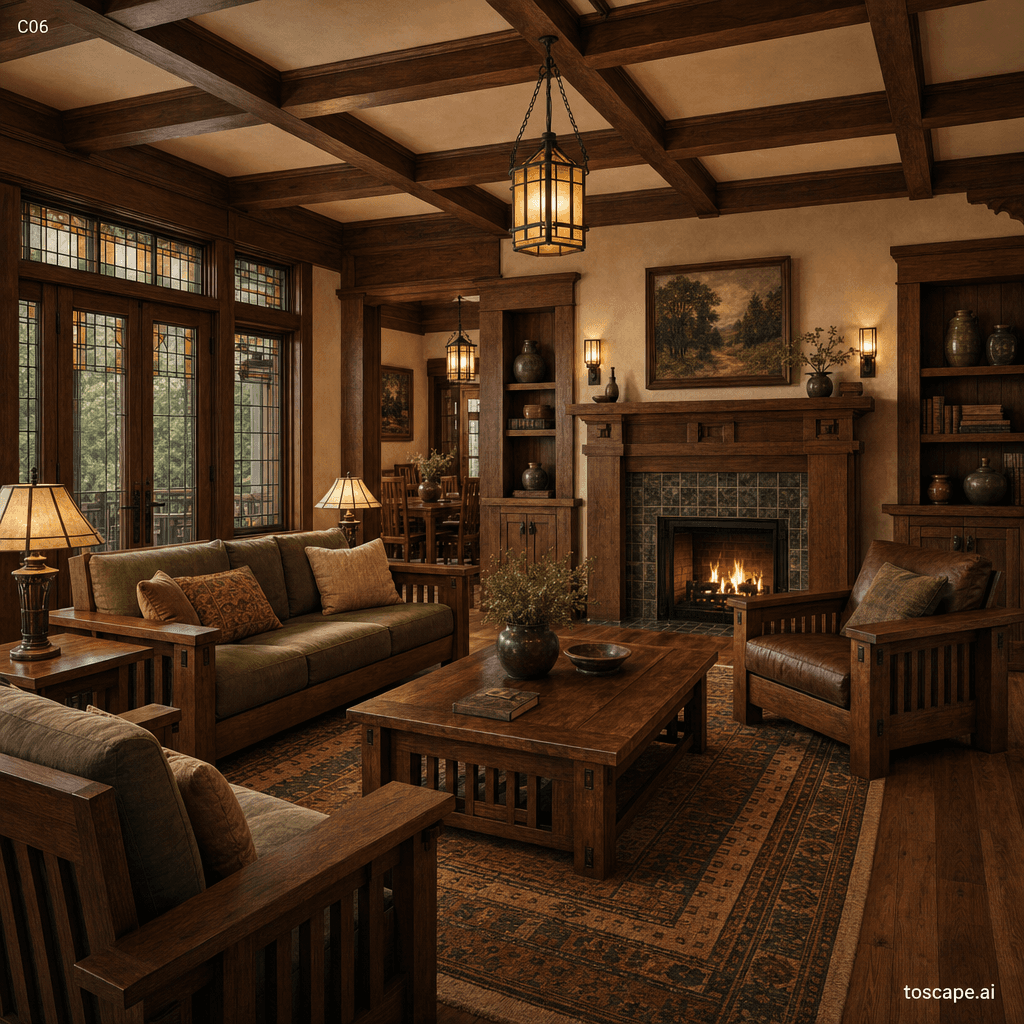
Interior reference image
Mission Style composition, material palette, furniture language, and lighting direction.
Context Snapshot
Originating in the American West and Midwest in the late 19th and early 20th centuries, Mission Style evolved as a simplified,... Used in high-end residential projects, boutique hospitality, heritage renovations, and select premium retail; favored by clients seeking warmth, authenticity, and quiet luxury. Integrate the core craftsmanship, real materials, and signature furniture forms with contemporary openness, refined lighting, and curated restraint, avoiding visual clutter or pastiche.
Composition And Planning
Room-based layouts with clear zones, articulated by woodworking and built-ins; respect for function, flow, and the human scale. Direct and comfortable; movement feels intuitive and fluid, gently guided by spatial rhythm and material contrast. The best image has a human-scale, eye-level camera, gentle daylight, a focal point on a fireplace or wood grid, and composition balanced by a rhythmic arrangement of woodwork and iconic furniture.
Furniture Grammar
Boxy, rectilinear, solid, substantial, and honest; emphasis on exposed tenon or mortise joinery and upright geometry. Pieces are grouped for conversation and comfort; main furniture floats in "island" arrangements away from walls, anchored by rug and table. - Stickley-style armchair - Mission oak trestle dining table - Rectilinear built-in bench or window seat
Creative Direction
A living room centered on a stone tile hearth, with exposed oak beams, a tapestry of wood built-ins, stained glass, solid Mission chairs, artisan rugs, hand-thrown pottery, and filtered daylight animating every grain. Curated, refined, and thoughtfully balanced-showcasing flawless wood joinery, an iconic furniture profile, artful accent glass, and subtly layered craftsman textiles in a sunlit, magazine-quality composition. Warm, golden hour sunlight streams over rich woods and earthy textiles, shadows deepen behind structural beams, while handmade glass lamps give a fireside glow. - True artisan wood joinery and rare hardwoods - Custom...
Best Project Applications
- Heritage living rooms, reading nooks, boutique hotel lobbies, curated residential dining, timeless library lounges.
Preserve, Transform, Avoid
Preserve
- Exposed quarter-sawn oak or hardwood joinery and trims
- Rectilinear geometry and honest furniture silhouettes
- Built-in wood cabinetry, benches, and signature hearths
- Muted, earthy, craftsman color and material palette
Transform
- Update spatial layout for modern living, but retain woodworking rhythm and warmth
- Edit accessory density for clarity but honor handcraft tradition
- Introduce subtle contemporary art or lighting if rooted in honest materials
- Use refined, lighter palettes for smaller spaces, without losing woodcraft presence
Avoid
- Applied, nonstructural ornament or faux historic detail
- Glossy surfaces, plastic, or chrome hardware
- Decorative overkill or Victorian floral elements
- Minimalist coldness, excess white space, or colorless cabinetry
- Randomly mixed styles that destroy the grid or crafted furniture language
Frequently asked questions
What is Mission Style?
Mission Style is an interior design style used for architectural visualization. A grounded, quietly elegant interior celebrating exposed artisan woodwork, solid furniture, and honest, handcrafted simplicity.
What materials define Mission Style?
Rustic, tactile, and natural; textures are matte or satin, with visible grain, faint tool marks, and artisanal irregularity. Wood organizes floors, ceilings, trims, and furniture; tile and glass accent hearths, built-ins, lighting.
What is the Mission Style color palette?
Medium-oak wood, warm plaster, moss green, hand-thrown pottery earth tones, olive or amber glass, and oil-rubbed metal. Use a triadic or analogous palette grounded by wood, soft neutrals, and occasional earthy greens, russets, or gentle.
What is the origin of Mission Style?
Originating in the American West and Midwest in the late 19th and early 20th centuries, Mission Style evolved as a simplified,... Used in high-end residential projects, boutique hospitality, heritage renovations, and select premium retail; favored by clients seeking warmth, authenticity, and quiet luxury.
When should architects use Mission Style?
A living room centered on a stone tile hearth, with exposed oak beams, a tapestry of wood built-ins, stained glass, solid Mission chairs, artisan rugs, hand-thrown pottery, and filtered daylight animating every grain. Curated, refined, and thoughtfully balanced-showcasing flawless wood joinery, an iconic furniture profile, artful accent glass, and subtly layered craftsman textiles in a sunlit, magazine-quality composition.
How do you render Mission Style in Toscape?
Open Toscape on Windows, load your own photo, elevation, sketch, or CAD view, then apply the Mission Style reference from the built-in style library. The Interior Design workflow keep your project geometry and camera while shifting materials, proportion, and detailing toward Mission Style.
Use this style in Toscape
Explore Mission Style inside Toscape using interior-focused rendering workflows and gallery references.
Open interior references