Moorish Interior
N05 / Arabian / Mediterranean / Ornamental / Heritage Revival / North African
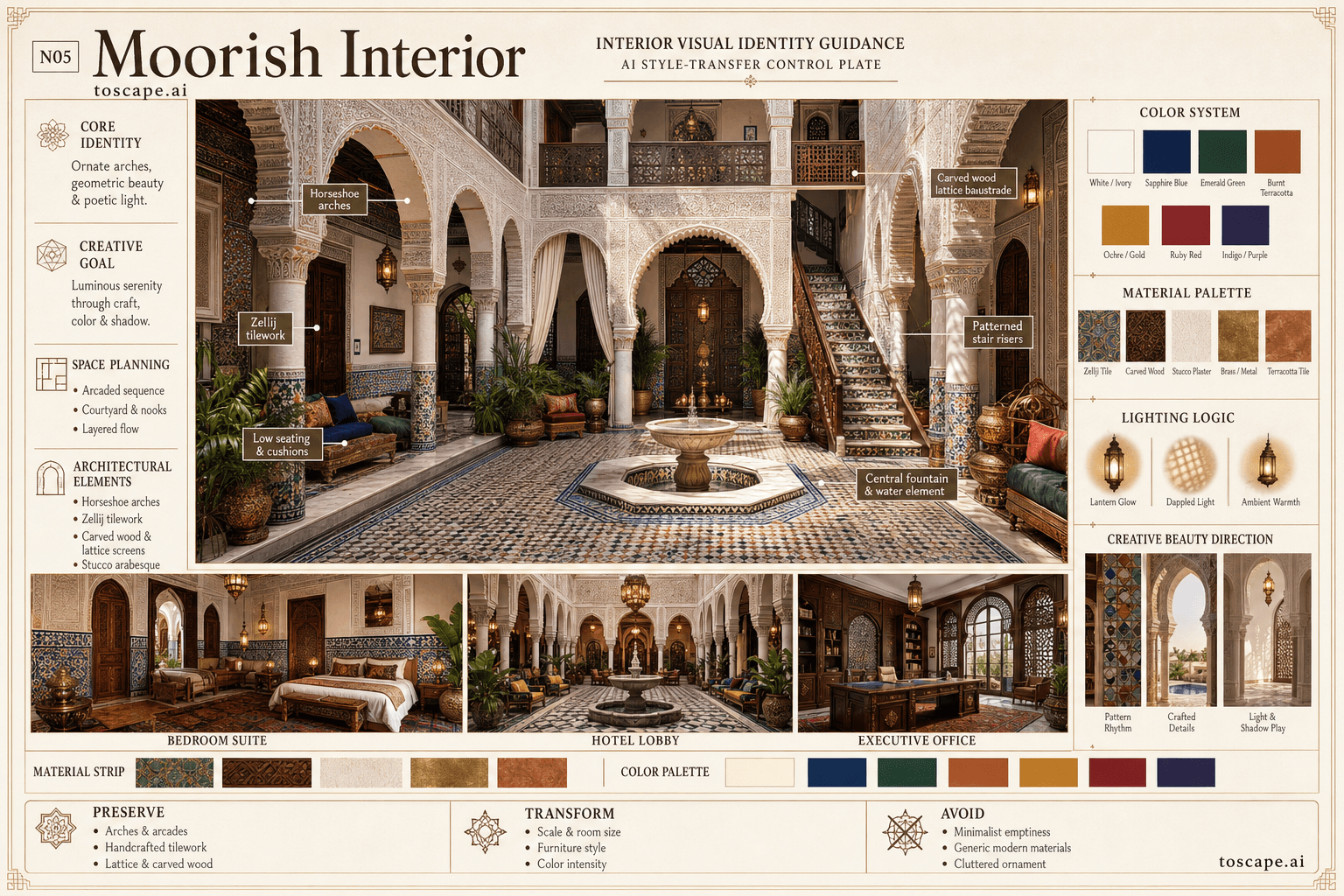
A serene, poetic interior style defined by signature horseshoe arches, intricate geometric tilework, patterned light, carved lattice, and...
Definition
Moorish Interior is an interior design style used for architectural visualization. A serene, poetic interior style defined by signature horseshoe arches, intricate geometric tilework, patterned light.
- Family
- Arabian / Mediterranean / Ornamental / Heritage Revival / North African.
- Origin
- Emerging from Al-Andalus (medieval Islamic Spain) and Maghreb, the style fuses Arab, Berber, Iberian, and Mediterranean.
- Massing
- Horseshoe and keyhole arches, arcades, domes, muqarnas, geometric inlays, ridged plaster, intricate lattice, and delicate wood screenwork.
- Materials
- Crisp carved plaster, glazed mosaic, silky smooth Tadelakt, rich wool, aged wood grain, and filigree brass.
- Palette
- Ivory, cobalt, emerald, terracotta, antique brass, and deep rug reds.
- Lighting
- Warm, layered, and low; lanterns, pendant clusters, and wall sconces integrated with arches and screens.
Overview
Moorish Interior is an interior design style defined by An immersive, ornate interior language defined by horseshoe arches, intricate geometric pattern, arabesque ornament, lattice, vivid color, and a luminous, atmospheric serenity. To evoke sensory richness, poetic light, and spatial harmony through layered architecture, patterned surfaces, fluid arches, and decorative serenity.
Visual DNA
Spatial Feeling
Serene, immersive, airy, poetic, and visually mesmerizing, with a subtle play of light and shadow.
Form Language
Horseshoe and keyhole arches, arcades, domes, muqarnas, geometric inlays, ridged plaster, intricate lattice, and delicate wood screenwork. Tall, inviting arches; balanced proportions; compressed intimacy around courtyards; ceilings...
Composition
Spatial rhythm based on arcaded halls, central courtyards, intimate nooks, and flow between inner and outer spaces. Central archways, ornate tile-panelled walls, patterned floors, grand doors, and water features or lanterns. Compose...
Interior Elements
Layered: smooth white/ivory plaster, banded with carved stucco, mosaic zellij tilework, hand-carved wood, and geometric lattice. Ceilings may be plain, domed, or delicately coffered; decorate with plaster relief, painted wood beams, or...
Color System
Ivory, cobalt, emerald, terracotta, antique brass, and deep rug reds. Balance luminous neutral plaster with two or three strong jewel tones repeated in tile, textiles, and accessories for rhythm and vibrancy. More saturated sapphire,...
Material Palette
Crisp carved plaster, glazed mosaic, silky smooth Tadelakt, rich wool, aged wood grain, and filigree brass. Use tile at base and feature panels, plaster for large surfaces, wood for doors and lattice, stone sparingly, and textiles to...
Lighting Logic
Warm, layered, and low; lanterns, pendant clusters, and wall sconces integrated with arches and screens. Use raked sunlight, patterned shadow, and golden lantern glow; emphasize contrasts between luminous centers, deep alcoves, and...
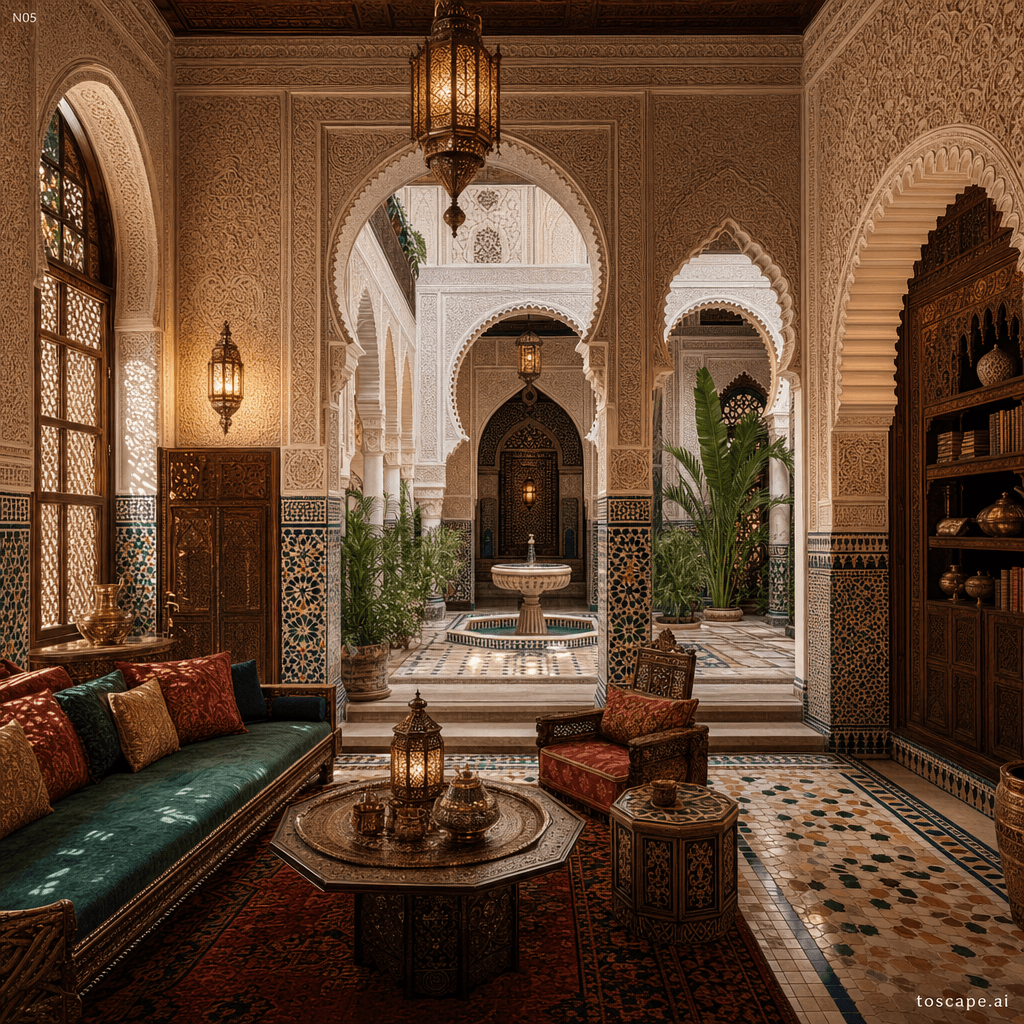
Interior reference image
Moorish Interior composition, material palette, furniture language, and lighting direction.
Context Snapshot
Emerging from Al-Andalus (medieval Islamic Spain) and Maghreb, the style fuses Arab, Berber, Iberian, and Mediterranean... Artfully revived in luxury villas, boutique hotels, spas, high-end majlis, museums, event spaces, and editorial design projects. Preserve arch rhythm, sophisticated zellij, lattice, and carved plaster, while opening plans, enhancing light, refining layering, and choosing premium materials for contemporary comfort.
Composition And Planning
Spatial rhythm based on arcaded halls, central courtyards, intimate nooks, and flow between inner and outer spaces. Encourages gentle procession through a sequence of arches, alcoves, and patterned zones; movement is layered and sensory. Compose from corner or frontal angles to showcase arches, layered depth, and a play of light/shadow; reveal foreground arch or lattice, middle seating, and background tile or court.
Furniture Grammar
Low, relaxed, softly geometric with gentle curves and tapestry surfaces. Arrange seating along walls to echo arches, floating rugs in central zones, tables as functional jewelry, always preserving open space and visual rhythm. - Horseshoe-arched low bench - Inlaid wooden octagonal table - Silk-embroidered pouf - Lattice-worked screen
Creative Direction
A sunlit arcaded salon framed by horseshoe arches, cobalt/emerald zellij, poetic carved plaster, plush jewel-toned seating, antique lanterns dappling shadow, and a tranquil courtyard beyond. Clean, lush, and curated-arch rhythm dominates, tilework is luminous and graphic, shadows from lattice enliven the white plaster, with textile and object details perfectly balanced. Dramatic contrast of sunlight and shadow, glowing brass lanterns, deep tile tones, layered arches receding, moody atmosphere with incense spiral and calm water. - Authentic handcrafted tile and carved work - True arches and plaster, not stickers or fake trims - Rich...
Best Project Applications
- Boutique hotels, luxury villa lounges, spa salons, arcaded courtyards, editorial majlis.
Preserve, Transform, Avoid
Preserve
- Signature rhythm of horseshoe/keyhole arches
- Authentic geometric tilework or lattice screens
- Layered play of light and shadow
- Carved arabesque plaster and wood craft
Transform
- Reduce ornament density for contemporary serenity
- Use new materials for luxury comfort as long as spatial and pattern logic is preserved
- Open plans around courtyard principles
- Refine color palette for high-end elegance while repeating Moorish color rhythm
Avoid
- Generic open-plan without arches or pattern
- Industrial, Scandinavian, or minimalist insertions
- Superficial Arabesque decor without true architectural features
- Overcrowded maximalism that blurs spatial order
- Overusing metallic gold, synthetic brights, or plastic furniture
Frequently asked questions
What is Moorish Interior?
Moorish Interior is an interior design style used for architectural visualization. A serene, poetic interior style defined by signature horseshoe arches, intricate geometric tilework, patterned light.
What materials define Moorish Interior?
Crisp carved plaster, glazed mosaic, silky smooth Tadelakt, rich wool, aged wood grain, and filigree brass. Use tile at base and feature panels, plaster for large surfaces, wood for doors and lattice, stone sparingly.
What is the Moorish Interior color palette?
Ivory, cobalt, emerald, terracotta, antique brass, and deep rug reds. Balance luminous neutral plaster with two or three strong jewel tones repeated in tile, textiles, and accessories for rhythm and vibrancy. More saturated sapphire.
What is the origin of Moorish Interior?
Emerging from Al-Andalus (medieval Islamic Spain) and Maghreb, the style fuses Arab, Berber, Iberian, and Mediterranean... Artfully revived in luxury villas, boutique hotels, spas, high-end majlis, museums, event spaces, and editorial design projects. Preserve arch rhythm, sophisticated zellij, lattice, and carved plaster, while opening plans, enhancing light, refining layering, and choosing premium materials for contemporary comfort.
When should architects use Moorish Interior?
A sunlit arcaded salon framed by horseshoe arches, cobalt/emerald zellij, poetic carved plaster, plush jewel-toned seating, antique lanterns dappling shadow, and a tranquil courtyard beyond. Clean, lush, and curated-arch rhythm dominates, tilework is luminous and graphic, shadows from lattice enliven the white plaster, with textile and object details perfectly balanced.
How do you render Moorish Interior in Toscape?
Open Toscape on Windows, load your own photo, elevation, sketch, or CAD view, then apply the Moorish Interior reference from the built-in style library. The Interior Design workflow keep your project geometry and camera while shifting materials, proportion, and detailing toward Moorish Interior.
Use this style in Toscape
Explore Moorish Interior inside Toscape using interior-focused rendering workflows and gallery references.
Open interior references