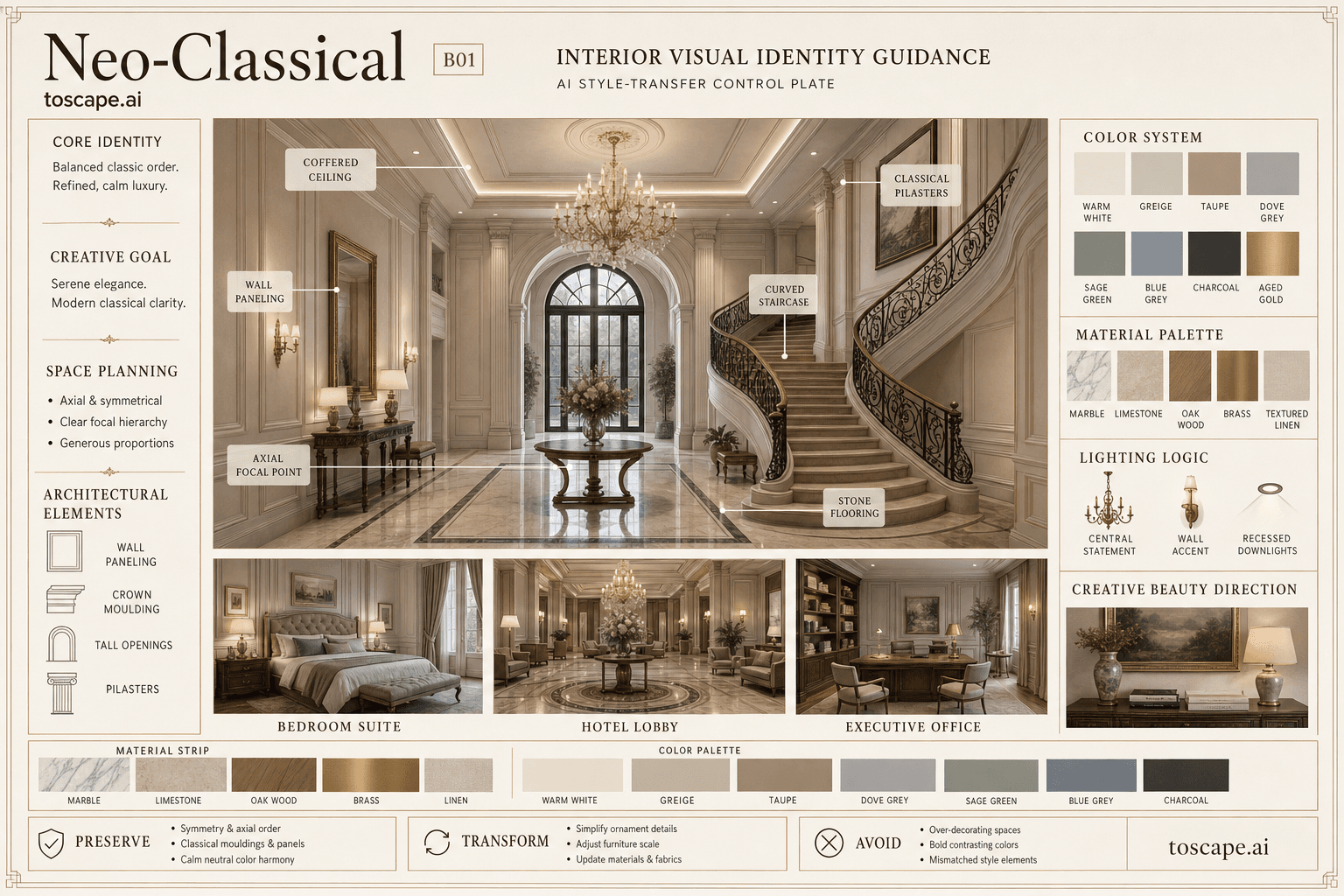
Neo-Classical
B01 / Modern Classic / Refined Classical / Transitional Luxury
A serene, harmonious classical style defined by balanced symmetry, refined panelled walls, noble materials, elegant furniture, and luminous calm.
Definition
Neo-Classical is an interior design style used for architectural visualization. A serene, harmonious classical style defined by balanced symmetry, refined panelled walls, noble materials, elegant furniture, and luminous calm.
- Family
- Modern Classic / Refined Classical / Transitional Luxury.
- Origin
- Emerging in late 18th-century and early 19th-century Europe as a return to Greek and Roman order.
- Massing
- Rectilinear and softly curved elements; flat wall panels, pilasters, restrained mouldings, round-arched or rectangular openings, clean lines with subtle relief.
- Materials
- Smooth, matte or gently reflective, soft to touch, with quiet layering of fine-grained woods, crisp textiles, and occasional relief in mouldings.
- Palette
- Warm ivory, misty grey, antique gold, pale oak, soft blue-green, and cream. Use a layered tonal palette with gentle transitions and minimal high-contrast color drama.
- Lighting
- Refined ceiling fixtures-discreetly recessed downlights, cove light, or a statement chandelier that is elegant and never excessively ornate.
Overview
Neo-Classical is an interior design style defined by A refined, balanced interior identity grounded in classic symmetry, elegant architectural detail, calm surfaces, and noble materials-reinterpreted with crisp restraint, clarity, and luxurious simplicity. To create a sense of calm elegance, heritage richness, and confident order-delivering a sophisticated atmosphere that feels enduring, graceful, and uncluttered.
Visual DNA
Spatial Feeling
Airy, serene, measured, cultivated, quietly grand, and balanced.
Form Language
Rectilinear and softly curved elements; flat wall panels, pilasters, restrained mouldings, round-arched or rectangular openings, clean lines with subtle relief. Tall, stately rooms; balanced wall expanse; generous openings; crown and...
Composition
Formally organized rooms or open layouts defined by axis, symmetry, and balanced focal points; never random or fragmentary. Centred fireplace, statement console with mirror, formal sofa, symmetrical window treatment, or a sculptural...
Interior Elements
Flat or raised wall paneling, elegant trims, soft neutral paint, refined base and crown mouldings, symmetrical mirrored or framed features. Ceilings may be simply stepped, modestly coffered, or feature a restrained central rosette, but...
Color System
Warm ivory, misty grey, antique gold, pale oak, soft blue-green, and cream. Use a layered tonal palette with gentle transitions and minimal high-contrast color drama. Add accents of charcoal, deep navy, or chocolate brown-but maintain...
Material Palette
Smooth, matte or gently reflective, soft to touch, with quiet layering of fine-grained woods, crisp textiles, and occasional relief in mouldings. Architectural detailing in painted wood; floors in wood or stone; seating in tactile...
Lighting Logic
Refined ceiling fixtures-discreetly recessed downlights, cove light, or a statement chandelier that is elegant and never excessively ornate. Soft, directional lighting to create gentle highlight and shadow interplay on paneling,...
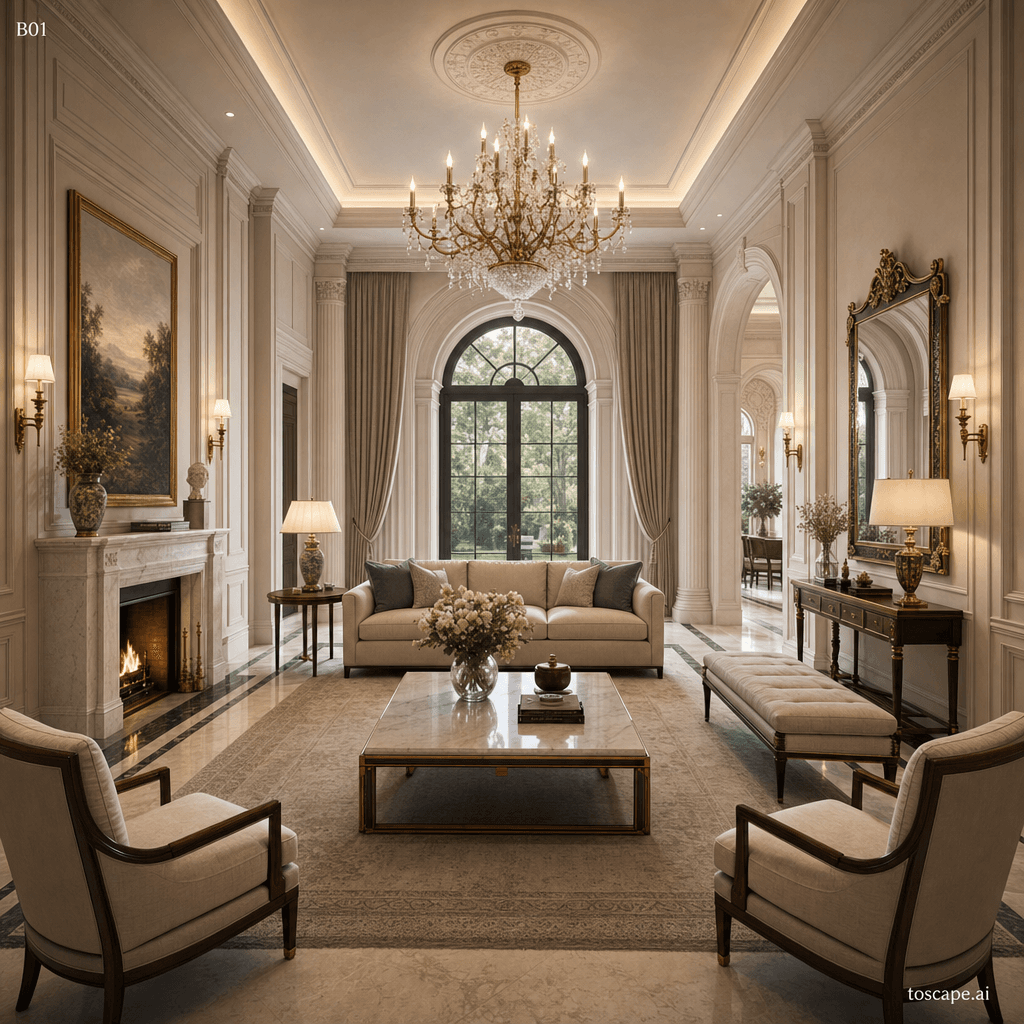
Interior reference image
Neo-Classical composition, material palette, furniture language, and lighting direction.
Context Snapshot
Emerging in late 18th-century and early 19th-century Europe as a return to Greek and Roman order, Neo-Classical evolved into a... Favored in premium residences, luxury hotels, flagship boutiques, embassies, and ceremonial spaces requiring both gravitas and freshness. Use beautifully proportioned rooms, soft neutral palettes, refined architectural detailing, premium materials, and minimal but precise decorative accents.
Composition And Planning
Formally organized rooms or open layouts defined by axis, symmetry, and balanced focal points; never random or fragmentary. Smooth, axial, processional; the eye is led through formal perspective toward a focal point-mirror, fireplace, artwork, or window. Eye-level or slightly elevated camera, centered on a main axis, showing strong foreground anchor, balanced midground, and a focused background feature.
Furniture Grammar
Classically inspired yet crisply edited; soft curves, tapered legs, thin arms, structured backs, and modest ornamentation. Arranged symmetrically or softly balanced on axis; spacing allows for clarity and movement; never cluttered, never floating without anchor. - Button-tufted straight-arm sofa - Tapered-leg armchairs with classical frame - Marble-top console table
Creative Direction
A glowing, formal yet inviting room with crisp paneling, elegant brass fixtures, pale oak or marble floors, sculptural classical furniture, and harmonious soft light. Visually quiet, elegantly styled, spacious, with curated art, brushed brass accents, perfect axial composition, and high-quality materials shot in natural light. Balanced deep shadows reveal crisp mouldings, a luminous chandelier, dark wood accents, and a soft interplay between highlight and shade on pale walls. - Perfectly proportioned paneling and trims - Impeccable material finishes - Calm, luminous palette with curated accents
Best Project Applications
- Luxury residences, hotel lobbies, embassies, premium dining rooms, formal salons.
Preserve, Transform, Avoid
Preserve
- Architectural symmetry and ordered paneling
- Clean, restrained wall and ceiling detail
- Balanced, premium material palette
- Classical furniture in contemporary interpretation
Transform
- Update paneling and molding with sharper lines
- Use modern lighting forms with classical hints
- Introduce subtle contemporary color or art
- Reduce surface density for calmness
Avoid
- Overly ornate, Baroque, or Rococo detailing
- Industrial, rustic, or raw finishes
- Maximalist color, pattern, or accessory overload
- Minimalist white-box approach with superficial trims
- Mixing with mid-century, Scandi, or boho elements
Frequently asked questions
What is Neo-Classical?
Neo-Classical is an interior design style used for architectural visualization. A serene, harmonious classical style defined by balanced symmetry, refined panelled walls, noble materials, elegant furniture, and luminous calm.
What materials define Neo-Classical?
Smooth, matte or gently reflective, soft to touch, with quiet layering of fine-grained woods, crisp textiles, and occasional relief in mouldings. Architectural detailing in painted wood; floors in wood or stone; seating in tactile.
What is the Neo-Classical color palette?
Warm ivory, misty grey, antique gold, pale oak, soft blue-green, and cream. Use a layered tonal palette with gentle transitions and minimal high-contrast color drama. Add accents of charcoal, deep navy, or chocolate brown-but maintain.
What is the origin of Neo-Classical?
Emerging in late 18th-century and early 19th-century Europe as a return to Greek and Roman order, Neo-Classical evolved into a... Favored in premium residences, luxury hotels, flagship boutiques, embassies, and ceremonial spaces requiring both gravitas and freshness. Use beautifully proportioned rooms, soft neutral palettes, refined architectural detailing, premium materials, and minimal but precise decorative accents.
When should architects use Neo-Classical?
A glowing, formal yet inviting room with crisp paneling, elegant brass fixtures, pale oak or marble floors, sculptural classical furniture, and harmonious soft light. Visually quiet, elegantly styled, spacious, with curated art, brushed brass accents, perfect axial composition, and high-quality materials shot in natural light.
How do you render Neo-Classical in Toscape?
Open Toscape on Windows, load your own photo, elevation, sketch, or CAD view, then apply the Neo-Classical reference from the built-in style library. The Interior Design workflow keep your project geometry and camera while shifting materials, proportion, and detailing toward Neo-Classical.
Use this style in Toscape
Explore Neo-Classical inside Toscape using interior-focused rendering workflows and gallery references.
Open interior references