Neo-Industrial
L02 / Industrial, Urban Loft, Modern Urban, Minimal, Hospitality-Luxe Industrial
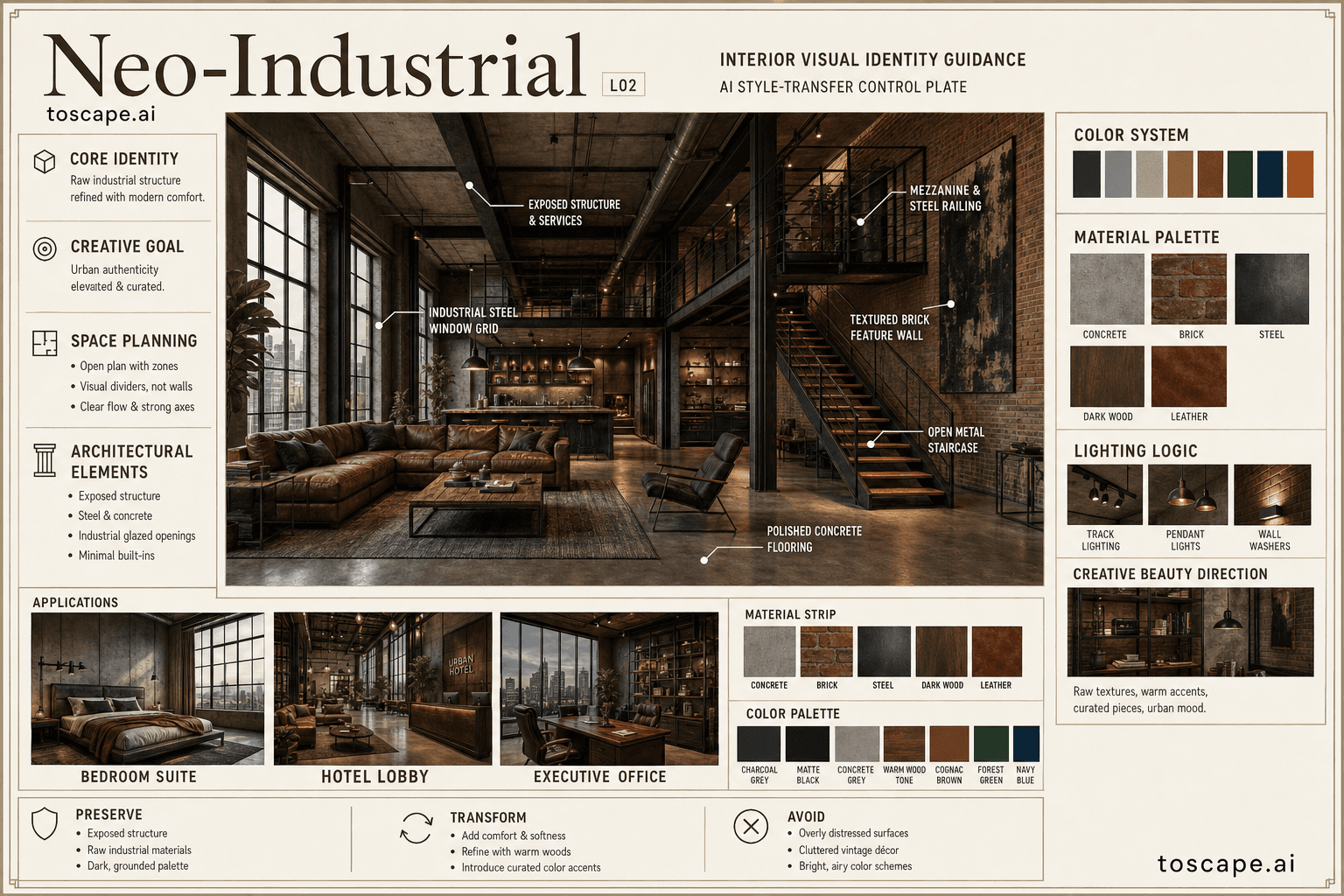
A refined, urban industrial style combining exposed structure, rich materials, curated art, and a moody contemporary city atmosphere.
Definition
Neo-Industrial is an interior design style used for architectural visualization. A refined, urban industrial style combining exposed structure, rich materials, curated art, and a moody contemporary city atmosphere.
- Family
- Industrial, Urban Loft, Modern Urban, Minimal, Hospitality-Luxe Industrial.
- Origin
- Rooted in the adaptive reuse of factories and warehouses for urban living.
- Massing
- Rectilinear masses, raw planes, exposed beams, visible services, steel window gridding, and confident furniture silhouettes; soft curves introduced through loose furnishings only for contrast.
- Materials
- Matte, tactile, and honest, with the play of rough and smooth, industrial and soft, cool and warm; textiles add intentional contrast to hard surfaces.
- Palette
- Concrete grey, matte black, natural brick, smoked wood, deep leather, aged metals, and a hint of warm textile to soften.
- Lighting
- Track lighting or exposed-rail linear lights mounted to ceiling structure; occasionally deep pendant floods or sculptural LED fixtures.
Overview
Neo-Industrial is an interior design style defined by Neo-Industrial fuses the raw, utilitarian DNA of classic industrial interiors with refined materials, tailored composition, contemporary comfort, and a premium polished atmosphere. To evoke urban authenticity and creative energy while providing comfort, tactile richness, and a curated modern sensibility.
Visual DNA
Spatial Feeling
Urban, open, expressive, tactile, slightly moody, and visually dynamic with a strong sense of materiality.
Form Language
Rectilinear masses, raw planes, exposed beams, visible services, steel window gridding, and confident furniture silhouettes; soft curves introduced through loose furnishings only for contrast. Lofty, tall ceilings and open spans...
Composition
Open-plan layouts preferred; distinct areas are loosely defined rather than walled-in, with visual zoning. A heavyweight statement piece (e.g., steel kitchen island, sculptural sofa, art wall), or architectural features such as a...
Interior Elements
Exposed concrete, natural or painted brick, steel, and blackened metal paneling; occasional softening with wood wall cladding or inset textured panels. Ceilings feature exposed structure-beams, ductwork, piping, or cable trays-kept...
Color System
Concrete grey, matte black, natural brick, smoked wood, deep leather, aged metals, and a hint of warm textile to soften. Maintain a controlled, moody palette with occasional warm accenting; major surfaces remain neutral while color pops...
Material Palette
Matte, tactile, and honest, with the play of rough and smooth, industrial and soft, cool and warm; textiles add intentional contrast to hard surfaces. Concrete/brick for the shell, steel for visual rhythm/structure, timber and leather...
Lighting Logic
Track lighting or exposed-rail linear lights mounted to ceiling structure; occasionally deep pendant floods or sculptural LED fixtures. Use strong directional light and deep shadow to sculpt space, highlight texture, and dramatize...
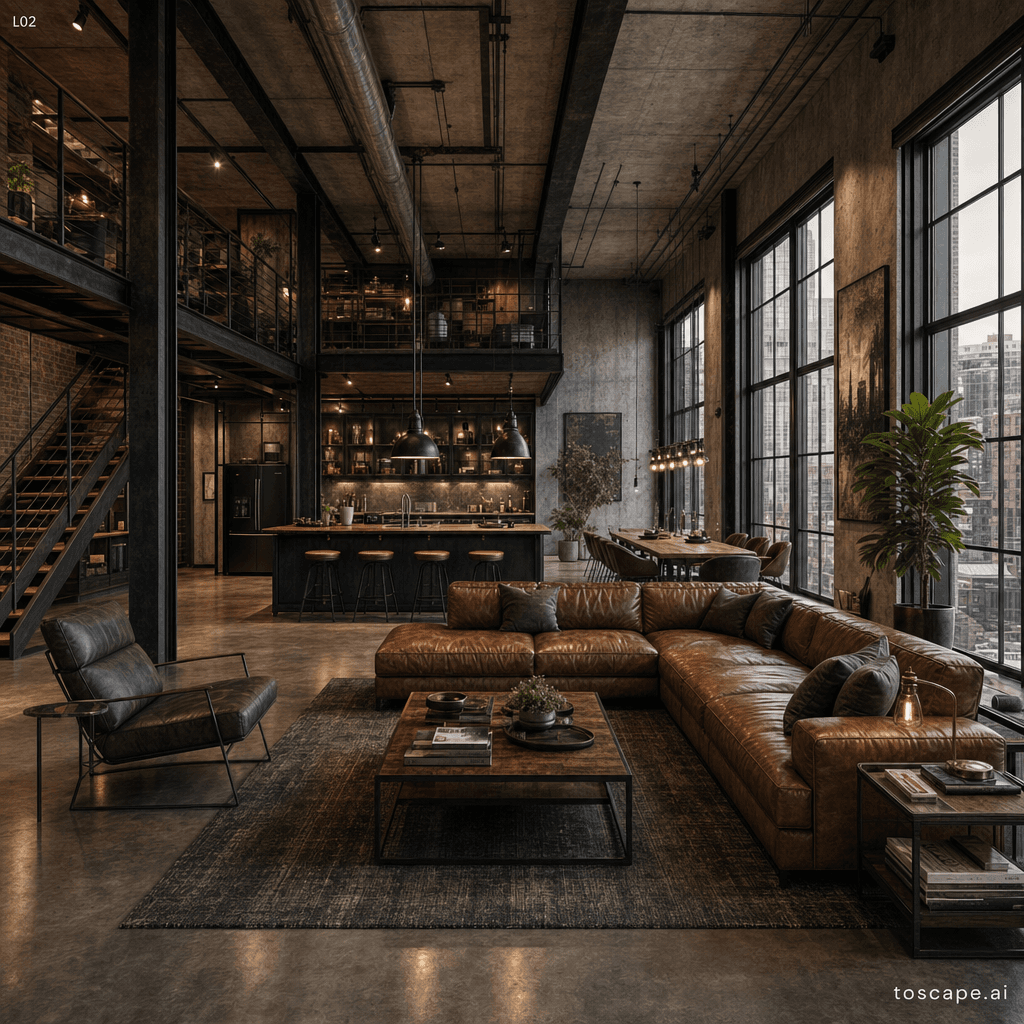
Interior reference image
Neo-Industrial composition, material palette, furniture language, and lighting direction.
Context Snapshot
Rooted in the adaptive reuse of factories and warehouses for urban living, Neo-Industrial reflects a 21st-century focus on... Applied in high-end city apartments, coworking hubs, cafes, boutique hotels, restaurants, creative studios, and urban living spaces seeking atmosphere and edge. Use genuine raw materials for structure, but balance with clean lines, high-quality finishes, curated furnishings, art, and premium lighting for an editorial-quality look.
Composition And Planning
Open-plan layouts preferred; distinct areas are loosely defined rather than walled-in, with visual zoning. Encourages free, informal flow with clear pathways, but visual movement is guided by dominant axes set by beams, windows, or lighting runs. Slightly low camera, wide framed shot with strong leading lines from beams, glass grids, or lighting; layer a clear foreground object (e.g., coffee table), midground group, and a bold focal background.
Furniture Grammar
Low, linear, robust, with strong geometry; occasional softening via rounded sofas or oversized lounge chairs. Anchor major seating in open "islands", place tables and casegoods parallel to structure, keep clear circulation, float signature furniture for maximum spatial effect. - Black steel-framed glass coffee table - Low cognac leather sofa - Cantilevered timber dining table - Industrial bar stool
Creative Direction
A spacious, light-filled city loft with exposed concrete beams, textured brick, matte black steel, smoked timber flooring, sculptural leather furniture, oversized industrial lighting, large-format art, and a balanced interplay of shadow and tactile materials. The space organizes strong urban structure, premium finishes, and curated art with impeccable lighting-moody, sophisticated, and atmospheric with magazine-level clarity. Deep shadow and slanting light slices across rough concrete and brick; bold silhouettes and artful negative space create tension and drama, while golden hour light warms raw surfaces against dark furniture. - Real,...
Best Project Applications
- Urban loft apartments, boutique hotels, contemporary restaurants, creative studios.
Preserve, Transform, Avoid
Preserve
- Exposed authentic structural materials (concrete, steel, brick)
- Moody, urban atmosphere and open plan logic
- Strong textural and visual contrast between materials
- Honest detailing and curated, substantial furniture
Transform
- Introduce softening textiles and sculptural seating to enhance comfort
- Deploy premium lighting and curated artwork for editorial beauty
- Use smoked or dark woods to raise the level of luxury
- Refine joinery and detailing for a more contemporary finish
Avoid
- Faux-distressed "shabby chic" or overdone vintage clutter
- Ornate classic or rococo detailing
- Bright white minimalism or pastel Scandi palettes
- Superficial brass/gold touches with no structure
- Overcrowding or breaking the open, structural logic
Frequently asked questions
What is Neo-Industrial?
Neo-Industrial is an interior design style used for architectural visualization. A refined, urban industrial style combining exposed structure, rich materials, curated art, and a moody contemporary city atmosphere.
What materials define Neo-Industrial?
Matte, tactile, and honest, with the play of rough and smooth, industrial and soft, cool and warm; textiles add intentional contrast to hard surfaces. Concrete/brick for the shell, steel for visual rhythm/structure, timber and leather.
What is the Neo-Industrial color palette?
Concrete grey, matte black, natural brick, smoked wood, deep leather, aged metals, and a hint of warm textile to soften. Maintain a controlled, moody palette with occasional warm accenting; major surfaces remain neutral while color pops.
What is the origin of Neo-Industrial?
Rooted in the adaptive reuse of factories and warehouses for urban living, Neo-Industrial reflects a 21st-century focus on... Applied in high-end city apartments, coworking hubs, cafes, boutique hotels, restaurants, creative studios, and urban living spaces seeking atmosphere and edge.
When should architects use Neo-Industrial?
A spacious, light-filled city loft with exposed concrete beams, textured brick, matte black steel, smoked timber flooring, sculptural leather furniture, oversized industrial lighting, large-format art, and a balanced interplay of shadow and tactile materials. The space organizes strong urban structure, premium finishes, and curated art with impeccable lighting-moody, sophisticated, and atmospheric with magazine-level clarity.
How do you render Neo-Industrial in Toscape?
Open Toscape on Windows, load your own photo, elevation, sketch, or CAD view, then apply the Neo-Industrial reference from the built-in style library. The Interior Design workflow keep your project geometry and camera while shifting materials, proportion, and detailing toward Neo-Industrial.
Use this style in Toscape
Explore Neo-Industrial inside Toscape using interior-focused rendering workflows and gallery references.
Open interior references