
Nordic Rustic
M07 / Rustic Modern / Scandinavian / Organic Minimal / Warm Minimal / Contemporary Cabin
A tactile, light-filled Scandinavian rustic style blending raw timber, pale walls, layered natural textures, and soulful, earthy calm.
Definition
Nordic Rustic is an interior design style used for architectural visualization. A tactile, light-filled Scandinavian rustic style blending raw timber, pale walls, layered natural textures, and soulful, earthy calm.
- Family
- Rustic Modern / Scandinavian / Organic Minimal / Warm Minimal / Contemporary Cabin.
- Origin
- Rooted in Northern European vernacular farmhouses, reinterpreted through Scandinavian minimalism and contemporary slow-living.
- Massing
- Simple, clean lines softened by gentle curves and irregularities; solid chunky profiles, exposed beams, rustic joinery, and organic elements.
- Materials
- Deeply tactile and layered-rough timber, nubby weaves, stone grain, soft knits, pottery irregularity.
- Palette
- Linen white, sand, driftwood, milk, weathered oak, dry clay, smudged charcoal. Monochrome and tone-on-tone layering; all colors should feel organic, weathered, and soft-never synthetic or primary.
- Lighting
- Soft, indirect sources-hidden wall wash, warm dimmable downlights, or exposed bulb pendants in simple metal or ceramic.
Overview
Nordic Rustic is an interior design style defined by A tactile, light-filled interior style where Scandinavian simplicity meets raw, honest rusticity, defined by natural materials, handcrafted textures, a pale grounded palette, and soulful warmth. To create a space of calm nourishment, understated beauty, and connection to nature-where every element feels both pure and deeply tactile.
Visual DNA
Spatial Feeling
Light, calm, tactile, grounded, nurturing, and serene with an undercurrent of rural coziness.
Form Language
Simple, clean lines softened by gentle curves and irregularities; solid chunky profiles, exposed beams, rustic joinery, and organic elements. Balanced, with generous ceilings and human-scale intimacy; large window openings, anchored...
Composition
Open yet intimate; rooms flow visually but feel grounded, with communal zones anchored by fireplaces, tables, or seating clusters. Stone fireplaces, wood-burning stoves, a statement dining table, heavy timber beams, or large windows...
Interior Elements
Lime-washed, plastered, or matte-painted walls in stone, white, or clay neutrals; raw or weathered timber cladding; occasional stone or brick accent walls. Natural timber beams (aged, rough-sawn, or reclaimed), simple plank ceilings, or...
Color System
Linen white, sand, driftwood, milk, weathered oak, dry clay, smudged charcoal. Monochrome and tone-on-tone layering; all colors should feel organic, weathered, and soft-never synthetic or primary. Moody deep browns, stormy greys, smoked...
Material Palette
Deeply tactile and layered-rough timber, nubby weaves, stone grain, soft knits, pottery irregularity. Timber for structure, floors, cabinetry, and furniture; stone or plaster for walls and hearths; textiles on seating and beds; ceramics...
Lighting Logic
Soft, indirect sources-hidden wall wash, warm dimmable downlights, or exposed bulb pendants in simple metal or ceramic. Harness diagonal shafts of natural light across raw textures; balance highlight and shadow to emphasize warmth and...
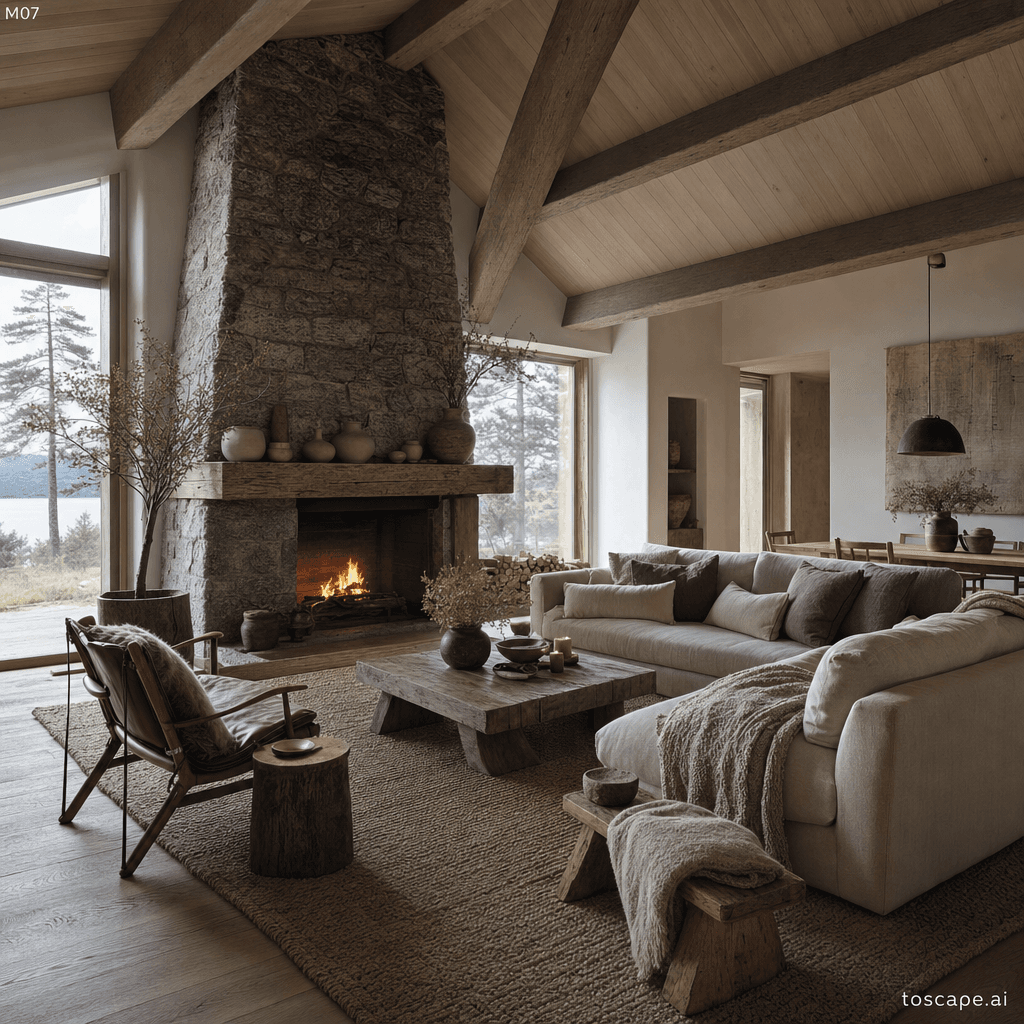
Interior reference image
Nordic Rustic composition, material palette, furniture language, and lighting direction.
Context Snapshot
Rooted in Northern European vernacular farmhouses, reinterpreted through Scandinavian minimalism and contemporary slow-living... Used in boutique hotels, lakeside cabins, villas, contemporary chalets, minimalist cottages, and upmarket apartments seeking warmth and realness. Emphasize simplicity of form, natural surface depth, and daylight, elevating humble materials through refined composition, curated restraint, and premium finishes.
Composition And Planning
Open yet intimate; rooms flow visually but feel grounded, with communal zones anchored by fireplaces, tables, or seating clusters. Gentle, with circulation that feels natural and unforced; the body moves through pools of warmth and quiet negative space. Natural light pouring from windows, mid/low camera angle to highlight textures; a hearth, table, or seating group as foreground anchor, window or stone wall as soft background, strong presence of natural materials in every image plane.
Furniture Grammar
Chunky, honest, and low-slung; softened minimalism with visible joinery and hand-finished edges. Grounded but unforced arrangement; anchor main furniture on rug or around fire; leave air around secondary pieces; allow for asymmetry that feels authentic and lived-in. - Reclaimed timber dining table - Wool-upholstered box sofa - Linen slipcovered armchair - Chunky wooden bench
Creative Direction
A large, sunlit space anchored by pale weathered beams, a tactile stone hearth, massive timber table, thick wool rugs, and curated, soulful ceramics-every surface gently textured, every element both simple and alive. Photographed at a low angle with crisp daylight raking across rough timber, linen, and limewashed surfaces; all objects intentional and savored, pauses of negative space giving the eyes room to land. Firelight or dusk light glows across smoky timber and wool, deepening the sense of shelter; shadows backdrop raw materials and highlight hand-built forms. - Real, rare timber surfaces - Thick, handwoven textiles - Visible...
Best Project Applications
- Contemporary cabins, boutique hotels, cozy villas, lakeside homes, artisanal apartments.
Preserve, Transform, Avoid
Preserve
- Authentic natural materiality in every plane
- Honest, tactile, layered textures (timber, wool, stone)
- Calm, light-drenched composition with curated negative space
- Rural soul and crafted detail
Transform
- Elegantly upsize or refine furniture scale for premium use
- Enhance daylight and frame nature with larger openings
- Edit accessory count to achieve magazine clarity while keeping artisanal objects
- Mix modern craftsmanship with age-old timber and stone for a fresh premium feeling
Avoid
- Plastic, faux finishes or machine-gloss
- Thin metal frames, mid-century silhouettes, glass-heavy furniture
- Over-accessorized, cluttered, or busy decor
- Bright or primary colors, high-gloss whites
- Industrial, farmhouse kitsch, or minimalism without tactile weight
Frequently asked questions
What is Nordic Rustic?
Nordic Rustic is an interior design style used for architectural visualization. A tactile, light-filled Scandinavian rustic style blending raw timber, pale walls, layered natural textures, and soulful, earthy calm.
What materials define Nordic Rustic?
Deeply tactile and layered-rough timber, nubby weaves, stone grain, soft knits, pottery irregularity. Timber for structure, floors, cabinetry, and furniture; stone or plaster for walls and hearths; textiles on seating and beds; ceramics.
What is the Nordic Rustic color palette?
Linen white, sand, driftwood, milk, weathered oak, dry clay, smudged charcoal. Monochrome and tone-on-tone layering; all colors should feel organic, weathered, and soft-never synthetic or primary. Moody deep browns, stormy greys, smoked.
What is the origin of Nordic Rustic?
Rooted in Northern European vernacular farmhouses, reinterpreted through Scandinavian minimalism and contemporary slow-living... Used in boutique hotels, lakeside cabins, villas, contemporary chalets, minimalist cottages, and upmarket apartments seeking warmth and realness. Emphasize simplicity of form, natural surface depth, and daylight, elevating humble materials through refined composition, curated restraint, and premium finishes.
When should architects use Nordic Rustic?
A large, sunlit space anchored by pale weathered beams, a tactile stone hearth, massive timber table, thick wool rugs, and curated, soulful ceramics-every surface gently textured, every element both simple and alive.
How do you render Nordic Rustic in Toscape?
Open Toscape on Windows, load your own photo, elevation, sketch, or CAD view, then apply the Nordic Rustic reference from the built-in style library. The Interior Design workflow keep your project geometry and camera while shifting materials, proportion, and detailing toward Nordic Rustic.
Use this style in Toscape
Explore Nordic Rustic inside Toscape using interior-focused rendering workflows and gallery references.
Open interior references