Pop Art Interior
V04 / Retro, Contemporary, Visual Culture, Editorial, Graphic, Dopamine Decor
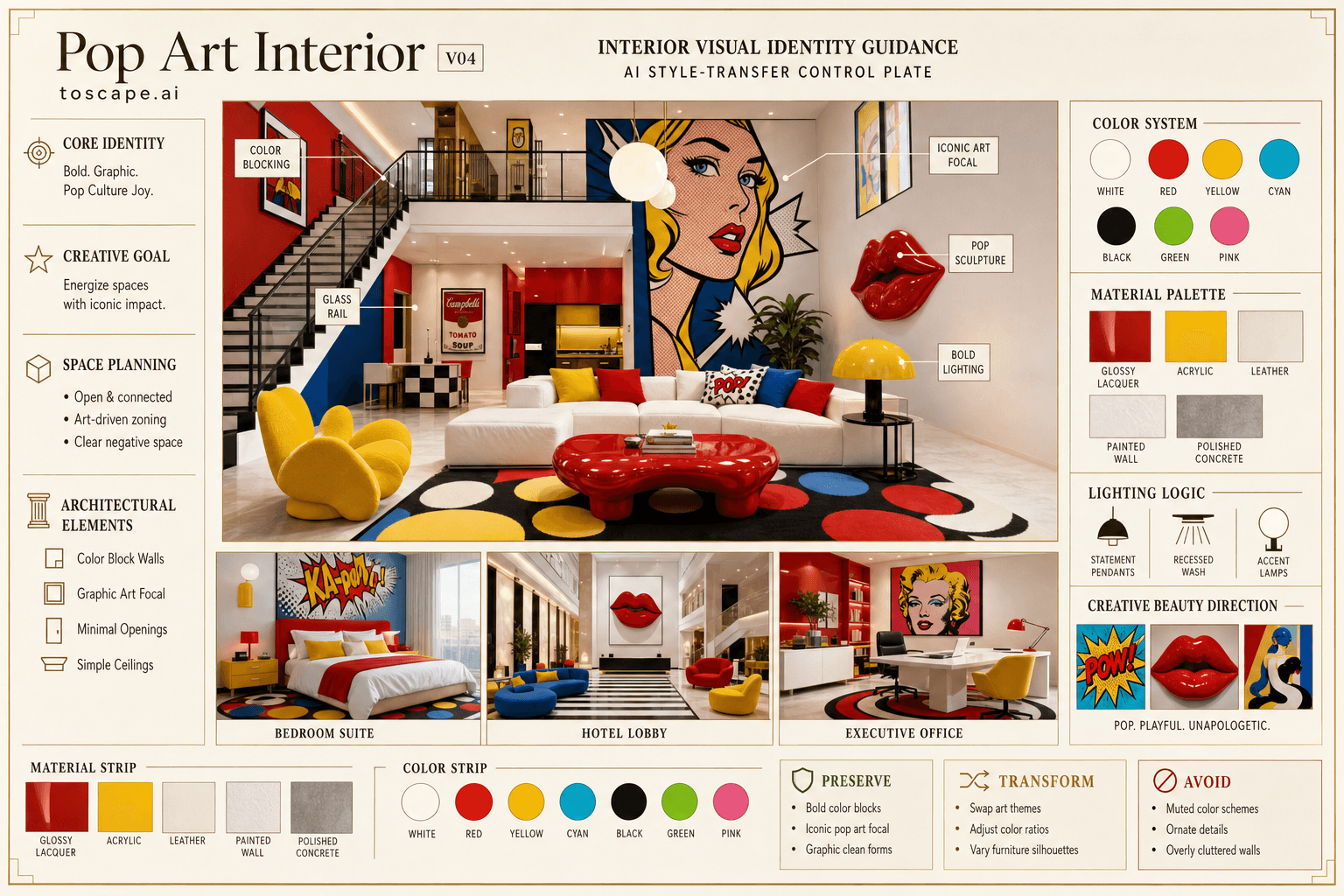
A bold, art-driven interior style marked by saturated color blocking, playful furniture, and iconic pop culture graphics.
Definition
Pop Art Interior is an interior design style used for architectural visualization. A bold, art-driven interior style marked by saturated color blocking, playful furniture, and iconic pop culture graphics.
- Family
- Retro, Contemporary, Visual Culture, Editorial, Graphic, Dopamine Decor.
- Origin
- Emerged in the 1960s as an interior translation of the Pop Art movement-Warhol, Lichtenstein, Hockney-characterized by mass.
- Massing
- Clean graphic shapes, smooth edges, soft rectangles, rounded geometry, circles, cartoonish profiles, and stylized silhouettes with high visual impact.
- Materials
- Predominantly smooth and glossy with deliberate pops of plush or tactile softness; playful felt, plastic, and slick painted surfaces; minimal natural grain.
- Palette
- White shell with blocks of red, blue, yellow, and black, energized with sharp accent greens or pinks; echoing the iconic Pop Art palette.
- Lighting
- Use hidden cove, spot, or downlighting to keep the canvas bright and even; avoid moody shadows.
Overview
Pop Art Interior is an interior design style defined by A visually bold, high-contrast, graphic interior style characterized by saturated color blocks, playful forms, and art-driven focal points inspired by 1960s Pop Art. The style's purpose is to delight, energize, and invite playfulness by immersing users in a world of color, pop-culture wit, and impactful visual statements.
Visual DNA
Spatial Feeling
Energetic, uplifting, playful, visually engaging, and instantly memorable.
Form Language
Clean graphic shapes, smooth edges, soft rectangles, rounded geometry, circles, cartoonish profiles, and stylized silhouettes with high visual impact. Medium to large-scale elements; accents and furniture are often oversized to...
Composition
Open-plan or connected zones structured to showcase wall art and statement pieces. Large-scale art prints, sculptural furniture, feature walls in vivid colors, playful lamps, or graphic installations. Works best with a slightly lowered...
Interior Elements
Large-scale color blocking, white or neutral base walls as a canvas, with bold graphic accent walls or mural surfaces; no ornate trims. Ceilings are simple-white, flat, and undistracting; may feature a bold pendant fixture or a colored...
Color System
White shell with blocks of red, blue, yellow, and black, energized with sharp accent greens or pinks; echoing the iconic Pop Art palette. Contrast is essential; use pure separated hues with crisp edges, and balance bold color with clean...
Material Palette
Predominantly smooth and glossy with deliberate pops of plush or tactile softness; playful felt, plastic, and slick painted surfaces; minimal natural grain. Walls and built-ins in smooth lacquer or paint; furniture combines tactile...
Lighting Logic
Use hidden cove, spot, or downlighting to keep the canvas bright and even; avoid moody shadows. Use bold directional light to amplify color intensity and sharp-edged shadows; highlight art and shape. Lighting reinforces art, color...
Interior reference image
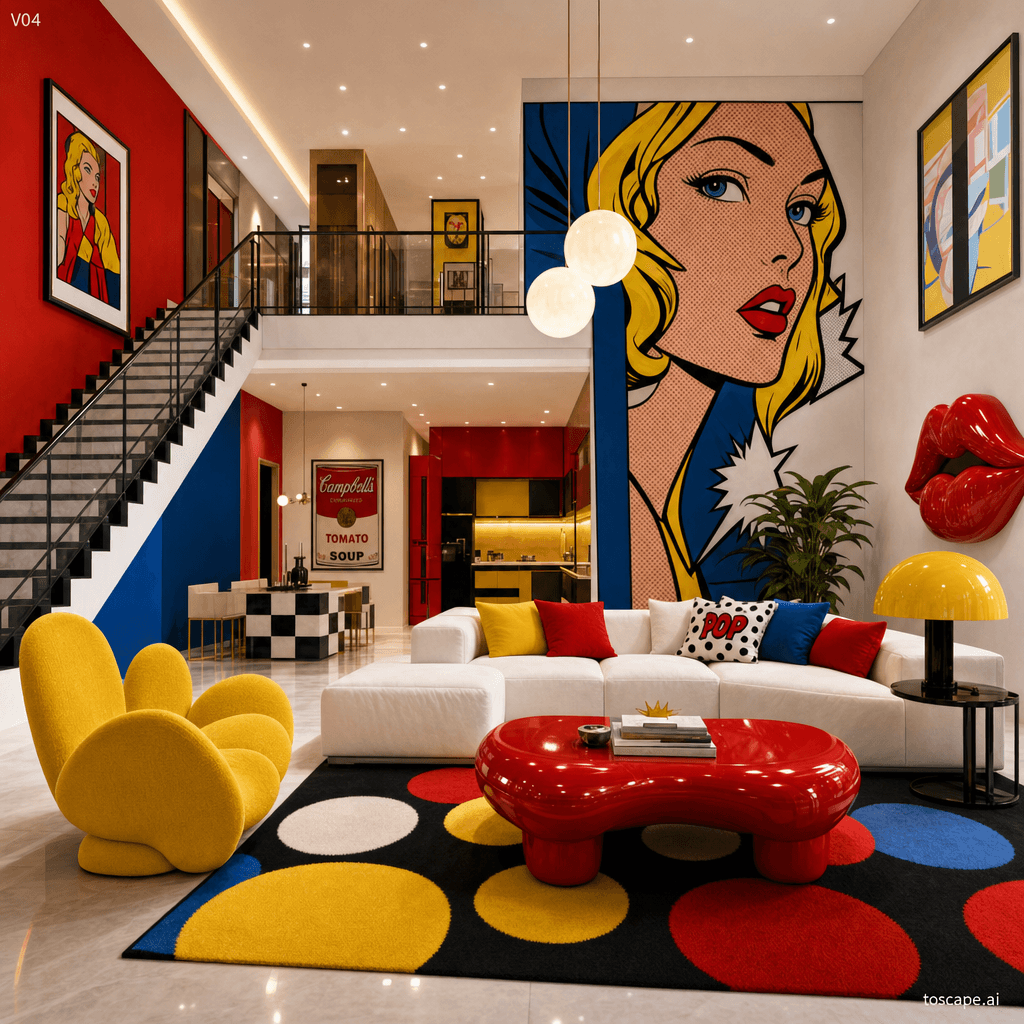
Pop Art Interior composition, material palette, furniture language, and lighting direction.
Context Snapshot
Emerged in the 1960s as an interior translation of the Pop Art movement-Warhol, Lichtenstein, Hockney-characterized by mass... Applied in creative offices, boutique hospitality spaces, concept retail, and occasionally in bold private homes as statement zones or feature rooms. Amplify clean lines, contemporary finishes, and high-impact color blocking; use pop graphics and playful art as central features, while balancing the palette to avoid chaos.
Composition And Planning
Open-plan or connected zones structured to showcase wall art and statement pieces. Encourages free movement and visual exploration; the eye is deliberately invited to jump between strong color and art focal points. Works best with a slightly lowered camera angle to emphasize color fields, with distinct foreground/midground/background; a strong pop art wall or focal vignette should dominate the composition.
Furniture Grammar
Round, tubular, exaggerated curves and playful graphic shapes; visual echo of 1960s-1970s iconic seating. Arrange in conversational clusters or as stand-alone sculptures; avoid crowding, with each piece contributing to the visual story. - Panton or Ball Chair (iconic pop shape) - Memphis-style modular sofa - Bold geometric coffee table - Sculptural acrylic cantilever chair
Creative Direction
A crisp editorial room with white walls, vivid pop art mural, a sculptural blue sofa, red and yellow color block rug, iconic pendant lamp, and playful objects in curated harmony. Minimal but powerful, with one or two statement artworks, designer pop seating, graphic lighting, and saturated color blocks balanced with open white space; visually leaping out of the page. High-gloss materials, neon accents, strong light-vs-shadow definition, and electrified pop color that lends a night-time urban gallery vibe. - High-quality lacquered finishes and premium textiles - Curated artist/designer pieces - Perfectly balanced color blocking and composition
Best Project Applications
- Creative studios, boutique lounges, trend-driven homes, playful living rooms, and statement cafes.
Preserve, Transform, Avoid
Preserve
- Preserve bold color blocking and clean negative space.
- Preserve the presence of large-scale pop art or iconic graphics.
- Preserve playful, curvaceous, statement furniture silhouettes.
- Preserve high-contrast, visually upbeat interior character.
Transform
- Allow subtle pastel pops for softness, but anchor them in bold composition.
- Experiment with sculptural lighting as pop objects for extra impact.
- Add one or two gallery-style white walls to focus the eye.
- Integrate 3D playful forms that increase fun without diluting graphic clarity.
Avoid
- Muddied, oversaturated, or vintage color palettes.
- Ornate, classical, or rustic architectural elements.
- Excessive accessories, random collectibles, or chaos.
- Tonal beige/grey/earthy schemes or moody lighting.
- Mimicking generic modern luxury without pop presence.
Frequently asked questions
What is Pop Art Interior?
Pop Art Interior is an interior design style used for architectural visualization. A bold, art-driven interior style marked by saturated color blocking, playful furniture, and iconic pop culture graphics.
What materials define Pop Art Interior?
Predominantly smooth and glossy with deliberate pops of plush or tactile softness; playful felt, plastic, and slick painted surfaces; minimal natural grain. Walls and built-ins in smooth lacquer or paint; furniture combines tactile.
What is the Pop Art Interior color palette?
White shell with blocks of red, blue, yellow, and black, energized with sharp accent greens or pinks; echoing the iconic Pop Art palette. Contrast is essential; use pure separated hues with crisp edges, and balance bold color with clean.
What is the origin of Pop Art Interior?
Emerged in the 1960s as an interior translation of the Pop Art movement-Warhol, Lichtenstein, Hockney-characterized by mass... Applied in creative offices, boutique hospitality spaces, concept retail, and occasionally in bold private homes as statement zones or feature rooms.
When should architects use Pop Art Interior?
A crisp editorial room with white walls, vivid pop art mural, a sculptural blue sofa, red and yellow color block rug, iconic pendant lamp, and playful objects in curated harmony. Minimal but powerful, with one or two statement artworks, designer pop seating, graphic lighting, and saturated color blocks balanced with open white space; visually leaping out of the page.
How do you render Pop Art Interior in Toscape?
Open Toscape on Windows, load your own photo, elevation, sketch, or CAD view, then apply the Pop Art Interior reference from the built-in style library. The Interior Design workflow keep your project geometry and camera while shifting materials, proportion, and detailing toward Pop Art Interior.
Use this style in Toscape
Explore Pop Art Interior inside Toscape using interior-focused rendering workflows and gallery references.
Open interior references