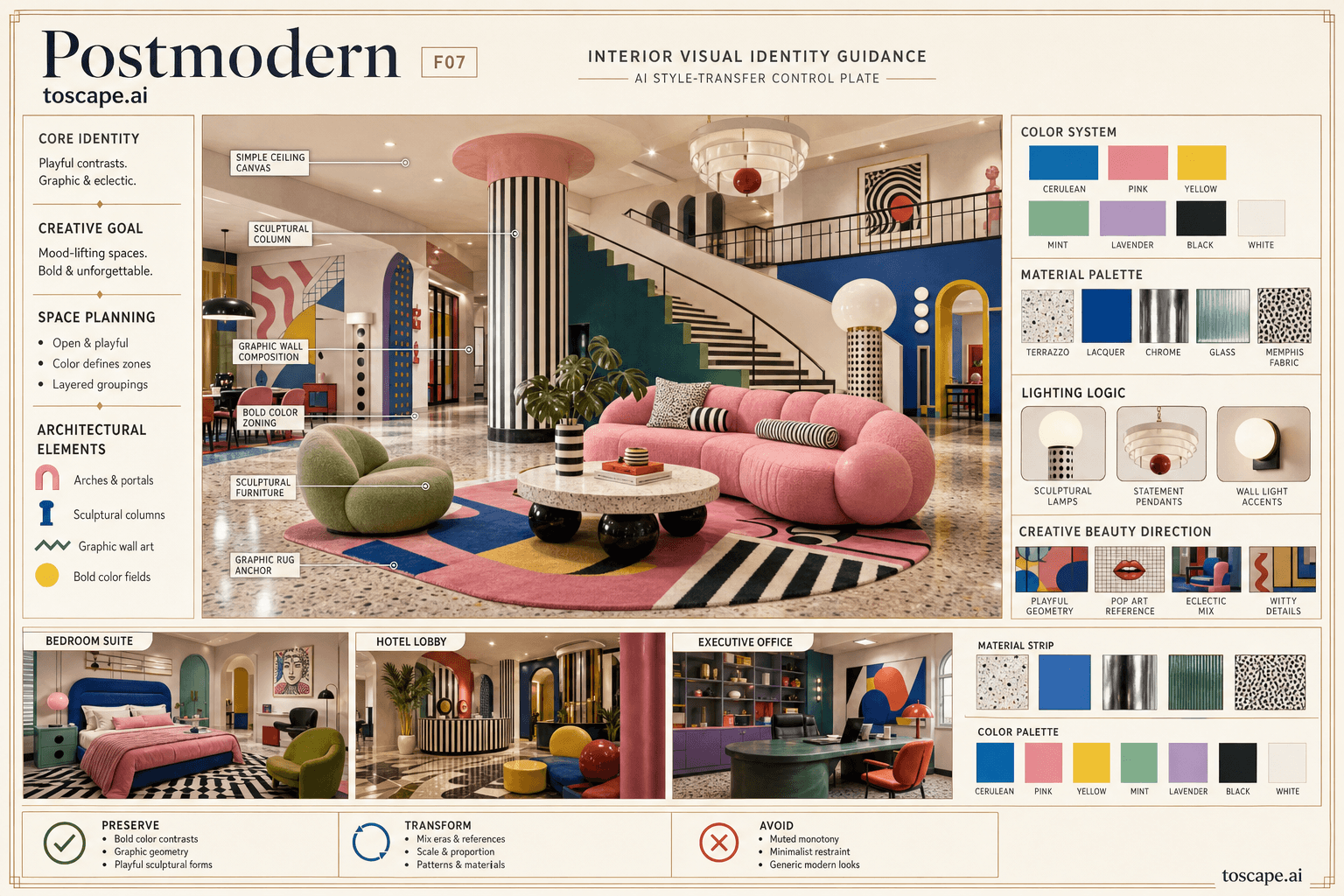
Postmodern
F07 / Contemporary / Retro Modern / Bold Design / Dramatic Modernism / Artistic Interior
A bold, playful, and witty interior style using graphic color, geometric shapes, and statement furniture to celebrate layered visual irony.
Definition
Postmodern is an interior design style used for architectural visualization. A bold, playful, and witty interior style using graphic color, geometric shapes, and statement furniture to celebrate layered visual irony.
- Family
- Contemporary / Retro Modern / Bold Design / Dramatic Modernism / Artistic Interior.
- Origin
- Postmodern interior design emerged in the late 1970s/1980s as a reaction against the austerity of Modernism-popularized.
- Massing
- Strong geometry, exaggerated curves, zigzags, spheres, columns, arches, chunky masses, mixed silhouettes, asymmetric arrangements.
- Materials
- Glossy, smooth, tactile, and visually playful; contrast matte and gloss, polished and soft.
- Palette
- Cerulean, pink, soft yellow, black, and white balanced with chrome, terrazzo, or color-backed glass.
- Lighting
- Even but not flat-recessed downlights, hidden cove lighting, or wall-wash to reveal color blocks and shape.
Overview
Postmodern is an interior design style defined by A playful, witty, and visually striking interior style defined by bold colors, graphic geometry, and eclectic references to historical motifs, generating a confident, layered, and irreverent visual statement. To create a visually energizing, highly memorable, and intellectually playful environment that challenges design conventions and rewards creative risk.
Visual DNA
Spatial Feeling
Energetic, surprising, witty, layered, playful, and visually stimulating.
Form Language
Strong geometry, exaggerated curves, zigzags, spheres, columns, arches, chunky masses, mixed silhouettes, asymmetric arrangements. Varies from oversized to outsized statements; combines bold monumental forms with surprising petite or...
Composition
Playful, open, and experimental; groupings feel intentional and staged, but are not rigid or formal. Sculptural sofas, iconic chairs, pop-art inspired objects, graphic rugs, or a hero wall with oversized art or mural. Best composed with...
Interior Elements
Graphic color blocking, bold paint fields, patterned wallpaper, large geometric murals, sometimes simple white for contrast; wall panels may use round, arched, or zigzag profiles. Ceilings are kept simple-white, pale, or as a field for...
Color System
Cerulean, pink, soft yellow, black, and white balanced with chrome, terrazzo, or color-backed glass. Mix dynamic primaries and secondaries with white or black for graphic effect; "clashing" colors are curated for energy rather than...
Material Palette
Glossy, smooth, tactile, and visually playful; contrast matte and gloss, polished and soft. Walls-painted or paneled in color; floors-carpet or hard/graphic tile; joinery-lacquered or colored; furniture-combination of lacquer, fabric,...
Lighting Logic
Even but not flat-recessed downlights, hidden cove lighting, or wall-wash to reveal color blocks and shape. Accent focal objects/shapes with directional or color-tuned lighting; create graphic shadows and strong highlights. Lighting...
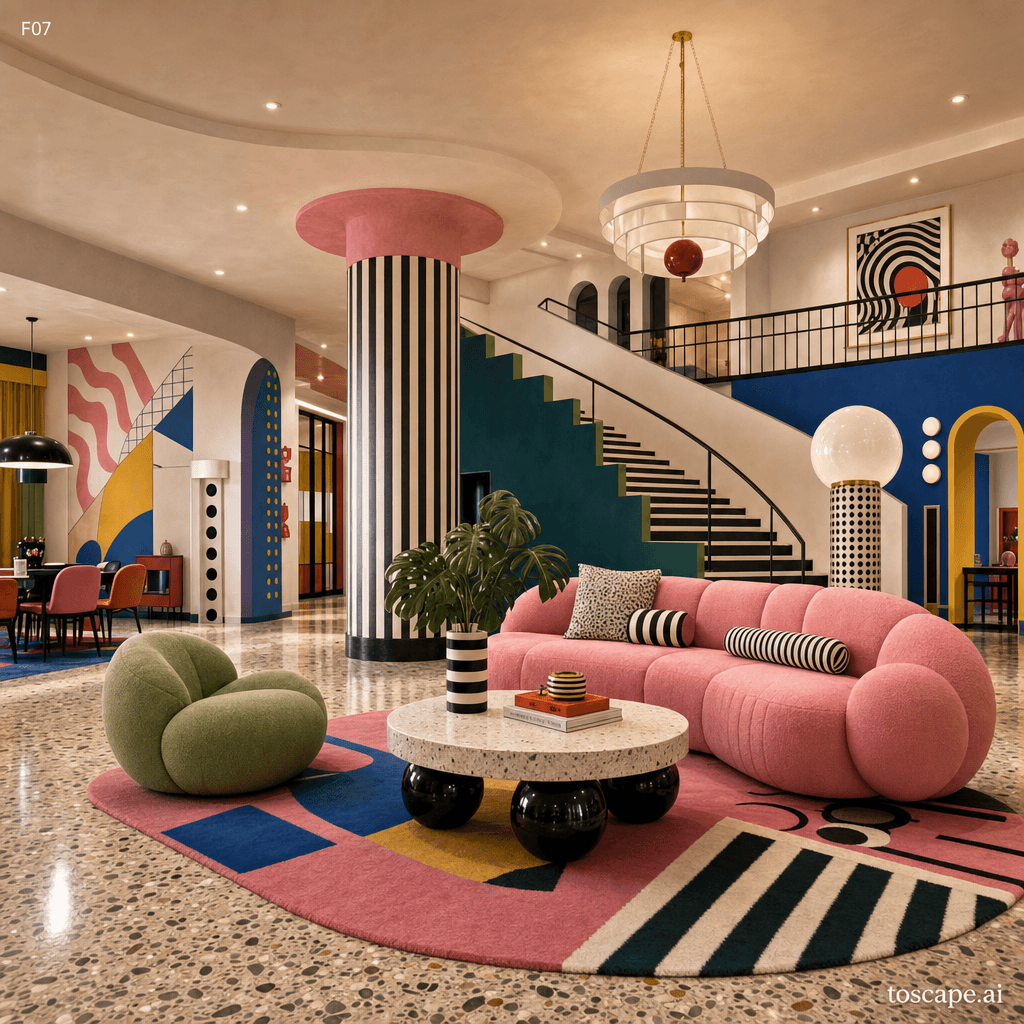
Interior reference image
Postmodern composition, material palette, furniture language, and lighting direction.
Context Snapshot
Postmodern interior design emerged in the late 1970s/1980s as a reaction against the austerity of Modernism-popularized by... Embraced in boutique hotels, creative workspaces, high-end retail, statement residences, art galleries, and editorial show apartments. Update using premium materials, refined color balance, sculptural high-design furniture, precise geometry, and curated layering to transform original exuberance into contemporary eclectic luxury.
Composition And Planning
Playful, open, and experimental; groupings feel intentional and staged, but are not rigid or formal. Movement is driven by curiosity and surprise-eye and body are invited to explore, encountering witty moments and dramatic focal points. Best composed with a mid-level camera, angled for layered foreground/midground depth, with a strong focal graphic gesture (wall, art, sculpture, or key furniture) and memorable furniture arrangement.
Furniture Grammar
Bold, chunky, sculptural, playfully exaggerated; geometric with softened corners or arch profiles; sometimes referencing classic forms in a witty way. Furniture floats or forms angular groupings; avoid wall-backed composition unless deliberately referenced. Celebrate quirky or iconic placement. - Sottsass "Carlton" bookcase (inspired) - Tubular sofa in cerulean or bubblegum - Geometric lacquered coffee table - Poltrona di Proust chair (as inspiration)
Creative Direction
A visually electric, editorially styled living space with striking color-blocked walls, sculptural Memphis-inspired sofas, geometric pop art, glossy accents, and intentional layering, unified by a clear graphic rhythm. Composed for camera focus, iconic furniture in dynamic poses, depth built with color and objects, sharp focal art or rug, and everything staged with designer wit-neither sterile nor cluttered. Saturated color-lit depths, strong directional shadows, artfully illuminated pop shapes, and a mood of confident, creative theater. - Flawless color curation with premium gloss, velvet, or lacquer - Artful integration of pattern, art,...
Best Project Applications
- Boutique hotels, creative studios, statement apartments, art-driven lounges, premium retail.
Preserve, Transform, Avoid
Preserve
- Intentional use of bold, graphic color and pattern
- Playful, ironic, or witty design gestures
- Statement sculptural furniture with memorable silhouettes
- Layered geometric shapes and pop cultural references
Transform
- Update original Postmodern palettes using more premium materials
- Subtly refine color harmonies and edit visual clutter for contemporary taste
- Push classic references or forms in a more sculptural, artful direction
- Scale up key elements for stronger visual impact in editorial or commercial settings
Avoid
- Diluting visual wit or color play through excessive restraint
- Swapping statement furniture for generic sofas or boxy tables
- Replacing bold geometry with bland minimalism or over-layered randomness
- Using rustic, farmhouse, or faux-industrial materials as primary elements
- Letting the interior resemble a generic modern hotel or soulless "luxury" development
Frequently asked questions
What is Postmodern?
Postmodern is an interior design style used for architectural visualization. A bold, playful, and witty interior style using graphic color, geometric shapes, and statement furniture to celebrate layered visual irony.
What materials define Postmodern?
Glossy, smooth, tactile, and visually playful; contrast matte and gloss, polished and soft. Walls-painted or paneled in color; floors-carpet or hard/graphic tile; joinery-lacquered or colored; furniture-combination of lacquer, fabric.
What is the Postmodern color palette?
Cerulean, pink, soft yellow, black, and white balanced with chrome, terrazzo, or color-backed glass. Mix dynamic primaries and secondaries with white or black for graphic effect; "clashing" colors are curated for energy rather than.
What is the origin of Postmodern?
Postmodern interior design emerged in the late 1970s/1980s as a reaction against the austerity of Modernism-popularized by... Embraced in boutique hotels, creative workspaces, high-end retail, statement residences, art galleries, and editorial show apartments. Update using premium materials, refined color balance, sculptural high-design furniture, precise geometry, and curated layering to transform original exuberance into contemporary eclectic luxury.
When should architects use Postmodern?
A visually electric, editorially styled living space with striking color-blocked walls, sculptural Memphis-inspired sofas, geometric pop art, glossy accents, and intentional layering, unified by a clear graphic rhythm. Composed for camera focus, iconic furniture in dynamic poses, depth built with color and objects, sharp focal art or rug, and everything staged with designer wit-neither sterile nor cluttered.
How do you render Postmodern in Toscape?
Open Toscape on Windows, load your own photo, elevation, sketch, or CAD view, then apply the Postmodern reference from the built-in style library. The Interior Design workflow keep your project geometry and camera while shifting materials, proportion, and detailing toward Postmodern.
Use this style in Toscape
Explore Postmodern inside Toscape using interior-focused rendering workflows and gallery references.
Open interior references