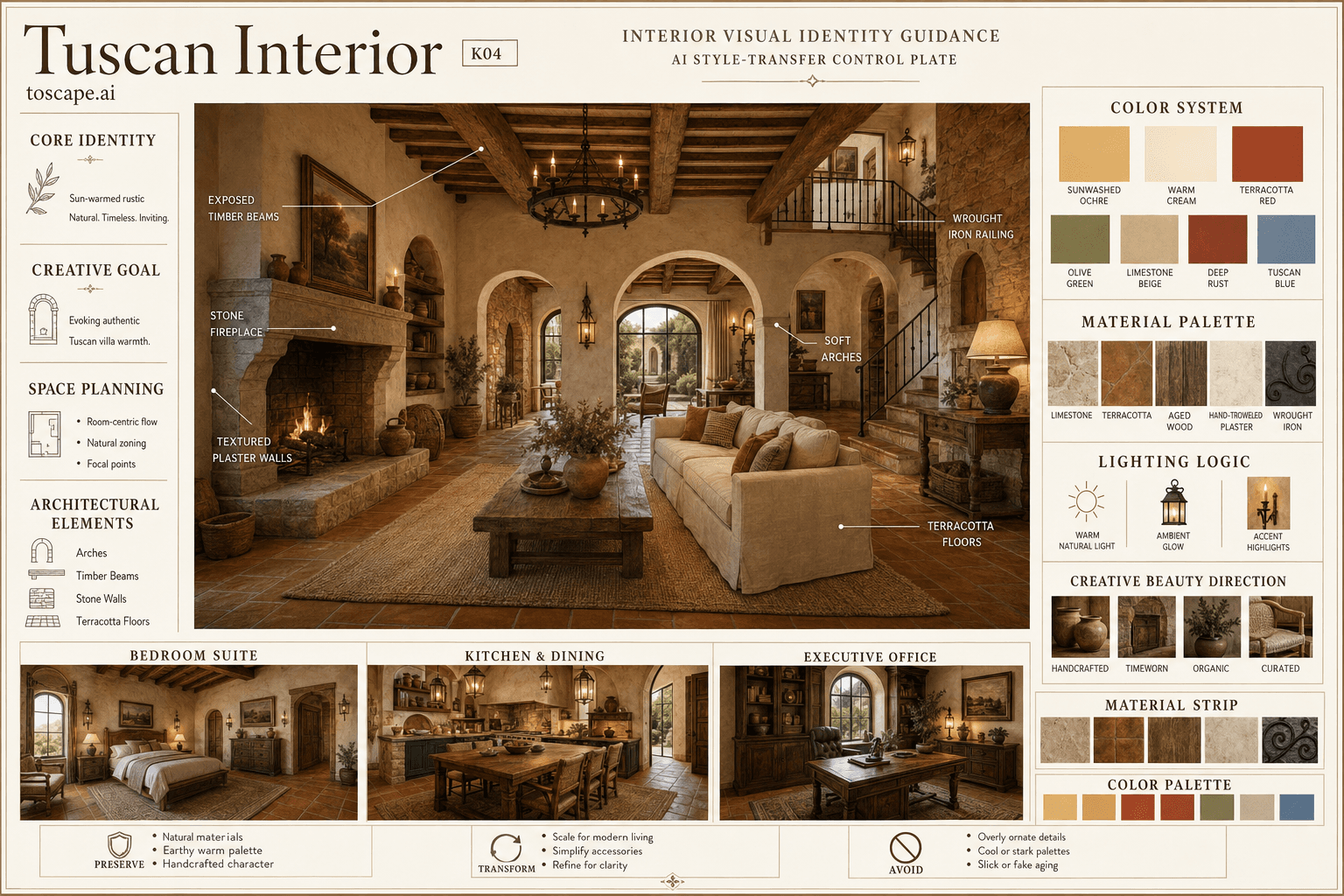
Tuscan Interior
K04 / Mediterranean, Rustic, Organic, Warm Classic, Heritage Contemporary
A refined and rustic Mediterranean interior defined by sunlit plaster, timber beams, earthy materials, and timeless Italian country warmth.
Definition
Tuscan Interior is an interior design style used for architectural visualization. A refined and rustic Mediterranean interior defined by sunlit plaster, timber beams, earthy materials, and timeless Italian country warmth.
- Family
- Mediterranean, Rustic, Organic, Warm Classic, Heritage Contemporary.
- Origin
- Inspired by traditional rural villas and farmhouses of Tuscany, drawing on centuries-old building practices, the Italian.
- Massing
- Soft arches, thick walls, heavy timber beams, simple columnar forms, generous thresholds, wide sills, and artisanal ironwork; rectilinear with gentle curves.
- Materials
- Rough and tactile plaster, lightly distressed wood, stone with visible fossils or grain, hammered iron, hand-loomed linen and wool.
- Palette
- Ivory plaster, ochre limewash, terracotta tile, soft olive and aged brown wood, iron hardware, linen, and sun filtering across surfaces.
- Lighting
- Warm, low-level; achieved through sconces, wall lanterns, and indirect up/down lights; always soft, never harsh.
Overview
Tuscan Interior is an interior design style defined by A sun-warmed, rustic Mediterranean interior built from textured natural materials, earthy colors, stone and wood details, handcrafted elements, and timeless, grounded warmth. To evoke the tranquility, permanence, and comfort of a historic Tuscan villa-calm, organic, and luxuriously unpretentious.
Visual DNA
Spatial Feeling
Embracing, grounded, sunlit, quietly luxurious, inviting, and texturally rich.
Form Language
Soft arches, thick walls, heavy timber beams, simple columnar forms, generous thresholds, wide sills, and artisanal ironwork; rectilinear with gentle curves. Medium to generous scale; spaces feel sturdy and solid but never monumental;...
Composition
Room-centric with transitions between cozy enclosed spaces and airy central living; open but comfortably divided by structural elements. Fireplaces, arched windows or doors, farmhouse dining tables, feature alcoves, rustic kitchen...
Interior Elements
Hand-troweled plaster, limewash, natural stone feature walls, exposed brick, or timeworn paint; surface patina is central. Exposed timber beams, gently arched or flat ceilings; ceilings must echo the rustic construction. Highlight a...
Color System
Ivory plaster, ochre limewash, terracotta tile, soft olive and aged brown wood, iron hardware, linen, and sun filtering across surfaces. Build harmony through tonal layering of earth colors, never sharp juxtapositions; use occasional...
Material Palette
Rough and tactile plaster, lightly distressed wood, stone with visible fossils or grain, hammered iron, hand-loomed linen and wool. Stone and plaster dominate walls and floors; timber beams and major furniture; iron as accent in...
Lighting Logic
Warm, low-level; achieved through sconces, wall lanterns, and indirect up/down lights; always soft, never harsh. Let daylight graze textured walls, backlight arches, and emphasize tactile material; use gold-amber glow in evenings for...
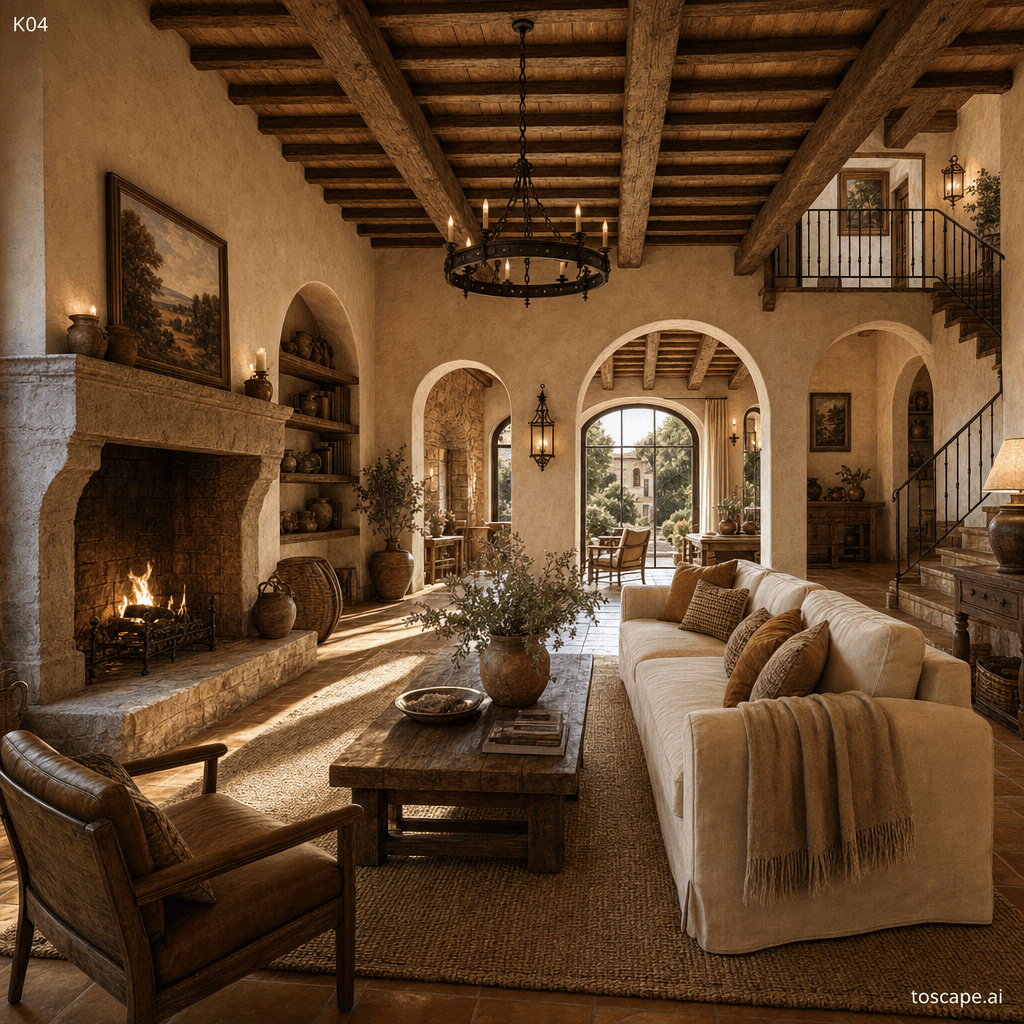
Interior reference image
Tuscan Interior composition, material palette, furniture language, and lighting direction.
Context Snapshot
Inspired by traditional rural villas and farmhouses of Tuscany, drawing on centuries-old building practices, the Italian... Frequently used in premium villas, countryside estates, resort hospitality, and select urban contexts seeking warmth and authenticity. Edit the density of elements, focus on real materials and refined detailing, and elevate essentials-stone, timber, and sunlit textures-avoiding theme-park rusticity.
Composition And Planning
Room-centric with transitions between cozy enclosed spaces and airy central living; open but comfortably divided by structural elements. Slow, processional, and organic, with the eye drawn to views, niches, fireplaces, and the outdoors. Eye-level or slightly lowered angle showing texture in foreground, main seating or dining in mid-ground, and deep focal wall or opening with daylight; lateral or diagonal views through arches maximize room depth.
Furniture Grammar
Robust, solid, hand-crafted with gentle wear, simple lines flavored with gentle curves or carved edge detail. Clustered in warm groupings around focal points; main pieces well anchored and never floating aimlessly; always referencing architectural focus such as fireplace or table. - Large farmhouse "fratino" table - Old wood beam bench or stool - Plaster or stone fireplace seating - Wrought iron lantern chandelier
Creative Direction
A luminous Tuscan living or dining space with thick sunlit plaster walls, raw timber beams, hand-laid terracotta floors, an artisanal iron chandelier, layered linen and wool textiles, pottery vessels, and curated negative space that feels at once ancient and elegantly livable. An airy, carefully styled room with restrained accessories, tactile surfaces, perfectly balanced daylight and shadow, and an obvious focal feature such as a fireplace, farmhouse table, or arched opening framed by subtle greenery and heirloom pottery. A shadowed room at dusk with flickering firelight, glowing terracotta, deep timber warmth, hand-hammered iron casting...
Best Project Applications
- Villas, countryside homes, Mediterranean resorts, premium restaurants, residential living/dining spaces.
Preserve, Transform, Avoid
Preserve
- Preserve rough plaster or stone wall surfaces.
- Preserve exposed timber beams or heavy wood elements.
- Preserve tactile, authentic materials and handcrafted details.
- Preserve earth-driven, sunlit color harmony and classic Mediterranean proportion.
Transform
- Simplify accessories and decorative objects for contemporary restraint.
- Refine rustic furniture with subtle modern edits in silhouette or upholstery.
- Increase daylight through larger windows if preserving wall thickness.
- Blend traditional and contemporary iron fixtures for subtle modern edge.
Avoid
- Minimalist, cold, or predominantly grey palettes.
- Overly distressed, theme-park "rustic" or fake patina.
- Thin, modern, or mid-century legs on core furniture.
- Fussy small accessory clutter or heavy floral textiles.
- High-gloss, slick, or plastic materials anywhere.
Frequently asked questions
What is Tuscan Interior?
Tuscan Interior is an interior design style used for architectural visualization. A refined and rustic Mediterranean interior defined by sunlit plaster, timber beams, earthy materials, and timeless Italian country warmth.
What materials define Tuscan Interior?
Rough and tactile plaster, lightly distressed wood, stone with visible fossils or grain, hammered iron, hand-loomed linen and wool. Stone and plaster dominate walls and floors; timber beams and major furniture.
What is the Tuscan Interior color palette?
Ivory plaster, ochre limewash, terracotta tile, soft olive and aged brown wood, iron hardware, linen, and sun filtering across surfaces. Build harmony through tonal layering of earth colors, never sharp juxtapositions; use occasional.
What is the origin of Tuscan Interior?
Inspired by traditional rural villas and farmhouses of Tuscany, drawing on centuries-old building practices, the Italian... Frequently used in premium villas, countryside estates, resort hospitality, and select urban contexts seeking warmth and authenticity. Edit the density of elements, focus on real materials and refined detailing, and elevate essentials-stone, timber, and sunlit textures-avoiding theme-park rusticity.
When should architects use Tuscan Interior?
A luminous Tuscan living or dining space with thick sunlit plaster walls, raw timber beams, hand-laid terracotta floors, an artisanal iron chandelier, layered linen and wool textiles, pottery vessels, and curated negative space that feels at once ancient and elegantly livable.
How do you render Tuscan Interior in Toscape?
Open Toscape on Windows, load your own photo, elevation, sketch, or CAD view, then apply the Tuscan Interior reference from the built-in style library. The Interior Design workflow keep your project geometry and camera while shifting materials, proportion, and detailing toward Tuscan Interior.
Use this style in Toscape
Explore Tuscan Interior inside Toscape using interior-focused rendering workflows and gallery references.
Open interior references