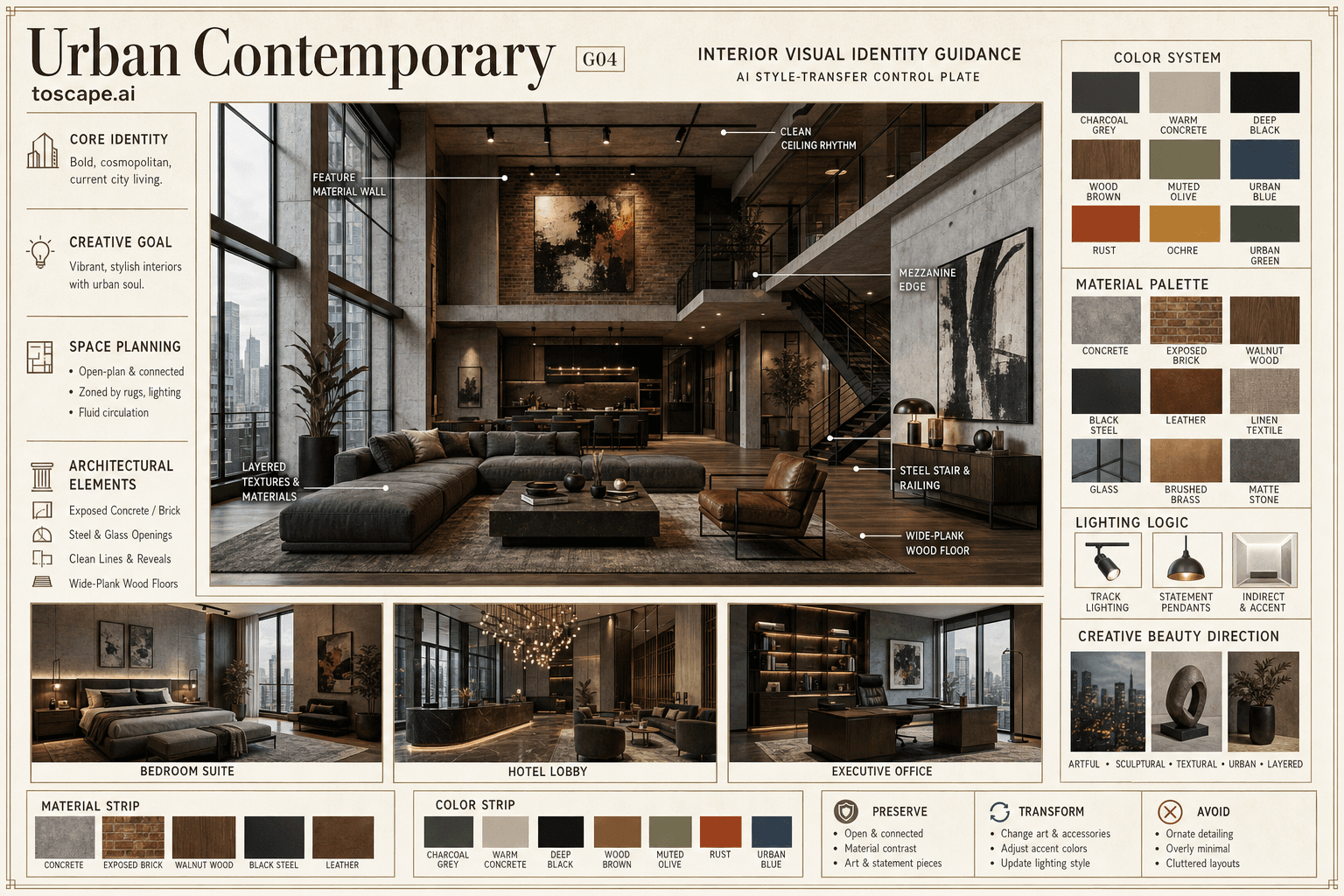
Urban Contemporary
G04 / Contemporary / Urban / Industrial / Modern / Soft Loft / Premium City
A dynamic, sophisticated city interior style using bold architectural lines, urban material layering, and curated contemporary art for a striking...
Definition
Urban Contemporary is an interior design style used for architectural visualization. A dynamic, sophisticated city interior style using bold architectural lines, urban material layering, and curated contemporary art for a striking.
- Family
- Contemporary / Urban / Industrial / Modern / Soft Loft / Premium City.
- Origin
- Emerged from loft conversions and urban apartment living, blending the city's energy with contemporary style, premium.
- Massing
- Strong geometric shapes, linear profiles, blocks, clean edges, integrated reveals, softened by select curves, sculptural elements, or rounded accents.
- Materials
- Smooth and matte finishes; tactile wood grain; soft textiles; gentle roughness in concrete or brick; layered but not rustic.
- Palette
- Layered greys, warm woods, black accents, creamy stone, and bursts of art-driven color or urban greenery.
- Lighting
- Track lights, recessed LED's, soft ceiling wash; avoid ornate fixtures.
Overview
Urban Contemporary is an interior design style defined by A bold, cosmopolitan interior identity combining clean architectural lines, urban materials, and curated contemporary furniture with occasional industrial or artistic accents. To create a premium, expressive, and livable space that reflects city life's vibrancy and sophistication.
Visual DNA
Spatial Feeling
Open, connected, energetic, inviting, layered, and intentionally urban.
Form Language
Strong geometric shapes, linear profiles, blocks, clean edges, integrated reveals, softened by select curves, sculptural elements, or rounded accents. Medium to generous scale, favoring open layouts and bold elements with a sense of...
Composition
Open-plan, airy, spatially dynamic, with clear functional zones that visually blend but remain distinct. Statement art, architectural feature walls (brick, concrete, textured wood), large view windows, sculptural lighting, or unique...
Interior Elements
Smooth painted walls in urban neutrals, exposed concrete or brick, refined wood panels, feature plaster, or matte surfaces with select textural interest. Keep ceilings plain, flat, or clean with crisp reveals or visible structural...
Color System
Layered greys, warm woods, black accents, creamy stone, and bursts of art-driven color or urban greenery. Anchor with deep darks, open with pale walls, add warmth and energy via controlled color pops and rich natural tones. Deep...
Material Palette
Smooth and matte finishes; tactile wood grain; soft textiles; gentle roughness in concrete or brick; layered but not rustic. Architectural surfaces carry concrete, wood, or neutral paint; joinery and shelves use wood or steel; soft...
Lighting Logic
Track lights, recessed LED's, soft ceiling wash; avoid ornate fixtures. Create visual tension with side-light, raking city-night effects, or a glowing contrast between daylight and zone-specific artificial lighting. Lighting highlights...
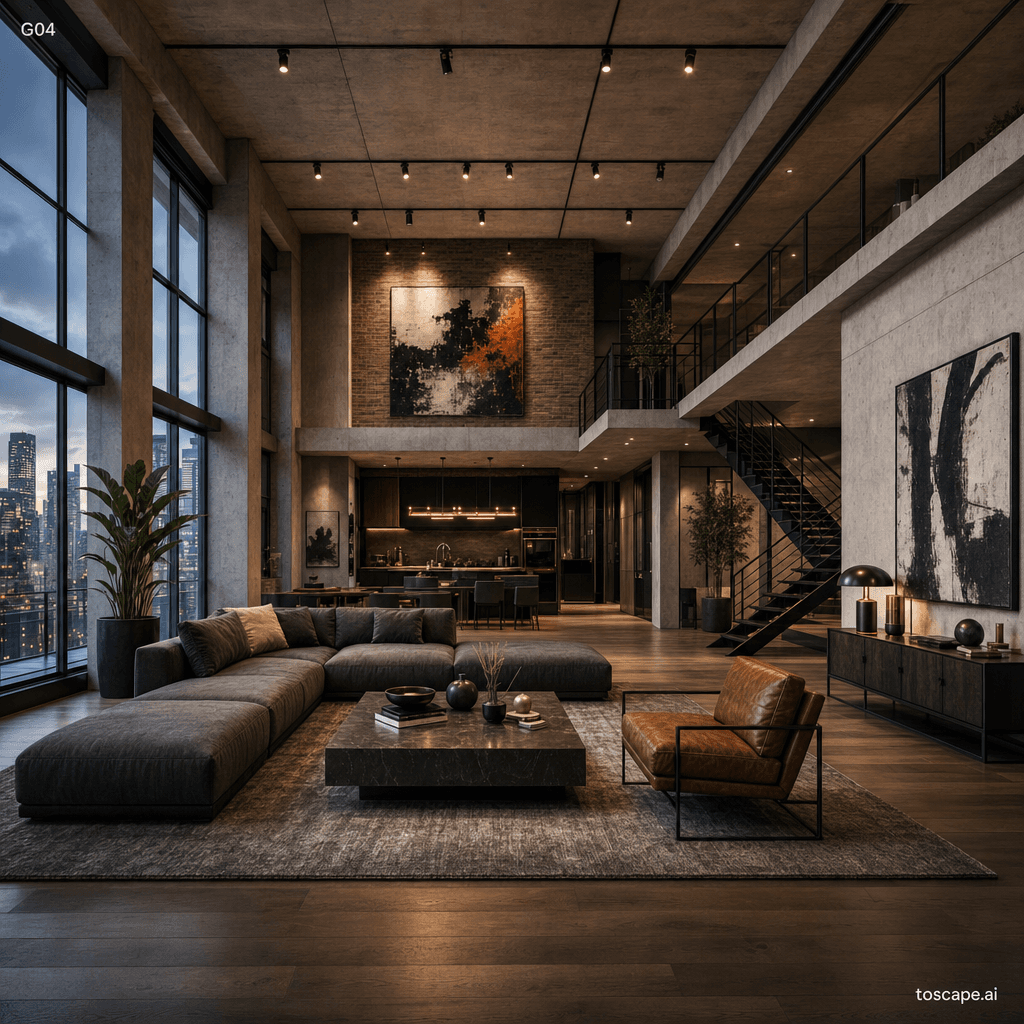
Interior reference image
Urban Contemporary composition, material palette, furniture language, and lighting direction.
Context Snapshot
Emerged from loft conversions and urban apartment living, blending the city's energy with contemporary style, premium... Applied in luxury apartments, boutique hotels, creative workspaces, penthouses, and open-plan residences. Prioritize a clean architectural base, showcase select structural elements with finesse, layer contemporary furnishings and urban art, and blend soft elements for comfort and edit for sophistication.
Composition And Planning
Open-plan, airy, spatially dynamic, with clear functional zones that visually blend but remain distinct. Encourage fluid circulation and city-like movement-sightlines should extend, and the eye moves freely from one visually anchored group to another. 3/4 or corner viewpoints with foreground furniture, a clear midground focal area (art or city view), and layered background depth; eye-level or slightly lower camera for immersive city perspective.
Furniture Grammar
Rectilinear, chunky, sculptural, with confident modern contours and occasional soft organic curves. Float large pieces in space, anchor with rugs, cluster for conversation, leave breathing room around silhouettes to keep the city energy uncluttered. - Chunky modular sofa in neutral textile - Black steel framed glass coffee table - Sculptural accent chair (e.g., boucle or leather) - Low-profile oak credenza - Oversized wall-mounted art or mural
Creative Direction
A luminous, open city interior with crisp concrete and wood, black steel, and plush furniture layered around bold artwork and illuminated by the energy of the skyline. Refined, gallery-like, spacious; art and materials are foregrounded with editorial lighting, dramatic sightlines, and careful negative space. Moody city-night interior: strong shadows, urban lights, illuminated art, glowing textures, reflections in glass, and dynamic materials. - Real city materiality with premium finish - Bold scale and composition - Large-scale art and designer lighting - Intelligent negative space
Best Project Applications
- City apartments, penthouses, boutique hotels, creative offices, upscale urban villas.
Preserve, Transform, Avoid
Preserve
- Urban-inspired material contrasts and premium finishes.
- Open-plan layouts with layered, curated furniture and art.
- Gallery-scale statement artwork or architectural feature wall.
- Confident use of city skyline or urban setting as a visual asset.
Transform
- Substitute concrete with premium microcement for a softer effect.
- Add sculptural planters and greenery for fresh, biophilic impact.
- Integrate smart or kinetic lighting for dynamic city mood.
- Incorporate curved or tactile furnishings where compatible with the base language.
Avoid
- Overly raw, unfinished, or industrial-dominant look.
- Excessive softness, rustic or cozy cottage elements.
- Insipid, pastel, or washed-out color palettes.
- Ornate classical or generic luxury furniture.
- Heavy vintage accessories or compulsive maximalist layering.
Frequently asked questions
What is Urban Contemporary?
Urban Contemporary is an interior design style used for architectural visualization. A dynamic, sophisticated city interior style using bold architectural lines, urban material layering, and curated contemporary art for a striking.
What materials define Urban Contemporary?
Smooth and matte finishes; tactile wood grain; soft textiles; gentle roughness in concrete or brick; layered but not rustic. Architectural surfaces carry concrete, wood, or neutral paint; joinery and shelves use wood or steel; soft.
What is the Urban Contemporary color palette?
Layered greys, warm woods, black accents, creamy stone, and bursts of art-driven color or urban greenery. Anchor with deep darks, open with pale walls, add warmth and energy via controlled color pops and rich natural tones. Deep.
What is the origin of Urban Contemporary?
Emerged from loft conversions and urban apartment living, blending the city's energy with contemporary style, premium... Applied in luxury apartments, boutique hotels, creative workspaces, penthouses, and open-plan residences. Prioritize a clean architectural base, showcase select structural elements with finesse, layer contemporary furnishings and urban art, and blend soft elements for comfort and edit for sophistication.
When should architects use Urban Contemporary?
A luminous, open city interior with crisp concrete and wood, black steel, and plush furniture layered around bold artwork and illuminated by the energy of the skyline. Refined, gallery-like, spacious; art and materials are foregrounded with editorial lighting, dramatic sightlines, and careful negative space.
How do you render Urban Contemporary in Toscape?
Open Toscape on Windows, load your own photo, elevation, sketch, or CAD view, then apply the Urban Contemporary reference from the built-in style library. The Interior Design workflow keep your project geometry and camera while shifting materials, proportion, and detailing toward Urban Contemporary.
Use this style in Toscape
Explore Urban Contemporary inside Toscape using interior-focused rendering workflows and gallery references.
Open interior references