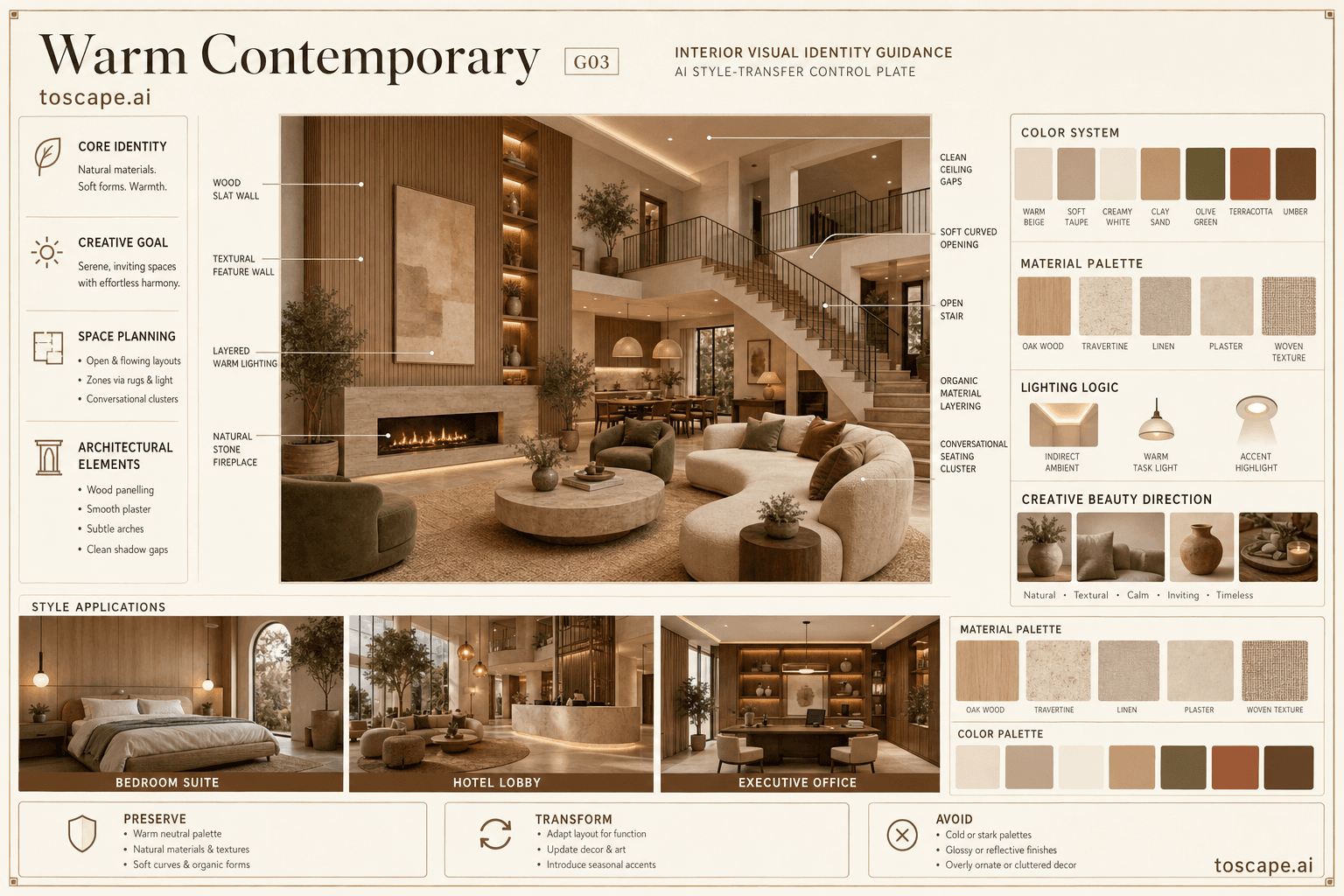
Warm Contemporary
G03 / Contemporary / Modern / Soft Contemporary / Organic Minimalism
A calm, inviting contemporary style defined by soft natural materials, gentle forms, layered tactile warmth, and effortless elegance.
Definition
Warm Contemporary is an interior design style used for architectural visualization. A calm, inviting contemporary style defined by soft natural materials, gentle forms, layered tactile warmth, and effortless elegance.
- Family
- Contemporary / Modern / Soft Contemporary / Organic Minimalism.
- Origin
- Emerged in the late 2010s as a response to the sterility of traditional minimalism and cold contemporary interiors, merging.
- Massing
- Soft rectilinear and rounded shapes, subtle curves, organic profiles, low massing, and smoothed transitions.
- Materials
- Layered, tactile, and natural-grain, weave, gentle irregularity; always soft to the eye and touch.
- Palette
- Warm beige, creamy white, pale oak, matte bronze, soft green, and tactile stone; all bathed in gentle natural light.
- Lighting
- Soft indirect cove or wall-wash lighting; gentle ceiling-integrated spotlights that avoid harsh illumination.
Overview
Warm Contemporary is an interior design style defined by A serene, inviting contemporary interior style defined by soft neutral palettes, natural materials, gentle forms, tactile warmth, and effortless compositional harmony. To create spaces that feel sophisticated yet supremely comfortable, blending contemporary clarity with the welcoming touch of nature and warm, humanized detailing.
Visual DNA
Spatial Feeling
Calm, relaxed, inviting, cocooning, and effortlessly elegant.
Form Language
Soft rectilinear and rounded shapes, subtle curves, organic profiles, low massing, and smoothed transitions. Balanced and human-scale; generally avoids extremes in monumentality or compression to preserve comfort and openness.
Composition
Open, flowing, and conversational layouts that promote comfort and togetherness without clutter or forced formality. Textural feature wall, curated artwork, sculptural furniture piece, fireplace, or a beautiful natural view. Eye-level...
Interior Elements
Soft painted finishes, broad strokes of warm neutral, wood panelling or battens, smooth plaster, refined stone or travertine, sometimes subtle woven wallpaper. Ceilings are quiet and clean, often flat with crisp shadow gaps, or lightly...
Color System
Warm beige, creamy white, pale oak, matte bronze, soft green, and tactile stone; all bathed in gentle natural light. Colors should blend seamlessly, with gentle transitions and no jarring contrast; accent hues must support the room's...
Material Palette
Layered, tactile, and natural-grain, weave, gentle irregularity; always soft to the eye and touch. Wood and stone for floors, lower walls, and major joinery; wool/linen for rugs and textiles; metals as quiet jewelry for hardware,...
Lighting Logic
Soft indirect cove or wall-wash lighting; gentle ceiling-integrated spotlights that avoid harsh illumination. Lean into shadow by using pools of warm light and darkness, revealing texture and form, evoking a soulful, editorial...
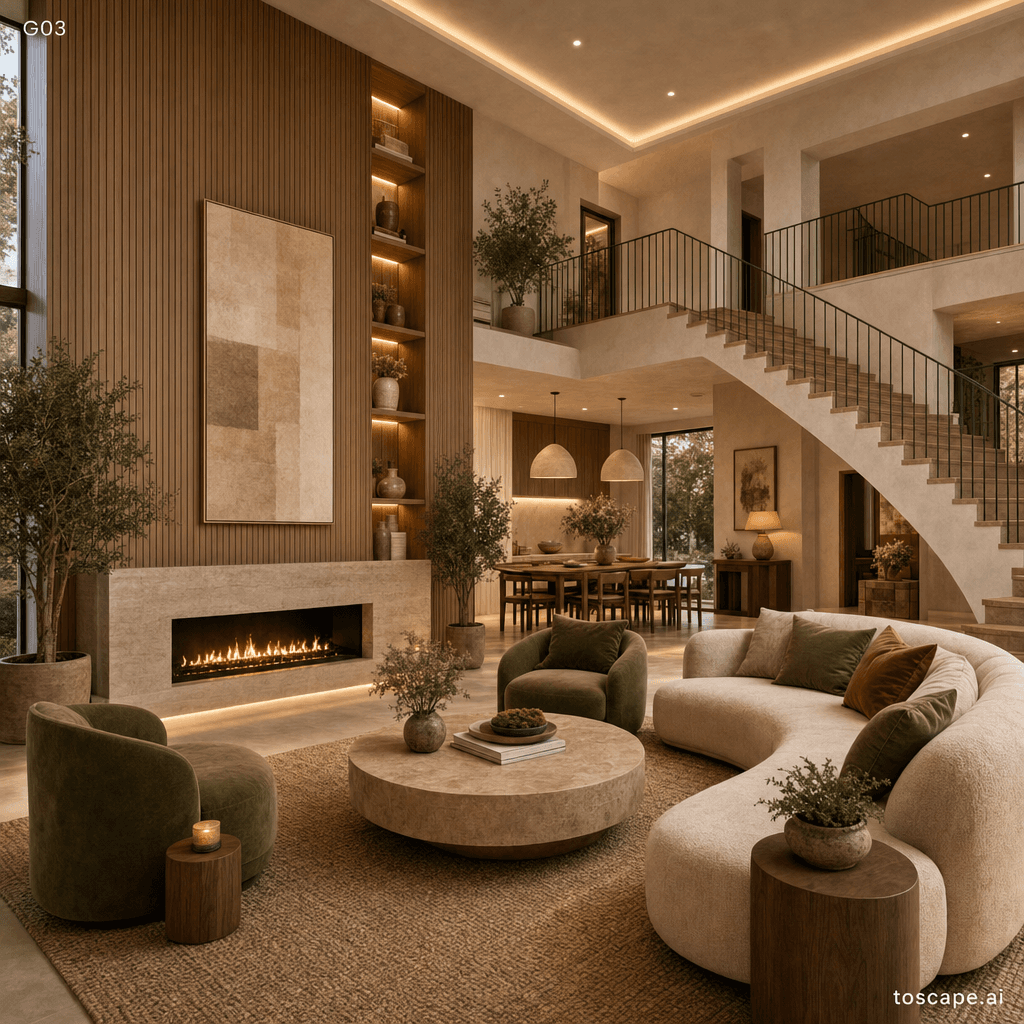
Interior reference image
Warm Contemporary composition, material palette, furniture language, and lighting direction.
Context Snapshot
Emerged in the late 2010s as a response to the sterility of traditional minimalism and cold contemporary interiors, merging... Actively used in high-end homes, apartments, boutique hotels, wellness spaces, lounges, and modern office environments seeking a calming, lived-in, and elegant atmosphere. Emphasize tactile richness, careful layering of natural materials, soft-edged furniture, gentle lighting, and subtle, harmonious color palettes-removing any clinical coldness.
Composition And Planning
Open, flowing, and conversational layouts that promote comfort and togetherness without clutter or forced formality. Fluid circulation; movement feels easy and natural, with clear sight lines and welcoming paths. Eye-level or slightly elevated; favor oblique angles that show layers of texture and softness; use soft natural light and foreground object to add intimacy and depth.
Furniture Grammar
Low, soft-edged, gentle curves; generous but without exaggeration; silhouettes are inviting and approachable rather than monolithic or sharply angular. Float main seating away from walls for inviting center; intentionally spaced to enable easy movement, with clear relationship to rugs, focal points, and light. - Rounded-edge modular sofa in boucle - Low travertine coffee table - Plinth-base armchair with wraparound back - Floating oak media console
Creative Direction
A softly lit editorial living space with creamy walls, pale oak floors, tactile boucle seating, floating wooden shelves, sculptural glass and ceramic accents, subtle bronze lighting, layered linen rugs, and a sense of profound calm. Curated to perfection: uncluttered but never stark, every material invites touch, light flows warmly, and carefully placed art or vases add soulful intrigue-every element feels intentional, comfortable, and quietly expensive. Cocooning shadows, golden light pools, highlighted textural details, strategic plant silhouettes, and a sense of warmth so intense it almost glows from within. - True natural materials in...
Best Project Applications
- Living rooms, lounges, hotel lobbies, boutique bedrooms, wellness spaces.
Preserve, Transform, Avoid
Preserve
- Warm, tactile material palette with natural wood and layered textiles
- Rounded, low, and approachable contemporary furniture
- Gentle indirect lighting and luminous natural light
- A calm, curated, and inviting atmosphere
Transform
- Subtly increase drama with accent art or sculptural lighting if staying within palette and form logic
- Edit decor for more minimalist expression as long as tactile warmth remains
- Experiment with organic forms or new material textures only if they support comfort and softness
- Blend in subtle biophilic elements for increased serenity
Avoid
- Overly cold, gray, or clinical color schemes
- High-gloss, shiny, or flashy materials and finishes
- Ultra-minimalist rooms devoid of layered comfort
- Stark industrial or exposed structure
- Loud accent colors or aggressive patterning
Frequently asked questions
What is Warm Contemporary?
Warm Contemporary is an interior design style used for architectural visualization. A calm, inviting contemporary style defined by soft natural materials, gentle forms, layered tactile warmth, and effortless elegance.
What materials define Warm Contemporary?
Layered, tactile, and natural-grain, weave, gentle irregularity; always soft to the eye and touch. Wood and stone for floors, lower walls, and major joinery; wool/linen for rugs and textiles; metals as quiet jewelry for hardware.
What is the Warm Contemporary color palette?
Warm beige, creamy white, pale oak, matte bronze, soft green, and tactile stone; all bathed in gentle natural light. Colors should blend seamlessly, with gentle transitions and no jarring contrast; accent hues must support the room's.
What is the origin of Warm Contemporary?
Emerged in the late 2010s as a response to the sterility of traditional minimalism and cold contemporary interiors, merging... Actively used in high-end homes, apartments, boutique hotels, wellness spaces, lounges, and modern office environments seeking a calming, lived-in, and elegant atmosphere.
When should architects use Warm Contemporary?
A softly lit editorial living space with creamy walls, pale oak floors, tactile boucle seating, floating wooden shelves, sculptural glass and ceramic accents, subtle bronze lighting, layered linen rugs, and a sense of profound calm.
How do you render Warm Contemporary in Toscape?
Open Toscape on Windows, load your own photo, elevation, sketch, or CAD view, then apply the Warm Contemporary reference from the built-in style library. The Interior Design workflow keep your project geometry and camera while shifting materials, proportion, and detailing toward Warm Contemporary.
Use this style in Toscape
Explore Warm Contemporary inside Toscape using interior-focused rendering workflows and gallery references.
Open interior references