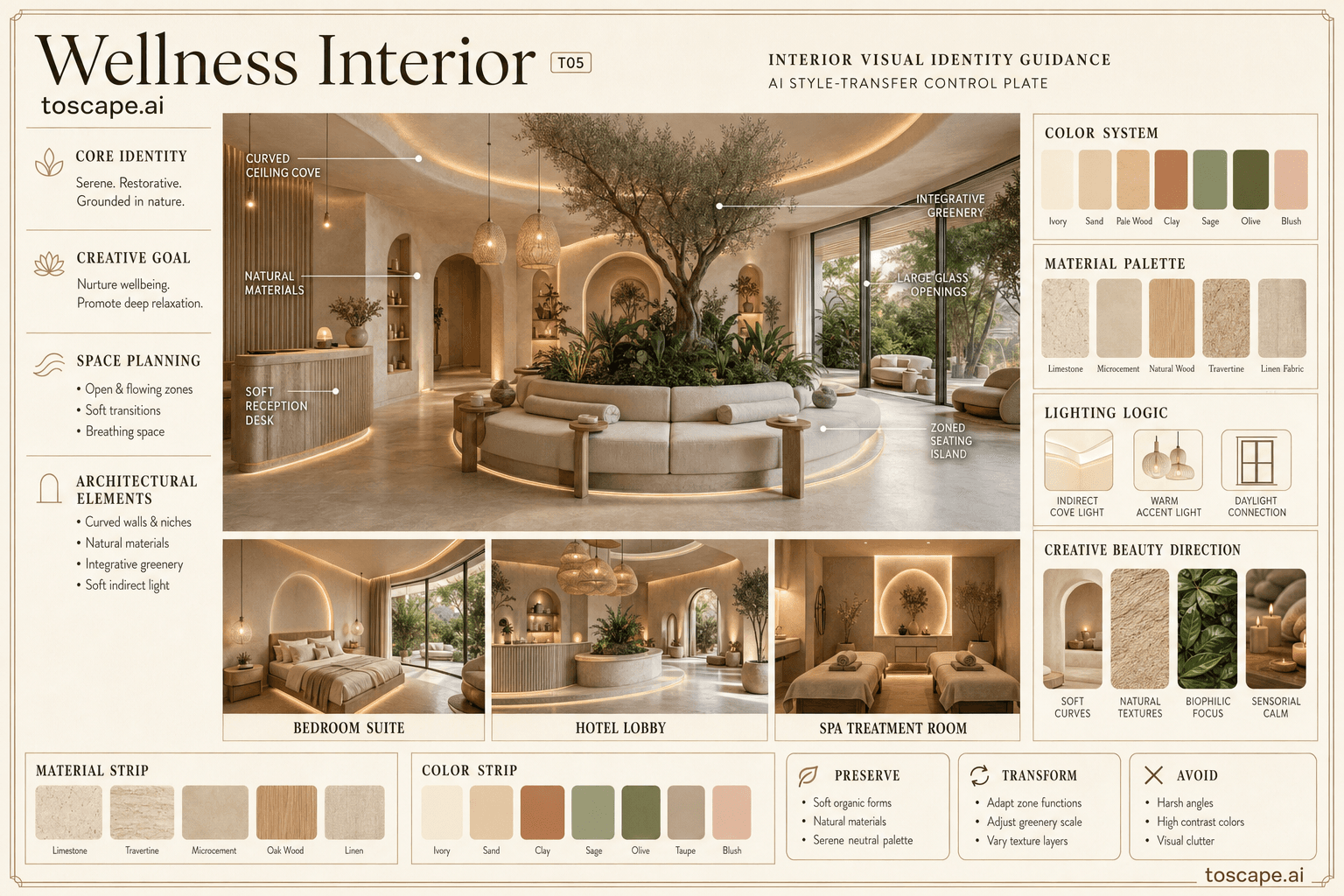
Wellness Interior
T05 / Soft Contemporary, Hospitality, Spa Zen, Organic Minimal, Resort Luxury
A calming, organic interior style devoted to sensory wellness, natural materials, gentle light, and curated biophilia.
Definition
Wellness Interior is an interior design style used for architectural visualization. A calming, organic interior style devoted to sensory wellness, natural materials, gentle light, and curated biophilia.
- Family
- Soft Contemporary, Hospitality, Spa Zen, Organic Minimal, Resort Luxury.
- Origin
- Rooted in contemporary wellness philosophy, drawing visual language from luxury spas, holistic clinics, health resorts, yoga.
- Massing
- Soft organic curves, rounded corners, gentle arches, sculpted volumes, meandering edges, and calming continuous lines; avoidance of sharp angles.
- Materials
- Matte, natural, tactile, soft to the touch, quiet movement; visual interest always comes from organic texture, not shine.
- Palette
- Ivory, sand, natural pale wood, soft olive, diffused greenery, stone/beige, with touches of matte bronze and terracotta.
- Lighting
- Gentle perimeter cove lighting, hidden LED strips, and diffused wall/ceiling fixtures-never strong direct glare.
Overview
Wellness Interior is an interior design style defined by A serene, restorative interior identity devoted to sensory calm, soft natural materials, gentle light, and the promotion of holistic wellbeing. To create tranquil, rejuvenating environments where the body and mind can decompress-using gentle organic design, natural light, and calming spatial compositions.
Visual DNA
Spatial Feeling
Serene, restorative, nurturing, spa-like, luminous, and softly enveloping.
Form Language
Soft organic curves, rounded corners, gentle arches, sculpted volumes, meandering edges, and calming continuous lines; avoidance of sharp angles. Balanced, intimate, welcoming; open but never cavernous, spaces feel human-centered and...
Composition
Open, flowing, and zoned through subtle shifts in material, light, or elevation; never strict, never densely packed; space always allows for visual and physical breathing room. Curved feature walls, sculptural tubs, illuminated niches...
Interior Elements
Smooth, curved plaster, limewash, natural stone cladding, vertical wood slats, gentle microcement, or earth-toned artisanal finishes; accents with inset shelving, soft niches, or living plant walls as features. Ceilings are quiet and...
Color System
Ivory, sand, natural pale wood, soft olive, diffused greenery, stone/beige, with touches of matte bronze and terracotta. Monochromatic or analogous palettes-layered neutrals and earth tones harmonize to promote visual calm, with...
Material Palette
Matte, natural, tactile, soft to the touch, quiet movement; visual interest always comes from organic texture, not shine. Stone/plaster for shell and floor, timber for joinery and seating, textiles for all comfort touchpoints, greenery...
Lighting Logic
Gentle perimeter cove lighting, hidden LED strips, and diffused wall/ceiling fixtures-never strong direct glare. Use soft directionality, indirect glow, layered shadow, and filtered daylight to create imagery evoking peace, clarity, and...
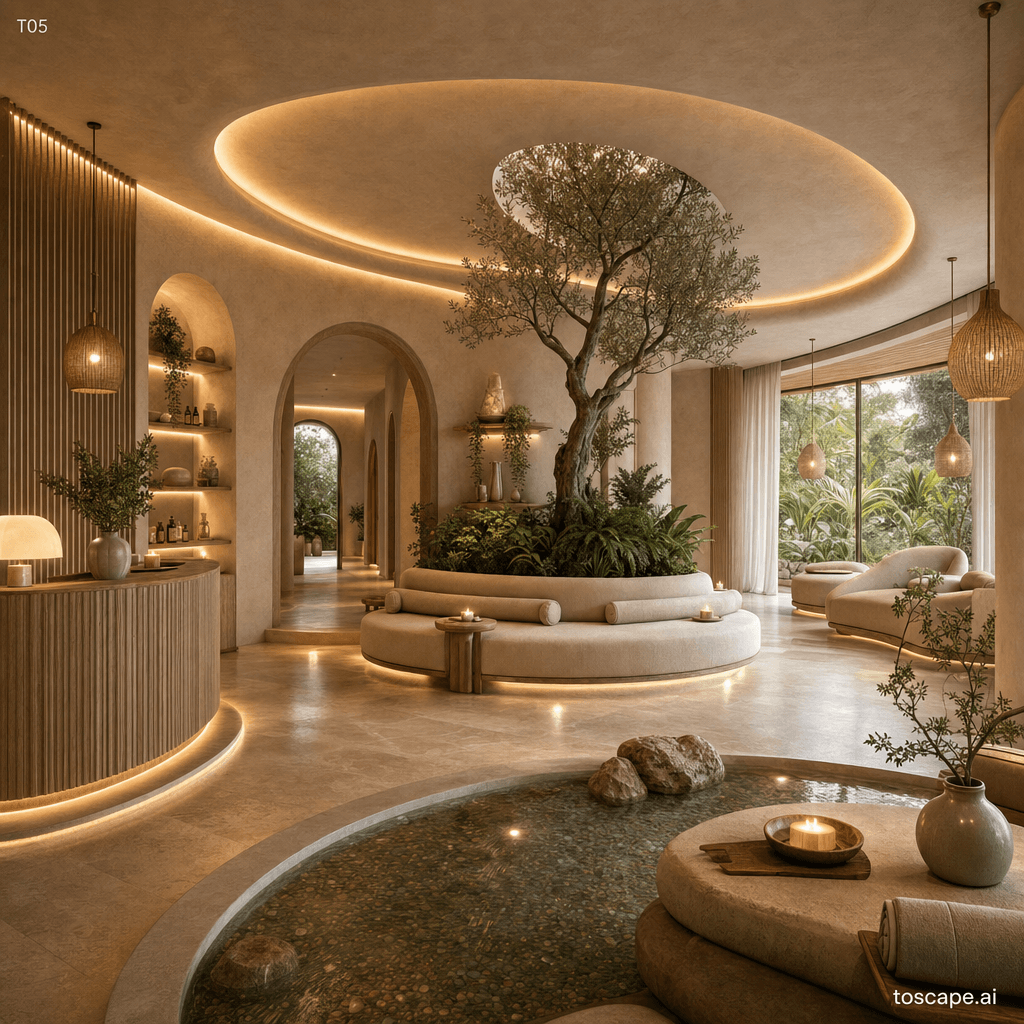
Interior reference image
Wellness Interior composition, material palette, furniture language, and lighting direction.
Context Snapshot
Rooted in contemporary wellness philosophy, drawing visual language from luxury spas, holistic clinics, health resorts, yoga... Active in luxury spas, wellness centers, day retreats, yoga lounges, holistic medical clinics, upscale residential bathrooms, bedrooms, and hospitality projects aiming for restorative appeal. Use premium natural materials, seamless transitions, indirect ambient lighting, integrated greenery, and sensory-focused furniture to build calming, visually immersive wellness environments.
Composition And Planning
Open, flowing, and zoned through subtle shifts in material, light, or elevation; never strict, never densely packed; space always allows for visual and physical breathing room. Fluid, slow, and sensory-driven; natural circulation guides the body gently between experiences, resting places, and focal elements. Eye-level or slightly above, wide framing with depth, inviting foreground seating or planter, strong vertical or curved background feature; always clean, calming, and luminous-never over-cropped or messy.
Furniture Grammar
Low, rounded, organically sculpted, modular, and visually soft; nothing angular or heavily ornamented. Float pieces away from walls, favor conversation groups and meandering lines; maintain generous circulation and let seats "face nature" or focal calm features. - Curved modular lounge sofa in textured linen - Sculptural stone or timber coffee table - Organic form chaise or meditation lounger
Creative Direction
A spa lounge or private suite bathed in warm daylight, featuring softly curving stone/plaster walls, tactile timber, floating sculptural seating, lush plant accents, seamless stone flooring, and gently glowing cove lighting-curated for complete sensory calm. A tranquil, impeccably styled space with uncluttered organic architecture, a hero plant or water feature, sculptural minimal furniture, artisan ceramics, and pure soft light for an inviting magazine-ready ambiance. A subtly luminous, shadow-play atmosphere-wellness immersed in natural textures, with filtered spotlighting on curved walls, lush greenery creating movement in the frame,...
Best Project Applications
- Luxury spas, resort lounges, holistic clinics, wellness suites, spa bathrooms, meditation/yoga rooms.
Preserve, Transform, Avoid
Preserve
- Maintain core organic form language and tactile natural materials.
- Preserve calming, softly flowing spatial planning.
- Retain biophilic elements as essential, never as afterthoughts.
- Maintain luminous, diffused light-never harsh or overly dark.
Transform
- Blend in contemporary lounge-style seating for hospitality luxury, keeping silhouettes soft.
- Incorporate modern lighting technology for hidden cove and calming perimeter glow.
- Use selective boldness in focal plantings, sculptural tubs, or architectural curves.
- Allow edited layering of textile or art if it supports tranquility and sensory harmony.
Avoid
- Introducing angular or hard-edged forms.
- Over-decorating with busy pattern or color.
- Using artificial or shiny materials.
- Adopting industrial, classical, or dark luxury cues.
- Adding cold LED or stark overhead lighting.
Frequently asked questions
What is Wellness Interior?
Wellness Interior is an interior design style used for architectural visualization. A calming, organic interior style devoted to sensory wellness, natural materials, gentle light, and curated biophilia.
What materials define Wellness Interior?
Matte, natural, tactile, soft to the touch, quiet movement; visual interest always comes from organic texture, not shine. Stone/plaster for shell and floor, timber for joinery and seating, textiles for all comfort touchpoints, greenery.
What is the Wellness Interior color palette?
Ivory, sand, natural pale wood, soft olive, diffused greenery, stone/beige.
What is the origin of Wellness Interior?
Rooted in contemporary wellness philosophy, drawing visual language from luxury spas, holistic clinics, health resorts, yoga... Active in luxury spas, wellness centers, day retreats, yoga lounges, holistic medical clinics, upscale residential bathrooms, bedrooms, and hospitality projects aiming for restorative appeal.
When should architects use Wellness Interior?
A spa lounge or private suite bathed in warm daylight, featuring softly curving stone/plaster walls, tactile timber, floating sculptural seating, lush plant accents, seamless stone flooring, and gently glowing cove lighting-curated for complete sensory calm.
How do you render Wellness Interior in Toscape?
Open Toscape on Windows, load your own photo, elevation, sketch, or CAD view, then apply the Wellness Interior reference from the built-in style library. The Interior Design workflow keep your project geometry and camera while shifting materials, proportion, and detailing toward Wellness Interior.
Use this style in Toscape
Explore Wellness Interior inside Toscape using interior-focused rendering workflows and gallery references.
Open interior references