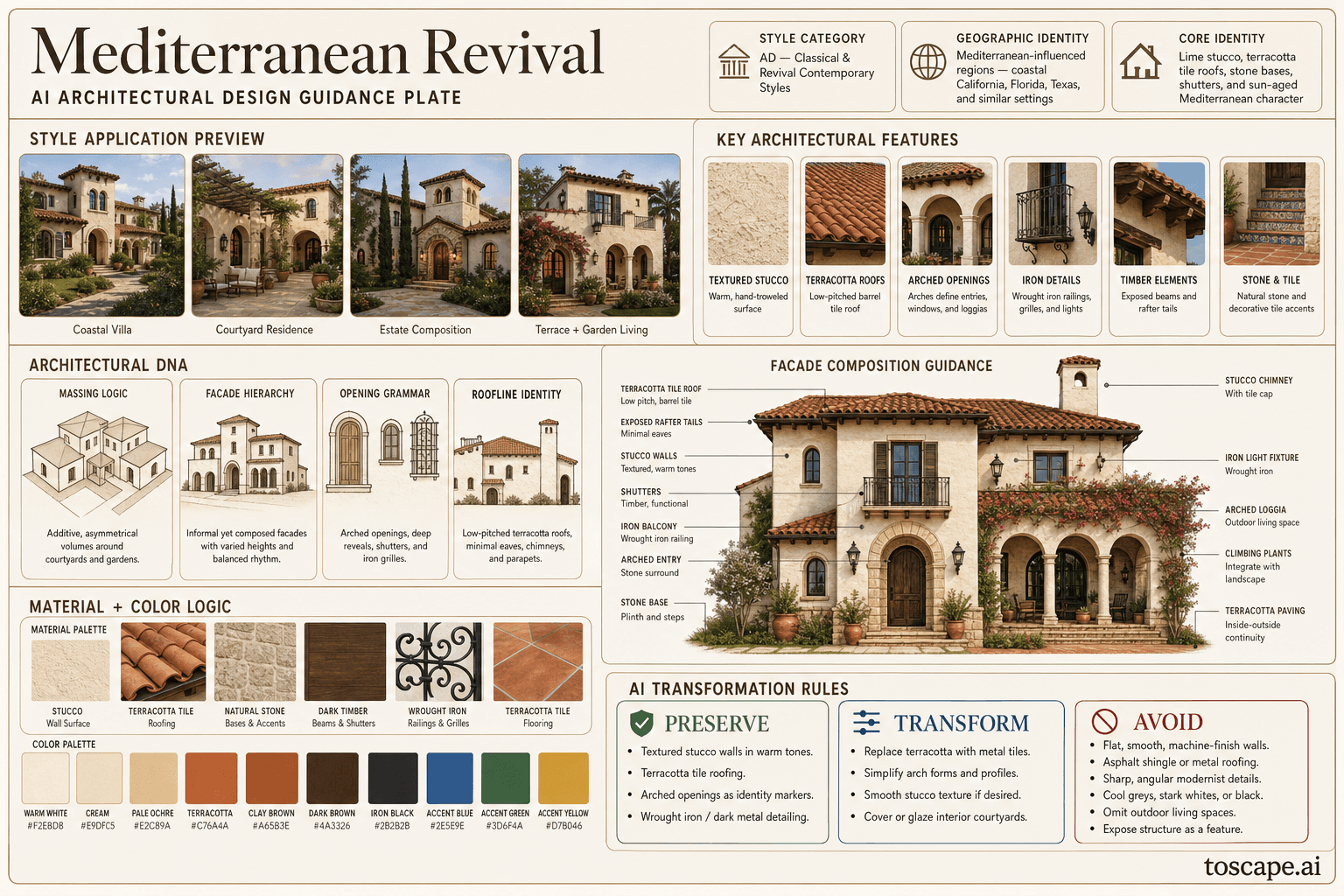
Mediterranean Revival
Mediterranean-influenced regions - coastal California, Florida, Texas, and similar... / Classical lineage
Lime stucco, terracotta tile roofs, stone bases, shutters, and sun-aged Mediterranean character.
Definition
Mediterranean Revival is a global architectural style within the classical lineage. Lime stucco, terracotta tile roofs, stone bases, shutters, and sun-aged Mediterranean character.
- Family
- Classical lineage
- Origin
- Mediterranean-influenced regions - coastal California, Florida, Texas, and similar.
- Massing
- Massing is additive and asymmetrical. The building reads as a composition of interconnected volumes rather than a single block.
- Materials
- Walls: lime-based or acrylic stucco. Hand-troweled, warm-toned, textured Roofing: terracotta barrel tiles.
- Palette
- Wall tones: warm white, cream, pale ochre, soft beige, light terracotta wash Roof tones: terracotta red-orange, weathered terracotta, warm clay Timber tones: dark brown, espresso.
- Climate response
- Mediterranean-influenced regions. Coastal California, Florida, Texas, and similar warm-climate settings.
Overview
Mediterranean Revival is a global architectural style rooted in Mediterranean-influenced regions - coastal California, Florida, Texas, and similar warm-climate settings. Adapted globally where Mediterranean architectural traditions merge with contemporary building technology and lifestyle. Lime stucco, terracotta tile roofs, stone bases, shutters, and sun-aged Mediterranean character. Warm, romantic, and sun-kissed.
Visual DNA
Massing & Form
Massing is additive and asymmetrical. the building reads as a composition of interconnected volumes rather than a single block.
Facade Language
Facades are textured and warm. hand-troweled stucco with a slightly irregular surface that catches light.
Materials & Texture
Walls: lime-based or acrylic stucco. hand-troweled, warm-toned, textured Roofing: terracotta barrel tiles.
Color Palette
Wall tones: warm white, cream, pale ochre, soft beige, light terracotta wash Roof tones: terracotta red-orange, weathered terracotta, warm clay Timber tones: dark brown, espresso, weathered grey Metal tones: dark iron, bronze, matte black...
Ornament & Detail
Textured stucco walls in warm tones. the essential Mediterranean surface.
Climate Response
Mediterranean-influenced regions. coastal California, Florida, Texas, and similar warm-climate settings.
Landscape & Ground
Mediterranean-influenced regions. coastal California, Florida, Texas, and similar warm-climate settings.
Reference elevation
Mediterranean Revival - characteristic facade composition within the classical lineage.
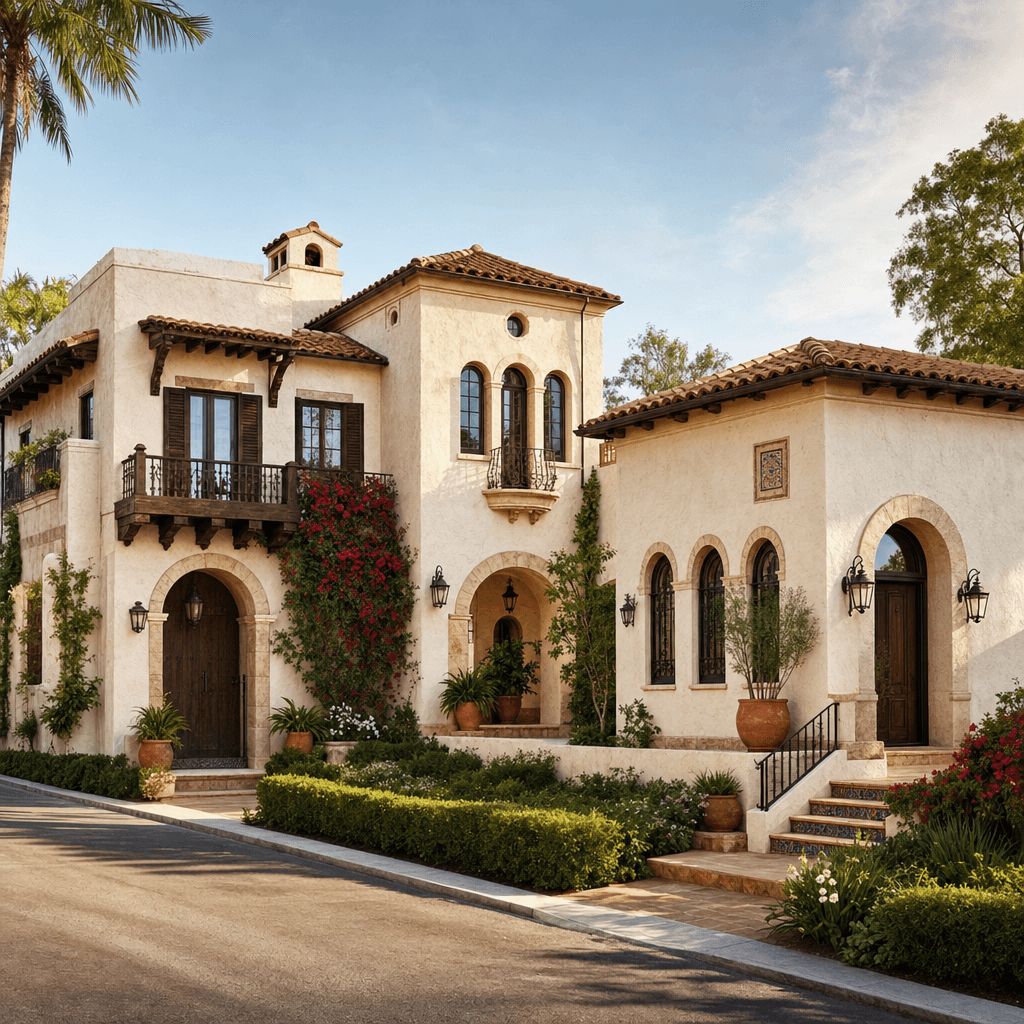
Context Snapshot
Warm, romantic, and sun-kissed. Massing is additive and asymmetrical - the building reads as a composition of interconnected volumes rather than a single block. Mediterranean-influenced regions - coastal California, Florida, Texas, and similar warm-climate settings.
Contemporary Relevance
Today, Mediterranean Revival remains relevant wherever projects need classical lineage cues without losing performance or contemporary usability. In Toscape it responds best when prompts emphasize massing is additive and asymmetrical - the building reads as a composition of interconnected volumes rather than a single block. walls: lime-based or acrylic stucco - hand-troweled, warm-toned, textured roofing: terracotta barrel tiles - warm orange-red to...
Use this style in Toscape
Explore Mediterranean Revival directly inside Toscape using Facade Re-Style and design workflow prompts tuned for global architectural references.
Open Mediterranean Revival in the galleryFrequently asked questions
What is Mediterranean Revival?
Mediterranean Revival is a global architectural style within the classical lineage. Lime stucco, terracotta tile roofs, stone bases, shutters, and sun-aged Mediterranean character.
What materials define Mediterranean Revival?
Walls: lime-based or acrylic stucco. Hand-troweled, warm-toned, textured Roofing: terracotta barrel tiles.
What is the Mediterranean Revival color palette?
Wall tones: warm white, cream, pale ochre, soft beige, light terracotta wash Roof tones: terracotta red-orange, weathered terracotta, warm clay Timber tones: dark brown, espresso, weathered grey Metal tones: dark iron, bronze, matte black.
What is the origin of Mediterranean Revival?
Warm, romantic, and sun-kissed. Massing is additive and asymmetrical - the building reads as a composition of interconnected volumes rather than a single block. Mediterranean-influenced regions - coastal California, Florida, Texas, and similar warm-climate settings.
When should architects use Mediterranean Revival?
Today, Mediterranean Revival remains relevant wherever projects need classical lineage cues without losing performance or contemporary usability. In Toscape it responds best when prompts emphasize massing is additive and asymmetrical - the building reads as a composition of interconnected volumes rather than a single block.
How do you render Mediterranean Revival in Toscape?
Open Toscape on Windows, load your own photo, elevation, sketch, or CAD view, then apply the Mediterranean Revival reference from the built-in style library. The Facade Re-Style and Design Options workflows keep your project geometry and camera while shifting materials, proportion, and detailing toward Mediterranean Revival.