Al Ain Oasis
United Arab Emirates · Al Ain, Eastern Region, Abu Dhabi Emirate
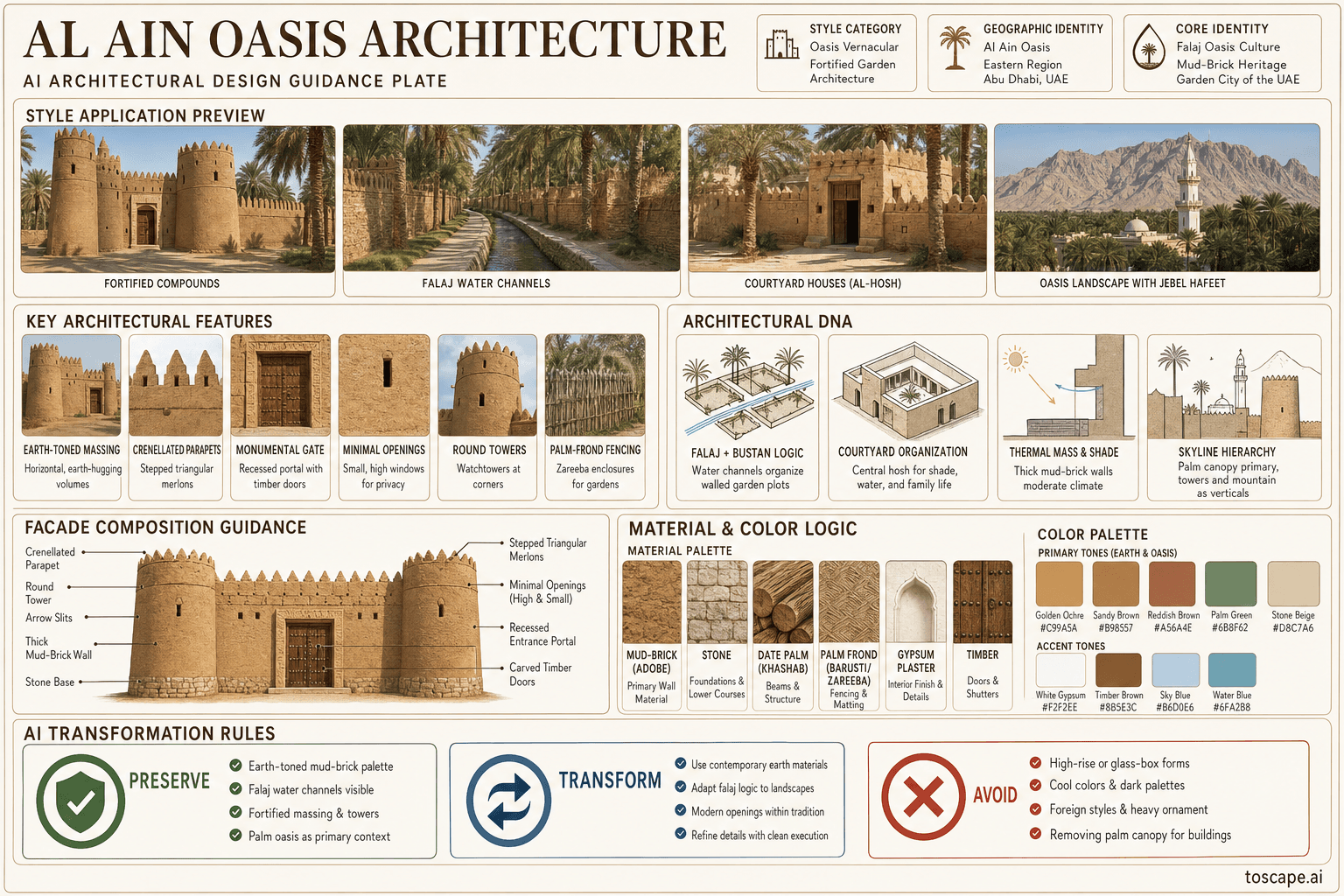
Oasis architecture shaped by falaj water, mud-brick compounds, palm canopy, and the fortified garden landscapes of Al Ain.
Definition
Al Ain Oasis is a regional architectural identity from United Arab Emirates. Oasis architecture shaped by falaj water, mud-brick compounds, palm canopy, and the fortified garden landscapes of Al Ain.
- Country
- United Arab Emirates
- Region
- Al Ain, Eastern Region, Abu Dhabi Emirate.
- Massing
- Buildings are low, earth-hugging, and dispersed within or beside oasis plots, while forts and watchtowers provide the major architectural markers.
- Materials
- Adobe, mud plaster, palm trunks, woven frond elements, gypsum, and local stone form the material logic.
- Palette
- Golden ochre, sandy brown, reddish earth, palm green, and pale limestone define the palette.
- Climate response
- Falaj water, dense date-palm shade, thick adobe walls, and inward courtyards create the oasis microclimate that makes settlement possible.
Overview
Al Ain Oasis is the interior oasis architectural identity of the UAE, defined by mud-brick compounds, fort and watchtower typologies, visible falaj irrigation, and a continuous canopy of date palms. It is characterized by thick earth walls, shaded productive gardens, and a settlement logic in which water, agriculture, and defensive morphology organize the built landscape together.
Visual DNA
Massing & Form
Buildings are low, earth-hugging, and dispersed within or beside oasis plots, while forts and watchtowers provide the major architectural markers. Horizontal compounds and walled gardens matter more than urban street fronts or isolated objects.
Facade Language
The wall is the main facade element: thick mud-brick surfaces, minimal openings, guarded gates, and crenellated fort edges. External expression stays calm and protective, with life opening more fully toward the inner courtyard and garden.
Materials & Texture
Adobe, mud plaster, palm trunks, woven frond elements, gypsum, and local stone form the material logic. Surfaces should read as dense, granular, and sun-baked, with tactile variation coming from earth construction rather than applied finish.
Color Palette
Golden ochre, sandy brown, reddish earth, palm green, and pale limestone define the palette. The identity depends on the contrast between shaded green canopy and warm earthen wall mass.
Ornament & Detail
Detail is concentrated in fort gates, crenellation patterns, gypsum niches, falaj stonework, and palm-weave craft. Ornament remains controlled and secondary to wall mass, water flow, and oasis structure.
Climate Response
Falaj water, dense date-palm shade, thick adobe walls, and inward courtyards create the oasis microclimate that makes settlement possible. The architecture relies on thermal mass and canopy cooling rather than exposed facade expression.
Landscape & Ground
The identity is inseparable from garden plots, mud boundary walls, visible irrigation channels, and the backdrop of Jebel Hafeet. Buildings should feel nested within the oasis landscape rather than laid over it.
Reference elevation
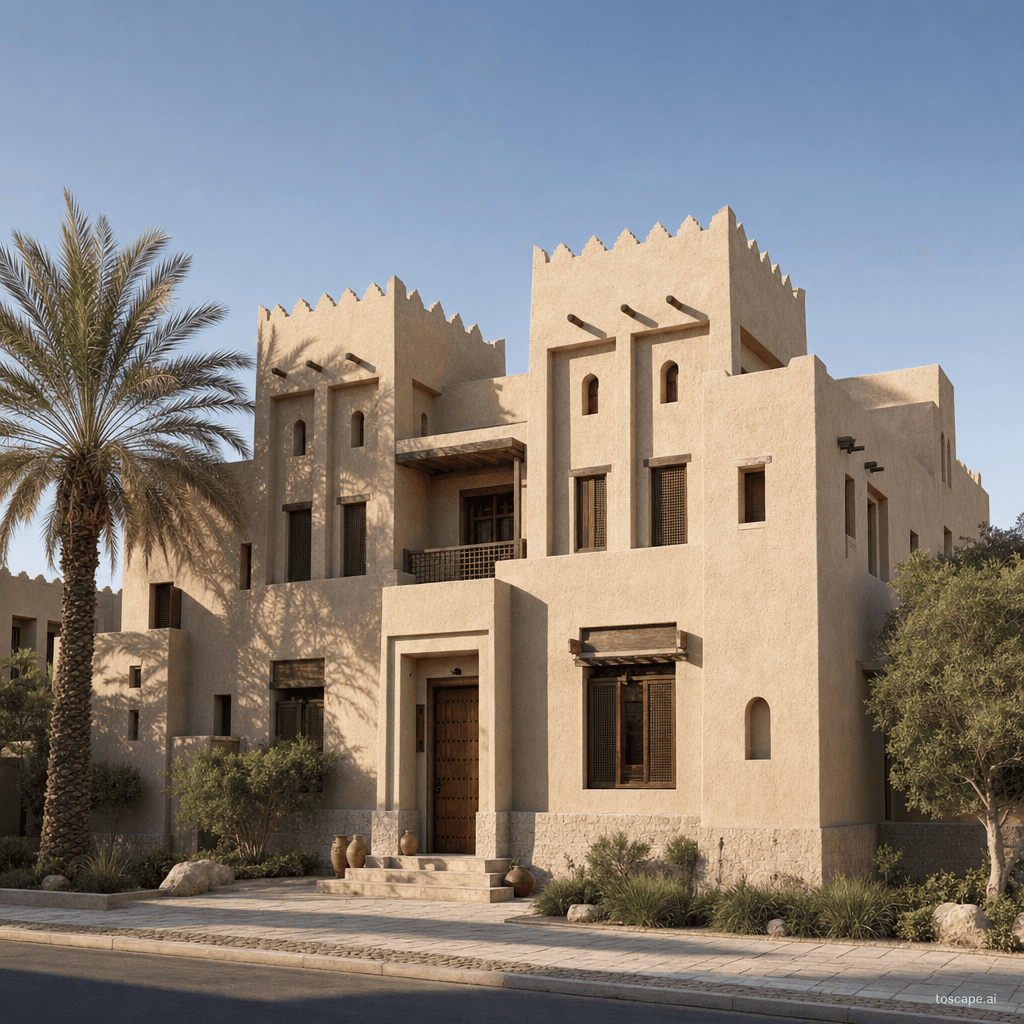
Al Ain Oasis — characteristic facade composition, Al Ain, Eastern Region, Abu Dhabi Emirate.
Context Snapshot
This identity belongs to Al Ain's long oasis history at the foot of Jebel Hafeet, where cultivation, water management, and walled settlement have shaped architecture for millennia. The major forts of Al Jahili, Al Muwaiji, and Al Murabba, together with the UNESCO-listed oasis system, still define the spatial and material grammar of the region.
Contemporary Relevance
Al Ain Oasis remains highly relevant for cultural, hospitality, and residential work that needs a genuine UAE interior identity grounded in water, earth, and canopy rather than generic desert imagery. In Toscape it works best when prompts emphasize mud-brick walls, falaj channels, date palms, fortified compounds, and oasis courtyards.
Use this style in Toscape
Explore Al Ain Oasis directly inside Toscape using the Facade Re-Style and Design Options workflows.
Open Al Ain Oasis in the galleryFrequently asked questions
What is Al Ain Oasis?
Al Ain Oasis is a regional architectural identity from United Arab Emirates. Oasis architecture shaped by falaj water, mud-brick compounds, palm canopy, and the fortified garden landscapes of Al Ain.
What materials define Al Ain Oasis?
Adobe, mud plaster, palm trunks, woven frond elements, gypsum, and local stone form the material logic. Surfaces should read as dense, granular, and sun-baked, with tactile variation coming from earth construction rather than applied finish.
What is the Al Ain Oasis color palette?
Golden ochre, sandy brown, reddish earth, palm green, and pale limestone define the palette. The identity depends on the contrast between shaded green canopy and warm earthen wall mass.
Where does Al Ain Oasis come from?
This identity belongs to Al Ain's long oasis history at the foot of Jebel Hafeet, where cultivation, water management, and walled settlement have shaped architecture for millennia. The major forts of Al Jahili, Al Muwaiji, and Al Murabba, together with the UNESCO-listed oasis system, still define the spatial and material grammar of the region.
When should architects use Al Ain Oasis?
Al Ain Oasis remains highly relevant for cultural, hospitality, and residential work that needs a genuine UAE interior identity grounded in water, earth, and canopy rather than generic desert imagery. In Toscape it works best when prompts emphasize mud-brick walls, falaj channels, date palms, fortified compounds, and oasis courtyards.
How do you render Al Ain Oasis in Toscape?
Open Toscape on Windows, load your own photo, elevation, sketch, or CAD view, then apply the Al Ain Oasis reference from the built-in style library. The Facade Re-Style and Design Options workflows keep your project geometry and camera while shifting materials, proportion, and detailing toward Al Ain Oasis.