Amazon
Brazil · Amazon region (Amazonas, Pará, Amapá)
Palafita Stilt Houses, Riverside Vernacular & Amazonian Bioclimatic Wisdom
Definition
Amazon is a regional architectural identity from Brazil. Palafita Stilt Houses, Riverside Vernacular & Amazonian Bioclimatic Wisdom.
- Country
- Brazil
- Region
- Amazon region (Amazonas, Pará, Amapá).
- Massing
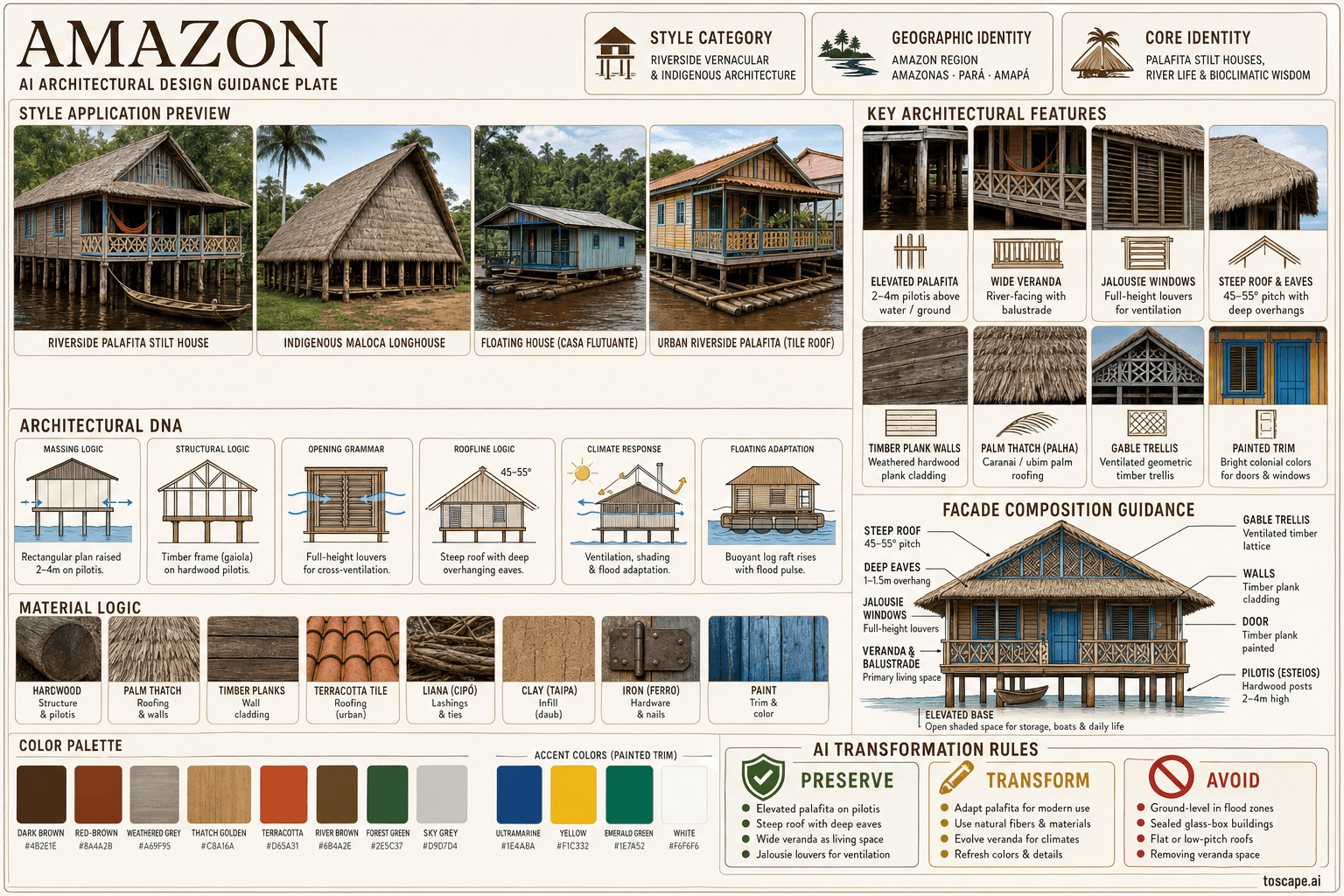
- Elevated volumes: rectangular plan raised 2-4m above ground on pilotis (esteios) — the defining Amazonian typology. Single-story with high attic, or two-story.
- Materials
- Madeira de lei (dense tropical hardwood): itaúba, acapu, maçaranduba, ipê — pilotis, structural frame, flooring, resistant to water, insects, decay.
- Palette
- Warm earth, sandy beige, ochre, clay brown, and sun-softened mineral tones should dominate, with palm green or weathered timber as secondary accents.
- Climate response
- Equatorial rainforest: hot year-round (25-35°C), extreme humidity (80-95%), annual flood pulse (cheia e seca — river rises 8-12m seasonally), heavy rainfall (2000-3000mm/year).
Overview
Amazon is a regional architectural identity in Brazil. Amazon region (Amazonas, Pará, Amapá) — riverside palafita and indigenous vernacular architecture. Elevated palafita (stilt houses) on hardwood pilotis above seasonal flood levels (2-4m high), open timber frame (gaiola) construction with timber plank or palm-thatch walls, steeply pitched roofs (45-55°) in caranai palm thatch (palha) or terracotta canal tiles, wide wrap-around verandas (varandas) with sawn timber balu...
Visual DNA
Massing & Form
Elevated volumes: rectangular plan raised 2-4m above ground on pilotis (esteios) — the defining Amazonian typology. Single-story with high attic, or two-story.
Facade Language
Elevated appearance — the house "floats" above ground or water on visible pilotis. Wide veranda with rhythmic pilotis posts and sawn timber balustrade (guarda-corpo de madeira).
Materials & Texture
Madeira de lei (dense tropical hardwood): itaúba, acapu, maçaranduba, ipê — pilotis, structural frame, flooring, resistant to water, insects, decay. Palha (palm thatch): caranai (Mauritia carana), ubim (Geonoma), or inajá (Maximiliana maripa) palm fronds split and bundled — roofing and walls.
Color Palette
Warm earth, sandy beige, ochre, clay brown, and sun-softened mineral tones should dominate, with palm green or weathered timber as secondary accents. The palette should read as land-derived rather than polished or urban-generic.
Ornament & Detail
Simple geometric ornament: sawn timber balustrade patterns on verandas — diamonds, crosses, wavy lines (cobrinha). Decorative gable trellis (treliça/cobogó): ventilated timber lattice in geometric patterns.
Climate Response
Equatorial rainforest: hot year-round (25-35°C), extreme humidity (80-95%), annual flood pulse (cheia e seca — river rises 8-12m seasonally), heavy rainfall (2000-3000mm/year). Elevated palafita: essential adaptation to annual flooding — house stays above highest water mark.
Landscape & Ground
Amazon region (Amazonas, Pará, Amapá) — riverside palafita and indigenous vernacular architecture. Equatorial rainforest: hot year-round (25-35°C), extreme humidity (80-95%), annual flood pulse (cheia e seca — river rises 8-12m seasonally), heavy rainfall (2000-3000mm/year).
Reference elevation
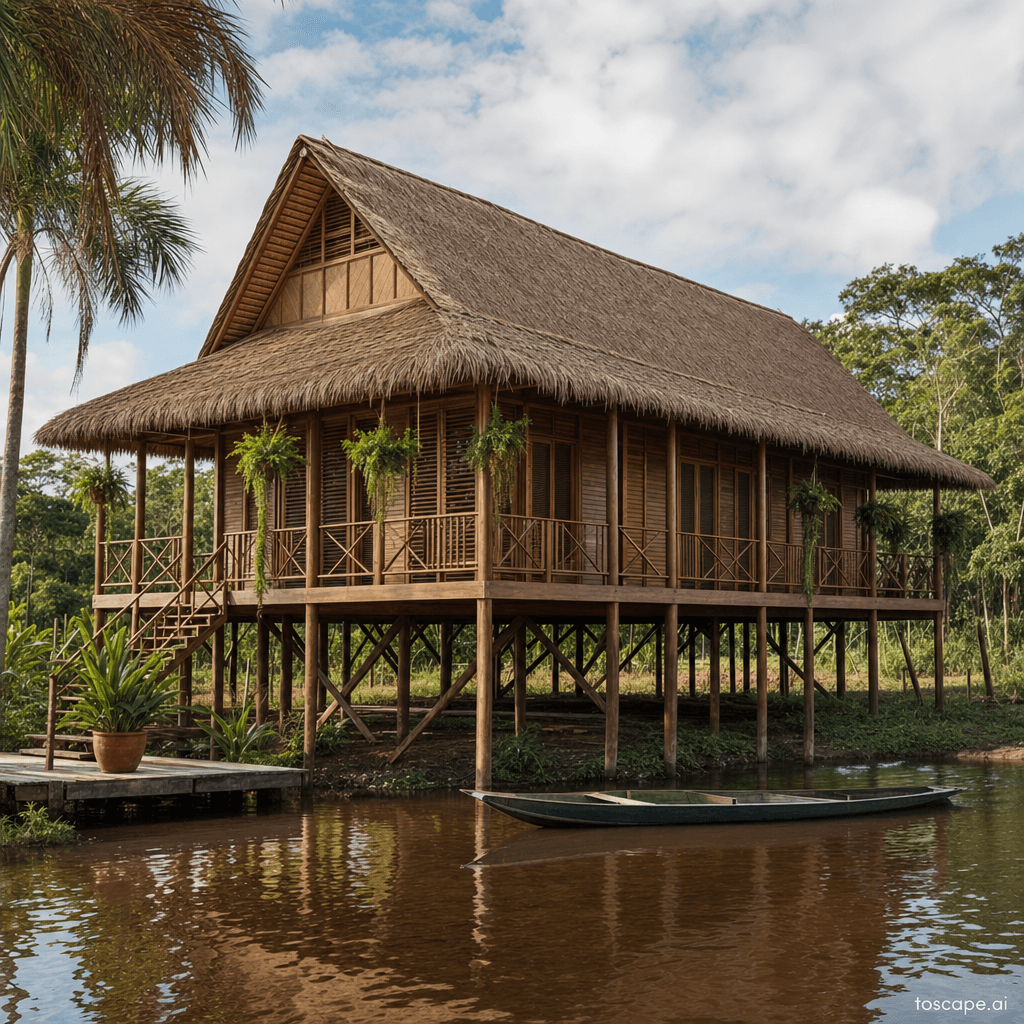
Amazon — characteristic facade composition, Amazon region (Amazonas, Pará, Amapá).
Context Snapshot
Amazon region (Amazonas, Pará, Amapá) — riverside palafita and indigenous vernacular architecture Equatorial rainforest: hot year-round (25-35°C), extreme humidity (80-95%), annual flood pulse (cheia e seca — river rises 8-12m seasonally), heavy rainfall (2000-3000mm/year).
Contemporary Relevance
Amazon is useful today for residential, hospitality, civic, and place-branding work that needs Brazil-specific character grounded in local massing, material tone, climate response, and settlement logic rather than generic international styling.
Use this style in Toscape
Explore Amazon directly inside Toscape using the Facade Re-Style and Design Options workflows.
Open Amazon in the galleryFrequently asked questions
What is Amazon?
Amazon is a regional architectural identity from Brazil. Palafita Stilt Houses, Riverside Vernacular & Amazonian Bioclimatic Wisdom.
What materials define Amazon?
Madeira de lei (dense tropical hardwood): itaúba, acapu, maçaranduba, ipê — pilotis, structural frame, flooring, resistant to water, insects, decay. Palha (palm thatch): caranai (Mauritia carana), ubim (Geonoma), or inajá (Maximiliana maripa) palm fronds split and bundled — roofing and walls.
What is the Amazon color palette?
Warm earth, sandy beige, ochre, clay brown, and sun-softened mineral tones should dominate, with palm green or weathered timber as secondary accents. The palette should read as land-derived rather than polished or urban-generic.
Where does Amazon come from?
Amazon region (Amazonas, Pará, Amapá) — riverside palafita and indigenous vernacular architecture Equatorial rainforest: hot year-round (25-35°C), extreme humidity (80-95%), annual flood pulse (cheia e seca — river rises 8-12m seasonally), heavy rainfall (2000-3000mm/year).
When should architects use Amazon?
Amazon is useful today for residential, hospitality, civic, and place-branding work that needs Brazil-specific character grounded in local massing, material tone, climate response, and settlement logic rather than generic international styling.
How do you render Amazon in Toscape?
Open Toscape on Windows, load your own photo, elevation, sketch, or CAD view, then apply the Amazon reference from the built-in style library. The Facade Re-Style and Design Options workflows keep your project geometry and camera while shifting materials, proportion, and detailing toward Amazon.