Bahia
Brazil · Bahia (Salvador, Recôncavo)
Afro-Brazilian Colonial, Pelourinho Pastels & Portuguese Azulejo Heritage
Definition
Bahia is a regional architectural identity from Brazil. Afro-Brazilian Colonial, Pelourinho Pastels & Portuguese Azulejo Heritage.
- Country
- Brazil
- Region
- Bahia (Salvador, Recôncavo)
- Massing
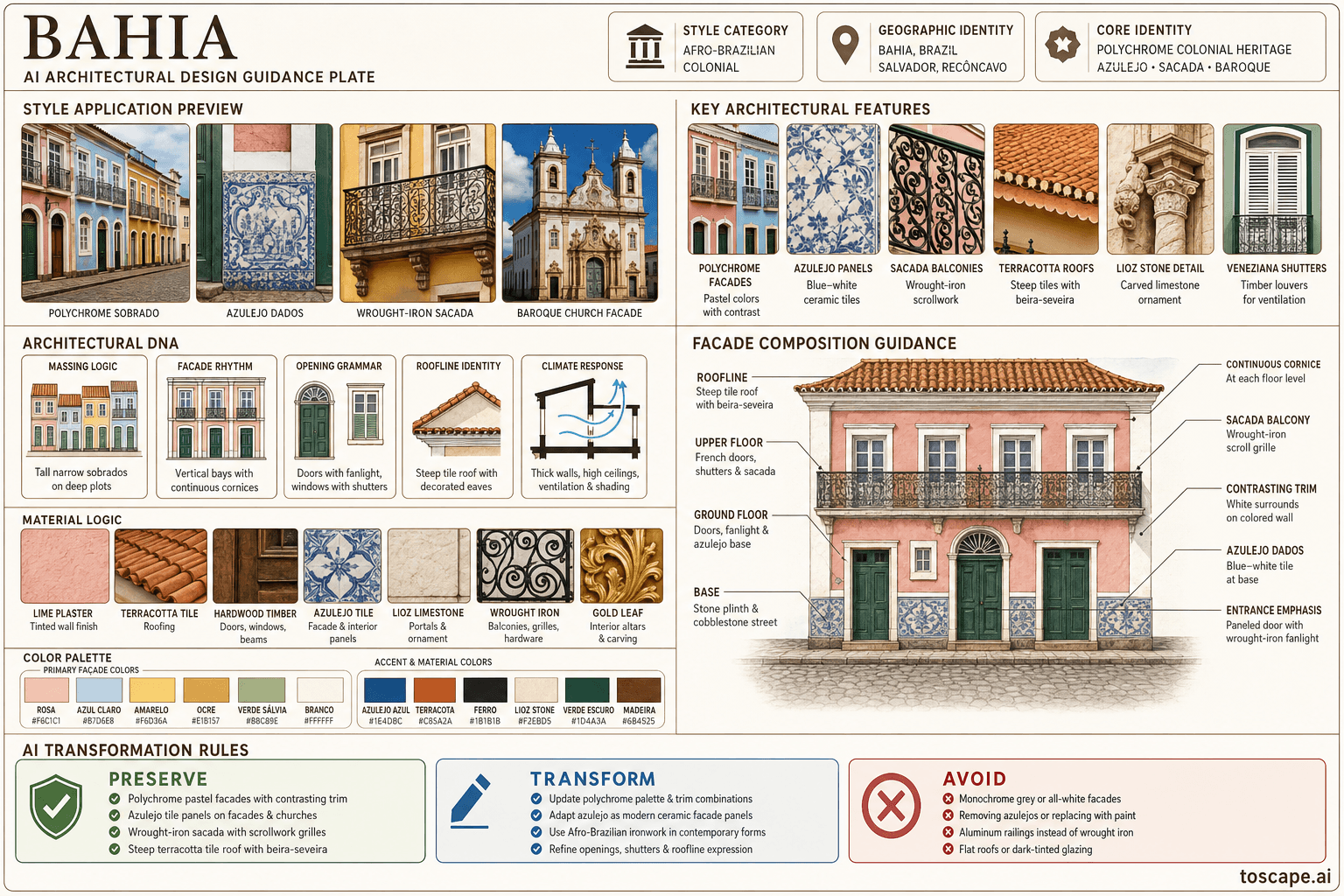
- Urban colonial: tall narrow sobrados (townhouses), 2-4 stories, on deep narrow plots (4-8m wide, 30-50m deep), built to property line forming continuous street walls.
- Materials
- Cal (lime): plaster and whitewash, tinted with mineral pigments (terras coloridas). Azulejo (glazed ceramic tile): blue-on-white Portuguese tiles, 14x14cm, in panels.
- Palette
- White, cream, pale sand, warm timber, and shadow-driven dark metal accents define the palette.
- Climate response
- Tropical coastal: hot humid year-round (25-30°C), heavy seasonal rainfall, intense sun, salt air from Baía de Todos os Santos.
Overview
Bahia is a regional architectural identity in Brazil. Bahia (Salvador, Recôncavo) — Afro-Brazilian Portuguese colonial architecture. Multi-colored pastel plaster facades in pink (rosa), blue (azul), yellow (amarelo), ochre, and white with contrasting painted window and door surrounds (molduras de cor contrastante), Portuguese azulejo glazed tile panels on facades and church interiors, steep terracotta tile roofs with decorated eaves (beirais), wrought-iron balconies wit...
Visual DNA
Massing & Form
Urban colonial: tall narrow sobrados (townhouses), 2-4 stories, on deep narrow plots (4-8m wide, 30-50m deep), built to property line forming continuous street walls. Irregular organic street pattern following topography of Salvador's upper and lower city (Cidade Alta/Cidade Baixa).
Facade Language
Polychrome facades — the defining Bahian visual. Each house painted a distinct pastel or vibrant color: colonial pink (rosa colonial), pale blue (azul colonial), golden yellow (amarelo), ochre (ocre), sage green (verde), and white (branco).
Materials & Texture
Cal (lime): plaster and whitewash, tinted with mineral pigments (terras coloridas). Azulejo (glazed ceramic tile): blue-on-white Portuguese tiles, 14x14cm, in panels.
Color Palette
White, cream, pale sand, warm timber, and shadow-driven dark metal accents define the palette. The facade should stay bright and climate-aware rather than heavy, gray, or over-saturated.
Ornament & Detail
Azulejos: the defining ornament of Bahia — blue-and-white glazed tile panels on church facades, naves, and cloisters (Convento de São Francisco), and on domestic facades as dados (lambris de azulejo). Motifs: religious scenes, hunting scenes, geometric patterns (tapete — carpet pattern), floral arabesques.
Climate Response
Tropical coastal: hot humid year-round (25-30°C), heavy seasonal rainfall, intense sun, salt air from Baía de Todos os Santos. Thick stone/brick walls: thermal mass for interior cooling.
Landscape & Ground
Bahia (Salvador, Recôncavo) — Afro-Brazilian Portuguese colonial architecture. Tropical coastal: hot humid year-round (25-30°C), heavy seasonal rainfall, intense sun, salt air from Baía de Todos os Santos.
Reference elevation
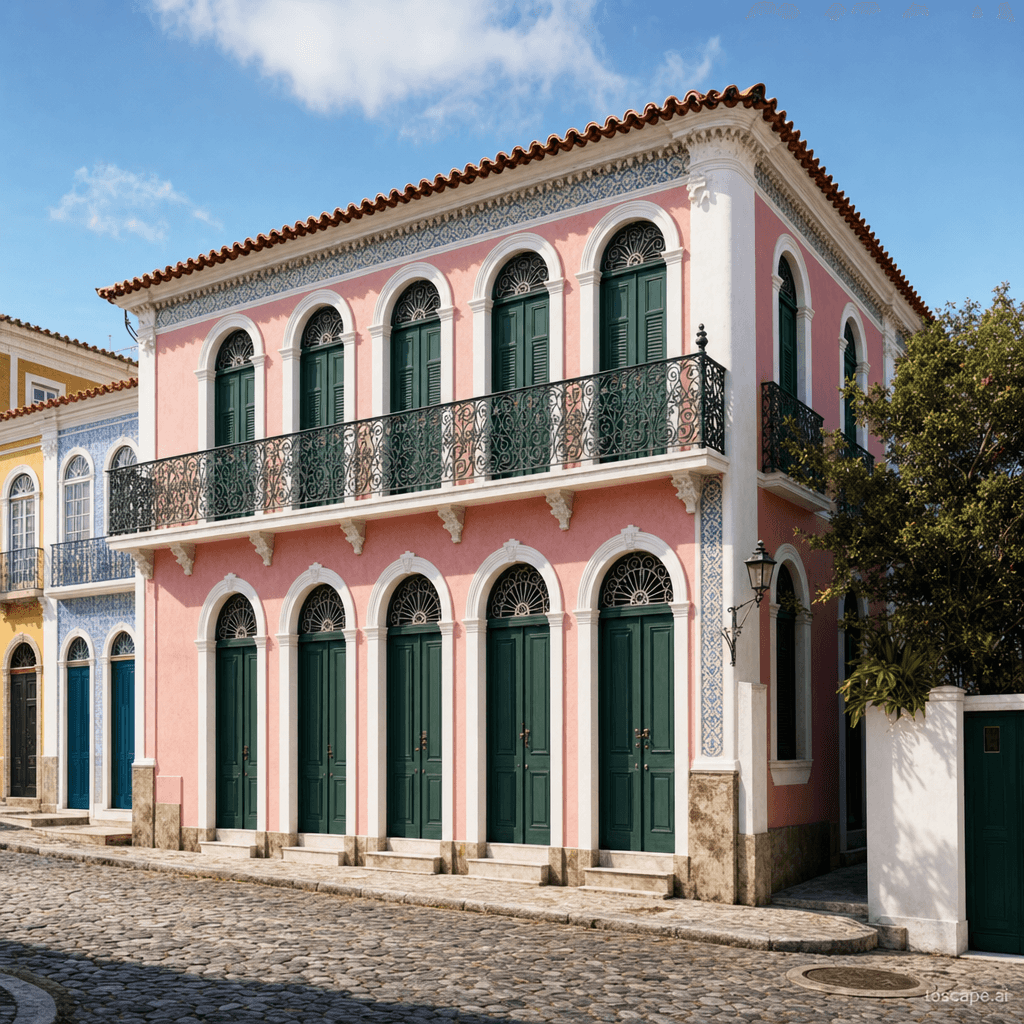
Bahia — characteristic facade composition, Bahia (Salvador, Recôncavo).
Context Snapshot
Bahia (Salvador, Recôncavo) — Afro-Brazilian Portuguese colonial architecture Tropical coastal: hot humid year-round (25-30°C), heavy seasonal rainfall, intense sun, salt air from Baía de Todos os Santos.
Contemporary Relevance
Bahia is useful today for residential, hospitality, civic, and place-branding work that needs Brazil-specific character grounded in local massing, material tone, climate response, and settlement logic rather than generic international styling.
Use this style in Toscape
Explore Bahia directly inside Toscape using the Facade Re-Style and Design Options workflows.
Open Bahia in the galleryFrequently asked questions
What is Bahia?
Bahia is a regional architectural identity from Brazil. Afro-Brazilian Colonial, Pelourinho Pastels & Portuguese Azulejo Heritage.
What materials define Bahia?
Cal (lime): plaster and whitewash, tinted with mineral pigments (terras coloridas). Azulejo (glazed ceramic tile): blue-on-white Portuguese tiles, 14x14cm, in panels.
What is the Bahia color palette?
White, cream, pale sand, warm timber, and shadow-driven dark metal accents define the palette. The facade should stay bright and climate-aware rather than heavy, gray, or over-saturated.
Where does Bahia come from?
Bahia (Salvador, Recôncavo) — Afro-Brazilian Portuguese colonial architecture Tropical coastal: hot humid year-round (25-30°C), heavy seasonal rainfall, intense sun, salt air from Baía de Todos os Santos.
When should architects use Bahia?
Bahia is useful today for residential, hospitality, civic, and place-branding work that needs Brazil-specific character grounded in local massing, material tone, climate response, and settlement logic rather than generic international styling.
How do you render Bahia in Toscape?
Open Toscape on Windows, load your own photo, elevation, sketch, or CAD view, then apply the Bahia reference from the built-in style library. The Facade Re-Style and Design Options workflows keep your project geometry and camera while shifting materials, proportion, and detailing toward Bahia.