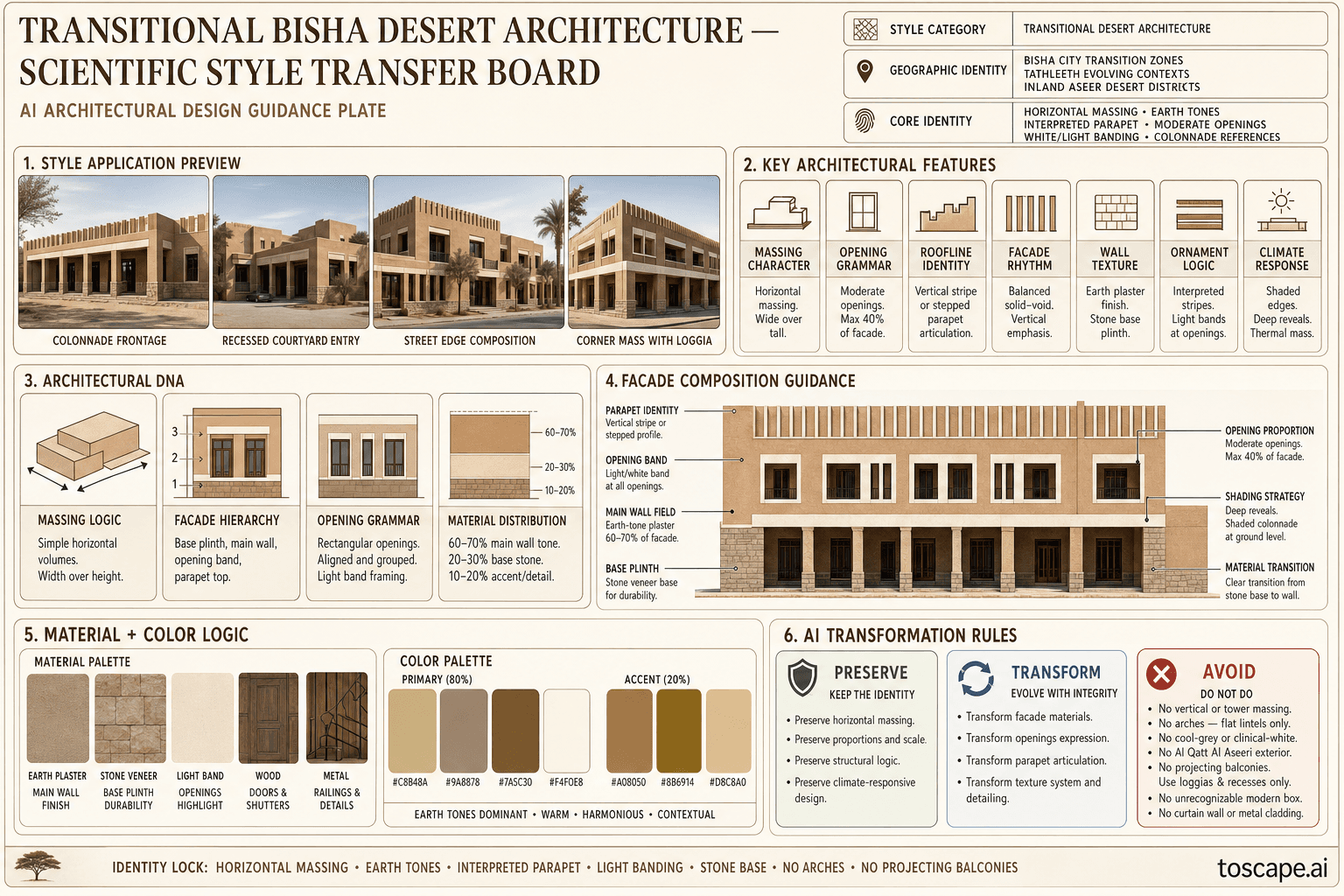
Bisha Desert Transitional
Saudi Arabia · Bisha Desert
The interpreted horizontal earth-tone desert architecture for contemporary living, mid-late 20th century CE
Definition
Bisha Desert Transitional is a regional architectural identity from Saudi Arabia. The interpreted horizontal earth-tone desert architecture for contemporary living, mid-late 20th century CE.
- Country
- Saudi Arabia
- Region
- Bisha Desert
- Massing
- Transitional Bisha Desert architecture retains the characteristic horizontal massing and low profile of the vernacular while accommodating up to 4 storeys and reducing wall taper.
- Materials
- Primary wall: mud brick equivalent — 60–70% of facade as one consistent earth-tone material.
- Palette
- Earth-toned wall masses, gypsum white accents, and warm timber details define the palette.
- Climate response
- The building still belongs to the flat Bisha Desert plain. Courtyard or patio organization encouraged.
Overview
Bisha Desert Transitional is a Saudi architectural identity rooted in Bisha Desert. Bisha Desert mud-brick character translated into simplified, more open, contemporary-compatible building form. Bisha city transition zones — Tathleeth evolving contexts — inland Aseer desert contemporary districts.
Visual DNA
Massing & Form
Transitional Bisha Desert architecture retains the characteristic horizontal massing and low profile of the vernacular while accommodating up to 4 storeys and reducing wall taper to up to 30% of building form . The width-to-height ratio of 1:0.25 to 1:0.94 is maintained — horizontal character must remain always dominan...
Facade Language
The tripartite reading is maintained — large-opening/colonnade-reference base + moderate-windowed middle + articulated parapet top — but in an interpreted rather than literal form. Upper-floor windows grow to moderate size (1:1.3 to 1:3 proportion range), positioned slightly higher than mid-wall.
Materials & Texture
Primary wall: mud brick equivalent — 60–70% of facade as one consistent earth-tone material. Acceptable contemporary substitutions include: colored concrete in sand/beige/brown, terra cotta cladding panels, cementitious panel siding in earth tones, robust stone veneer, rammed earth finish, or mud-colored plaster .
Color Palette
Earth-toned wall masses, gypsum white accents, and warm timber details define the palette. The building should read as desert mineral first, with ornament or painted detail working as a controlled secondary layer rather than a competing facade field.
Ornament & Detail
Pattern is interpreted rather than literal. Horizontal layering expressed through material banding or coursing — abstract reference to mud-brick courses.
Climate Response
The building still belongs to the flat Bisha Desert plain. Courtyard or patio organization encouraged.
Landscape & Ground
Bisha city transition zones — Tathleeth evolving contexts — inland Aseer desert contemporary districts. The building still belongs to the flat Bisha Desert plain.
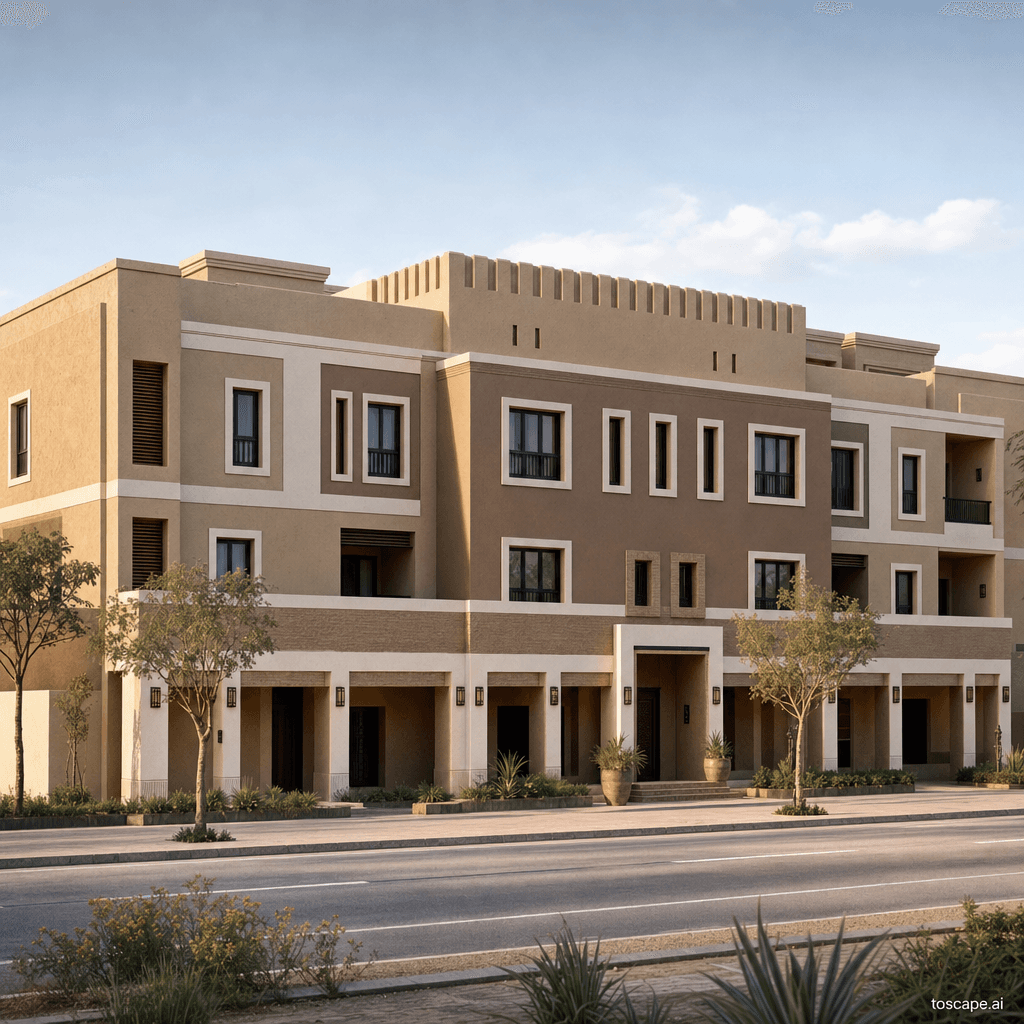
Reference elevation
Bisha Desert Transitional — characteristic facade composition, Bisha Desert.
Context Snapshot
Interpreted Bisha Desert vernacular character — balancing the essential horizontal earth-tone identity with contemporary materials and moderate modernization Bisha Desert mud-brick character translated into simplified, more open, contemporary-compatible building form Bisha city transition zones — Tathleeth evolving contexts — inland Aseer desert contemporary districts
Contemporary Relevance
Bisha Desert Transitional is the bridge between conservation and current construction across Bisha Desert, allowing contemporary programs to keep regional identity legible while using modern structure, services, and envelope systems. It is the most practical mode for streetscapes that need to feel rooted without becoming literal replicas.
Use this style in Toscape
Explore Bisha Desert Transitional directly inside Toscape using the Facade Re-Style and Design Options workflows.
Open Bisha Desert Transitional in the galleryFrequently asked questions
What is Bisha Desert Transitional?
Bisha Desert Transitional is a regional architectural identity from Saudi Arabia. The interpreted horizontal earth-tone desert architecture for contemporary living, mid-late 20th century CE.
What materials define Bisha Desert Transitional?
Primary wall: mud brick equivalent — 60–70% of facade as one consistent earth-tone material. Acceptable contemporary substitutions include: colored concrete in sand/beige/brown, terra cotta cladding panels, cementitious panel siding in earth tones, robust stone veneer, rammed earth finish, or mud-colored plaster .
What is the Bisha Desert Transitional color palette?
Earth-toned wall masses, gypsum white accents, and warm timber details define the palette. The building should read as desert mineral first, with ornament or painted detail working as a controlled secondary layer rather than a competing facade field.
Where does Bisha Desert Transitional come from?
Interpreted Bisha Desert vernacular character — balancing the essential horizontal earth-tone identity with contemporary materials and moderate modernization Bisha Desert mud-brick character translated into simplified, more open, contemporary-compatible building form Bisha city transition zones — Tathleeth evolving contexts — inland Aseer desert contemporary districts.
When should architects use Bisha Desert Transitional?
Bisha Desert Transitional is the bridge between conservation and current construction across Bisha Desert, allowing contemporary programs to keep regional identity legible while using modern structure, services, and envelope systems. It is the most practical mode for streetscapes that need to feel rooted without becoming literal replicas.
How do you render Bisha Desert Transitional in Toscape?
Open Toscape on Windows, load your own photo, elevation, sketch, or CAD view, then apply the Bisha Desert Transitional reference from the built-in style library. The Facade Re-Style and Design Options workflows keep your project geometry and camera while shifting materials, proportion, and detailing toward Bisha Desert Transitional.