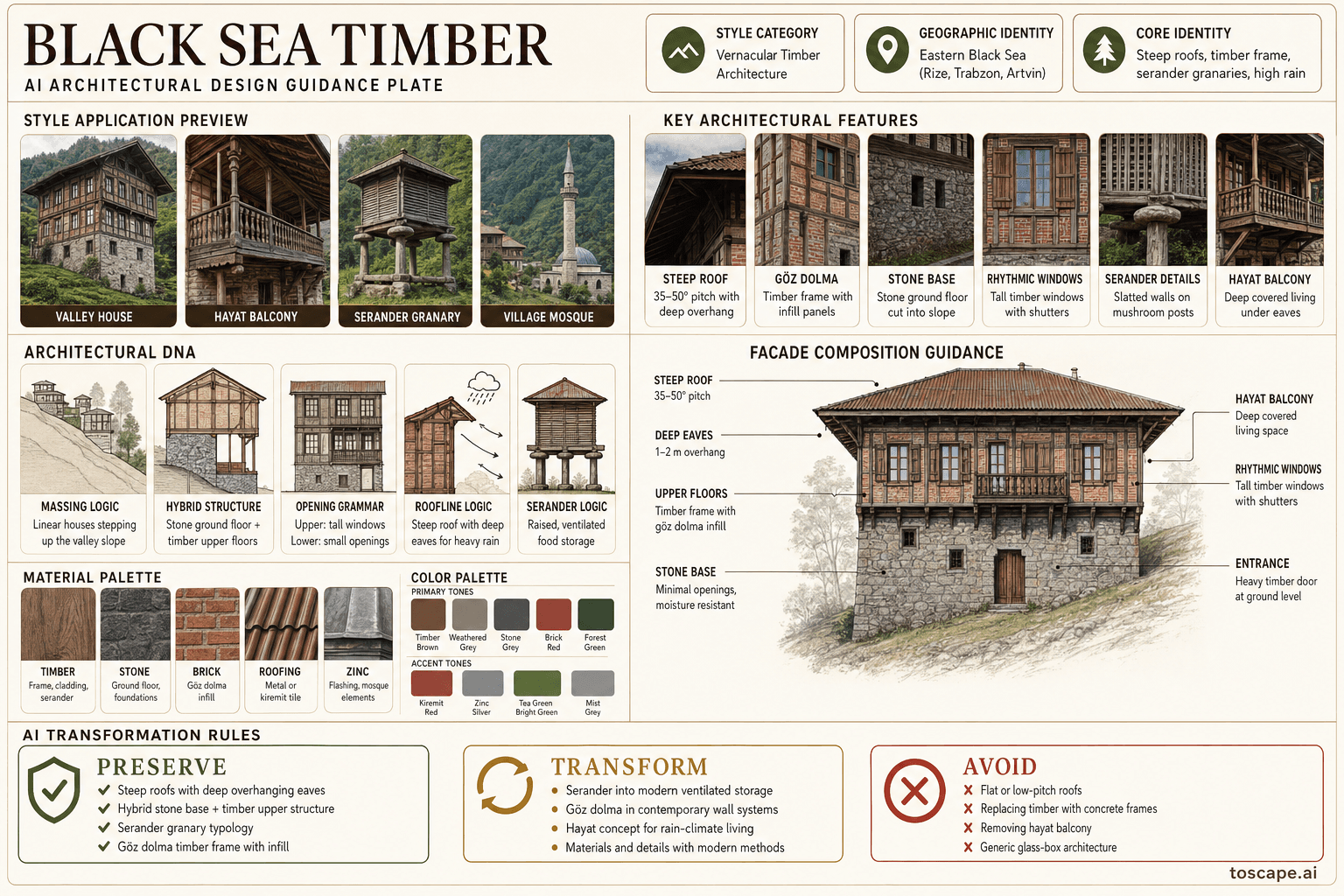
Black Sea Timber
Turkey · Eastern Black Sea region (Rize, Trabzon, Artvin)
Steep-Roofed Wooden Houses, Serander Granaries & Lush Pontic Coast Architecture
Definition
Black Sea Timber is a regional architectural identity from Turkey. Steep-Roofed Wooden Houses, Serander Granaries & Lush Pontic Coast Architecture.
- Country
- Turkey
- Region
- Eastern Black Sea region (Rize, Trabzon, Artvin).
- Massing
- Rectangular 2-3 story houses, narrow frontage facing valley/road, deep plan reaching upslope — ground floor stone (storage/stable) cut into slope, upper timber living floors projecting.
- Materials
- Chestnut and spruce timber — structural frame, cladding, seranders. Local stone (volcanic andesite/basalt) — ground floor walls.
- Palette
- Warm earth, sandy beige, ochre, clay brown, and sun-softened mineral tones should dominate, with palm green or weathered timber as secondary accents.
- Climate response
- Humid subtropical, extreme rainfall (2000-2500mm/year), mild temperatures, persistent humidity. Steep roof for rapid rain shedding with deep eaves protecting timber walls.
Overview
Black Sea Timber is a regional architectural identity in Turkey. Eastern Black Sea region (Rize, Trabzon, Artvin) — timber architecture in Turkey's wettest, greenest region. Steeply pitched wide-eaved roofs (metal or tile), timber-frame construction with brick or stone infill (göz dolma), raised wooden granaries (serander/nailya) on stilts, linear settlement along valleys, adaptation to 2000mm+ annual rainfall
Visual DNA
Massing & Form
Rectangular 2-3 story houses, narrow frontage facing valley/road, deep plan reaching upslope — ground floor stone (storage/stable) cut into slope, upper timber living floors projecting. Detached serander: square timber granary raised on 4-6 wooden posts with mushroom-shaped rat guards.
Facade Language
Stone ground floor: minimal openings, slightly battered walls. Upper timber floors: rhythmic vertical timber studding, göz dolma infill panels, projecting rectangular windows.
Materials & Texture
Chestnut and spruce timber — structural frame, cladding, seranders. Local stone (volcanic andesite/basalt) — ground floor walls.
Color Palette
Warm earth, sandy beige, ochre, clay brown, and sun-softened mineral tones should dominate, with palm green or weathered timber as secondary accents. The palette should read as land-derived rather than polished or urban-generic.
Ornament & Detail
Timber joinery as ornament: decorative cut ends of beams and purlins, carved door frames, turned balusters on hayat railings. Serander post discs: mushroom-shaped stone caps — functional (rodent protection) yet sculptural.
Climate Response
Humid subtropical, extreme rainfall (2000-2500mm/year), mild temperatures, persistent humidity. Steep roof for rapid rain shedding with deep eaves protecting timber walls.
Landscape & Ground
Eastern Black Sea region (Rize, Trabzon, Artvin) — timber architecture in Turkey's wettest, greenest region. Humid subtropical, extreme rainfall (2000-2500mm/year), mild temperatures, persistent humidity.
Reference elevation
Black Sea Timber — characteristic facade composition, Eastern Black Sea region (Rize, Trabzon, Artvin).
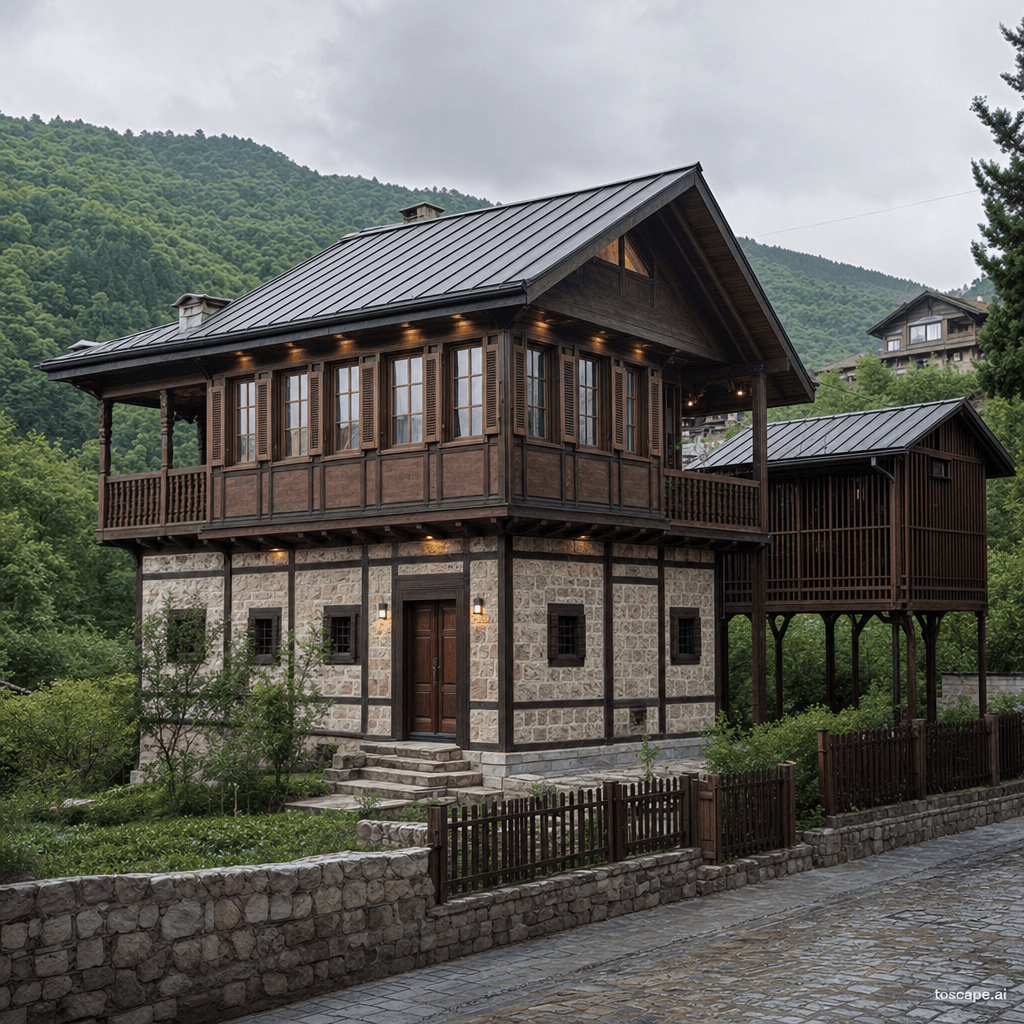
Context Snapshot
Eastern Black Sea region (Rize, Trabzon, Artvin) — timber architecture in Turkey's wettest, greenest region Humid subtropical, extreme rainfall (2000-2500mm/year), mild temperatures, persistent humidity.
Contemporary Relevance
Black Sea Timber is useful today for residential, hospitality, civic, and place-branding work that needs Turkey-specific character grounded in local massing, material tone, climate response, and settlement logic rather than generic international styling.
Use this style in Toscape
Explore Black Sea Timber directly inside Toscape using the Facade Re-Style and Design Options workflows.
Open Black Sea Timber in the galleryFrequently asked questions
What is Black Sea Timber?
Black Sea Timber is a regional architectural identity from Turkey. Steep-Roofed Wooden Houses, Serander Granaries & Lush Pontic Coast Architecture.
What materials define Black Sea Timber?
Chestnut and spruce timber — structural frame, cladding, seranders. Local stone (volcanic andesite/basalt) — ground floor walls.
What is the Black Sea Timber color palette?
Warm earth, sandy beige, ochre, clay brown, and sun-softened mineral tones should dominate, with palm green or weathered timber as secondary accents. The palette should read as land-derived rather than polished or urban-generic.
Where does Black Sea Timber come from?
Eastern Black Sea region (Rize, Trabzon, Artvin) — timber architecture in Turkey's wettest, greenest region Humid subtropical, extreme rainfall (2000-2500mm/year), mild temperatures, persistent humidity.
When should architects use Black Sea Timber?
Black Sea Timber is useful today for residential, hospitality, civic, and place-branding work that needs Turkey-specific character grounded in local massing, material tone, climate response, and settlement logic rather than generic international styling.
How do you render Black Sea Timber in Toscape?
Open Toscape on Windows, load your own photo, elevation, sketch, or CAD view, then apply the Black Sea Timber reference from the built-in style library. The Facade Re-Style and Design Options workflows keep your project geometry and camera while shifting materials, proportion, and detailing toward Black Sea Timber.