Central Highlands Colonial
Mexico · Mexican colonial architecture of the Bajío and Central Highlands
Tezontle & Cantera Stone, Baroque Churches & Hacienda Courtyards
Definition
Central Highlands Colonial is a regional architectural identity from Mexico. Tezontle & Cantera Stone, Baroque Churches & Hacienda Courtyards.
- Country
- Mexico
- Region
- Mexican colonial architecture of the Bajío and Central Highlands.
- Massing
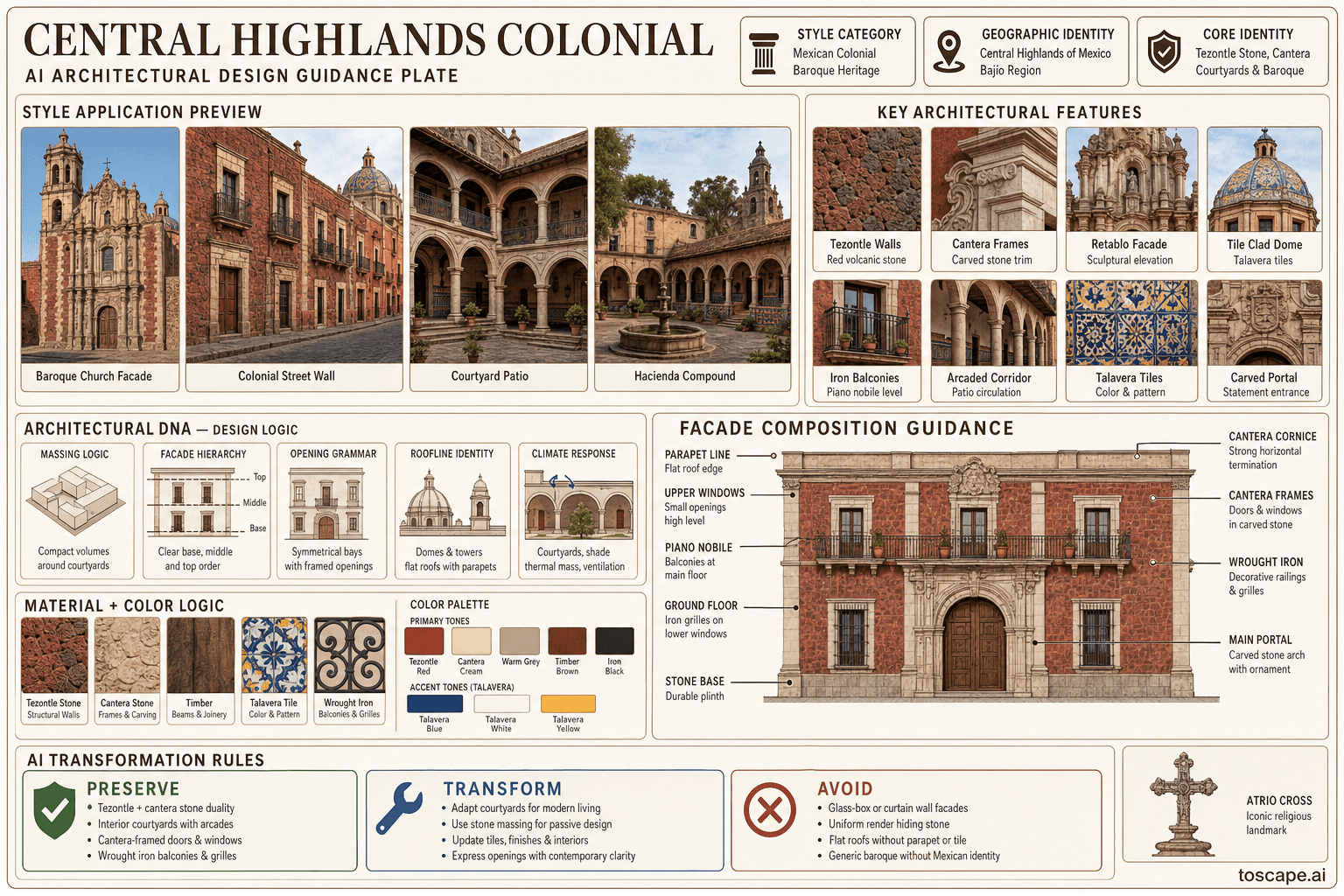
- Urban: continuous street-wall 2-3 story buildings on narrow lots, interior courtyards (patios centrales). Churches: basilican plan, single bell tower (torre única), octagonal drum dome over crossing.
- Materials
- Tezontle (red/black porous volcanic stone). Cantera (carved tuff in cream, pink, grey, green variants).
- Palette
- White, cream, pale sand, warm timber, and shadow-driven dark metal accents define the palette.
- Climate response
- Temperate highland climate (1800-2200m). Thick stone walls for thermal mass.
Overview
Central Highlands Colonial is a regional architectural identity in Mexico. Mexican colonial architecture of the Bajío and Central Highlands — Spanish-Indigenous fusion in stone. Red tezontle volcanic stone + carved cantera trim, domed baroque churches, hacienda complexes around courtyards, talavera tile accents
Visual DNA
Massing & Form
Urban: continuous street-wall 2-3 story buildings on narrow lots, interior courtyards (patios centrales). Churches: basilican plan, single bell tower (torre única), octagonal drum dome over crossing.
Facade Language
Church facades: retablo-facade (altarpiece-as-facade) — tripartite vertical, framed niches with sculptures, estípite columns. Domestic: symmetrical 3-5 bay, central portal with cantera frame, wrought-iron balconies at piano nobile, small upper windows.
Materials & Texture
Tezontle (red/black porous volcanic stone). Cantera (carved tuff in cream, pink, grey, green variants).
Color Palette
White, cream, pale sand, warm timber, and shadow-driven dark metal accents define the palette. The facade should stay bright and climate-aware rather than heavy, gray, or over-saturated.
Ornament & Detail
Church: Churrigueresque/Ultra-Baroque — estípite pilasters, niche-sculpture programs, gilded retablos. Domestic: carved cantera door/window frames, wrought-iron balcony detailing, talavera tile wainscots and dome cladding.
Climate Response
Temperate highland climate (1800-2200m). Thick stone walls for thermal mass.
Landscape & Ground
Mexican colonial architecture of the Bajío and Central Highlands — Spanish-Indigenous fusion in stone. Temperate highland climate (1800-2200m).
Reference elevation
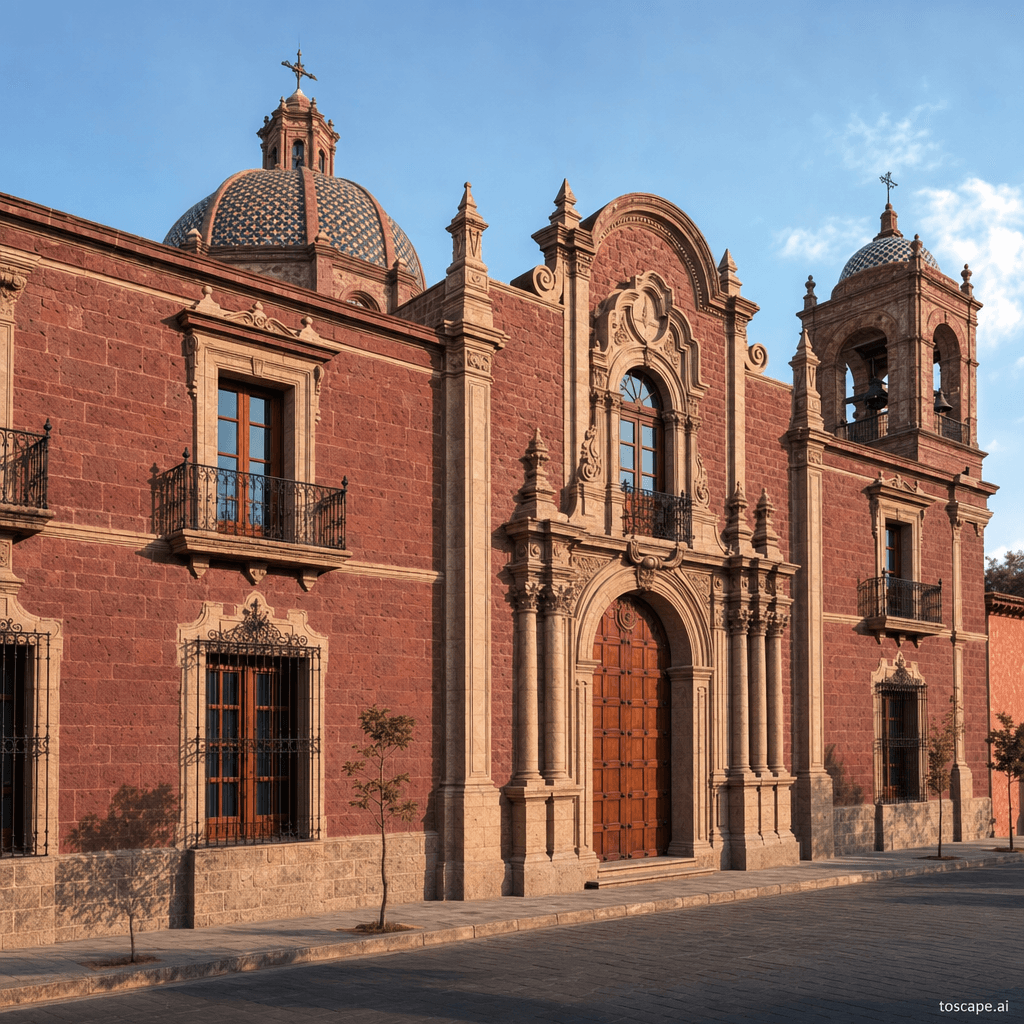
Central Highlands Colonial — characteristic facade composition, Mexican colonial architecture of the Bajío and Central Highlands.
Context Snapshot
Mexican colonial architecture of the Bajío and Central Highlands — Spanish-Indigenous fusion in stone Temperate highland climate (1800-2200m).
Contemporary Relevance
Central Highlands Colonial is useful today for residential, hospitality, civic, and place-branding work that needs Mexico-specific character grounded in local massing, material tone, climate response, and settlement logic rather than generic international styling.
Use this style in Toscape
Explore Central Highlands Colonial directly inside Toscape using the Facade Re-Style and Design Options workflows.
Open Central Highlands Colonial in the galleryFrequently asked questions
What is Central Highlands Colonial?
Central Highlands Colonial is a regional architectural identity from Mexico. Tezontle & Cantera Stone, Baroque Churches & Hacienda Courtyards.
What materials define Central Highlands Colonial?
Tezontle (red/black porous volcanic stone). Cantera (carved tuff in cream, pink, grey, green variants).
What is the Central Highlands Colonial color palette?
White, cream, pale sand, warm timber, and shadow-driven dark metal accents define the palette. The facade should stay bright and climate-aware rather than heavy, gray, or over-saturated.
Where does Central Highlands Colonial come from?
Mexican colonial architecture of the Bajío and Central Highlands — Spanish-Indigenous fusion in stone Temperate highland climate (1800-2200m).
When should architects use Central Highlands Colonial?
Central Highlands Colonial is useful today for residential, hospitality, civic, and place-branding work that needs Mexico-specific character grounded in local massing, material tone, climate response, and settlement logic rather than generic international styling.
How do you render Central Highlands Colonial in Toscape?
Open Toscape on Windows, load your own photo, elevation, sketch, or CAD view, then apply the Central Highlands Colonial reference from the built-in style library. The Facade Re-Style and Design Options workflows keep your project geometry and camera while shifting materials, proportion, and detailing toward Central Highlands Colonial.