Eastern Cape
South Africa · architectural identity of the Eastern Cape
The Xhosa rondavel and the frontier farmhouse — the conical thatch-and-mud cylinder of the amaXhosa, the 1820 Settler stone cottage, and the enduring architectural dialogue at the...
Definition
Eastern Cape is a regional architectural identity from South Africa. The Xhosa rondavel and the frontier farmhouse — the conical thatch-and-mud cylinder of the amaXhosa, the 1820 Settler stone cottage.
- Country
- South Africa
- Region
- architectural identity of the Eastern Cape.
- Massing
- The Xhosa rondavel is a pure cylinder-and-cone geometric composition — the circular wall (4–7 m diameter × 1. 8–2.
- Materials
- The Xhosa rondavel — a circular plan (4–7 m diameter) with a cylindrical wattle-and-daub wall (1. 8–2.
- Palette
- White, cream, pale sand, warm timber, and shadow-driven dark metal accents define the palette.
- Climate response
- The architectural identity of the Eastern Cape — the Xhosa rondavel (indlu / iNgquphantsi) with its conical thatch roof and mud-daubed wattle walls.
Overview
Eastern Cape is a regional architectural identity in South Africa. The architectural identity of the Eastern Cape — the Xhosa rondavel (indlu / iNgquphantsi) with its conical thatch roof and mud-daubed wattle walls, the 1820 British Settler stone cottage with its corrugated iron lean-to, and the distinctive frontier synthesis of African and European building traditions in the rolling hills of the former Ciskei, Transkei, and Albany districts. The Xhosa rondavel — a circular plan (4–...
Visual DNA
Massing & Form
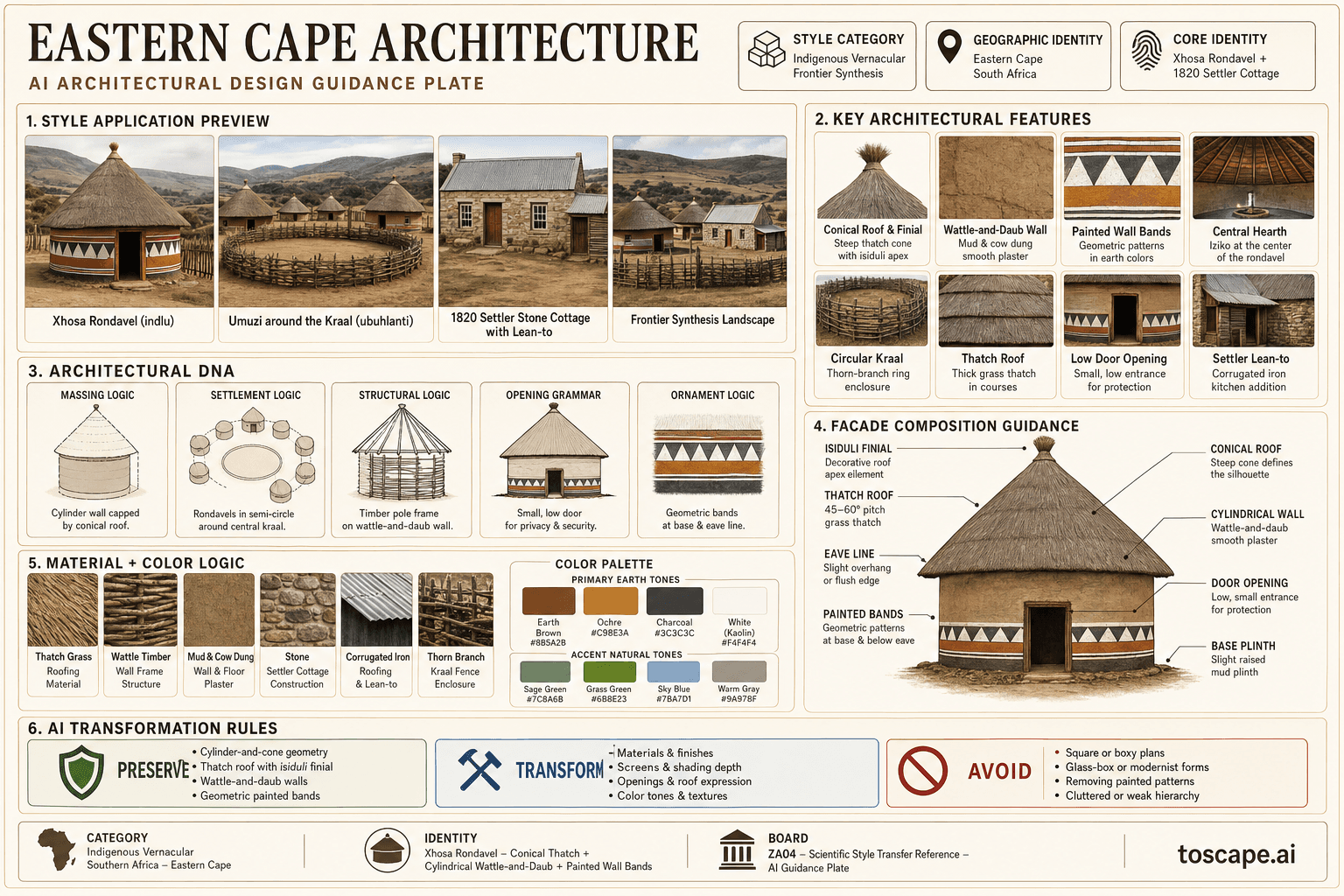
The Xhosa rondavel is a pure cylinder-and-cone geometric composition — the circular wall (4–7 m diameter × 1.8–2.4 m high) capped by a steep conical thatch roof (45–60° pitch). The cone may overhang the cylinder slightly or meet it flush.
Facade Language
The primary Xhosa architectural ornament is the painted rondavel wall — the work of women: (1) Geometric bands — horizontal stripes at wall base and below the eave line — in white (lime or kaolin clay), red ochre, and charcoal black. (2) Triangular and diamond patterns — repeating geometric friezes derived from beadwor...
Materials & Texture
The Xhosa rondavel — a circular plan (4–7 m diameter) with a cylindrical wattle-and-daub wall (1.8–2.4 m high) and a steep conical thatch roof (45–60° pitch) terminating in a distinctive apex finial (isiduli) — walls plastered with a mixture of clay, cow dung, and water, polished to a smooth earthen sheen — decorative...
Color Palette
White, cream, pale sand, warm timber, and shadow-driven dark metal accents define the palette. The facade should stay bright and climate-aware rather than heavy, gray, or over-saturated.
Ornament & Detail
The Xhosa rondavel — a circular plan (4–7 m diameter) with a cylindrical wattle-and-daub wall (1.8–2.4 m high) and a steep conical thatch roof (45–60° pitch) terminating in a distinctive apex finial (isiduli) — walls plastered with a mixture of clay, cow dung, and water, polished to a smooth earthen sheen — decorative...
Climate Response
The architectural identity of the Eastern Cape — the Xhosa rondavel (indlu / iNgquphantsi) with its conical thatch roof and mud-daubed wattle walls, the 1820 British Settler stone cottage with its corrugated iron lean-to, and the distinctive frontier synthesis of African and European building traditions in the rolling...
Landscape & Ground
The architectural identity of the Eastern Cape — the Xhosa rondavel (indlu / iNgquphantsi) with its conical thatch roof and mud-daubed wattle walls, the 1820 British Settler stone cottage with its corrugated iron lean-to, and the distinctive frontier synthesis of African and European building traditions in the rolling...
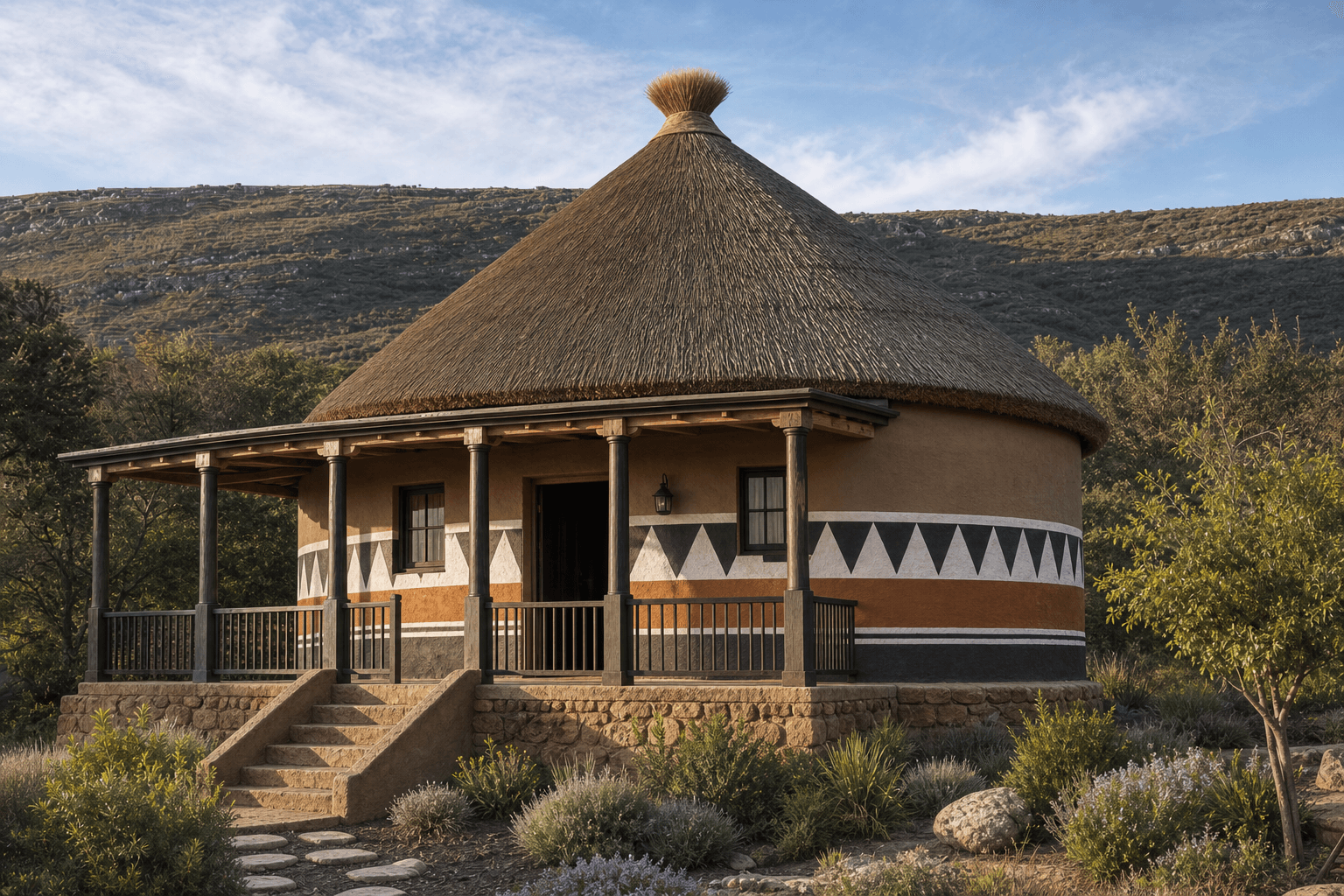
Reference elevation
Eastern Cape — characteristic facade composition, architectural identity of the Eastern Cape.
Context Snapshot
The architectural identity of the Eastern Cape — the Xhosa rondavel (indlu / iNgquphantsi) with its conical thatch roof and mud-daubed wattle walls, the 1820 British Settler stone cottage with its cor...
Contemporary Relevance
Eastern Cape is useful today for residential, hospitality, civic, and place-branding work that needs South Africa-specific character grounded in local massing, material tone, climate response, and settlement logic rather than generic international styling.
Use this style in Toscape
Explore Eastern Cape directly inside Toscape using the Facade Re-Style and Design Options workflows.
Open Eastern Cape in the galleryFrequently asked questions
What is Eastern Cape?
Eastern Cape is a regional architectural identity from South Africa. The Xhosa rondavel and the frontier farmhouse — the conical thatch-and-mud cylinder of the amaXhosa, the 1820 Settler stone cottage.
What materials define Eastern Cape?
The Xhosa rondavel — a circular plan (4–7 m diameter) with a cylindrical wattle-and-daub wall (1. 8–2. 4 m high) and a steep conical thatch roof (45–60° pitch) terminating in a distinctive apex finial (isiduli) — walls plastered with a mixture of clay, cow dung, and water, polished to a smooth earthen sheen — decorative.
What is the Eastern Cape color palette?
White, cream, pale sand, warm timber, and shadow-driven dark metal accents define the palette. The facade should stay bright and climate-aware rather than heavy, gray, or over-saturated.
Where does Eastern Cape come from?
The architectural identity of the Eastern Cape — the Xhosa rondavel (indlu / iNgquphantsi) with its conical thatch roof and mud-daubed wattle walls, the 1820 British Settler stone cottage with its cor.
When should architects use Eastern Cape?
Eastern Cape is useful today for residential, hospitality, civic, and place-branding work that needs South Africa-specific character grounded in local massing, material tone, climate response, and settlement logic rather than generic international styling.
How do you render Eastern Cape in Toscape?
Open Toscape on Windows, load your own photo, elevation, sketch, or CAD view, then apply the Eastern Cape reference from the built-in style library. The Facade Re-Style and Design Options workflows keep your project geometry and camera while shifting materials, proportion, and detailing toward Eastern Cape.