Fujian Tulou
China · Fujian Tulou
Rammed Earth Fortress Dwellings, Circular Clan Residences & Hakka Mountain Architecture
Definition
Fujian Tulou is a regional architectural identity from China. Rammed Earth Fortress Dwellings, Circular Clan Residences & Hakka Mountain Architecture.
- Country
- China
- Region
- Fujian Tulou
- Massing
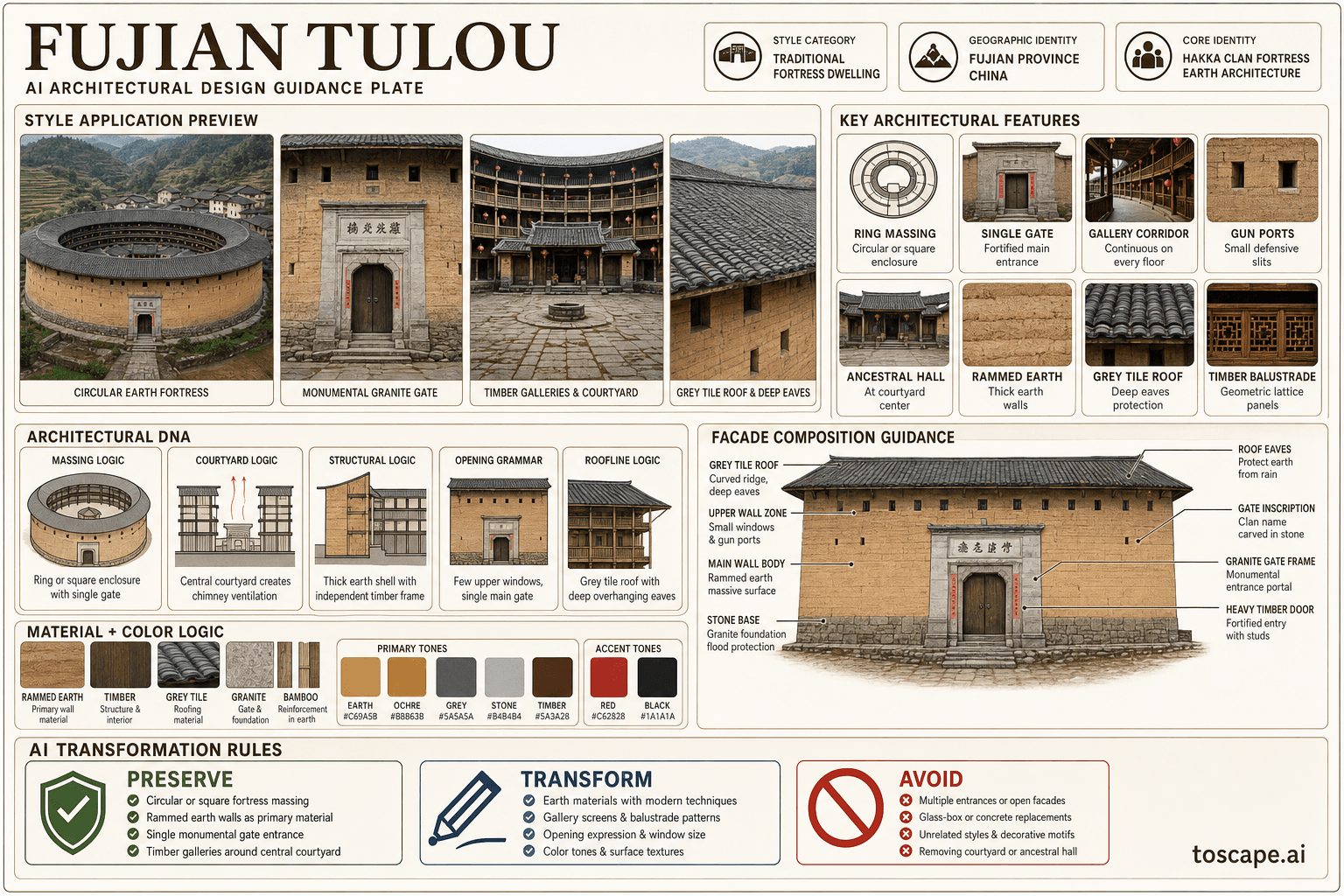
- Circular or square plan: massive ring-shaped (or rectangular) rammed-earth enclosure, 3-5 stories, 30-70m diameter. Single fortified entrance at ground level.
- Materials
- Rammed earth (hangtu) with lime-sand-rice paste binder — primary external wall material. Granite — gate frame, foundation, steps, courtyard paving.
- Palette
- Warm earth, sandy beige, ochre, clay brown, and sun-softened mineral tones should dominate, with palm green or weathered timber as secondary accents.
- Climate response
- Subtropical monsoon: hot humid summers, heavy rain, typhoons, mild winters. Thick rammed-earth walls (1-1. 8m) provide massive thermal mass — cool in summer, warm in winter.
Overview
Fujian Tulou is a regional architectural identity in China. Fujian Tulou — massive circular and rectangular rammed-earth clan fortresses of the Hakka people. Monumental circular or square rammed-earth walls (up to 5 stories, 70m diameter), inward-facing with single fortified gate, timber gallery corridors circling inner courtyard, ancestral hall at center, grey tile roofs, defensive gun ports (qiang yan)
Visual DNA
Massing & Form
Circular or square plan: massive ring-shaped (or rectangular) rammed-earth enclosure, 3-5 stories, 30-70m diameter. Single fortified entrance at ground level.
Facade Language
External rammed-earth wall: massive continuous surface, minimal openings — only small windows at upper floors (gun ports and ventilation). Single monumental stone gate with granite frame.
Materials & Texture
Rammed earth (hangtu) with lime-sand-rice paste binder — primary external wall material. Granite — gate frame, foundation, steps, courtyard paving.
Color Palette
Warm earth, sandy beige, ochre, clay brown, and sun-softened mineral tones should dominate, with palm green or weathered timber as secondary accents. The palette should read as land-derived rather than polished or urban-generic.
Ornament & Detail
Gate inscription: clan name and motto carved in granite lintel. Timber lattice panels on gallery balustrades — geometric patterns.
Climate Response
Subtropical monsoon: hot humid summers, heavy rain, typhoons, mild winters. Thick rammed-earth walls (1-1.8m) provide massive thermal mass — cool in summer, warm in winter.
Landscape & Ground
Fujian Tulou — massive circular and rectangular rammed-earth clan fortresses of the Hakka people. Subtropical monsoon: hot humid summers, heavy rain, typhoons, mild winters.
Reference elevation
Fujian Tulou — characteristic facade composition, Fujian Tulou.
Context Snapshot
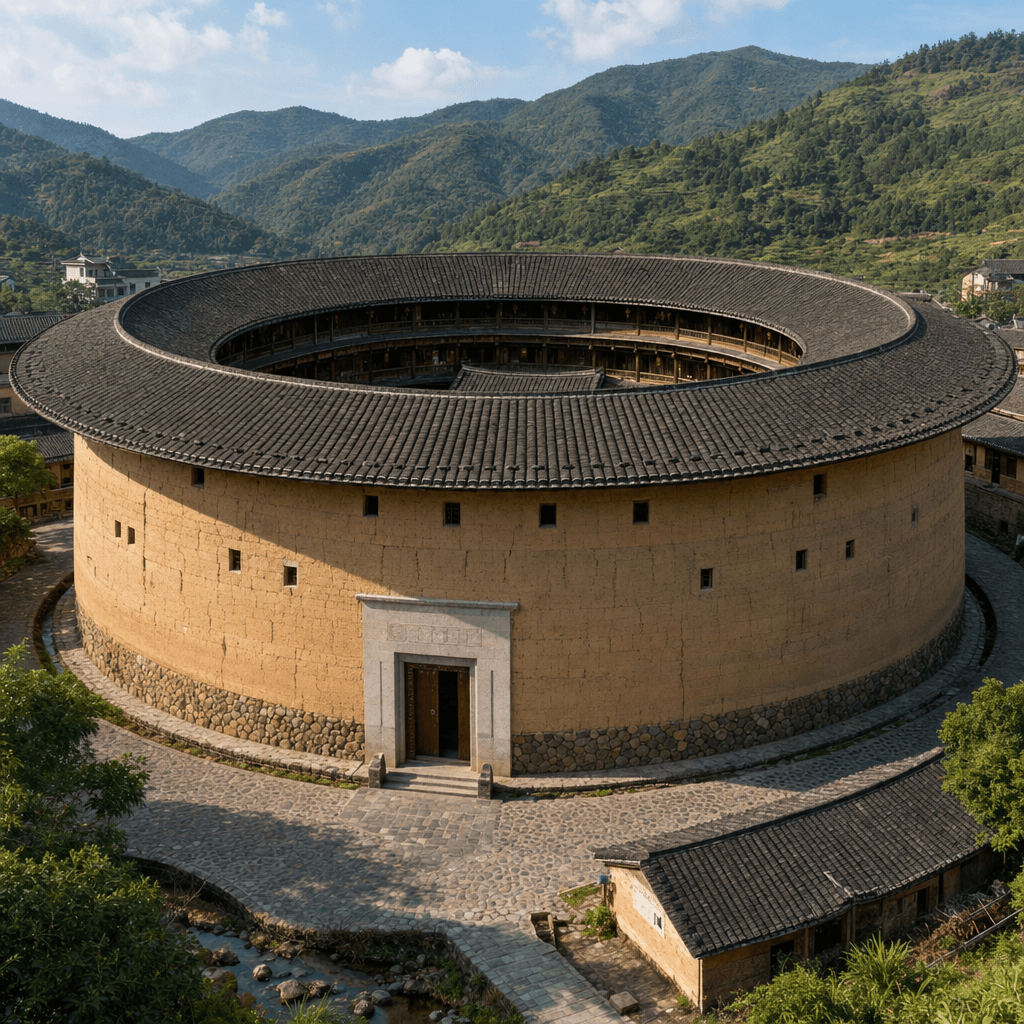
Fujian Tulou — massive circular and rectangular rammed-earth clan fortresses of the Hakka people Subtropical monsoon: hot humid summers, heavy rain, typhoons, mild winters.
Contemporary Relevance
Fujian Tulou is useful today for residential, hospitality, civic, and place-branding work that needs China-specific character grounded in local massing, material tone, climate response, and settlement logic rather than generic international styling.
Use this style in Toscape
Explore Fujian Tulou directly inside Toscape using the Facade Re-Style and Design Options workflows.
Open Fujian Tulou in the galleryFrequently asked questions
What is Fujian Tulou?
Fujian Tulou is a regional architectural identity from China. Rammed Earth Fortress Dwellings, Circular Clan Residences & Hakka Mountain Architecture.
What materials define Fujian Tulou?
Rammed earth (hangtu) with lime-sand-rice paste binder — primary external wall material. Granite — gate frame, foundation, steps, courtyard paving.
What is the Fujian Tulou color palette?
Warm earth, sandy beige, ochre, clay brown, and sun-softened mineral tones should dominate, with palm green or weathered timber as secondary accents. The palette should read as land-derived rather than polished or urban-generic.
Where does Fujian Tulou come from?
Fujian Tulou — massive circular and rectangular rammed-earth clan fortresses of the Hakka people Subtropical monsoon: hot humid summers, heavy rain, typhoons, mild winters.
When should architects use Fujian Tulou?
Fujian Tulou is useful today for residential, hospitality, civic, and place-branding work that needs China-specific character grounded in local massing, material tone, climate response, and settlement logic rather than generic international styling.
How do you render Fujian Tulou in Toscape?
Open Toscape on Windows, load your own photo, elevation, sketch, or CAD view, then apply the Fujian Tulou reference from the built-in style library. The Facade Re-Style and Design Options workflows keep your project geometry and camera while shifting materials, proportion, and detailing toward Fujian Tulou.