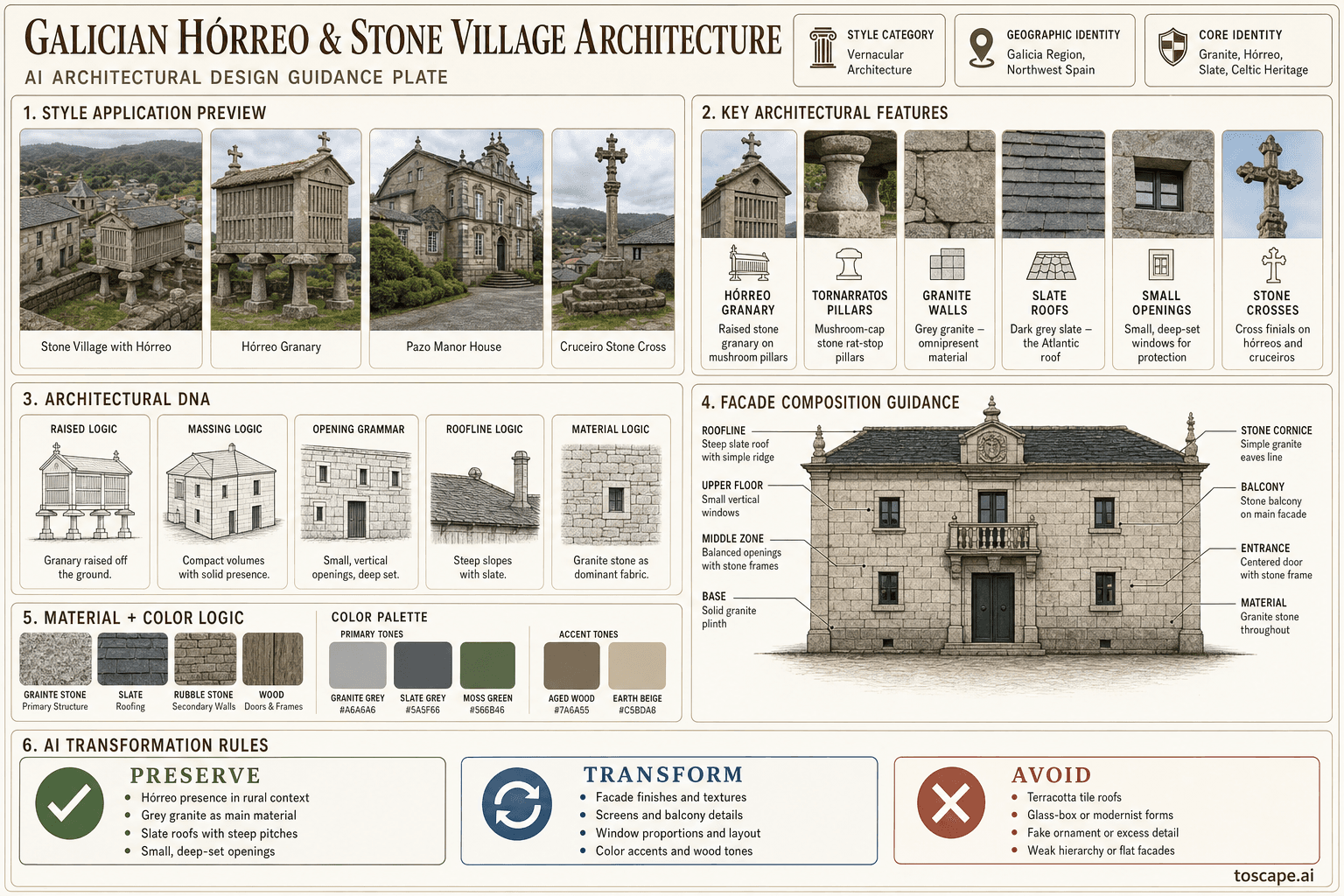
Galician Hórreo & Stone Village
Spain · distinctive vernacular architecture of Galicia
The Atlantic Celtic-influenced stone architecture of northwestern Spain — hórreo granaries and pazos manors
Definition
Galician Hórreo & Stone Village is a regional architectural identity from Spain. The Atlantic Celtic-influenced stone architecture of northwestern Spain — hórreo granaries and pazos manors.
- Country
- Spain
- Region
- distinctive vernacular architecture of Galicia.
- Massing
- The hórreo — the iconic raised stone granary on mushroom-cap stone pillars (tornarratos) with a cross finial — the defining Galician architectural symbol, unique within Spain.
- Palette
- Stone gray, weathered timber brown, mineral white, muted charcoal, and restrained landscape greens define the palette.
- Climate response
- The distinctive vernacular architecture of Galicia — Spain's rainiest, greenest region, with deep Celtic roots and a unique architectural identity.
Overview
Galician Hórreo & Stone Village is a regional architectural identity in Spain. The distinctive vernacular architecture of Galicia — Spain's rainiest, greenest region, with deep Celtic roots and a unique architectural identity. The hórreo — the iconic raised stone granary on mushroom-cap stone pillars (tornarratos) with a cross finial — the defining Galician architectural symbol, unique within Spain.
Visual DNA
Massing & Form
The hórreo — the iconic raised stone granary on mushroom-cap stone pillars (tornarratos) with a cross finial — the defining Galician architectural symbol, unique within Spain. Pazo (manor house): granite stone, Baroque-influenced, with a distinctive asymmetrical composition.
Facade Language
The hórreo — the iconic raised stone granary on mushroom-cap stone pillars (tornarratos) with a cross finial — the defining Galician architectural symbol, unique within Spain. Pazo (manor house): granite stone, Baroque-influenced, with a distinctive asymmetrical composition.
Materials & Texture
The hórreo — the iconic raised stone granary on mushroom-cap stone pillars (tornarratos) with a cross finial — the defining Galician architectural symbol, unique within Spain. Pazo (manor house): granite stone, Baroque-influenced, with a distinctive asymmetrical composition.
Color Palette
Stone gray, weathered timber brown, mineral white, muted charcoal, and restrained landscape greens define the palette. The building should feel rooted in terrain and craft rather than coated in synthetic contrast.
Ornament & Detail
The hórreo — the iconic raised stone granary on mushroom-cap stone pillars (tornarratos) with a cross finial — the defining Galician architectural symbol, unique within Spain. Pazo (manor house): granite stone, Baroque-influenced, with a distinctive asymmetrical composition.
Climate Response
The distinctive vernacular architecture of Galicia — Spain's rainiest, greenest region, with deep Celtic roots and a unique architectural identity
Landscape & Ground
The distinctive vernacular architecture of Galicia — Spain's rainiest, greenest region, with deep Celtic roots and a unique architectural identity
Reference elevation
Galician Hórreo & Stone Village — characteristic facade composition, distinctive vernacular architecture of Galicia.
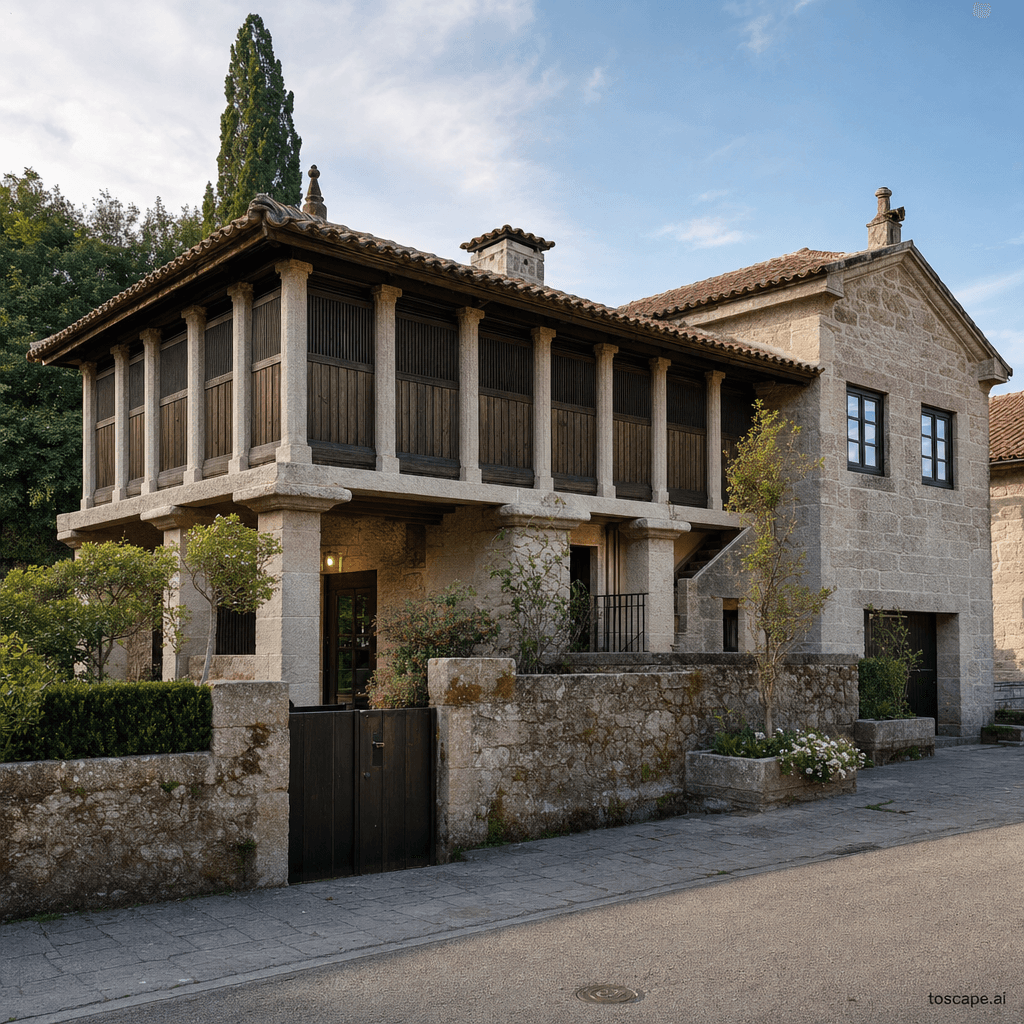
Context Snapshot
The distinctive vernacular architecture of Galicia — Spain's rainiest, greenest region, with deep Celtic roots and a unique architectural identity
Contemporary Relevance
Galician Hórreo & Stone Village is useful today for residential, hospitality, civic, and place-branding work that needs Spain-specific character grounded in local massing, material tone, climate response, and settlement logic rather than generic international styling.
Use this style in Toscape
Explore Galician Hórreo & Stone Village directly inside Toscape using the Facade Re-Style and Design Options workflows.
Open Galician Hórreo & Stone Village in the galleryFrequently asked questions
What is Galician Hórreo & Stone Village?
Galician Hórreo & Stone Village is a regional architectural identity from Spain. The Atlantic Celtic-influenced stone architecture of northwestern Spain — hórreo granaries and pazos manors.
What materials define Galician Hórreo & Stone Village?
The hórreo — the iconic raised stone granary on mushroom-cap stone pillars (tornarratos) with a cross finial — the defining Galician architectural symbol, unique within Spain. Pazo (manor house): granite stone, Baroque-influenced, with a distinctive asymmetrical composition.
What is the Galician Hórreo & Stone Village color palette?
Stone gray, weathered timber brown, mineral white, muted charcoal, and restrained landscape greens define the palette. The building should feel rooted in terrain and craft rather than coated in synthetic contrast.
Where does Galician Hórreo & Stone Village come from?
The distinctive vernacular architecture of Galicia — Spain's rainiest, greenest region, with deep Celtic roots and a unique architectural identity.
When should architects use Galician Hórreo & Stone Village?
Galician Hórreo & Stone Village is useful today for residential, hospitality, civic, and place-branding work that needs Spain-specific character grounded in local massing, material tone, climate response, and settlement logic rather than generic international styling.
How do you render Galician Hórreo & Stone Village in Toscape?
Open Toscape on Windows, load your own photo, elevation, sketch, or CAD view, then apply the Galician Hórreo & Stone Village reference from the built-in style library. The Facade Re-Style and Design Options workflows keep your project geometry and camera while shifting materials, proportion, and detailing toward Galician Hórreo & Stone Village.