Hill Country
Sri Lanka · Sri Lankan Hill Country
Tea Planter Bungalows, Stone-Timber Vernacular & Colonial Highland Estate Architecture
Definition
Hill Country is a regional architectural identity from Sri Lanka. Tea Planter Bungalows, Stone-Timber Vernacular & Colonial Highland Estate Architecture.
- Country
- Sri Lanka
- Region
- Sri Lankan Hill Country.
- Massing
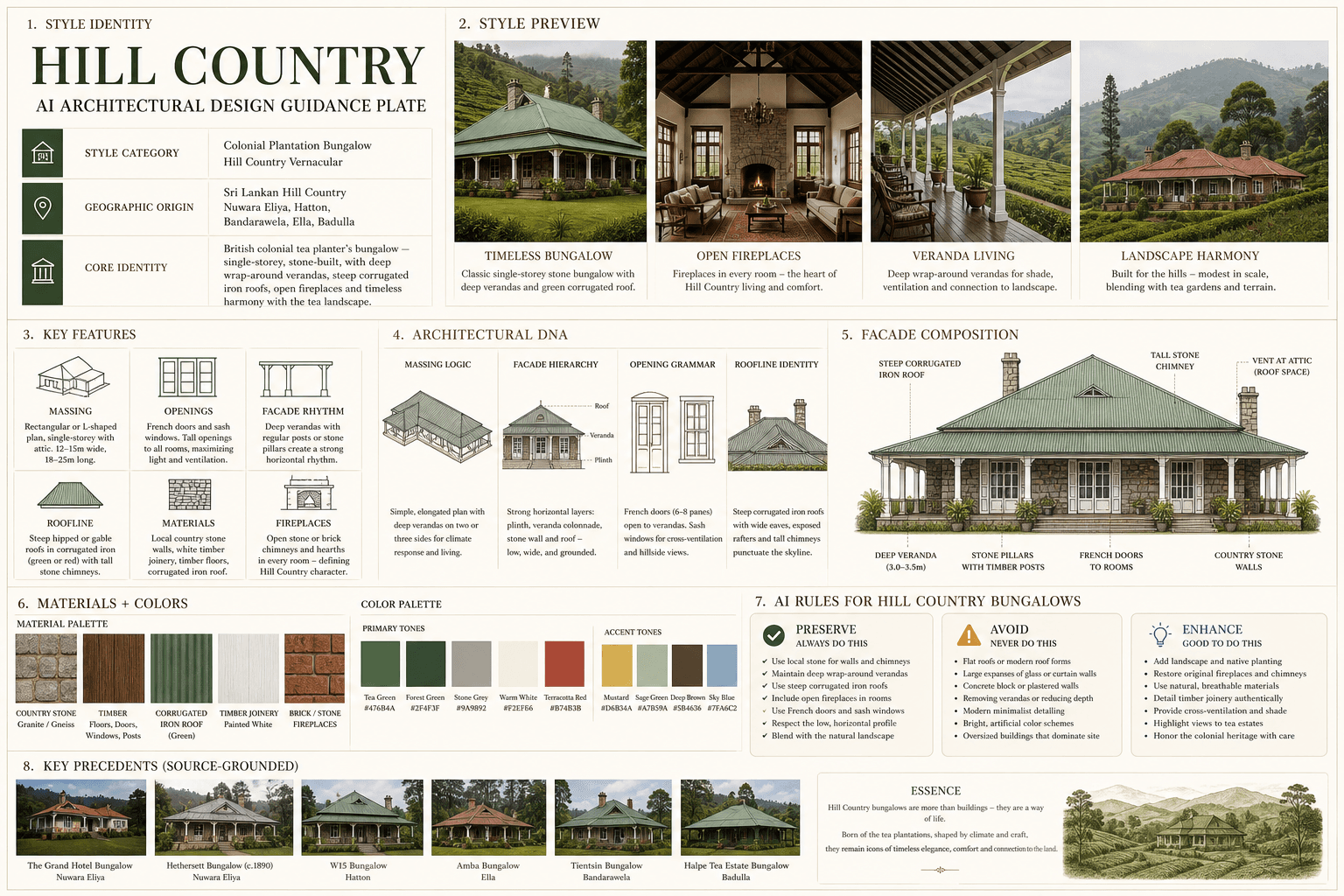
- Tea planter's bungalow: rectangular or L-shaped plan, typically 12-15m wide by 18-25m long. Single storey with attic (roof space sometimes converted to staff quarters or storage).
- Materials
- "Country stone" (granite/gneiss): local quarry stone — grey to pinkish-grey, random rubble or coursed, used for walls either exposed or rendered.
- Palette
- White, cream, pale sand, warm timber, and shadow-driven dark metal accents define the palette.
- Climate response
- Tropical highland (Cfb) — elevation 1,200-2,200m, cool year-round (10-22°C), very high rainfall (3,000-5,000mm), monsoon mist and drizzle, occasional frost at highest elevations (Nuwara Eliya).
Overview
Hill Country is a regional architectural identity in Sri Lanka. Sri Lankan Hill Country — Nuwara Eliya, Hatton, Bandarawela, Ella, Badulla. British colonial tea planter's bungalow — the archetypal Hill Country dwelling: sprawling single-storey house with steep hipped or gable roof originally of corrugated iron or terracotta tiles (now largely painted green or red corrugated iron — "zinc-alume" in green), wrap-around deep verandas on two or three sides with white timber posts or s...
Visual DNA
Massing & Form
Tea planter's bungalow: rectangular or L-shaped plan, typically 12-15m wide by 18-25m long. Single storey with attic (roof space sometimes converted to staff quarters or storage).
Facade Language
The bungalow facade is dominated by the deep wrap-around veranda — a continuous colonnade of white timber posts or stone pillars creating a rhythmic light-shadow modulation. Behind the veranda, the house wall appears as a recessive plane with regularly spaced doors (usually glazed French doors opening from each room) a...
Materials & Texture
"Country stone" (granite/gneiss): local quarry stone — grey to pinkish-grey, random rubble or coursed, used for walls either exposed or rendered. Exposed stone bungalows: the stone texture is celebrated — rough-hewn gneiss blocks with thick white or cream lime pointing.
Color Palette
White, cream, pale sand, warm timber, and shadow-driven dark metal accents define the palette. The facade should stay bright and climate-aware rather than heavy, gray, or over-saturated.
Ornament & Detail
Tea planter's bungalow ornament is restrained British colonial — practical but comfortable. Gable bargeboards: simple molded or carved timber boards following the gable rake, sometimes with a decorative drop finial at the peak.
Climate Response
Tropical highland (Cfb) — elevation 1,200-2,200m, cool year-round (10-22°C), very high rainfall (3,000-5,000mm), monsoon mist and drizzle, occasional frost at highest elevations (Nuwara Eliya). Fireplaces: the defining climate feature — the cool highland climate demands heating, unique in tropical Sri Lanka.
Landscape & Ground
Sri Lankan Hill Country — Nuwara Eliya, Hatton, Bandarawela, Ella, Badulla. Tropical highland (Cfb) — elevation 1,200-2,200m, cool year-round (10-22°C), very high rainfall (3,000-5,000mm), monsoon mist and drizzle, occasional frost at highest elevations (Nuwara Eliya).
Reference elevation
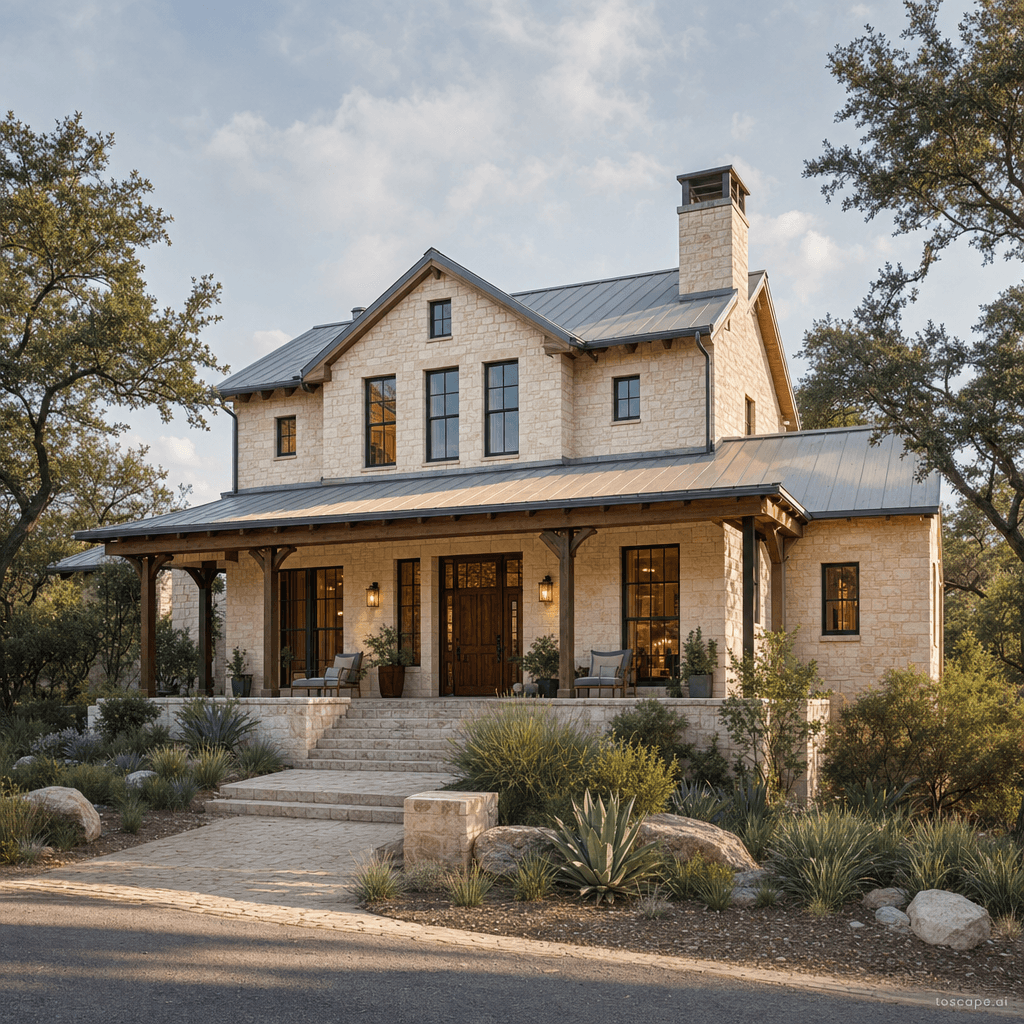
Hill Country — characteristic facade composition, Sri Lankan Hill Country.
Context Snapshot
Sri Lankan Hill Country — Nuwara Eliya, Hatton, Bandarawela, Ella, Badulla Tropical highland (Cfb) — elevation 1,200-2,200m, cool year-round (10-22°C), very high rainfall (3,000-5,000mm), monsoon mist and drizzle, occasional frost at highest elevations (Nuwara Eliya).
Contemporary Relevance
Hill Country is useful today for residential, hospitality, civic, and place-branding work that needs Sri Lanka-specific character grounded in local massing, material tone, climate response, and settlement logic rather than generic international styling.
Use this style in Toscape
Explore Hill Country directly inside Toscape using the Facade Re-Style and Design Options workflows.
Open Hill Country in the galleryFrequently asked questions
What is Hill Country?
Hill Country is a regional architectural identity from Sri Lanka. Tea Planter Bungalows, Stone-Timber Vernacular & Colonial Highland Estate Architecture.
What materials define Hill Country?
"Country stone" (granite/gneiss): local quarry stone — grey to pinkish-grey, random rubble or coursed, used for walls either exposed or rendered. Exposed stone bungalows: the stone texture is celebrated — rough-hewn gneiss blocks with thick white or cream lime pointing.
What is the Hill Country color palette?
White, cream, pale sand, warm timber, and shadow-driven dark metal accents define the palette. The facade should stay bright and climate-aware rather than heavy, gray, or over-saturated.
Where does Hill Country come from?
Sri Lankan Hill Country — Nuwara Eliya, Hatton, Bandarawela, Ella, Badulla Tropical highland (Cfb) — elevation 1,200-2,200m, cool year-round (10-22°C), very high rainfall (3,000-5,000mm), monsoon mist and drizzle, occasional frost at highest elevations (Nuwara Eliya).
When should architects use Hill Country?
Hill Country is useful today for residential, hospitality, civic, and place-branding work that needs Sri Lanka-specific character grounded in local massing, material tone, climate response, and settlement logic rather than generic international styling.
How do you render Hill Country in Toscape?
Open Toscape on Windows, load your own photo, elevation, sketch, or CAD view, then apply the Hill Country reference from the built-in style library. The Facade Re-Style and Design Options workflows keep your project geometry and camera while shifting materials, proportion, and detailing toward Hill Country.