Himachal Dhajji Dewari
India · Western Himalayan traditional
Timber-Laced Earthquake Houses, Cantilevered Balconies & Slate Roofs
Definition
Himachal Dhajji Dewari is a regional architectural identity from India. Timber-Laced Earthquake Houses, Cantilevered Balconies & Slate Roofs.
- Country
- India
- Region
- Western Himalayan traditional
- Massing
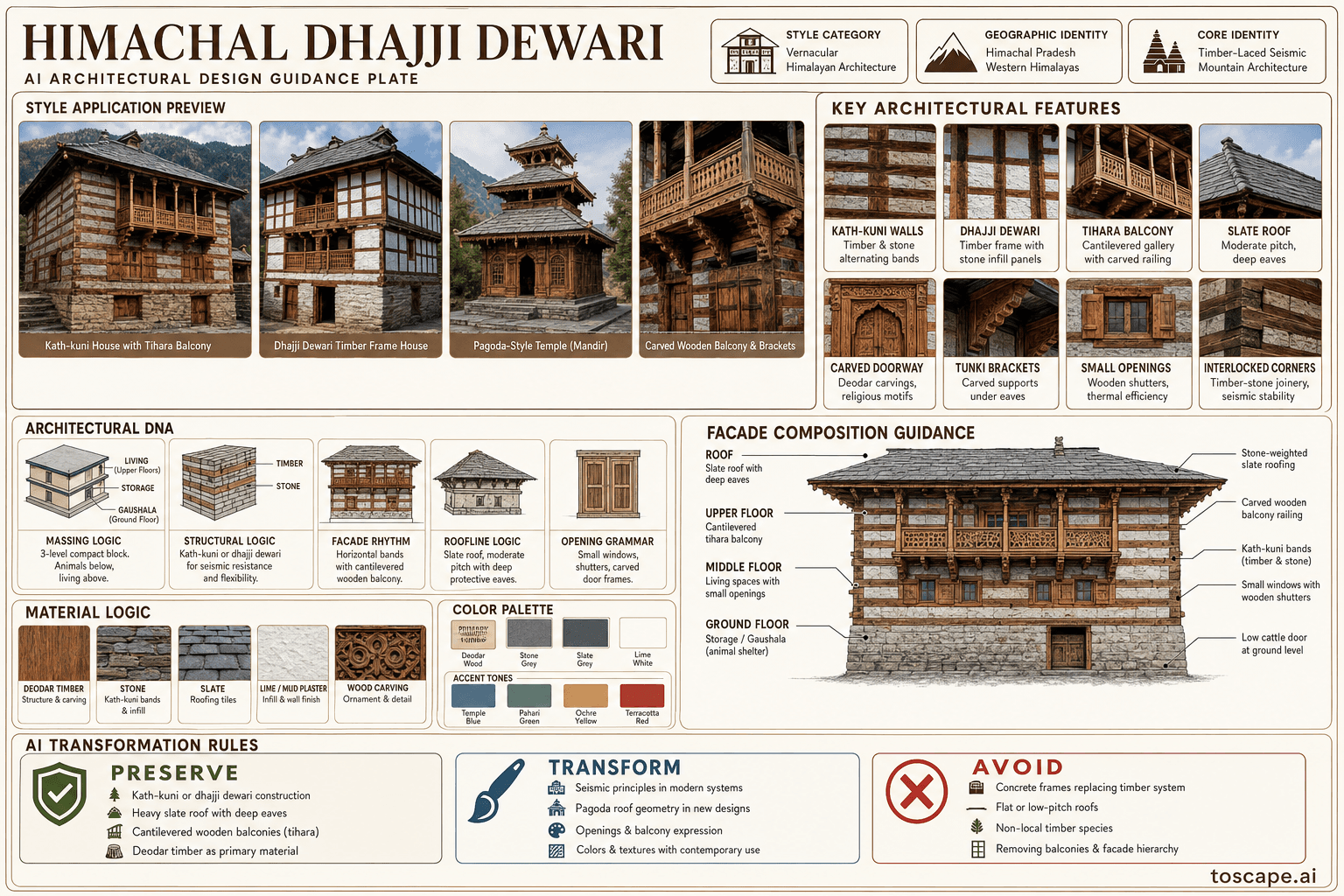
- 2-3 story rectangular block, compact footprint (6-10m face). Lower floors for cattle/storage (gaushala), upper floors for living.
- Materials
- Deodar cedar (Cedrus deodara) — primary timber for structure and carving. Stone: local slate, granite, quartzite.
- Palette
- White, cream, pale sand, warm timber, and shadow-driven dark metal accents define the palette.
- Climate response
- High altitude (1500-3500m): cold winters with heavy snow, mild summers, extreme diurnal range, high seismic risk (Zone IV-V). Heavy slate roof for snow load and wind.
Overview
Himachal Dhajji Dewari is a regional architectural identity in India. Western Himalayan traditional architecture — dhajji dewari timber-laced construction with kath-kuni stone-timber walls. Seismic-resistant timber frame with stone infill (dhajji dewari), cantilevered wooden balconies with carved details, heavy slate roofs, alternating timber-and-stone wall bands (kath-kuni), temple-like residential aesthetic
Visual DNA
Massing & Form
2-3 story rectangular block, compact footprint (6-10m face). Lower floors for cattle/storage (gaushala), upper floors for living.
Facade Language
Kath-kuni: striking horizontal banding — alternating dark timber (30cm) and grey stone (30-40cm) courses creating rhythmic striped pattern. Dhajji dewari: visible timber grid with stone infill panels, often lime-rendered.
Materials & Texture
Deodar cedar (Cedrus deodara) — primary timber for structure and carving. Stone: local slate, granite, quartzite.
Color Palette
White, cream, pale sand, warm timber, and shadow-driven dark metal accents define the palette. The facade should stay bright and climate-aware rather than heavy, gray, or over-saturated.
Ornament & Detail
Wood carving as primary ornament: balcony railing patterns (geometric, floral), door frame carvings (Ganesha, floral motifs), temple facade panels (deity figures, narrative scenes), carved wooden brackets (tunki) under eaves and balconies. Corner posts (dandi) with carved capitals.
Climate Response
High altitude (1500-3500m): cold winters with heavy snow, mild summers, extreme diurnal range, high seismic risk (Zone IV-V). Heavy slate roof for snow load and wind.
Landscape & Ground
Western Himalayan traditional architecture — dhajji dewari timber-laced construction with kath-kuni stone-timber walls. High altitude (1500-3500m): cold winters with heavy snow, mild summers, extreme diurnal range, high seismic risk (Zone IV-V).
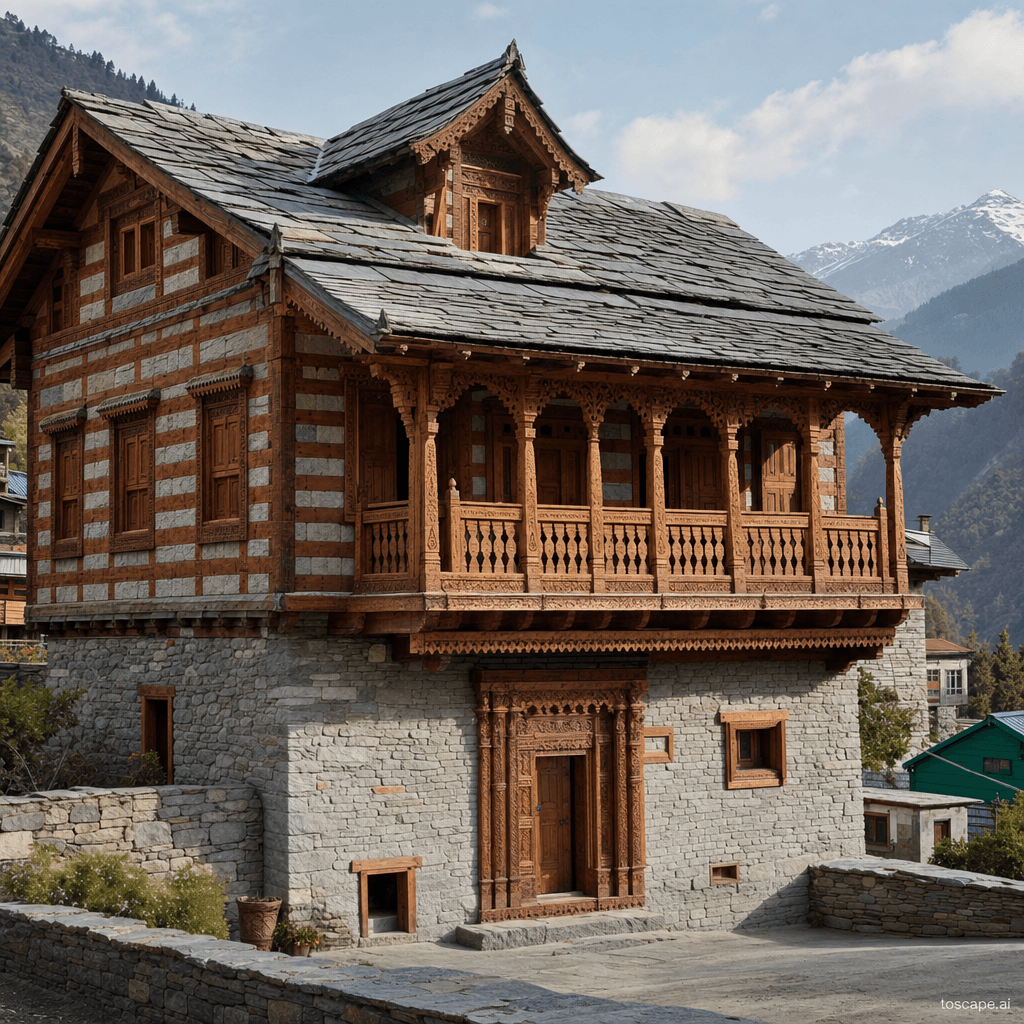
Reference elevation
Himachal Dhajji Dewari — characteristic facade composition, Western Himalayan traditional.
Context Snapshot
Western Himalayan traditional architecture — dhajji dewari timber-laced construction with kath-kuni stone-timber walls High altitude (1500-3500m): cold winters with heavy snow, mild summers, extreme diurnal range, high seismic risk (Zone IV-V).
Contemporary Relevance
Himachal Dhajji Dewari is useful today for residential, hospitality, civic, and place-branding work that needs India-specific character grounded in local massing, material tone, climate response, and settlement logic rather than generic international styling.
Use this style in Toscape
Explore Himachal Dhajji Dewari directly inside Toscape using the Facade Re-Style and Design Options workflows.
Open Himachal Dhajji Dewari in the galleryFrequently asked questions
What is Himachal Dhajji Dewari?
Himachal Dhajji Dewari is a regional architectural identity from India. Timber-Laced Earthquake Houses, Cantilevered Balconies & Slate Roofs.
What materials define Himachal Dhajji Dewari?
Deodar cedar (Cedrus deodara) — primary timber for structure and carving. Stone: local slate, granite, quartzite.
What is the Himachal Dhajji Dewari color palette?
White, cream, pale sand, warm timber, and shadow-driven dark metal accents define the palette. The facade should stay bright and climate-aware rather than heavy, gray, or over-saturated.
Where does Himachal Dhajji Dewari come from?
Western Himalayan traditional architecture — dhajji dewari timber-laced construction with kath-kuni stone-timber walls High altitude (1500-3500m): cold winters with heavy snow, mild summers, extreme diurnal range, high seismic risk (Zone IV-V).
When should architects use Himachal Dhajji Dewari?
Himachal Dhajji Dewari is useful today for residential, hospitality, civic, and place-branding work that needs India-specific character grounded in local massing, material tone, climate response, and settlement logic rather than generic international styling.
How do you render Himachal Dhajji Dewari in Toscape?
Open Toscape on Windows, load your own photo, elevation, sketch, or CAD view, then apply the Himachal Dhajji Dewari reference from the built-in style library. The Facade Re-Style and Design Options workflows keep your project geometry and camera while shifting materials, proportion, and detailing toward Himachal Dhajji Dewari.