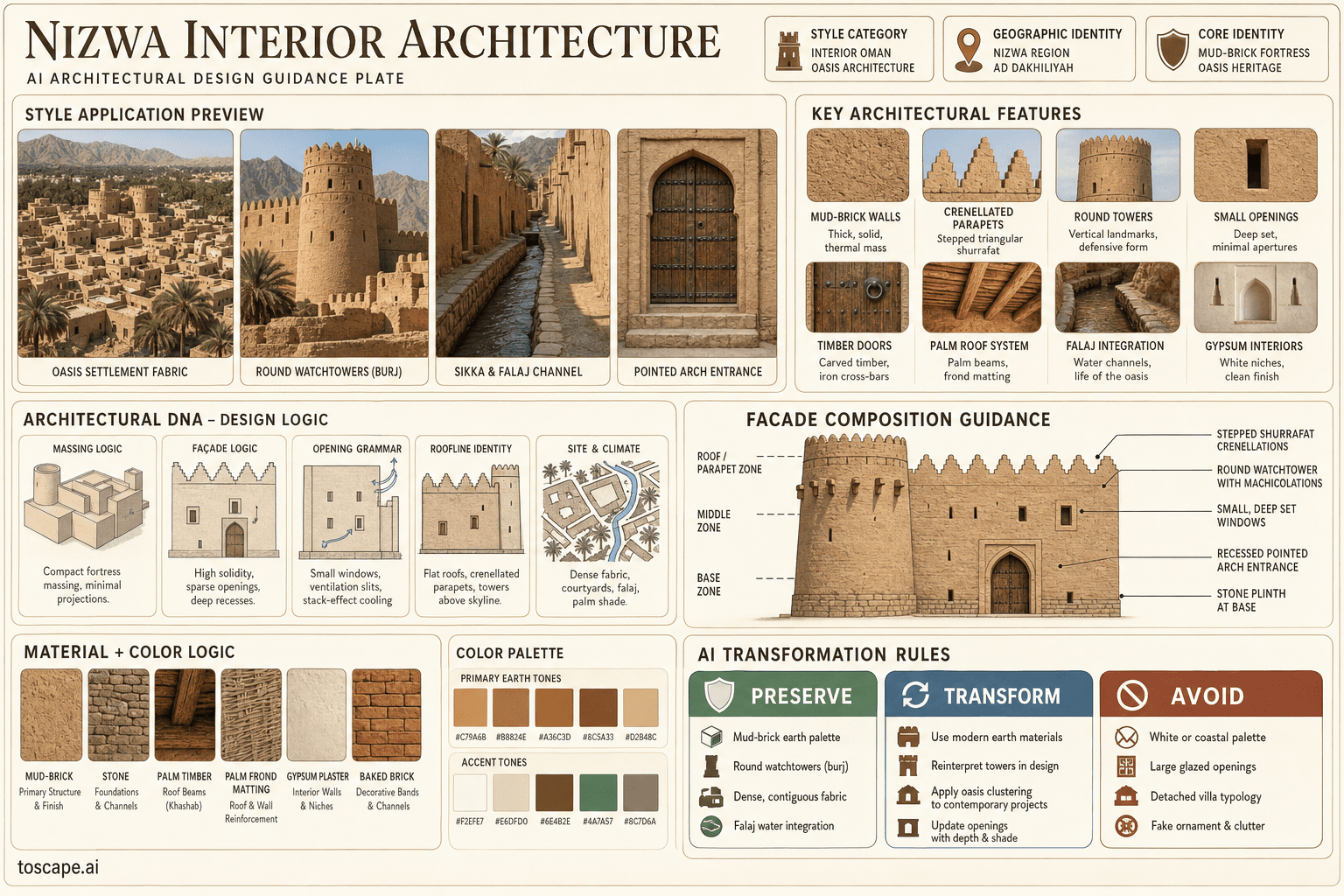
Nizwa Interior
Oman · inland architecture of the Nizwa region and Ad Dakhiliyah Governorate
The mud-brick oasis architecture of Oman's interior heartland — round watchtowers, dense date palm settlements, falaj irrigation, and the fortress aesthetic of the Ad Dakhiliyah re...
Definition
Nizwa Interior is a regional architectural identity from Oman. The mud-brick oasis architecture of Oman's interior heartland — round watchtowers, dense date palm settlements, falaj irrigation, and the fortress aesthetic of the Ad Dakhiliyah re.
- Country
- Oman
- Region
- inland architecture of the Nizwa region and Ad Dakhiliyah Governorate.
- Massing
- Nizwa interior buildings are thick-walled, compact, horizontally-organized volumes — typically 10–18 m wide × 12–25 m deep, 2–4 storeys high.
- Materials
- Mud-brick (labin) — sun-dried clay brick, warm earth-brown to golden-ochre color.
- Palette
- White, cream, pale sand, warm timber, and shadow-driven dark metal accents define the palette.
- Climate response
- The interior architecture is an extreme climate adaptation system: (1) Mud-brick thermal mass — walls 600–1200 mm thick absorb daytime heat and release it slowly.
Overview
Nizwa Interior is a regional architectural identity in Oman. Traditional inland architecture of the Nizwa region and Ad Dakhiliyah Governorate — the historic capital of inland Oman and the cultural heartland of the interior. This architecture is defined by mud-brick construction, monumental round watchtowers, dense oasis settlement patterns, and the falaj irrigation system that enables life in the arid interior.
Visual DNA
Massing & Form
Nizwa interior buildings are thick-walled, compact, horizontally-organized volumes — typically 10–18 m wide × 12–25 m deep, 2–4 storeys high. The massing is fortress-derived: heavy, grounded, defensive in character even in domestic applications.
Facade Language
The Nizwa interior facade is characterized by solidity and minimal penetration — the wall-to-opening ratio is typically 85:15 or more extreme: Base zone: Solid mud-brick wall with one or two entrance doors — deeply recessed within pointed arch portals. Doorways are framed in stone or baked brick for durability at groun...
Materials & Texture
Mud-brick (labin) — sun-dried clay brick, warm earth-brown to golden-ochre color, the primary structural and finishing material Baked brick (ajur) — fired clay brick used for foundations, water channels, and decorative banding — darker reddish-brown Date palm timber — trunks used as roof beams (khashab), fronds for mat...
Color Palette
White, cream, pale sand, warm timber, and shadow-driven dark metal accents define the palette. The facade should stay bright and climate-aware rather than heavy, gray, or over-saturated.
Ornament & Detail
Nizwa interior ornament is characterized by extreme restraint — the beauty derives from material honesty, proportion, and the play of light and shadow on mud-brick surfaces rather than applied decoration. Key decorative moments: (1) carved timber doors — simple geometric patterns incised into wood, (2) gypsum niche sur...
Climate Response
The interior architecture is an extreme climate adaptation system: (1) Mud-brick thermal mass — walls 600–1200 mm thick absorb daytime heat and release it slowly at night, stabilizing interior temperatures (diurnal variation can exceed 20°C in the interior). (2) The falaj system — ancient gravity-fed irrigation channel...
Landscape & Ground
Traditional inland architecture of the Nizwa region and Ad Dakhiliyah Governorate — the historic capital of inland Oman and the cultural heartland of the interior. This architecture is defined by mud-brick construction, monumental round watchtowers, dense oasis settlement patterns, and the falaj irrigation system that...
Reference elevation
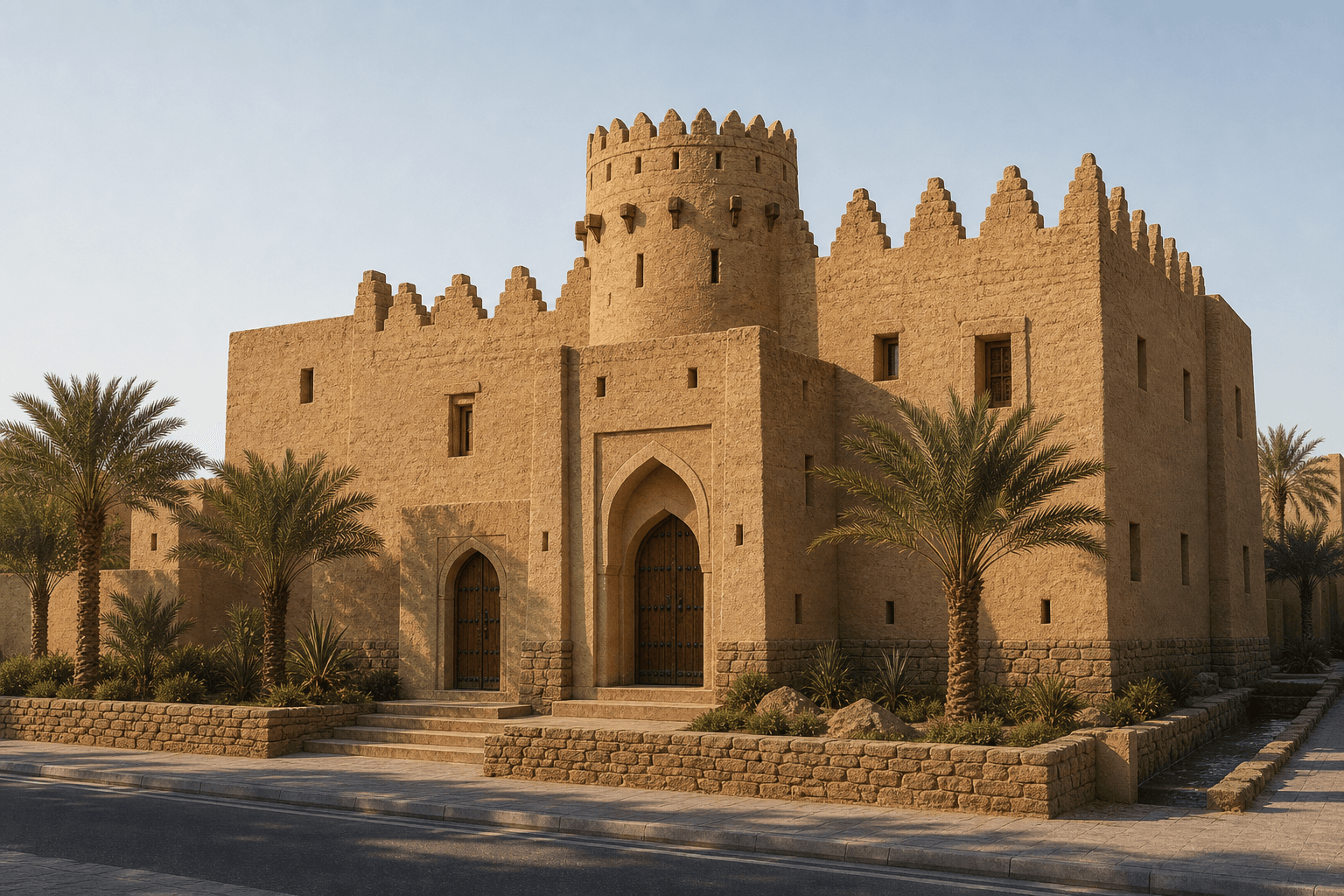
Nizwa Interior — characteristic facade composition, inland architecture of the Nizwa region and Ad Dakhiliyah Governorate.
Context Snapshot
Traditional inland architecture of the Nizwa region and Ad Dakhiliyah Governorate — the historic capital of inland Oman and the cultural heartland of the interior. The interior architecture is an extreme climate adaptation system: (1) Mud-brick thermal mass — walls 600–1200 mm thick absorb daytime heat and release it slowly at night, stabilizing interior temperatures (diurnal varia...
Contemporary Relevance
Nizwa Interior is useful today for residential, hospitality, civic, and place-branding work that needs Oman-specific character grounded in local massing, material tone, climate response, and settlement logic rather than generic international styling.
Use this style in Toscape
Explore Nizwa Interior directly inside Toscape using the Facade Re-Style and Design Options workflows.
Open Nizwa Interior in the galleryFrequently asked questions
What is Nizwa Interior?
Nizwa Interior is a regional architectural identity from Oman. The mud-brick oasis architecture of Oman's interior heartland — round watchtowers, dense date palm settlements, falaj irrigation, and the fortress aesthetic of the Ad Dakhiliyah re.
What materials define Nizwa Interior?
Mud-brick (labin) — sun-dried clay brick, warm earth-brown to golden-ochre color, the primary structural and finishing material Baked brick (ajur) — fired clay brick used for foundations, water channels, and decorative banding — darker reddish-brown Date palm timber — trunks used as roof beams (khashab), fronds for mat.
What is the Nizwa Interior color palette?
White, cream, pale sand, warm timber, and shadow-driven dark metal accents define the palette. The facade should stay bright and climate-aware rather than heavy, gray, or over-saturated.
Where does Nizwa Interior come from?
Traditional inland architecture of the Nizwa region and Ad Dakhiliyah Governorate — the historic capital of inland Oman and the cultural heartland of the interior. The interior architecture is an extreme climate adaptation system: (1) Mud-brick thermal mass — walls 600–1200 mm thick absorb daytime heat and release it slowly at night, stabilizing interior temperatures (diurnal varia.
When should architects use Nizwa Interior?
Nizwa Interior is useful today for residential, hospitality, civic, and place-branding work that needs Oman-specific character grounded in local massing, material tone, climate response, and settlement logic rather than generic international styling.
How do you render Nizwa Interior in Toscape?
Open Toscape on Windows, load your own photo, elevation, sketch, or CAD view, then apply the Nizwa Interior reference from the built-in style library. The Facade Re-Style and Design Options workflows keep your project geometry and camera while shifting materials, proportion, and detailing toward Nizwa Interior.